TypeScript 6.0: The Last JavaScript-Based Release Before the Go Rewrite — What Changes, What Dies, and How to Migrate
March 27, 2026
GDC 2026 Game Audio AI Shock: 52% of Developers Say AI Hurts the Industry — 5 Reasons Sound Designers Lead the Revolt
March 28, 2026
What’s a guitar riff from “Californication” worth when it generates $26 million in annual revenue? According to Warner Music Group and Bain Capital, the answer is at least $300 million. The biggest music catalog deal of 2026 is now on the table, and it tells us everything about where the music industry is headed.

The Warner Music Red Hot Chili Peppers Catalog Deal — First Major Target of a $1.65B Fund
Warner Music Group (WMG) and private equity giant Bain Capital are pushing ahead with their joint venture, Beethoven JV 1, LLC, to acquire the Red Hot Chili Peppers’ masters catalog. RHCP is reportedly seeking $350 million for the collection, though industry insiders expect the final price to land somewhere between $325 million and $340 million.
The JV originally launched in summer 2025 with $1.2 billion in total capacity. But on February 5, 2026, both parties upped their equity commitments by $100 million each, bringing total equity to $700 million ($350 million per shareholder) and the fund’s total spending power — including debt leverage — to approximately $1.65 billion. WMG CEO Robert Kyncl and Bain Capital Partner Angelo Rufino stated that their “joint venture is off to a terrific start” and that they were “excited to increase our combined equity commitment by $200 million.”
The structure is telling: WMG handles marketing, distribution, and rights administration, while Bain brings the capital muscle and deal sourcing expertise. It’s a model designed to combine operational know-how with institutional-scale firepower — and RHCP could be the proof of concept.
What’s in the RHCP Catalog — $26M Annual Revenue Across 40 Years of Rock
The Red Hot Chili Peppers’ masters catalog includes 13 studio albums and additional releases issued through Warner Records. We’re talking about some of the most recognizable songs in rock history: “Californication,” “Under the Bridge,” “Dani California,” “Snow (Hey Oh),” “Can’t Stop,” “Give It Away,” “Scar Tissue,” “By the Way,” and “Otherside.” These aren’t just songs — they’re cultural touchstones that have maintained relevance across generations.
The catalog generates approximately $26 million in annual revenue. At the asking price of $350 million, that works out to roughly a 13.5x multiple — above the typical 8-12x range for evergreen catalogs but in line with premium assets that demonstrate consistent streaming growth. On Spotify alone, tracks like “Under the Bridge” and “Californication” have accumulated hundreds of millions of streams, and they continue to appear in younger listeners’ playlists with remarkable consistency.
One important distinction: this deal covers masters only (the actual recorded music). RHCP’s publishing catalog (songwriting and composition rights) was already sold to Merck Mercuriadis’ Hipgnosis Songs Fund in 2021 for $150 million. The separation of masters and publishing into different transactions is increasingly common in today’s catalog market.

Music Catalogs as a ‘Safe Asset Class’ — The Numbers Behind the Boom
The RHCP deal isn’t happening in a vacuum. Music catalogs have firmly established themselves as an institutional asset class. In 2024 alone, catalog transactions totaling more than $8 billion closed globally. The global music market, valued at $105 billion in 2024, is projected to reach nearly $200 billion by 2035 at a compound annual growth rate of about 6%.
Warner and Bain aren’t the only players with deep pockets. Sony Music has partnered with Singapore’s GIC sovereign wealth fund to operate a JV with over $2 billion in deployment capacity, spending $2.5 billion across 60+ deals in 2024-2025 alone. According to Billboard, this influx of institutional capital is simultaneously driving up both liquidity and valuations in the catalog market.
Premium evergreen catalogs now sometimes trade at 20-30x annual revenue multiples. Asset-backed securitization (ABS) financing structures allow up to 65% leverage (compared to 55% with traditional bank financing), enabling buyers to offer roughly 10% higher purchase prices while maintaining the same equity returns. This structural advantage is one of the key reasons private equity firms are so aggressively entering the music space.
Bain Capital’s Return to Music — 20 Years After Taking Warner Private
Bain Capital’s involvement in music isn’t new territory. The firm was a key investor in Warner Music Group’s going-private transaction back in 2004. Two decades later, rejoining forces with the same partner to invest in music assets signals something significant: catalogs have been fundamentally revalued as investment opportunities.
The relationship between WMG and Bain adds a layer of trust and operational alignment that purely financial buyers can’t replicate. Warner understands the nuances of catalog management — from sync licensing opportunities to playlist optimization to emerging market expansion. Bain brings disciplined capital allocation and the ability to structure complex transactions. Together, they can move faster and more strategically than competitors.
Why Streaming Changed Everything for Catalog Valuations
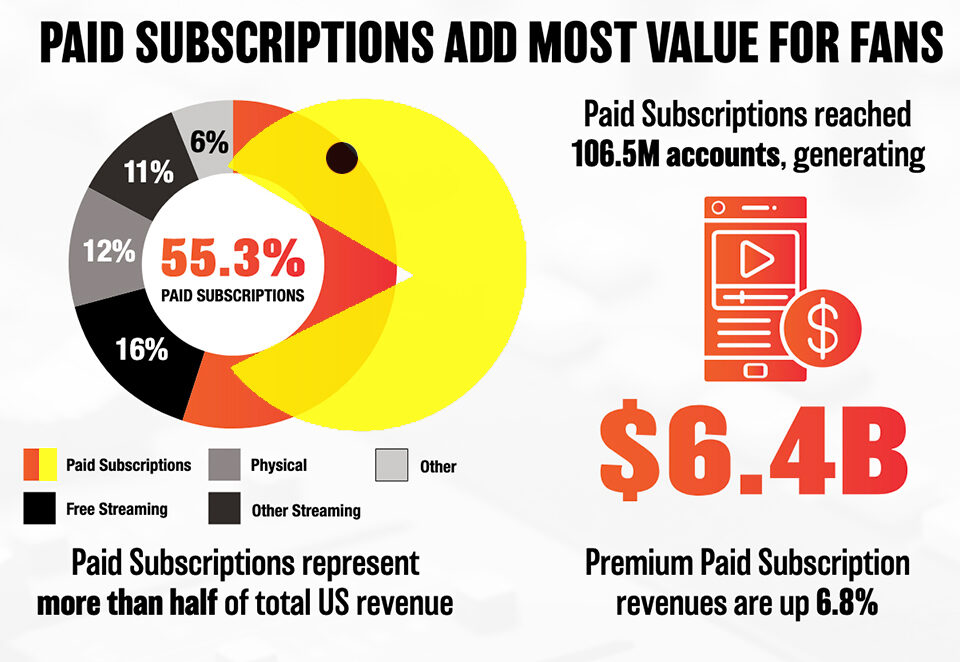
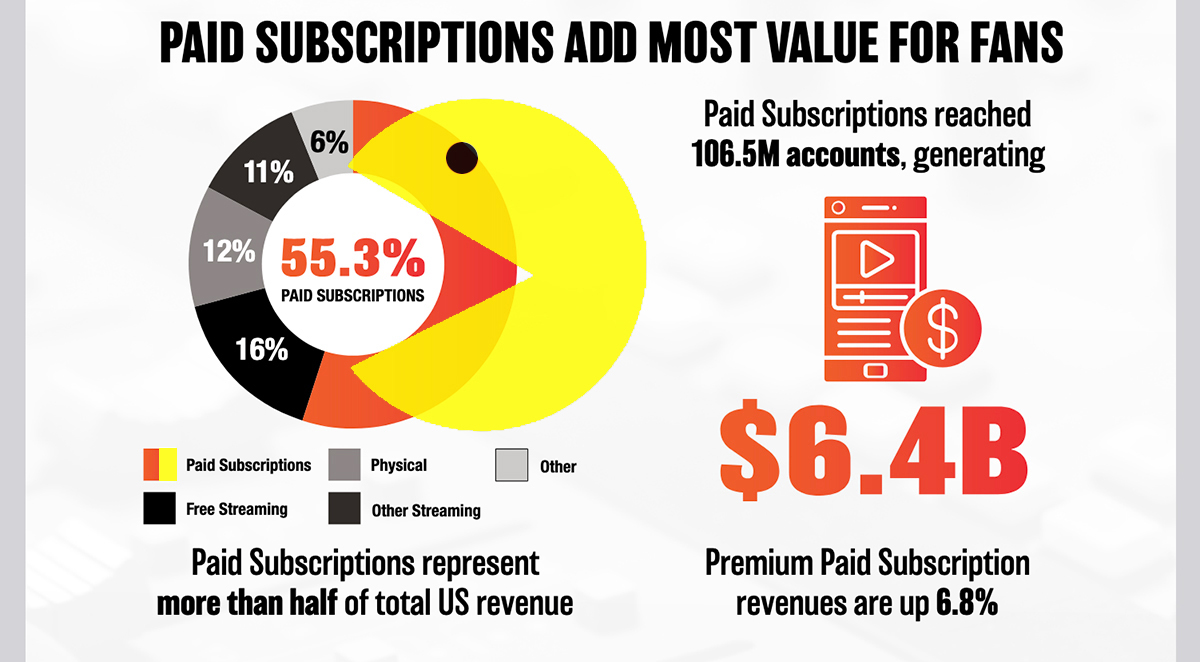
The streaming revolution is the engine behind the catalog investment boom. In 2026, streaming data — monthly listeners, playlist placements, save rates, engagement metrics, and TikTok virality — has become the primary indicator of catalog health. For artists like RHCP, whose music enjoys cross-generational appeal, streaming platforms create a perpetual discovery engine that drives predictable, stable revenue.
Before streaming, catalog revenue was largely dependent on physical sales, radio play, and sync placements. These were inherently lumpy and unpredictable. Streaming turned music into a recurring revenue model — closer to SaaS than traditional media. That predictability is exactly what institutional investors crave, and it’s why multiples have expanded so dramatically over the past five years.
The 2026 market outlook suggests the strongest deal activity growth will occur in Latin, Pop, Country, and EDM/Dance genres, with 71% of industry respondents expecting Latin deal volume to increase. But classic rock catalogs like RHCP’s remain blue-chip assets — the kind of holdings that anchor a diversified portfolio.
Consider the lifecycle economics: a song like “Give It Away” was released in 1991, yet it continues to generate meaningful revenue 35 years later through Spotify playlists, Apple Music radio stations, film and television sync placements, and TikTok viral moments. The marginal cost of serving an additional stream is essentially zero, making these catalogs extraordinarily high-margin assets. For institutional investors accustomed to infrastructure-like returns, music catalogs offer a compelling risk-reward profile with built-in inflation protection through periodic streaming rate adjustments.
What This Means for the Industry — More Competition, Higher Prices, New Structures
If the Warner-Bain RHCP deal closes, it will send several important signals through the industry. First, the major label + private equity JV model will likely become the standard structure for large-scale catalog acquisitions. Second, 13x+ multiples could set a new benchmark for premium rock catalogs. Third, the separation of masters and publishing into distinct transactions will continue to accelerate.
For artists and estates considering catalog sales, the market has never been more favorable. The combination of institutional capital, favorable financing structures, and streaming-driven predictability means that well-known catalogs will continue to command premium valuations. For investors, music catalogs offer something rare in today’s market: steady yield with low correlation to traditional equities.
Having spent over 28 years in the music industry, watching this level of capital flow into catalog rights is remarkable. Streaming didn’t just change how we consume music — it fundamentally redefined music as a financial asset. Regardless of whether the RHCP deal closes at $300 million or $350 million, the trajectory is clear: the value of music rights will continue to climb.
The Warner-Bain JV model represents something new in the music industry: a systematic, institutional approach to catalog acquisition that combines operational expertise with patient capital. As more funds enter the space and streaming continues to grow globally — particularly in emerging markets across Asia, Africa, and Latin America — the floor price for premium catalogs will only rise. For anyone watching the intersection of music, finance, and technology, the RHCP deal is the one to watch in 2026.
Stay on top of the latest music industry deals and investment trends — delivered weekly.
Get weekly AI, music, and tech trends delivered to your inbox.