ChatGPT Agent Deep Dive: 5 Real-World Automation Workflows Coming This Summer
July 4, 2025
Samsung Galaxy Z Fold7 Full Preview: 4.2mm Thin, 200MP Camera, and Galaxy AI — Everything Before Unpacked
July 4, 2025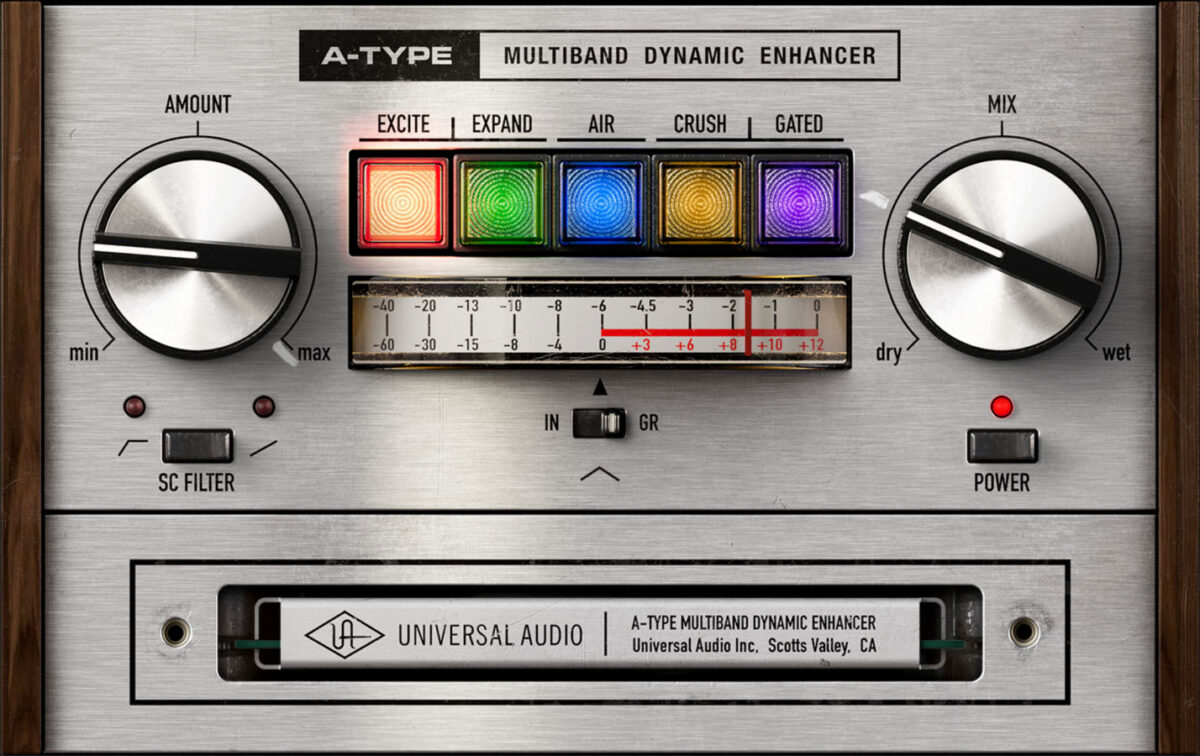
$6,729 worth of plugins for $19.99 a month. That number alone should make you pause. But Universal Audio Spark just made the deal even sweeter by adding the brand-new A-Type Multiband Dynamic Enhancer to the subscription—a plugin that costs $199 on its own and brings one of the most legendary studio techniques into your DAW with a single knob turn.
What Is Universal Audio Spark, and Why Does It Matter in 2025?
If you’ve been sleeping on Universal Audio Spark, it’s time to wake up. Launched as UA’s native plugin subscription service, Spark gives you access to over 40 of their most iconic processors for $19.99 per month or $149.99 per year. We’re talking about the same algorithms that have defined professional mixing and mastering for decades—the 1176 Classic Limiter Collection, LA-2A Leveler Collection, Neve 1073 Preamp & EQ, Pultec Passive EQ Collection, API 2500 Bus Compressor, Studer A800 Tape Machine, and many more—all running natively on your CPU without needing any UAD hardware.
That last part is critical. Universal Audio Spark plugins run natively on Mac and Windows. No Apollo interface required. No UAD-2 DSP card. Just install, authorize through your UA Connect account, and start mixing. This shift toward native processing has been one of the biggest changes in UA’s strategy, and it’s opened the door for a massive number of producers who couldn’t justify the hardware investment.
The A-Type Multiband Dynamic Enhancer: The Dolby A Trick Goes Native
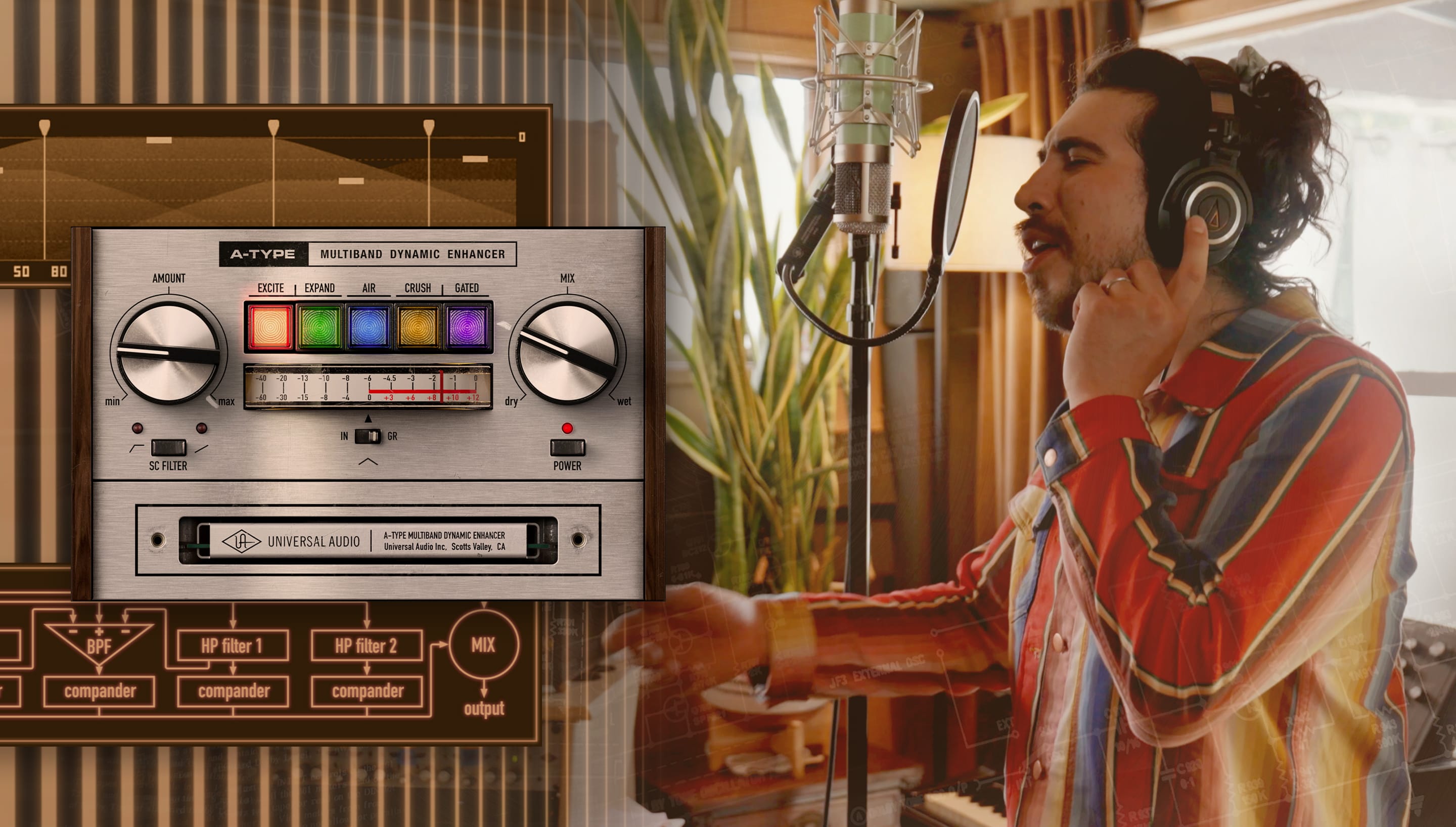
On June 24, 2025, Universal Audio released the native version of the A-Type Multiband Dynamic Enhancer, and it immediately became available to all Spark subscribers. This plugin emulates the legendary Dolby A-Type Model 361 noise reduction unit from the early 1970s—but not for noise reduction. The magic here is what engineers call the “Dolby A Trick.”
Here’s the technique in a nutshell: the Dolby A-Type was originally designed as a multiband noise reduction system. It splits the signal into four frequency bands and applies expansion to reduce noise. But when engineers started running signals through the encode side only—without the corresponding decode—they discovered something remarkable. The multiband compansion added a lush, open, airy quality to everything it touched. Vocals gained presence without harshness. Drums got punchy without losing their natural dynamics. Entire mixes sounded wider and more polished.
The technique became a closely guarded secret among top-tier mixing engineers for decades. Names like Chris Lord-Alge, Michael Brauer, and Tom Lord-Alge have all been known to use the Dolby A Trick on their mixes. It’s one of those “if you know, you know” studio techniques that separates good mixes from truly exceptional ones.
Five Modes That Go Way Beyond the Original
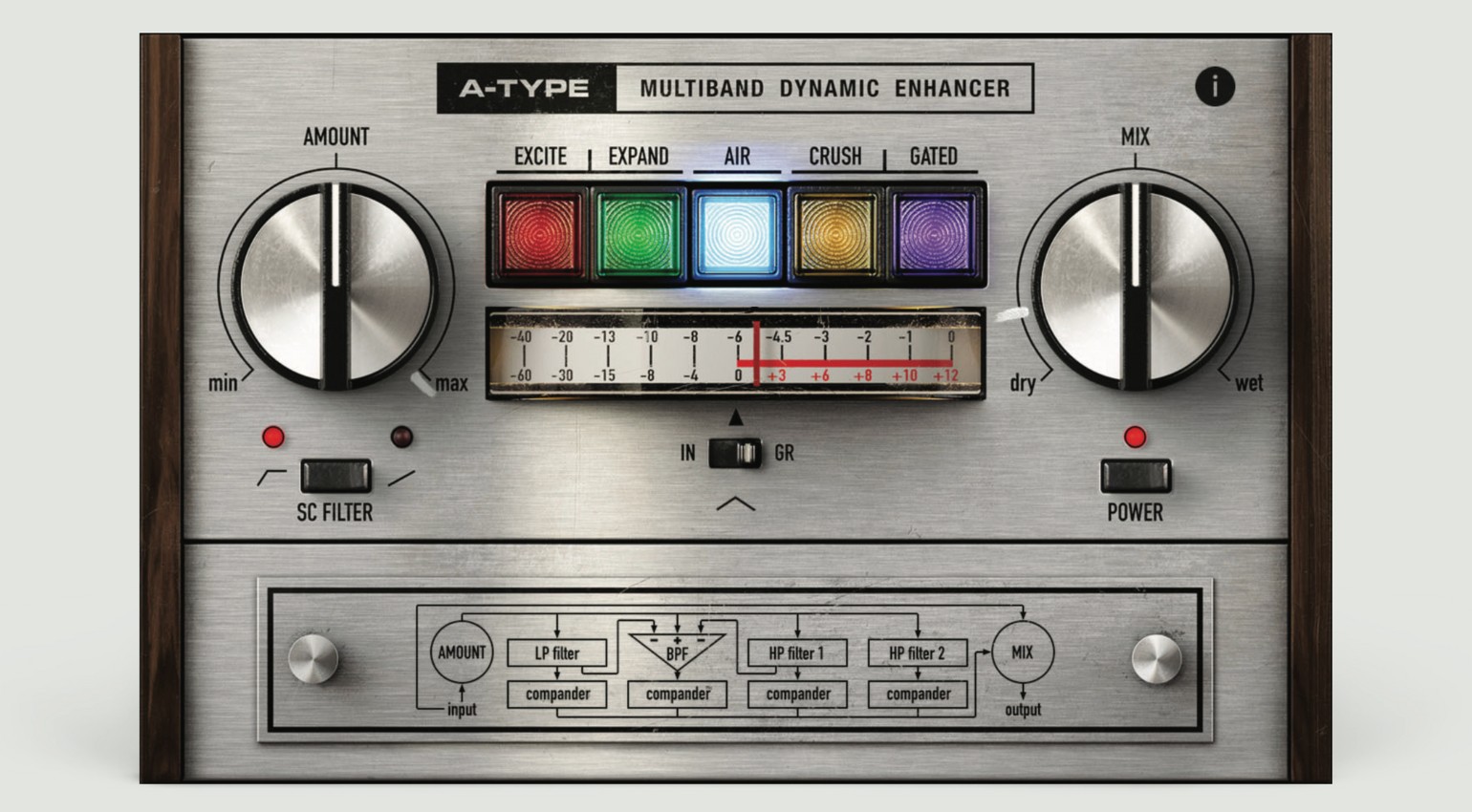
What makes UA’s A-Type particularly exciting is that it doesn’t just replicate the original technique—it expands on it with five distinct processing modes:
- Excite — The classic Dolby A Trick sound. Adds harmonic richness and presence across the frequency spectrum. Perfect for vocals, acoustic guitars, and mix bus processing.
- Expand — Opens up the dynamic range with a wider multiband expansion curve. Great for bringing life back to over-compressed recordings or adding natural dynamics to programmed drums.
- Air — Focuses the enhancement on the upper frequencies, adding shimmer and openness without the brittleness of a standard high-shelf EQ. Ideal for vocals and acoustic instruments that need to breathe.
- Crush — Flips the script entirely, pushing multiband compression for aggressive parallel-style processing. Think drum bus destruction, distorted synth enhancement, or lo-fi character.
- Gate — Uses the multiband architecture for intelligent gating, cleaning up noise and bleed while preserving the natural tone of the source material.
On top of these modes, the A-Type includes a Circuit Mods panel that adds transient shaping and subharmonic effects—features that go well beyond what any original Dolby unit could do. MusicRadar reports that this makes it one of the most versatile single-plugin processors UA has ever released.
The Full Universal Audio Spark Library: What $19.99/Month Actually Gets You
The A-Type is the latest addition, but the Universal Audio Spark library has been building momentum for a while now. Let’s break down what’s actually in there, because the breadth of this collection is genuinely impressive for a subscription that costs less than a decent lunch.
Compressors & Dynamics
- 1176 Classic Limiter Collection — Three versions of the most used compressor in recording history. The Rev A for aggressive character, Rev E for smoother response, and the AE anniversary edition.
- LA-2A Leveler Collection — The optical compressor that defined vocal processing. Silver and gray versions with distinct tonal characteristics.
- API 2500 Bus Compressor — The punch machine. Industry standard for drum bus and mix bus compression.
- API Vision Channel Strip — A complete channel strip with the API sound from input to output.
- Manley VOXBOX & Variable Mu — High-end tube processing that normally costs thousands in hardware.
EQs & Tone Shaping
- Neve 1073 Preamp & EQ — The sound of British rock and pop. Musical EQ curves that just work.
- Pultec Passive EQ Collection — The simultaneous boost-and-cut trick on the low end remains one of the most satisfying EQ moves in audio engineering.
- A-Type Multiband Dynamic Enhancer — The newest addition, as covered above.
Reverbs & Spatial
- Lexicon 224 Digital Reverb — The reverb that defined the 1980s. Lush, dense, unmistakable.
- Capitol Chambers — Modeled from the actual echo chambers at Capitol Studios in Hollywood.
- Pure Plate Reverb — Clean, versatile plate reverb for everyday mixing.
Tape & Delay
- Studer A800 Multichannel Tape Recorder — The warmth, saturation, and gentle compression of analog tape without the maintenance headaches.
- Galaxy Tape Echo — Vintage tape delay with all the character and none of the calibration.
Instruments
- PolyMAX Synthesizer — A deep analog poly synth with modern flexibility.
- Opal Morphing Synthesizer — Wavetable morphing with UA’s signature sound quality.
- Minimoog Model D — The bass synth that needs no introduction.
- Ravel Grand Piano — A beautifully sampled concert grand.
- Waterfall B3 Organ — Rotary speaker simulation included.
Add it all up at retail prices and you’re looking at over $6,729 worth of plugins. At $19.99 per month, you break even on the value of a single 1176 plugin in about ten months. At the annual rate of $149.99, the math becomes almost absurd.
Who Is Universal Audio Spark Actually For?
This is where it gets interesting, because Spark occupies a unique position in the market. Let me break it down by user type:
Bedroom producers and home studio owners: If you’re building your plugin collection from scratch, Spark is arguably the single best investment you can make. Instead of spending $200-300 on individual plugins and slowly building up over years, you get immediate access to industry-standard tools across every category. Your mixes will sound better overnight—not because of magic, but because these are genuinely excellent processors with decades of refinement behind them.
Working engineers who haven’t gone UA yet: Maybe you’ve been in the Waves ecosystem, or you’re running a collection of various third-party plugins. Spark lets you test-drive the entire UA native lineup without committing to individual purchases. If the 1176 becomes essential to your workflow, you can always buy it outright later and cancel the subscription.
Existing Apollo owners: Here’s where it gets nuanced. If you already own an Apollo and have purchased UA plugins over the years, Spark might fill the gaps in your collection. That Lexicon 224 you never pulled the trigger on? The Pultec Collection? Now they’re included. Plus, new additions like the A-Type land in your lap automatically.
Students and educators: At $19.99/month, Spark is accessible enough for students while providing professional-grade tools. No more compromising on quality during the learning phase.
The Dolby A Trick in Practice: Why the A-Type Changes Your Mix Workflow
Having worked with analog processing chains for over 28 years in audio production, I can tell you that the Dolby A Trick was one of those techniques that separated mix engineers who had access to high-end studios from those who didn’t. The original Dolby A-Type units are rare, expensive, and require proper maintenance. When you found a working one in a studio, it was like finding gold.
What makes the A-Type plugin genuinely useful—not just nostalgic—is the Excite mode on the mix bus. Running your stereo mix through Excite at subtle settings (around 30-40%) adds a cohesion and openness that’s hard to achieve with conventional processing. It’s not the same as an exciter, not the same as multiband compression, and not the same as saturation. It’s its own thing, and that’s exactly why the original technique became so prized.
The Air mode on vocals is another standout. Instead of reaching for a high-shelf EQ and fighting with sibilance, the Air mode lifts the presence and breathiness of a vocal performance while the multiband architecture keeps harshness in check. As Production Expert noted, this makes it one of the most immediately useful processors for vocal production in 2025.
And the Crush mode? Put it on a parallel drum bus and thank me later. The multiband compression character is distinctly different from a standard parallel compression setup. It retains the transient attack in the high frequencies while absolutely destroying the low-mids in the most musical way possible.
Spark vs. Buying Individual Plugins: The Real Math
The subscription vs. ownership debate is real, and I respect both sides. Here’s the honest breakdown:
If you subscribe to Universal Audio Spark at the annual rate of $149.99/year, you’re paying roughly $12.50/month. In one year, you’ve spent $150 for access to $6,729+ worth of plugins. Even if you only use five of those plugins regularly, you’re still getting an exceptional deal. The breakeven point for buying those five plugins individually would likely be $800-1,200.
The counter-argument is that you don’t “own” anything. If you cancel, the plugins stop working. That’s a valid concern, and UA addresses it partially by offering a permanent license discount to active subscribers who want to purchase plugins outright. It’s not a perfect solution, but it does provide a path from subscription to ownership.
For most producers I talk to, the answer is practical: subscribe, figure out which plugins become essential to your workflow over 6-12 months, then buy those individually if long-term ownership matters to you. In the meantime, you have access to everything.
What’s Coming Next for Spark?
UA has been consistently adding new plugins to the Spark library throughout 2025. The A-Type is the latest, but the pattern suggests we’ll see more native conversions of their UAD-2 exclusive catalog throughout the rest of the year. The fact that they’re releasing plugins like the A-Type simultaneously as standalone purchases and Spark inclusions tells you everything about their commitment to the subscription model.
For $19.99/month, Universal Audio Spark has become the kind of no-brainer recommendation that’s hard to argue against. Whether you’re a beginner building your first serious plugin collection or a seasoned engineer looking to fill gaps in your toolkit, the value proposition keeps getting stronger with every new addition. The A-Type Multiband Dynamic Enhancer—with its five modes and the legendary Dolby A Trick technique—is exactly the kind of unique, workflow-changing tool that makes a subscription worth keeping.
If you’re serious about mixing and production in 2025, the combination of classic emulations and innovative new processors makes Spark one of the smartest investments you can make. Try the A-Type on your mix bus in Excite mode, then tell me it wasn’t worth the monthly fee.
Looking to get the most out of your plugin chain? Whether it’s mixing, mastering, or building the right signal flow for your productions, professional guidance makes a real difference.
Get weekly AI, music, and tech trends delivered to your inbox.