Claude Artifacts Update: Anthropic Just Turned Chat Into a Full Interactive App Builder
June 20, 2025
Snapdragon X2 Benchmark Leaks: 30% Faster Single-Core Than Intel and AMD — ARM Laptops Are Coming for the Throne
June 20, 2025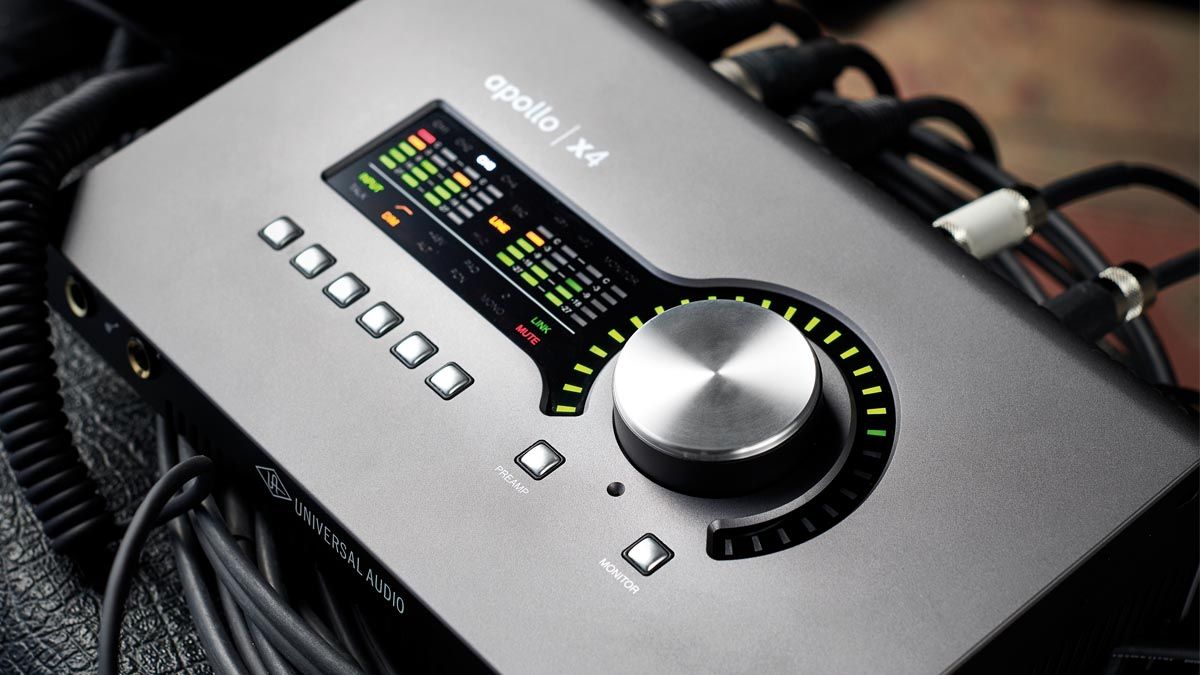
After 28 years behind the console, I’ve lost count of how many interfaces have crossed my desk — but the UAD Apollo x4 Heritage Edition is one of the few that made me rethink what a desktop unit can actually deliver. Spoiler: it punches well above its weight class.
UAD Apollo x4 Heritage Edition: What You Actually Get
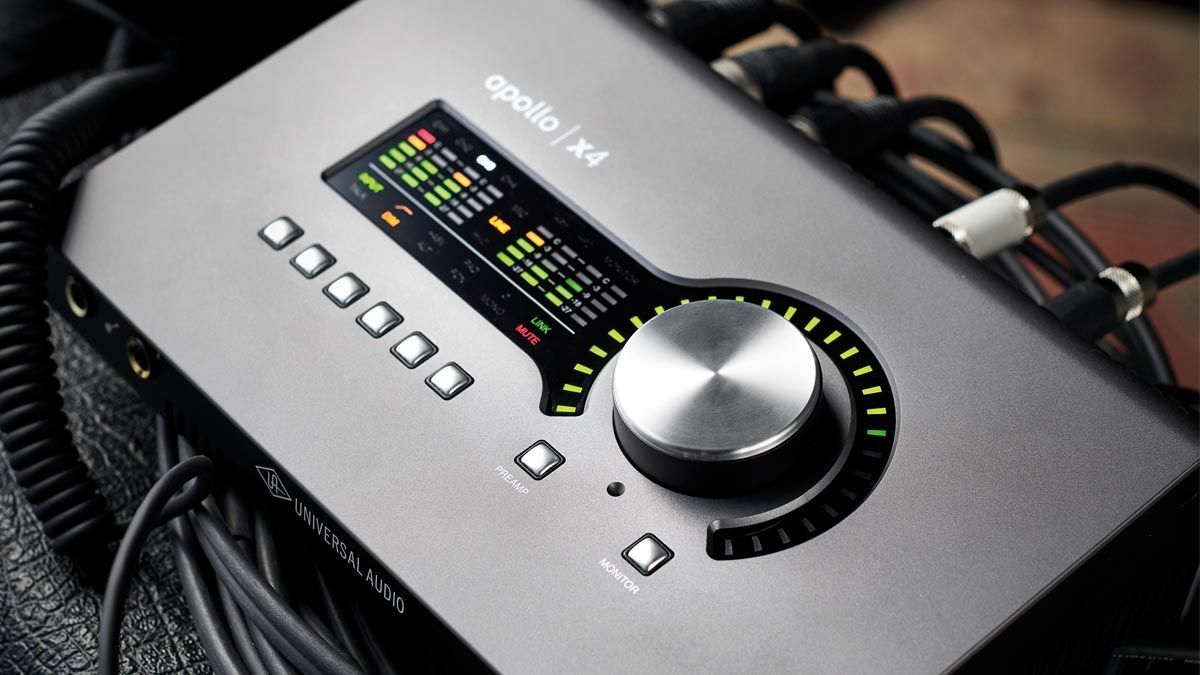
Universal Audio’s Apollo x4 Heritage Edition is a 12-in/18-out Thunderbolt 3 desktop audio interface built around a QUAD Core UAD DSP engine. The hardware itself features four Unison-enabled mic/line preamps, two Hi-Z instrument inputs, four line outputs, dual independent headphone outputs, ADAT/SPDIF optical I/O, a built-in talkback mic, and dedicated monitor remote controls.
But the real story of the Heritage Edition isn’t the hardware — it’s the 34 UAD plug-ins bundled inside, including 10 premium Heritage titles worth over $2,400. That’s the difference between walking into a studio with a toolkit and walking in with an entire vintage outboard rack.
Conversion Quality: 127 dB Dynamic Range That You Can Actually Hear
Let’s talk numbers first. The Apollo x4 delivers 24-bit/192 kHz conversion with a dynamic range of 127 dB and THD+N of -117 dB. These aren’t just spec-sheet bragging rights — Sound On Sound confirmed that the desktop format comes with “no performance penalty” compared to UA’s rackmount Apollo X units. The conversion and clocking are state-of-the-art, period.
In practice, the preamps have an impressively low noise floor. Whether you’re tracking a Shure SM7B at high gain or capturing the delicate transients of a ribbon mic, the Apollo x4 handles it without breaking a sweat. MusicRadar’s review summed it up perfectly with a 4.65/5 rating, praising its “wonderful sound and ease of use.”
Unison Preamps: Why This Changes Your Recording Workflow
The four Unison-enabled preamps are where the UAD Apollo x4 Heritage Edition truly separates itself from the competition. Unison technology isn’t just another plugin emulation — it adjusts the preamp’s analog impedance, gain staging, and circuit behavior in real time to match the exact characteristics of classic hardware.
That means when you load up the Neve 1073 Unison preset, your preamp doesn’t just sound like a 1073 — it responds like one. The gain knob, the impedance interaction with your microphone, the harmonic saturation curve — all of it changes at the analog hardware level before the signal even hits the converter. You can also run emulations of API, Manley, SSL, and Fender preamps with the same level of analog-stage integration.
From a workflow perspective, this is massive. Instead of committing to a specific preamp character during tracking and hoping it works in the mix, Unison lets you audition different preamp flavors in real time with zero latency. I’ve used this extensively for vocal sessions — switching between a warm Manley VOXBOX tone and a crisp API 512c character in seconds, without re-patching a single cable.
The Heritage Plugin Bundle: 34 Plugins Breakdown
Every Apollo x4 ships with the Realtime Analog Classics Plus bundle — 16 solid plug-ins including the UA 610-B, legacy Pultec EQs, LA-2A and 1176 compressors, Marshall Plexi Classic, and Ampeg SVT-VR. These alone cover a wide range of mixing and tracking needs.
The Heritage Edition adds 10 premium titles on top, and this is where the value proposition gets serious:
- UA 1176 Collection — The complete set of Rev A through Rev E, plus the LN version. Every flavor of the most-used compressor in recording history.
- Teletronix LA-2A Classic Leveler Collection — Optical compression that defines the smooth vocal sound of countless hit records.
- Pultec Passive EQ Collection — The EQP-1A, MEQ-5, and HLF-3C. The low-end trick (boost and cut at the same frequency) still works magic 60 years later.
- Fairchild Tube Limiter Collection — The 660 and 670, the most expensive and sought-after limiters ever made, now running on your desktop.
- UA 610 Tube Preamp & EQ Collection — Bill Putnam Sr.’s original console design, the foundation of Universal Audio itself.
- Teletronix LA-3A Audio Leveler — The solid-state sibling of the LA-2A, faster attack, brighter character.
- Helios Type 69 Preamp & EQ — The sound of Olympic Studios, Led Zeppelin, and The Rolling Stones.
- V76 Preamplifier — German broadcast-grade tube preamp, warm and authoritative.
- UA Oxide Tape Recorder — Analog tape saturation, cohesion, and that subtle high-frequency roll-off that glues a mix together.
- UA Pure Plate Reverb — Clean, dense plate reverb modeled from a custom-built studio plate.
Combined, that’s $2,400+ worth of plug-ins that cover compression, EQ, preamp coloring, tape saturation, and reverb. For a project studio owner, this effectively replaces an entire rack of vintage outboard gear — at a fraction of the cost and with total recall on every session.
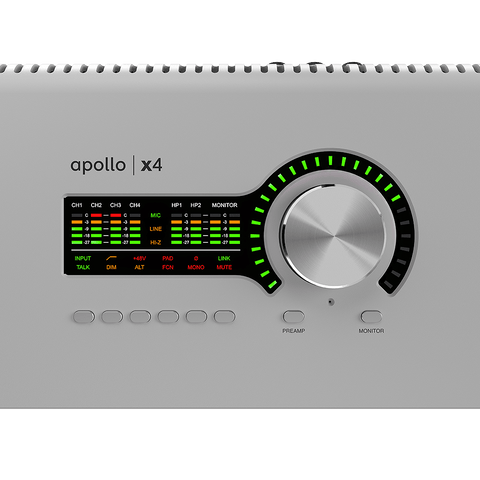
UAD Apollo x4 Heritage Edition: Practical Studio Scenarios
Here’s where I want to get specific about who this interface is actually for, because at this price point, you need to know if it fits your workflow.
Home/Project Studio Producers
With four preamps and dual headphone outputs, you can track a vocalist and a guitarist simultaneously while giving each their own cue mix. The ADAT expansion means you can add eight more preamps via an external unit like the Audient ASP880, giving you 12 simultaneous mic inputs for drum tracking. That’s a complete recording rig on your desk.
Mixing Engineers
The Heritage Edition bundle covers 90% of what you need on a mix bus. Run the Fairchild 670 on your stereo bus, Pultec EQs on guitars, 1176s on vocals and drums, LA-2A on bass — all processing on the QUAD Core DSP without touching your CPU. The monitor controller functionality also means you can switch between speaker pairs without an external monitor controller unit.
Podcast/Voiceover Professionals
The four Unison preamps with real-time processing mean you can track four hosts simultaneously, each with their own chain of compression and EQ. The built-in talkback mic handles producer communication without needing additional hardware. It’s overkill for solo podcasters, but perfect for multi-host setups.
What Could Be Better: The Honest Take
No review is complete without addressing the limitations. The Apollo x4 Heritage Edition isn’t perfect:
- No Thunderbolt cable included — At this price point, including a $40 cable should be a given. Sound On Sound flagged this too.
- No surround sound configuration — Despite having six outputs, MusicRadar noted there’s no way to configure them for 5.1 monitoring. If you’re doing immersive audio work, you’ll need the rackmount Apollo x8 or x16.
- Thunderbolt 3 only — No USB fallback. If your laptop doesn’t have Thunderbolt, this interface won’t work for you. Windows users should verify TB3 compatibility before purchasing.
- DSP ceiling — The QUAD Core is powerful, but heavy sessions with multiple Unison preamps and insert chains can max it out. You can cascade up to four Apollo units, but that’s a significant additional investment.
- Heritage Edition pricing premium — The Heritage Edition historically carried a premium over the standard Apollo x4. You need to calculate whether buying the standard edition and purchasing select individual plug-ins would be more cost-effective for your specific needs.
UAD Apollo x4 Heritage Edition vs the Competition
At the desktop interface price point, the Apollo x4 Heritage Edition competes with the Antelope Audio Zen Tour Synergy Core, RME Babyface Pro FS, and Apogee Duet 3. Here’s the honest breakdown:
- vs Antelope Zen Tour — Antelope offers more I/O and their own Synergy Core DSP effects, but UA’s plug-in ecosystem is significantly more mature and widely used in professional studios.
- vs RME Babyface Pro FS — RME wins on driver stability and latency performance, but offers no onboard DSP processing. If you want real-time hardware emulations during tracking, Apollo is the only option.
- vs Apogee Duet 3 — The Duet is more portable and has excellent conversion, but with only 2 inputs and no onboard DSP, it’s a different product category entirely.
The Apollo x4’s unique selling point remains the Unison preamp technology combined with real-time DSP processing. No other desktop interface offers this combination at this level of quality.
Final Verdict: Who Should Buy the Heritage Edition?
The UAD Apollo x4 Heritage Edition is the right choice if you’re building a serious project studio and want a single purchase that covers your interface, preamps, and core mixing tools. The 34 plug-in bundle eliminates the need to spend thousands on individual UAD titles over the next few years, and the Unison preamp technology delivers a recording experience that no software-only solution can match.
Skip it if you already own a UAD-2 satellite or previous Apollo with a healthy plug-in library — in that case, the standard Apollo x4 makes more financial sense. Also skip if you need USB connectivity, surround monitoring, or more than four simultaneous mic inputs without expansion.
For everyone else building from scratch? The Heritage Edition is the most complete desktop recording package available in 2025. Period.
Need professional mixing, mastering, or help optimizing your studio signal chain? Sean Kim brings 28+ years of audio engineering experience to every project.
Get weekly AI, music, and tech trends delivered to your inbox.