Google I/O 2025 Gemini 2.5 Pro & Flash — Complete Keynote Breakdown 10 Days Later
May 30, 2025
Google I/O 2025: What Android 16 and Gemini Reveal About the Pixel 10 Tensor G5
May 30, 2025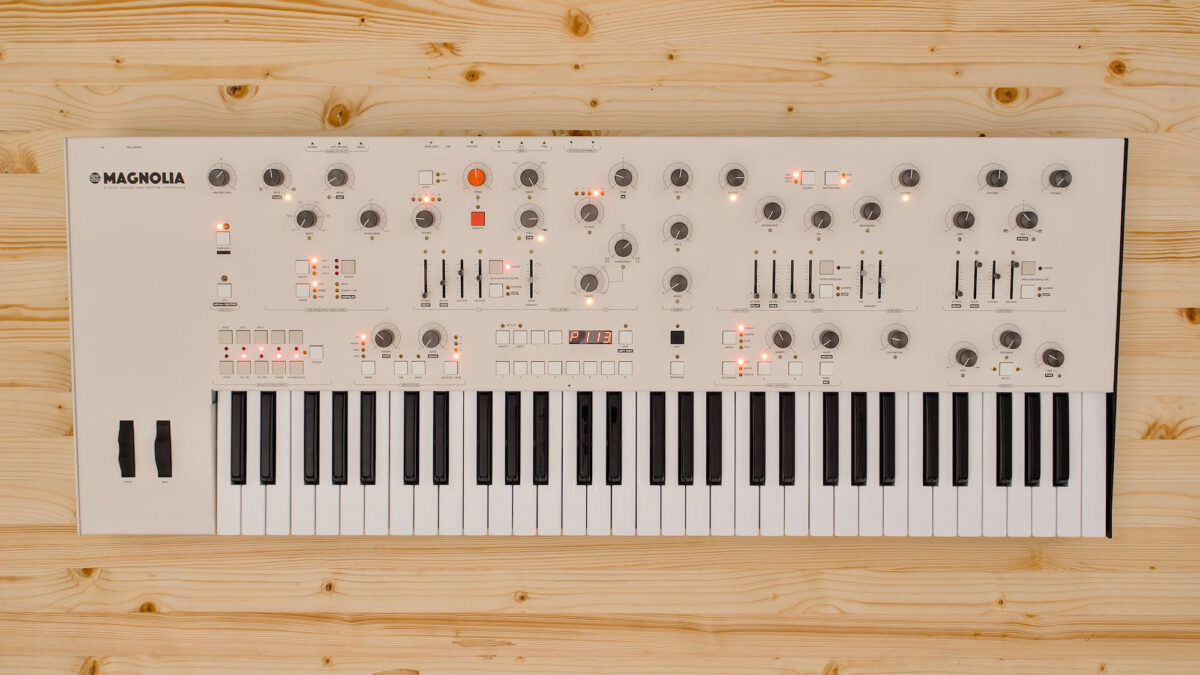
Eight thousand people packed into a Berlin venue, 301 exhibitors from 31 countries crammed into every available corner, and the announcements just kept coming. Superbooth 2025 didn’t just meet expectations—it obliterated them. From the world’s first West Coast polysynth to an acoustic resonator you play with your bare hands, this year’s modular synth showcase delivered hardware that could reshape how we think about electronic sound design for years to come.
Here are the ten Superbooth 2025 modular synth and Eurorack announcements that generated the most buzz on the floor and across the synth community.
1. Frap Tools Magnolia — The First West Coast Polysynth
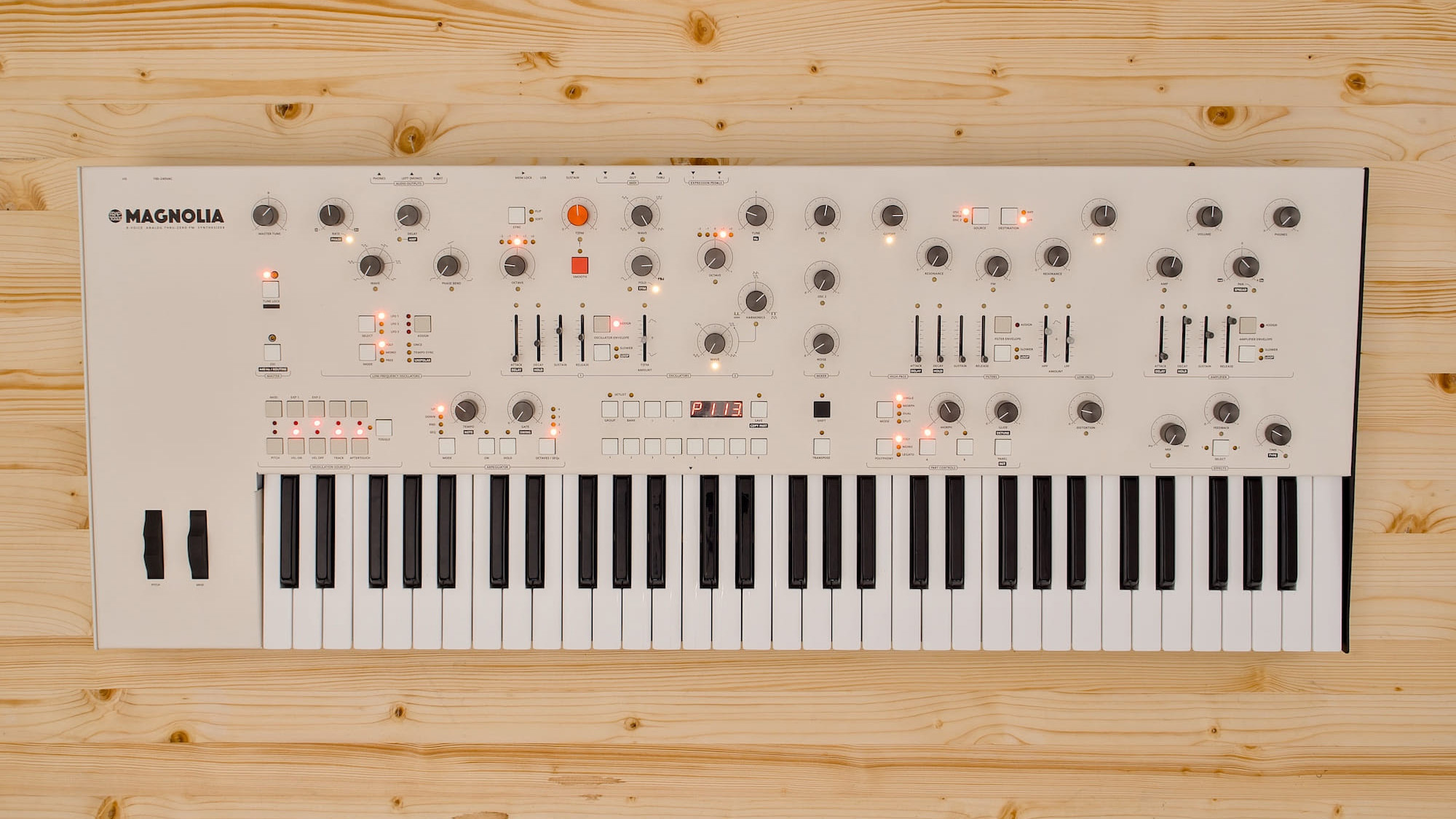
If there was a single product that dominated every conversation at Superbooth 2025, it was the Frap Tools Magnolia. This eight-voice, bi-timbral analog synthesizer is nothing short of a milestone: it’s the first true West Coast-style polysynth ever brought to market. That alone would be noteworthy, but the execution puts it on another level entirely.
The Magnolia offers dual oscillator types per voice—East Coast PWM alongside West Coast wavefolder with flip sync and through-zero FM. The Fatar keybed supports both velocity and polyphonic aftertouch, and the modulation architecture is staggering: three LFOs, three envelopes, and 16 mod sources routed to 38 destinations. Round it out with analog distortion and digital stereo chorus/delay effects, and you have an instrument that bridges decades of synthesis philosophy into one cohesive design.
At EUR 4,199 (USD 4,199 / GBP 3,699), it’s a serious investment—but for a handcrafted Italian polysynth with this depth, the pricing actually feels aggressive. MusicRadar placed it at the top of their best-of list for the show, and it’s easy to see why.
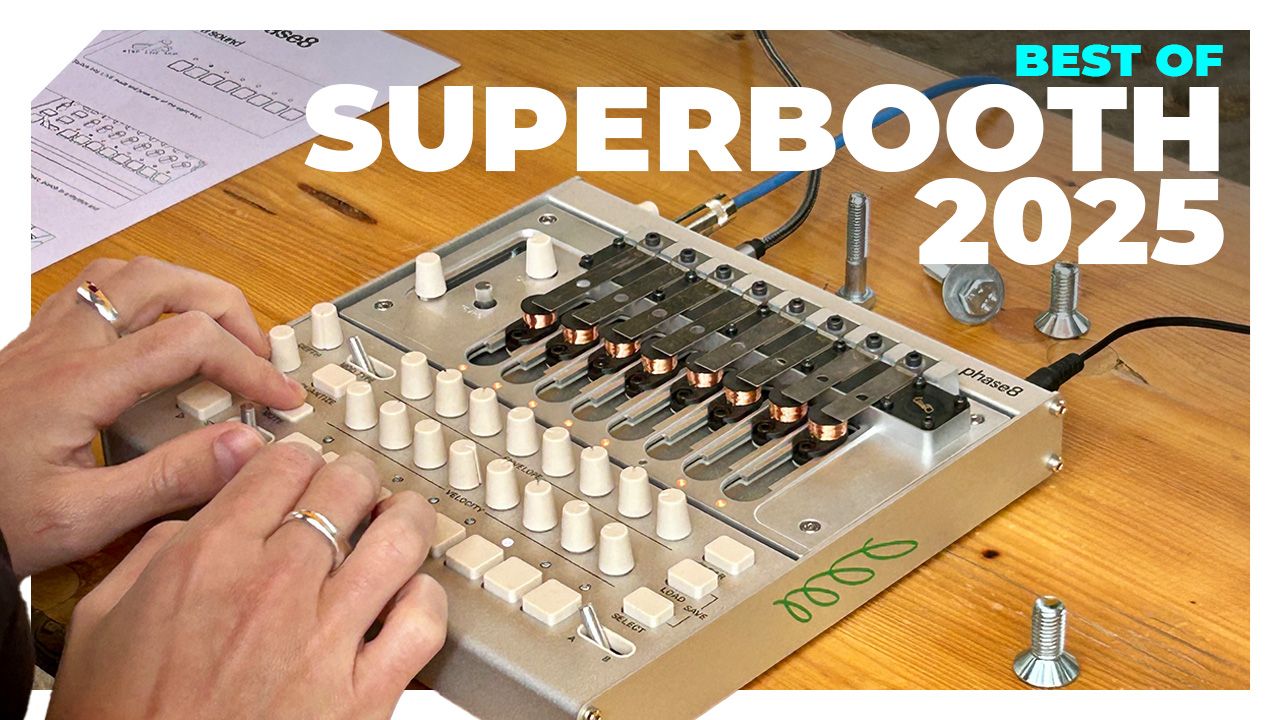
2. Korg Berlin Phase8 — Acoustic Synthesis Meets Analog
Korg’s Berlin R&D division has been quietly developing some of the most unconventional instruments in the company’s history, and the Phase8 might be their boldest move yet. This eight-voice synthesizer blends analog signal generation with actual physical acoustic resonators—metal elements you can touch, mute, and manipulate with your hands or objects to alter the timbre in real time.
Think of it as a prepared piano crossed with an analog synth. The result is a sound palette that simply cannot be replicated in software. As Sound On Sound reported, the Phase8 has been confirmed for production with an early 2026 availability window and a target price under EUR 1,000—remarkably accessible for this level of innovation.
3. Erica Synths x Hexinverter HexDrums — Analog Drums Reborn
The collaboration between Erica Synths and Hexinverter was one of those announcements that had the Eurorack community buzzing well before the show doors opened. HexDrums is a nine-part analog drum machine that revives Hexinverter’s legendary Mutant drum voices—circuits that gained a cult following before disappearing from production.
What makes HexDrums more than a nostalgia play is the signal chain: a Mutant Hot Glue-style compressor and overdrive sit at the output stage, giving the entire drum bus that aggressive, glued character that producers typically need external processing to achieve. For anyone building hardware-centered beats, this could be a serious centerpiece.
4. Make Noise Jumbler — 36 VCAs in One Module
Make Noise has always excelled at modules that sound simple in concept but open up enormous creative territory in practice. The Jumbler follows that tradition perfectly: a six-input, six-output signal combiner packing 36 analog VCAs into a single Eurorack module.
The applications range from straightforward mixing to complex, evolving soundscapes where signals bleed into and modulate each other in unpredictable ways. It’s the kind of module that rewards patching experimentation—exactly what the Eurorack ecosystem thrives on. Pricing has yet to be announced, but the Make Noise community is already plotting how to rearrange their racks.
5. Instruo Seashell — Desktop Monosynth with DAW Integration
Scotland-based Instruo brought the Seashell, a compact analog monosynth that bridges the gap between standalone hardware and computer-based production in an elegant way. Dual analog VCOs with sync and cross modulation feed into a CV-controlled wavefolder and lowpass filter, while a stereo diffusion effect adds spatial depth.
The clever part is the 14-bit digital control engine that handles MIDI, total recall, and—crucially—built-in audio interfacing with a dedicated DAW plug-in. At USD 719 (EUR 749 / GBP 644), it hits a sweet spot for producers who want genuine analog character without leaving their DAW workflow behind.
6. 1010music Bento — Portable Sampling Powerhouse
1010music has carved out a niche with compact, capable instruments, and the Bento takes that philosophy to its most ambitious expression yet. This portable sampling studio packs eight flexible tracks, a 7-inch touchscreen, sixteen responsive pads, granular synthesis, multisample instruments, loop slicing, MIDI control, and real-time sampling into a form factor you can toss in a backpack.
Industry observers noted that the Bento’s touchscreen workflow felt remarkably fluid in hands-on demos—a critical factor for a device that merges sampling, sequencing, and sound design into a single instrument. Pricing hasn’t been announced, but the feature set suggests 1010music is aiming squarely at the Akai MPC and Roland SP competition.
7. Clank Uranograph — Best of Show Winner
Every year, one product at Superbooth captures imaginations in a way nobody predicted. In 2025, that product was Clank’s Uranograph—a five-voice microtonal synthesizer controlled by dual capacitive keyboards inspired by MPE instruments. It won the Best of Show award, and anyone who spent time with it on the floor understood why immediately.
The Uranograph merges the expressive depth of classical acoustic instruments with the limitless tonal possibilities of synthesis. Microtonal tuning systems open up scales and intervals that standard 12-TET keyboards simply cannot access, making it a genuinely unique tool for composers exploring non-Western tonalities, experimental music, or just fresh melodic territory.
8. Intellijel Jellymix, Swells, and Scoops — The Comeback
Intellijel returned to Superbooth after a five-year absence with a lineup that made the wait worthwhile. The Jellymix is a five-channel desktop mixer featuring stereo tilt EQs and low-cut filters on every channel—exactly the kind of hands-on mixing tool that Eurorack setups often lack. Alongside it, the Swells stereo reverb module (with blur and fog algorithms), Scoops dual stereo filter, a compact 2HP Mic module, and an improved 7U Performance Case rounded out a strong product portfolio.
For Intellijel users who’ve been waiting for new hardware, this felt less like a return and more like a statement of intent. The combination of desktop and Eurorack products suggests the company is thinking about complete ecosystems rather than individual modules.
9. Polyend MESS — Multi-Effect Step Sequencer Pedal
Polyend has been on a tear lately, and the MESS (Multi-Effect Step Sequencer) pedal continues that momentum. It blends traditional effects processing with four independent effect tracks and over 120 high-quality effects including reverb, delay, looping, and granular sampling.
What sets MESS apart from yet another multi-effects unit is the step sequencer integration: you can automate effect parameters per step, creating rhythmic, evolving textures that would require multiple pedals and a separate sequencer to replicate otherwise. It’s a concept that should appeal to guitarists, synth players, and sound designers alike.
10. Tiptop Audio x Buchla — 248t MARF and 230t
Tiptop Audio’s ongoing collaboration with Buchla continues to democratize some of the most legendary circuit designs in synthesis history. The 248t is a 72HP Eurorack adaptation of the Buchla Multiple Arbitrary Function (MARF) generator—a module that serves simultaneously as a sequencer and slope generator, creating complex, evolving voltage patterns that define the Buchla sound.
Alongside the 248t, the 230t Triple Envelope Follower brings another essential Buchla building block to Eurorack format. Tiptop also showed new modules in their ART polyphonic ecosystem and a four-channel Resonator, signaling that the Buchla-in-Eurorack vision is becoming a comprehensive system rather than a handful of standalone conversions.
Honorable Mentions from Superbooth 2025
The top 10 barely scratches the surface. Xaoc Devices showed the Oradea, a four-channel CV-controllable analog resonator with the Arad expander for effects processing. Bastl Instruments brought the Kastle 2 Wave Bard, a patchable palm-sized sample player with eight sample slots, pitch control, and a built-in pattern generator. And Doepfer—the company that essentially invented Eurorack—unveiled six new modules including the A-155-2 compact 8-step analog sequencer.
What Superbooth 2025 Tells Us About the Future of Modular Synth
Several trends emerged clearly from this year’s show. First, the line between desktop instruments and Eurorack modules continues to blur—products like the Instruo Seashell and Intellijel Jellymix are designed to work both ways. Second, physical interaction is making a comeback: the Korg Phase8’s acoustic resonators and the Clank Uranograph’s capacitive keyboards suggest designers are looking beyond knobs and patch cables for expressive control.
Third, and perhaps most importantly, the modular synth community is healthier than ever. With MusicTech reporting record-breaking attendance of 8,800+ participants from 31 countries, the market for hardware electronic instruments isn’t just surviving the software era—it’s thriving. And if the products announced at Superbooth 2025 are any indication, the best hardware is yet to come.
Whether you’re building a Eurorack rig from scratch or looking to add that one transformative module, this year’s Superbooth lineup offers something at every price point and creative direction. The challenge isn’t finding something worth buying—it’s narrowing down the list.
Planning a studio build around new Eurorack gear or need help integrating modular synths into your production workflow? Sean Kim brings 28+ years of audio engineering experience to every project.
Get weekly AI, music, and tech trends delivered to your inbox.