GPT-5 Deep Dive: OpenAI’s First Unified Model Merges Speed, Reasoning, and Multimodal Into One
August 4, 2025
Back-to-School Laptop Guide August 2025: 6 Best Picks for Every Budget
August 4, 2025
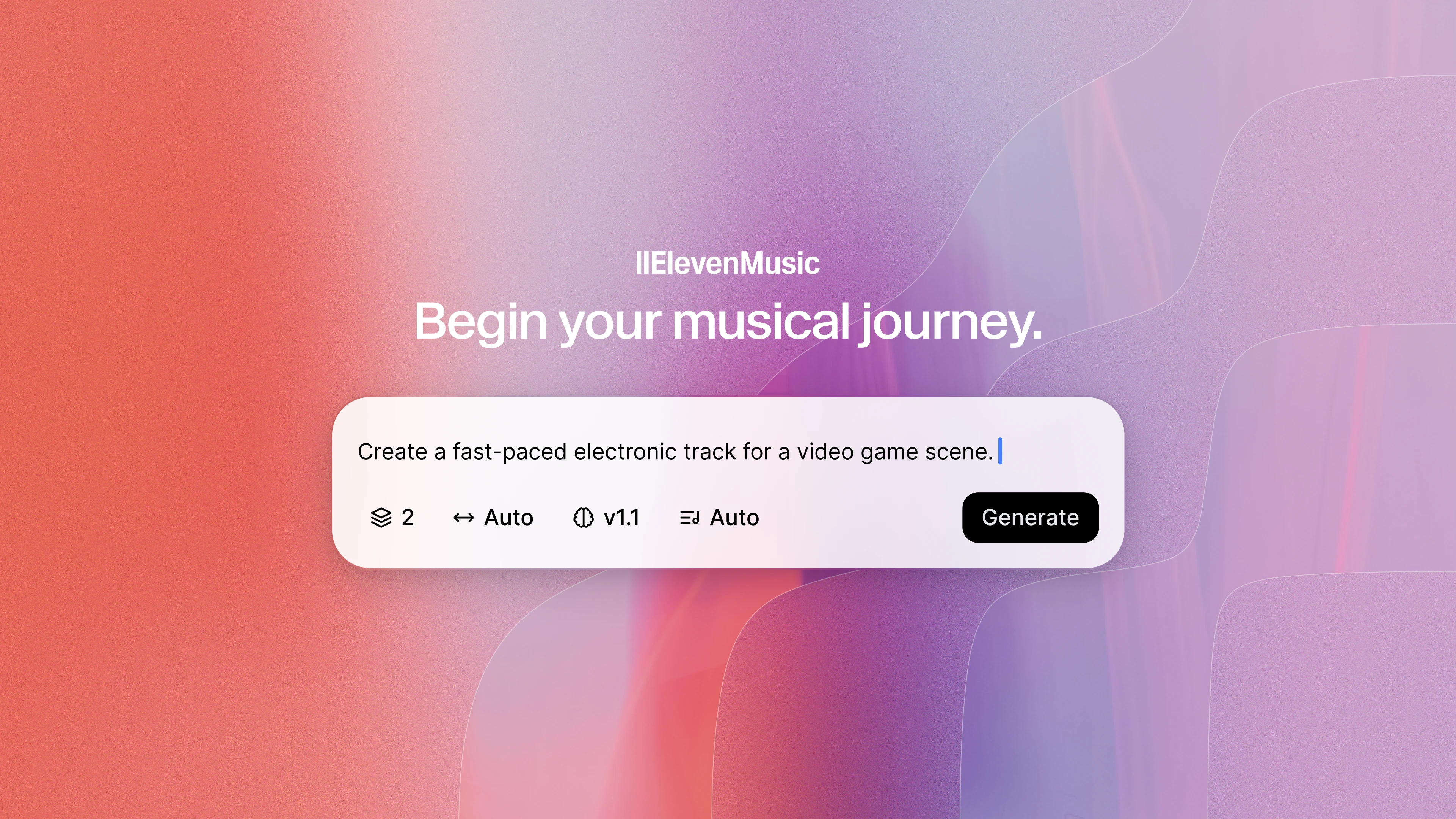
ElevenLabs just dropped a bomb on the AI music world. On August 5, 2025, the voice AI giant launched Eleven Music — the first AI music generator that ships with pre-negotiated licensing deals from Merlin Network and Kobalt Music Group. Meanwhile, Suno’s v4.5 update turned it into a near-DAW with 12-stem separation, and Udio’s Sessions editor finally gave producers a timeline to work with. Three platforms, three philosophies, one question: which one actually deserves your money in August 2025?
The AI Music Generator Comparison Landscape: August 2025
The AI music generation space has never been this competitive. Suno, the current market leader, is riding high on its v4.5 update and WavTool acquisition that brought browser-based DAW capabilities directly into the platform. Udio countered with its Allegro v1.5 model in March and the Sessions timeline editor in June. And now ElevenLabs — a company valued at over $1 billion for its voice synthesis technology — has entered the ring with a commercially licensed music generator that could reshape how creators think about AI-generated music rights.
After testing all three platforms extensively, here’s the breakdown that matters for producers, content creators, and anyone who needs AI-generated music that doesn’t come with a legal asterisk.

Pricing: How Much AI Music Generator Do You Get Per Dollar?
Let’s talk money first, because the pricing structures are wildly different across these three platforms — and that difference tells you a lot about who each tool is actually built for.
Suno AI Pricing (August 2025)
- Free: 50 credits/day (~10 songs), non-commercial, v4.5 model
- Pro: $8/month — 2,500 credits (~500 songs), commercial rights
- Premier: $24/month — 10,000 credits (~2,000 songs), commercial rights
Udio Pricing (August 2025)
- Free: 10 credits/day + 100/month (~3 full songs daily)
- Standard: $8/month — 1,200 credits, editing tools, 6 concurrent generations
- Pro: $24/month — 4,800 credits, style references, bulk downloads
ElevenLabs Music Pricing (August 2025)
- Free: 11 minutes/month
- Starter: $5/month — 22 minutes
- Creator: $22/month — 62 minutes
- Pro: $99/month — 304 minutes, full commercial clearance
The verdict on value: Suno crushes it. At $8/month, you’re getting roughly 500 songs with commercial rights. Udio’s $8 tier gives you significantly fewer credits. ElevenLabs charges per minute rather than per song, and the full commercial license jumps to $99/month — that’s a serious premium for the licensing safety net. If volume matters, Suno wins the AI music generator comparison on pure cost-per-track by a wide margin.
Audio Quality: Blind Test Results Tell a Different Story
Here’s where things get interesting. The platform that wins on price doesn’t necessarily win on sound — and the quality gap depends heavily on what genre you’re working in.
Suno v4.5 produces the most consistently professional-sounding tracks across genres. The mixes are well-balanced, song progressions feel coherent, and the overall production quality has reached a point where tracks could genuinely pass as human-produced demos. With support for over 1,200 musical genres and up to 8-minute track generation, it’s the most versatile option.
Udio’s Allegro v1.5 wins vocal realism in blind listening tests — no contest. If you’re making vocal-forward music, especially in electronic genres, Udio produces crisp, well-mixed output that rivals boutique sample packs. The trade-off? Tracks sometimes feel structurally incoherent, and the platform occasionally generates music in completely different genres than what you requested.
ElevenLabs Eleven Music leverages the company’s voice AI expertise for strong vocal synthesis and delivers well-structured songs with professional-level mixing. However, it’s still the newest entrant — some users report unclear beats and occasionally overpowering vocals. The multilingual vocal capability (English, Spanish, German, Japanese) is a genuine differentiator that neither Suno nor Udio match at this quality level.
Editing Tools: From Text Prompts to Near-DAW Workflows
This is where the three platforms have diverged most dramatically in 2025. We’re no longer just comparing prompt-in, song-out experiences.
Suno’s Song Editor + Stem Separation
Suno’s WavTool acquisition was the game-changer. The v4.5 update brought a visual song editor with drag-and-drop section reordering, Quick Replace for instant section auditions, fade in/out controls, and — the big one — up to 12-stem separation for paid users. You can now export individual vocal, drum, bass, and instrument stems directly to your DAW. Add Vocals lets you layer AI vocals onto your own instrumentals, while Add Instrumentals does the reverse. This is the closest any AI music generator has come to being an actual production tool rather than a novelty.
Udio’s Sessions and Inpainting
Udio launched Sessions in late June 2025 — a waveform-centric editor that gives you a timeline view of your track. Every action (Create, Extend, Remix, Inpaint, Edit) returns two results for fast A/B comparison, with transparent credit usage (2 credits for 32-second pairs, 4 credits for ~130-second “u-130” pairs). The Inpainting feature remains Udio’s crown jewel: select any portion of a track and regenerate just that section based on surrounding context. It’s surgical editing that neither Suno nor ElevenLabs can match at this granularity.
ElevenLabs Section-Based Editing
Eleven Music offers section-level editing with real-time lyric highlighting — you can regenerate specific song sections without re-rendering the entire track. Downloads include full song, vocals/instrumentals split, or individual stems. It’s functional but still behind Suno’s DAW-like editor and Udio’s surgical inpainting. The API access (available to all paid users as of August 20, 2025) is the real power move here — developers can integrate AI music generation directly into their products.
Commercial Licensing: The Make-or-Break Factor
This is where ElevenLabs rewrites the playbook. The legal landscape for AI music in August 2025 is a patchwork of settlements, lawsuits, and regulatory uncertainty — and your choice of platform determines how much risk you carry.
ElevenLabs launched with pre-negotiated licensing deals with Merlin Network (representing the world’s leading independent labels) and Kobalt Music Group (the largest independent music publisher). This makes Eleven Music the first AI music generator explicitly cleared for YouTube monetization without copyright strikes. Film, TV, podcasts, ads, gaming — all covered from day one.
Suno offers commercial rights on Pro ($8/mo) and Premier ($24/mo) plans, but the legal foundation is shakier. Warner Music Group settled with Suno in late 2025, but earlier in August 2025, the copyright landscape remained contentious. The US Copyright Office’s position — that fully AI-generated music cannot receive copyright protection — means Suno-generated tracks exist in a gray zone.
Udio similarly offers commercial use on paid plans. Universal Music Group settled with Udio, bringing some legitimacy, but the same copyright uncertainty applies. If you’re generating music for a commercial project with real budgets on the line, ElevenLabs’ proactive licensing approach offers the cleanest legal position in August 2025.
Who Should Use Which AI Music Generator?
After extensive testing, the recommendation breaks down cleanly by use case:
Choose Suno if: You want the fastest path from idea to finished song. Best for content creators who need volume, beginners exploring AI music, and producers who want to export stems into their existing DAW workflow. The v4.5 editor with 12-stem separation makes it the most production-friendly option.
Choose Udio if: You care most about vocal realism and want surgical control over your tracks. Best for musicians making electronic or experimental music, anyone who needs precise section-level editing via inpainting, and creators who value A/B testing in their workflow. The Sessions editor is genuinely useful once you learn it.
Choose ElevenLabs if: You need bulletproof commercial licensing. Best for film/TV music supervisors, ad agencies, app developers who need API access, and anyone creating music for monetized YouTube content. The multilingual vocal capability is also unmatched if you’re producing for international audiences. The $99/month Pro price is steep, but consider it insurance against copyright claims.
The Bottom Line: AI Music Generators Are Production Tools Now
The most important takeaway from this AI music generator comparison isn’t which platform “wins” — it’s that all three have crossed the threshold from novelty to genuine production utility. Suno’s stem separation means you can treat AI-generated tracks as starting points in a real DAW. Udio’s inpainting lets you fix specific musical moments without starting over. ElevenLabs’ licensing deals mean you can actually ship commercial projects without a lawyer on speed dial.
The shared weakness? Lyrics. All three platforms consistently struggle with authentic lyric writing — the output often signals “AI” immediately. For professional use, plan to write or heavily edit lyrics yourself. AI music generation in August 2025 is an incredibly powerful compositional and production tool. But the human touch still matters, especially where words meet melody.
Exploring AI music tools for your next production project? Whether you need AI-integrated workflows or professional mixing and mastering, Sean Kim has 28+ years of audio expertise to help.
Get weekly AI, music, and tech trends delivered to your inbox.