Elektron Syntakt OS 1.30: SY CHIP, Euclidean Sequencing, and 4 New Machines That Transform Your Groovebox
June 16, 2025
Best Free Drum VSTs June 2025: MT Power Drumkit, Steven Slate SSD5.5, DrumMic’a and 3 More Compared
June 17, 2025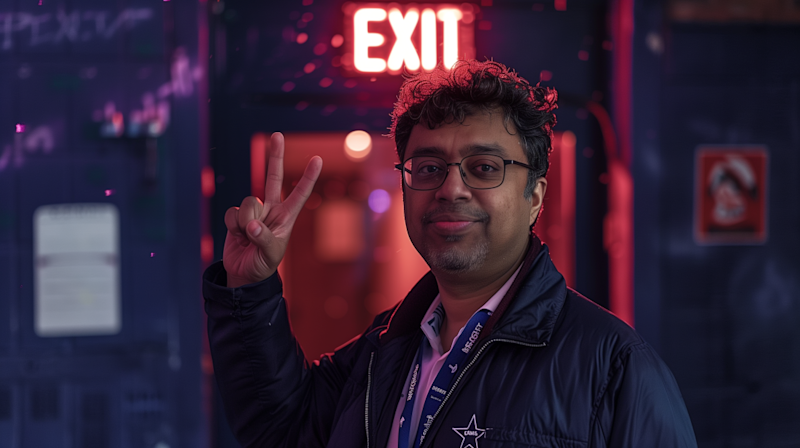
One year ago, the most influential figure in open source AI image generation walked away from his own company — and nobody was sure what would survive. Emad Mostaque’s resignation from Stability AI in March 2024 didn’t just create a leadership vacuum. It triggered a chain reaction that fundamentally reorganized how the world builds, distributes, and monetizes AI-generated imagery. Fifteen months later, the dust has settled enough to see clearly: the Stability AI CEO departure was the best thing that could have happened to open source AI.
Why the Stability AI CEO Departure Was Inevitable
By early 2024, Stability AI was burning through roughly $8 million per month while generating less than $5 million per quarter in revenue. The math simply didn’t work. Investors including Lightspeed Venture Partners and Coatue Management had grown increasingly frustrated with the gap between Mostaque’s ambitious vision and the company’s financial reality. A planned fundraise at a $4 billion valuation had collapsed, and the company reportedly owed $100 million to creditors.
But the financial crisis was only half the story. The real damage was the talent exodus. Key researchers who had actually built Stable Diffusion — Robin Rombach, Andreas Blattmann, and Dominik Lorenz among them — had already left or were preparing to leave. When the people who wrote the code walk out the door, no amount of runway can save you.
On March 22, 2024, Mostaque resigned, posting on X that “you’re not going to beat centralized AI with more centralized AI.” It was a philosophical parting shot — genuine in its conviction, but also a convenient framing for a departure that investors had been pushing for months. COO Shan Shan Wong and CTO Christian Laforte were appointed as interim co-CEOs to steady the ship.
Black Forest Labs and the Rise of FLUX: The Talent That Left Built Something Better
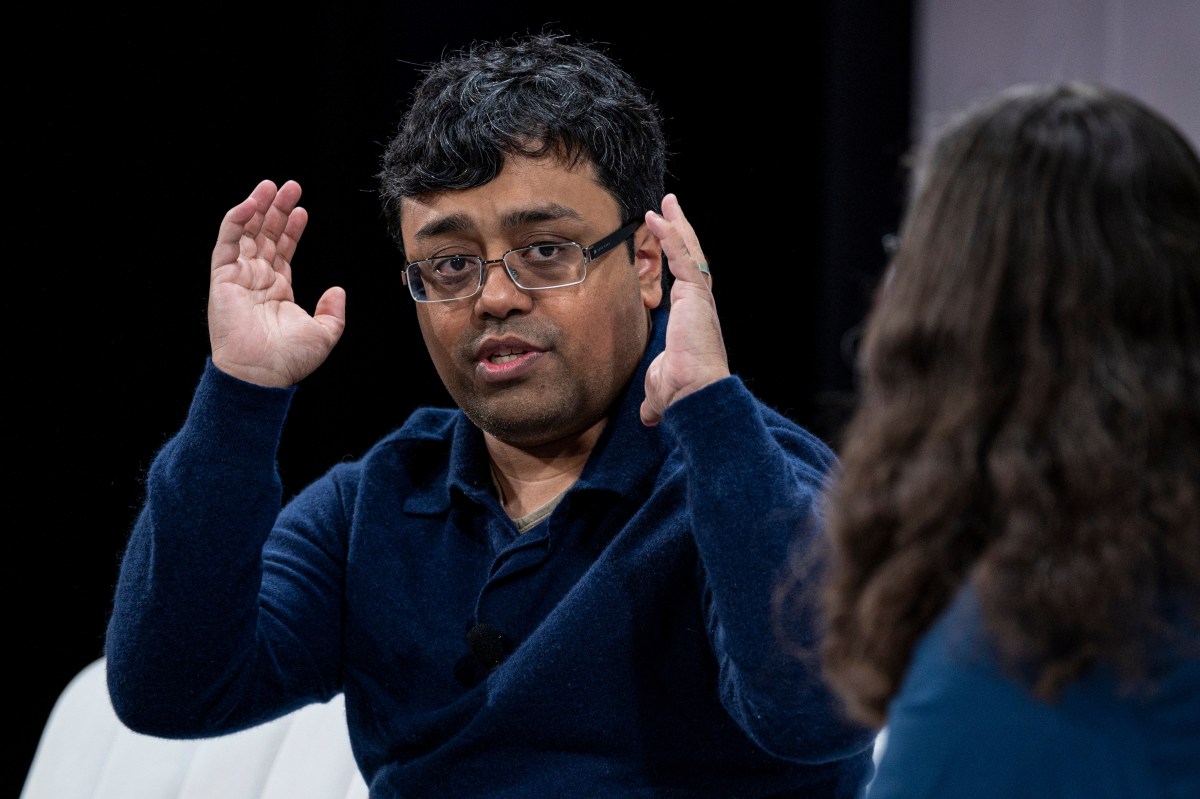
Here’s the part most people missed while watching Stability AI scramble to survive: the researchers who built Stable Diffusion didn’t retire. They started Black Forest Labs, raised $31 million in seed funding from Andreessen Horowitz, and launched FLUX.1 in August 2024.
FLUX arrived in three variants that served different segments of the market brilliantly. FLUX.1 Pro, available via API, targeted commercial users who needed the highest quality. FLUX.1 Dev, released under an open-weight license, gave researchers and developers the freedom to fine-tune and experiment. And FLUX.1 Schnell, released under the Apache 2.0 license, became the truly open source option — fast, free, and unrestricted for any use.
The results spoke for themselves. Within months of its release, FLUX overtook Stable Diffusion in community benchmarks for prompt adherence, hand rendering accuracy, and text generation within images — three areas where SD had long struggled. The irony was thick: the talent drain that nearly killed Stability AI ended up accelerating innovation in the broader open source AI image generation ecosystem.
Black Forest Labs also nailed the business model that Stability AI never figured out. By offering a premium API alongside truly open models, they created a sustainable revenue stream without compromising the open source ethos. It was a vindication of the idea that you can build a profitable company around open source AI — you just need to structure it correctly from the start.
The timing couldn’t have been more significant. While Midjourney remained closed-source and DALL-E 3 was locked behind OpenAI’s API, FLUX gave the open source community a model that could genuinely compete on quality. Artists and developers who had built entire workflows around Stable Diffusion now had a credible alternative — one built by the same minds that created SD in the first place. The LoRA training community rapidly adapted, and within weeks of FLUX’s release, thousands of custom fine-tunes were available on platforms like CivitAI and Hugging Face.
Prem Akkaraju’s Turnaround: Can a Hollywood Executive Save an AI Company?
In June 2024, three months after Mostaque’s exit, Stability AI’s board made what seemed like an unusual choice: they brought in Prem Akkaraju, the former CEO of Weta Digital, as the company’s new CEO. Sean Parker — yes, the Napster and Facebook Sean Parker — came on as Executive Chairman. Then James Cameron joined the board in September 2024. The message was clear: Stability AI was pivoting toward enterprise and creative industry clients.
The strategy shift was dramatic. Under Mostaque, Stability AI had tried to be everything to everyone — an open source champion, a commercial API provider, a research lab, and a consumer product company all at once. Akkaraju narrowed the focus. He raised $80 million in fresh capital, stabilized operations, and began aggressively courting Hollywood studios and enterprise clients who needed reliable, licensable AI image generation tools.
The results by late 2024 were promising. Stability AI reported triple-digit revenue growth by December, though the company hasn’t disclosed exact figures. Stable Diffusion 3.5, released in October 2024, represented a meaningful quality improvement — not a FLUX killer, but a solid competitive offering that proved the company could still ship meaningful research without its original founding researchers.
The Decentralization Paradox: Mostaque Was Right About the Problem, Wrong About the Solution
When Mostaque said “you’re not going to beat centralized AI with more centralized AI,” he identified a real tension in the industry. OpenAI, Midjourney, and Google have massive advantages in compute, data, and talent acquisition. A startup trying to compete head-to-head on their terms — training ever-larger models at ever-greater cost — is fighting a losing battle.
But Mostaque’s proposed alternative — some vague notion of “decentralized AI” — never materialized into a concrete product or business strategy while he was at the helm. What actually happened was more interesting. The open source AI image generation community decentralized itself organically. FLUX became the new foundation model of choice. ComfyUI and other open source toolchains matured rapidly. ControlNet, IP-Adapter, and dozens of community-built extensions created an ecosystem that no single company controlled.
The decentralization Mostaque envisioned happened — just not the way he planned, and not under his leadership. It happened because talented researchers left his company, built better tools, and released them openly. The market, not a corporate strategy deck, figured out how to decentralize AI image generation.
What This Means for the Future of Open Source AI Image Generation
As of mid-2025, the open source AI image generation landscape is healthier and more competitive than it has ever been. Here’s the current state of play:
- FLUX has become the default choice for quality-focused applications, with an active community of fine-tuners and extension developers building on top of it
- Stable Diffusion 3.5 remains widely used, particularly in applications where the SD ecosystem’s mature tooling and extensive LoRA library give it an advantage
- Stability AI under Akkaraju has found a viable niche in enterprise and creative industry services, moving away from the “be everything” strategy that burned through hundreds of millions
- Black Forest Labs has proven that open source AI can be a sustainable business when paired with premium API offerings
- The community ecosystem — ComfyUI, A1111, Forge, and countless extensions — has never been more robust or accessible
The lesson from the Stability AI CEO departure isn’t that open source AI is doomed or saved. It’s that the health of an open source ecosystem doesn’t depend on any single company or leader. When Mostaque left, many feared it would be the end of open source AI image generation’s golden age. Instead, it turned out to be a necessary correction — a moment where concentrated, poorly managed resources were redistributed across a broader, more resilient ecosystem.
For creators, developers, and businesses building on open source AI image generation tools today, the practical takeaway is clear: diversify your dependencies. Don’t bet everything on one model or one company. The tools available right now — FLUX, SD 3.5, and whatever comes next — represent a competitive market that benefits everyone. And that competitive market exists precisely because one company’s crisis forced the ecosystem to grow up.
There’s also a broader industry dynamic at play. The enterprise market for AI image generation is expanding rapidly. Film studios, advertising agencies, game developers, and e-commerce platforms all need reliable, scalable, and legally defensible AI image generation. Stability AI’s pivot under Akkaraju positions it to serve this market, while Black Forest Labs and the open source community serve the researcher, indie developer, and creator segments. This natural market segmentation means there’s room for multiple winners — a far healthier situation than the 2023 landscape where everyone was competing for the same users with the same approach.
The Stability AI saga is far from over. Akkaraju’s enterprise pivot still needs to prove long-term profitability. Black Forest Labs needs to sustain its momentum against well-funded competitors. And new challengers — from Chinese labs releasing competitive open models to major tech companies open-sourcing their own image generators — are entering the space constantly. But one thing is certain: the open source AI image generation movement is no longer dependent on any single point of failure. And that’s exactly how it should be.
Want to stay ahead of the shifts reshaping AI and creative technology? Get weekly analysis on the trends that matter.
Get weekly AI, music, and tech trends delivered to your inbox.