AI Image Generation September Roundup: FLUX 1.1 vs SDXL vs Midjourney v7 — The Definitive Comparison
September 19, 2025
Pixel Buds Pro 2 Feature Drop: 4 AI-Powered Upgrades That Make These Earbuds Feel Brand New
September 19, 2025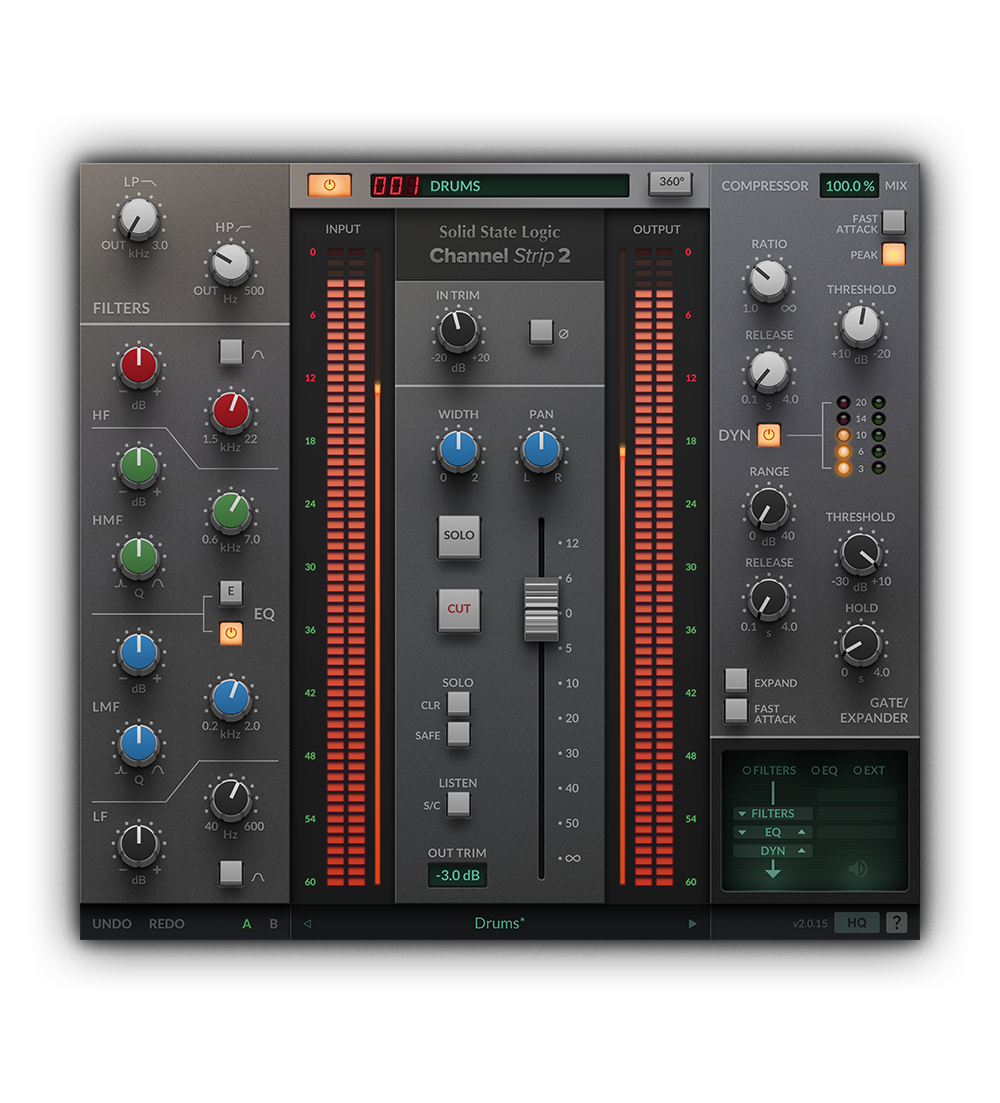
SSL finally did what every mix engineer has been wishing for. SSL Native Channel Strip 2 puts the E Series and G Series EQ modes from the legendary 9000K console into a single plugin — switchable with one click. This is not just a version bump. It is a fundamental rethinking of how we access SSL console tone inside the DAW, and with AES 2025 just around the corner, the timing could not be better to break down what this plugin actually delivers and where it fits in SSL’s rapidly expanding plugin ecosystem.
SSL Native Channel Strip 2: Two Console Personalities, One Plugin
The SSL 9000K console, introduced in 1994, was SSL’s flagship large-format desk. What made it special was that it inherited the EQ characteristics of both the earlier 4000E and 4000G consoles. SSL Native Channel Strip 2 faithfully recreates this duality, giving you access to both E Series and G Series EQ modes within the same instance.
The E Series EQ operates on a Constant-Q principle. Regardless of how much gain you apply — whether you are boosting 2dB or 14dB — the bandwidth remains the same. This makes E Series mode exceptionally precise. When you need to notch out a problematic resonance in a vocal at 3.2kHz, you know the Q will stay exactly where you set it. The result is surgical accuracy that has made the 4000E console a studio standard for decades.
The G Series EQ uses a Variable-Q design. As you increase the gain, the Q narrows automatically. Boost a little and you get a broad, gentle lift across a wide frequency range. Boost more aggressively and the plugin focuses the energy into a tighter band. This proportional behavior is what gives the G Series its famously musical character — the EQ seems to “know” what you want, tightening up when you push harder and staying smooth when you are making subtle adjustments.
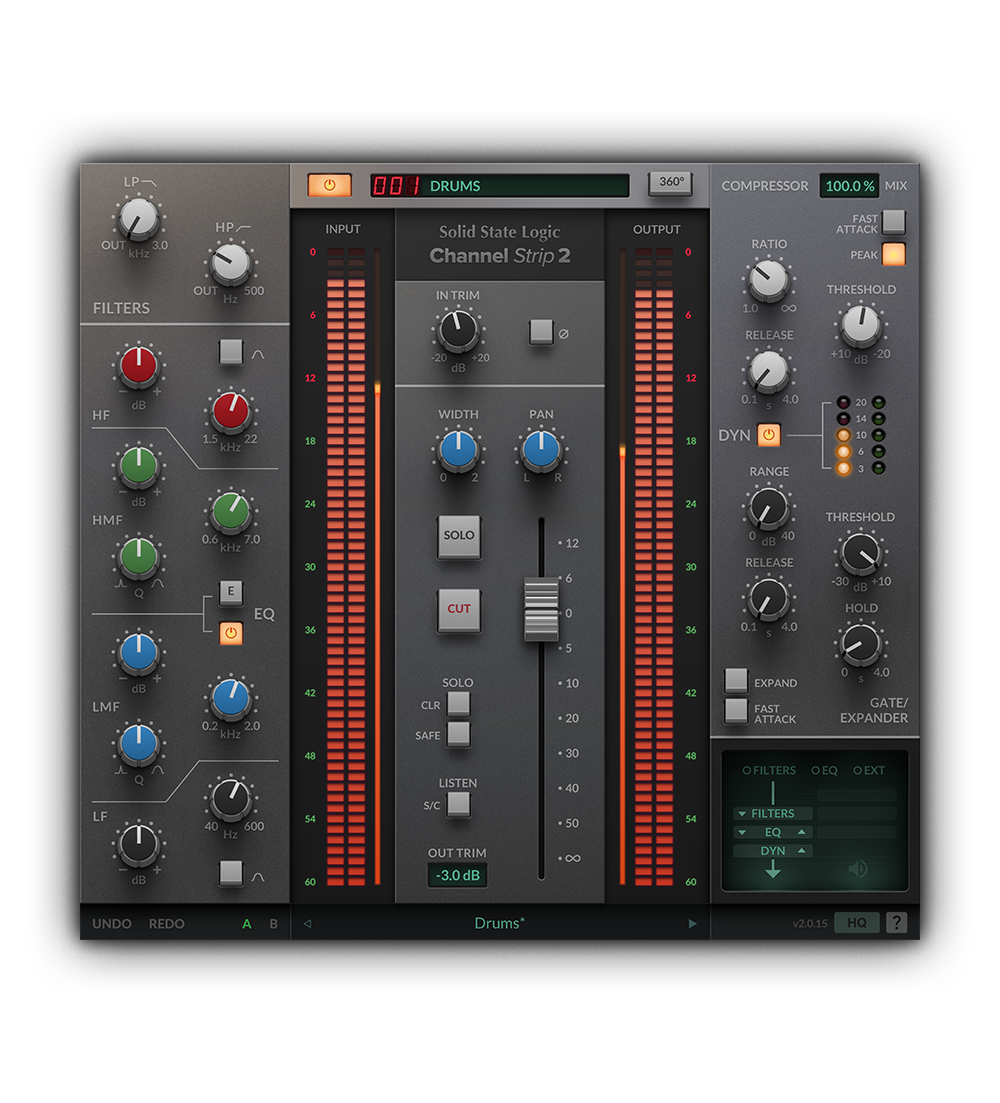
” alt=”SSL Native Channel Strip 2 plugin interface showing E Series and G Series EQ switching”/>
Under the Hood: Key Features of SSL Native Channel Strip 2
The EQ mode switching is the headline feature, but SSL Native Channel Strip 2 is a complete channel strip that handles everything from input to output. Here is what you are working with.
4-Band Parametric EQ with Anti-Cramping: Each of the four bands offers independent frequency, gain, and Q controls. SSL’s Anti-Cramping technology ensures the EQ curves remain accurate near the Nyquist frequency — a common weak point in digital EQ implementations where high-frequency curves tend to droop and compress. This means your 12kHz shelf boost actually behaves like a 12kHz shelf boost, not a skewed approximation.
Dynamics Section with Soft/Hard Knee: The compressor and expander/gate deliver the fast, punchy dynamics processing SSL consoles are known for. The soft knee option provides transparent gain control for bus processing, while hard knee gives you that aggressive, in-your-face compression that can make a snare drum cut through any mix. The gate section is equally capable, with adjustable threshold and range for clean drum editing or creative gating effects.
HQ Oversampling Mode: When enabled, HQ mode increases the internal processing resolution, minimizing aliasing artifacts — particularly noticeable when applying aggressive high-frequency boosts or heavy compression. The CPU hit is real, so the practical workflow is to mix with HQ off and enable it across your session before the final bounce. On critical tracks like lead vocals or mix bus, you might want to keep it on throughout the session.
Output Section: Added in the v2 update, this section includes fader, pan, and stereo width controls. It transforms the plugin from a processor into a true console channel — you can run your entire signal path through a single SSL Native Channel Strip 2 instance, from input gain through EQ and dynamics to final level and panning. The price point sits at $149.
E Series vs G Series in Practice: When to Use Each Mode
Understanding the technical differences is one thing. Knowing when to reach for each mode during an actual mix session is where the real value lies.
Reach for E Series when: You need to surgically remove a resonance without affecting surrounding frequencies. A vocal with a harsh ring at 2.8kHz is the textbook case — E Series lets you notch it out with precision because the Q stays consistent regardless of gain. E Series also excels at precise attack enhancement on drums and percussion, where you want to boost a narrow frequency band without coloring the surrounding spectrum. For mastering work requiring subtle tonal adjustments, E Series gives you the control to make 0.5dB moves that translate exactly as intended.
Reach for G Series when: You want to add presence and body to a guitar, thicken a synth pad, or apply broad tonal shaping to a mix bus. The Variable-Q design means a gentle 3dB boost at 3kHz will give you a wide, natural-sounding presence lift, while a more aggressive 8dB boost will focus the energy more tightly. This makes G Series particularly effective for creative sound shaping — the EQ adapts its behavior to match the intensity of your moves. For adding air to a vocal with a high shelf, G Series delivers that silky top-end without harshness.
The real power of SSL Native Channel Strip 2 is the ability to A/B these modes on the same source instantly. Load it on a vocal track, dial in your EQ settings, then flip between E and G to hear which character serves the song better. No loading a second plugin, no copying settings — just click and compare. This workflow acceleration alone justifies the plugin for anyone who takes their mixing seriously.
SSL’s 2025 Console Emulation Lineup: 4K B, 4K E, 4K G, and Channel Strip 2
SSL has been methodically building out a complete console emulation portfolio throughout 2025, and understanding the full lineup puts Channel Strip 2 in proper context.
SSL 4K E Channel Strip models the 1979 4000E console — the desk that put SSL on the map. It offers Brown Knob (musical, broad strokes) and Black Knob (surgical, tight Q) EQ variants with Constant-Q mid bands. The character is aggressive and forward, making it a go-to for rock and pop vocals that need to sit right at the front of a mix. The dynamics section captures the specific VCA characteristics of the original gold can compressor.
SSL 4K G Channel Strip dropped in July 2025 at $149 ($99 intro) and models the 1987 4000G console. This one gives you Pink 292 and Black 242 EQ flavors — both Variable-Q designs but with distinct tonal personalities. The HMF x3 and LMF ÷3 selectors extend the frequency range of the mid bands, giving you more reach than the original hardware. The dynamics section is tighter and more controlled than the 4K E, reflecting the refined engineering of the later console.
SSL 4K B Channel Strip goes all the way back to the 1976 4000B — the original SSL console. Its defining characteristic is the dbx 202 Black Can VCA compressor, which has a distinctly different compression character from the later SSL designs. For engineers chasing that raw, early SSL sound, this is the one.
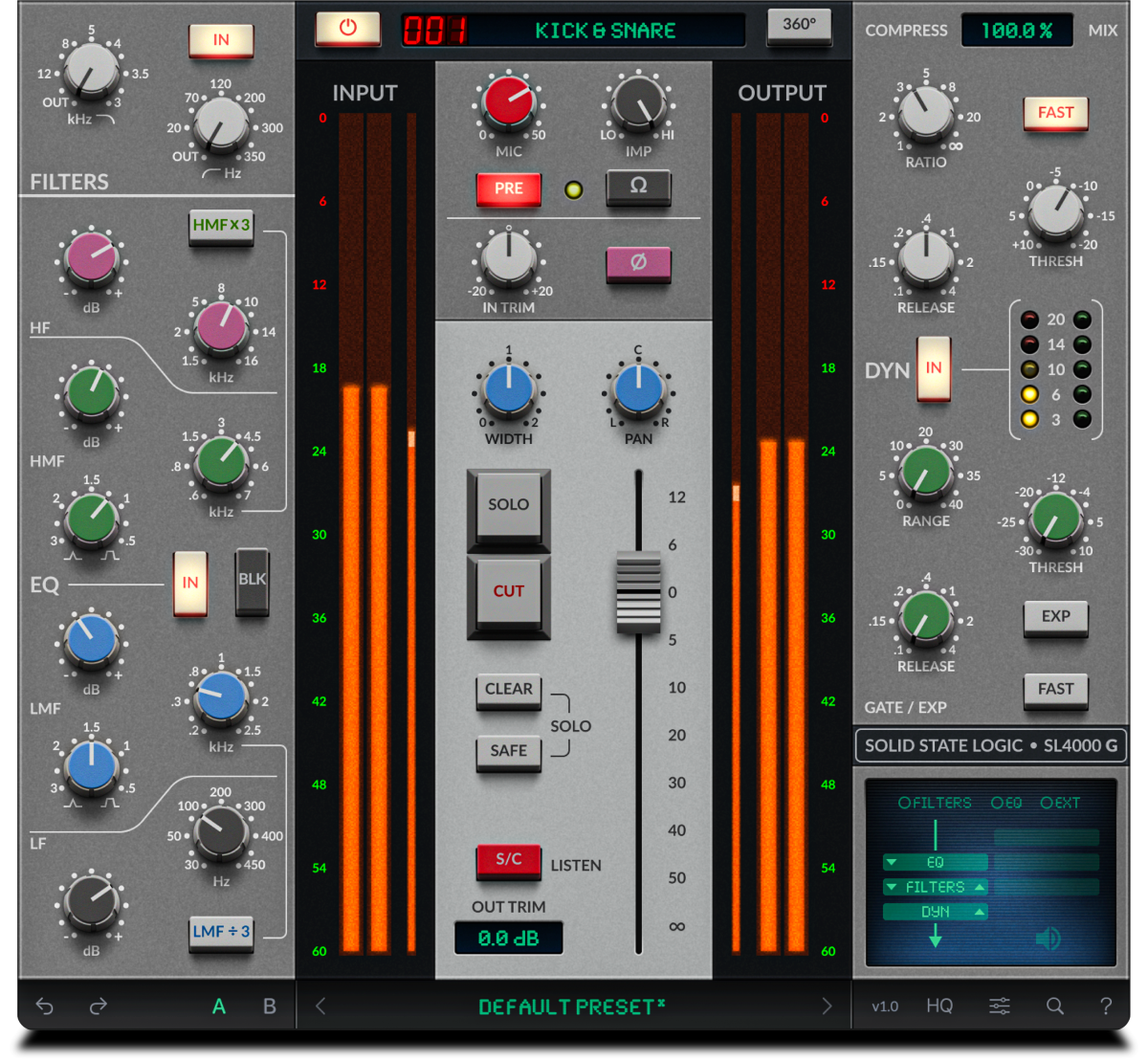
” alt=”SSL Native Channel Strip 2 and SSL 4K plugin lineup comparison E Series G Series”/>
Choosing the Right SSL Plugin: Channel Strip 2 vs the 4K Series
With four console emulations in the lineup, the obvious question is: which one should you buy? The answer depends on what you prioritize in your workflow.
Go with SSL Native Channel Strip 2 if you want maximum flexibility from a single plugin. The 9000K was SSL’s most refined console, incorporating lessons learned from every previous desk. Channel Strip 2 reflects this — it sounds modern, clean, and precise, with the added versatility of E/G switching. If you are buying one SSL plugin and need it to handle everything from pop vocals to electronic music to acoustic recordings, this is the safe and smart choice.
Go with a specific 4K plugin if you are after the authentic vintage character of a particular console era. The 4K E and 4K G are not just “modes” — they are deep emulations of specific hardware, capturing the unique circuit topology, noise characteristics, and saturation behavior of each console. The 4K E’s aggressive midrange push sounds different from Channel Strip 2’s E mode because it is modeling different hardware. Same philosophy, different execution, different vibe.
The most practical approach for a working mix engineer is to use Channel Strip 2 as your default workhorse across most tracks, then bring in the 4K series for specific tonal goals. Put the 4K G on your drum bus for that tight, punchy compression. Drop the 4K E on your lead vocal for aggressive midrange presence. Let Channel Strip 2 handle everything else with its clean, flexible processing. This hybrid workflow gives you the best of all worlds — the versatility of the 9000K and the vintage character of the 4000 series, all within the same session.
What SSL’s Plugin Strategy Means for Mixing in 2025
Stepping back and looking at the big picture, SSL is doing something ambitious. They are systematically digitizing their entire console heritage — from the 1976 4000B through the 1994 9000K — and making each era’s sound accessible for $149 per plugin. Check the SSL Channel Strip Guide for the full breakdown of each console’s character.
For mix engineers, this means something that was genuinely impossible even a decade ago: the ability to move between console eras within a single session. You can have the raw aggression of a 4000E on one track, the silky musicality of a 4000G on another, and the modern precision of a 9000K on your bus — all in the same project. The SSL console sound, once locked behind six-figure hardware and premium studio bookings, is now available to anyone with a DAW and $149.
SSL Native Channel Strip 2 sits at the center of this lineup, and for good reason. It is the most versatile option, covering the widest range of mixing scenarios with its E/G switching, HQ oversampling, and complete channel strip functionality. Whether you are mixing a lo-fi bedroom pop track or a full orchestral score, it adapts. The 4K series plugins are the specialists — reach for them when you need a specific vintage flavor. Together, they represent the most comprehensive SSL mixing toolkit ever available in plugin form, and that is something worth paying attention to as we head into AES this September.
Looking for professional mixing, mastering, or Dolby Atmos production using SSL console workflows? Greit Studios can help.
Get weekly AI, music, and tech trends delivered to your inbox.