GitHub Copilot Workspace Launch: 7 Things That Change How Developers Write Code in 2025
May 19, 2025
Razer Blade 16 RTX 5080 Review: $1,000 Cheaper Than the 5090 — But How Much Performance Do You Actually Lose?
May 19, 2025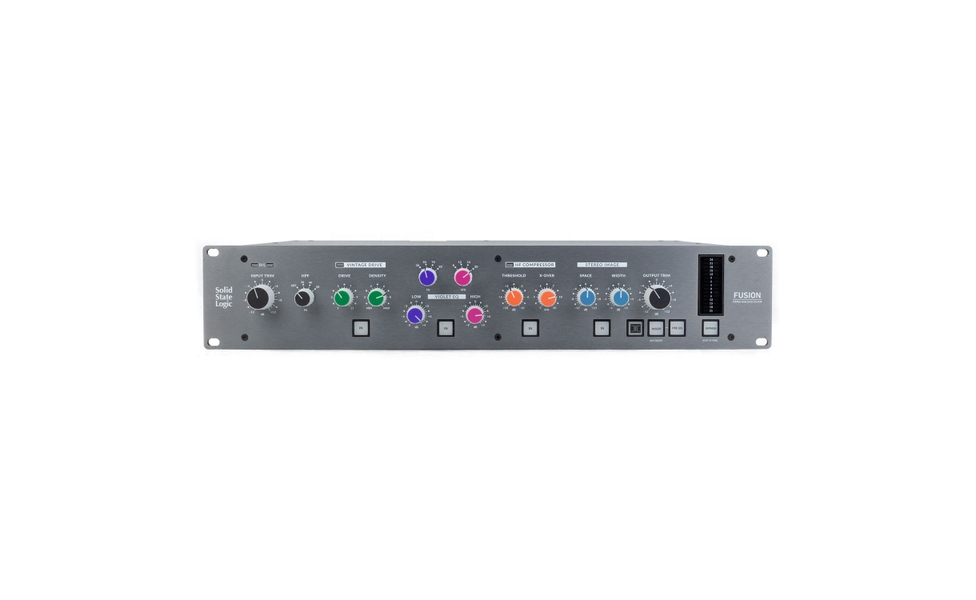
Stop scrolling through plugin emulations. After 25 years without a new analog EQ design, SSL Fusion dropped into the mastering world and reminded everyone what real copper, iron, and transistors sound like when they’re engineered by the team behind the most recorded console in history. Six processing sections. One 2U box. Zero DSP. Here’s why it matters.
What Makes the SSL Fusion Different From Every Other Outboard Box
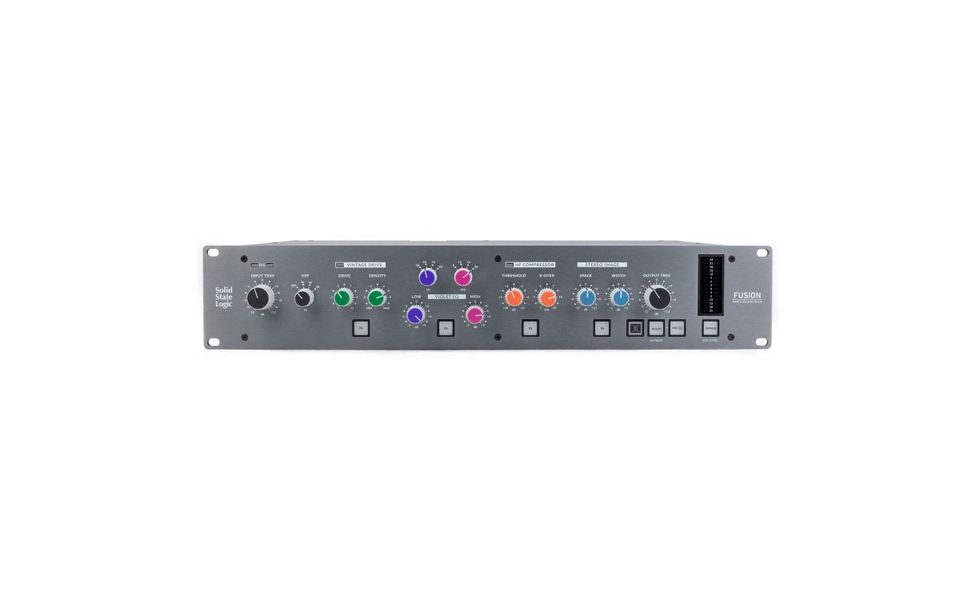
The SSL Fusion is not a channel strip. It’s not a compressor. It’s not an EQ in the traditional sense. It’s a stereo analog coloration processor — six independent sections that each add a distinct sonic character to your signal. Think of it as a palette of analog textures that you can stack, combine, or use individually across your mix bus or mastering chain.
What separates the Fusion from competing outboard units is the philosophy behind it. Where a Neve MBP gives you one tonal signature and an Elysia Xpressor gives you surgical precision, the Fusion gives you six different flavors in a single 2U rackmount. Each section can be bypassed independently, so you can engage exactly what you need for a given session.
The build quality reflects SSL’s pedigree. According to measurements published in Sound On Sound’s review, the Fusion delivers THD+N below 0.004% in bypass, a dynamic range of 117dB, bandwidth stretching from 5Hz to 180kHz, and headroom of +27.5dBu. Channel crosstalk sits at approximately 110dB at 20kHz. These are reference-grade specifications that put the Fusion in serious mastering territory.
The 6 SSL Fusion Processing Sections: A Deep Dive
1. Vintage Drive
This is the section that gets the most attention, and for good reason. Vintage Drive introduces harmonic saturation that ranges from subtle warmth to aggressive grit. At lower settings, it adds the kind of analog “glue” that plugin developers have spent decades trying to emulate. Crank it up and you get a character that sits somewhere between tape saturation and tube overdrive. Sound On Sound’s Hugh Robjohns identified this as one of the Fusion’s standout features, and after spending time with the unit, it’s easy to understand why. The Drive control interacts with your input level in a way that feels organic — it responds to dynamics rather than just applying a static effect.
2. Violet EQ
Here’s the headline spec: the Violet EQ is SSL’s first new analog EQ circuit in over 25 years. That’s not marketing copy — it’s a genuinely new topology. It provides broad, musical shelving EQ at high and low frequencies. The curves are wide and gentle, designed for mastering applications where you’re shaping the overall tonal balance rather than surgical problem-solving. The low shelf adds weight without mud. The high shelf adds air without harshness. It’s the kind of EQ that makes you reach for it on every session because it just makes things sound better.
3. HF Compressor
This is where the Fusion gets genuinely creative. The HF Compressor is a frequency-selective dynamics processor that tames harsh high frequencies without dulling the overall mix. If you’ve ever fought with sibilance in a vocal-heavy mix or tried to control cymbal splash in a dense arrangement, this section solves the problem at the mix bus level. It’s not a de-esser — it’s more like a dynamic EQ that operates in the analog domain. The threshold and ratio controls are simple, but the results are sophisticated.
4. Stereo Image
The Stereo Image section uses a true analog mid-side circuit — not a digital matrix, not a plugin simulation, but real analog M-S processing. You can widen or narrow the stereo field, and because it’s operating in the analog domain, the phase relationships remain pristine. This matters enormously in mastering, where even subtle phase issues can collapse a mix on mono playback systems. The Fusion also provides an M-S insert point, allowing you to patch external processors into the mid or side chains independently.
5. SSL Transformer
A custom SSL-designed transformer that adds weight, density, and low-end saturation when engaged. Transformers have always been a secret weapon in analog audio — they introduce subtle harmonic content and slight compression that makes signals feel more solid and present. The Fusion’s transformer section is switchable, so you can A/B its effect instantly. On bass-heavy material, the difference is immediately audible: low end becomes tighter and more defined without any EQ adjustment.
6. The Hidden LMC (Listen Mic Compressor)
This is the easter egg. SSL included a version of their legendary Listen Mic Compressor — the aggressive, punchy compressor circuit originally designed for the studio talkback mic on SSL consoles. Engineers discovered decades ago that this circuit sounded incredible on drums and parallel compression buses. On the Fusion, it’s accessible as a sixth processing option, giving you access to that unmistakable SSL pumping character directly in your stereo bus chain.
SSL Fusion in Professional Studios: Real-World Results
The Fusion has found its way into some of the world’s top studios. According to SSL’s own documentation, 8-time Grammy winner Manny Marroquin at Larrabee Studios in Los Angeles uses the Fusion on synths, melodic lines, and backing vocals. Marroquin described it as “like having 3-4 plugins in one,” praising the depth it adds without overprocessing. He reportedly wanted a second unit for Studio B — which tells you everything about how quickly it became essential to his workflow.
As noted in Tape Op’s review, the Fusion’s strength lies in its simplicity: five individual processing sections (plus the hidden LMC) with straightforward controls that deliver results quickly. For busy professional studios where time is money, the ability to dial in analog character without menu-diving or recalling complex settings is a genuine workflow advantage.

Specs and Connectivity
For the spec-minded engineers, here’s what you’re working with:
- Format: 2U rackmount stereo analog processor
- I/O: Balanced XLR with ±12dB input/output trim
- Filter: 3rd-order high-pass filter
- Dynamic Range: 117dB
- THD+N: Below 0.004% (bypass)
- Bandwidth: 5Hz to 180kHz
- Maximum Headroom: +27.5dBu
- Crosstalk: ~110dB at 20kHz
- M-S Insert: External processor patching for mid/side chains
- Street Price: Approximately $3,499 (via Sweetwater)
How the SSL Fusion Compares to the Competition
At the $3,499 price point, the Fusion occupies an interesting position. Let’s look at the landscape:
Tegeler Audio Manufaktur Creme RC offers a Pultec-style EQ combined with a VCA bus compressor and remote recall capability. It’s a complementary tool rather than a direct competitor — where the Fusion gives you six color options, the Creme RC gives you deep control over two specific processes.
Neve MBP (Master Bus Processor) carries the Neve console legacy and delivers a distinctly different tonal character. If you want that classic Neve warmth and weight, the MBP is your tool. But it doesn’t offer the same breadth of processing options as the Fusion.
Elysia Xfilter and Xpressor represent the German precision approach — modular units that excel at specific tasks. Together they might match the Fusion’s feature set, but you’re buying two units and using more rack space.
The Fusion’s unique advantage is versatility in a single unit. No other box on the market gives you saturation, EQ, frequency-selective compression, stereo imaging, transformer coloring, and parallel compression all in 2U. Whether that versatility matters more than the depth of a dedicated unit depends entirely on your workflow.
My Take: What 28 Years in Audio Taught Me About This
After nearly three decades in audio production, I’ve watched the industry swing back and forth between analog and digital more times than I can count. Every few years, someone declares analog dead, and every few years, a product like the SSL Fusion proves them wrong. But here’s the thing most reviews won’t tell you: the Fusion isn’t about analog versus digital. It’s about workflow.
In my experience, the biggest advantage of having a dedicated analog color box in your chain isn’t the sound — it’s the decision-making speed. When I’m working on a mix and I need warmth, I don’t want to audition 15 saturation plugins. I want to reach for a knob, turn it, and hear the result immediately. The Fusion delivers exactly that kind of tactile, immediate creativity. Six tools, zero latency, no presets to scroll through. That’s where the real value lives.
The HF Compressor section alone would justify keeping this unit in a mastering chain. I’ve seen too many mixes come through with harsh, brittle top end from overzealous high-frequency processing in the box. The Fusion’s HF Compressor handles that problem elegantly — it’s the kind of tool that solves a problem you didn’t realize you had until you hear the result. And the Violet EQ’s broad curves are genuinely musical in a way that most digital EQs still struggle to match, despite all the advances in analog modeling.
If you’re running a hybrid studio and you can only afford one outboard stereo processor, the SSL Fusion should be at the top of your list. Not because it’s the best at any single thing, but because it’s remarkably good at six different things — and that versatility is worth more than perfection in one domain.
Final Verdict: Who Should Buy the SSL Fusion?
The SSL Fusion is ideal for hybrid studio owners who want a Swiss Army knife of analog color. If you’re a mastering engineer looking for subtle tonal shaping tools, a mix engineer who wants analog character on your bus without committing to a single flavor, or a producer building a compact but capable outboard rack — this is the unit that covers the most ground per rack unit.
At $3,499, it’s not cheap. But when you consider that it replaces multiple standalone processors and does so with SSL-grade build quality and specifications, the price-per-function ratio is actually competitive. The Fusion isn’t about making your mixes louder or more compressed. It’s about adding the analog texture, dimension, and character that separates professional releases from bedroom productions. And sometimes, that’s exactly the difference that matters.
Looking for professional mixing, mastering, or Dolby Atmos services to complement your analog processing chain?
Get weekly AI, music, and tech trends delivered to your inbox.