Music Copyright Basics for Producers: Sampling, Licensing, and AI in 2025
July 24, 2025
Runway Gen-3 Alpha Commercial License: Everything Brands and Agencies Need to Know About AI Video Rights
July 25, 2025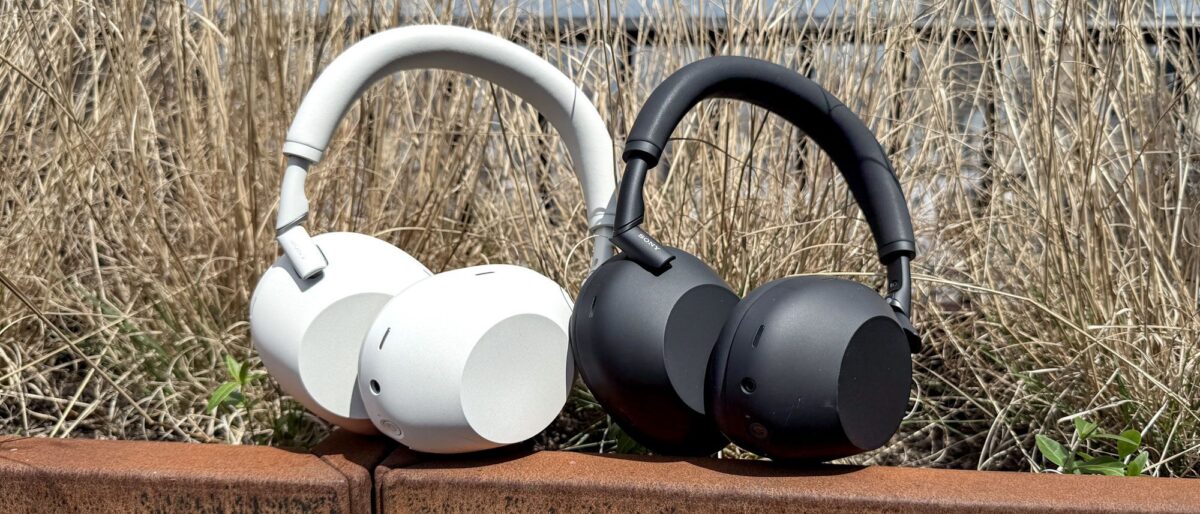
Two months in, and I still reach for the Sony WH-1000XM6 every single morning. After testing dozens of noise-cancelling headphones over the years — from the original XM3 that started the revolution to last year’s Bose QC Ultra refresh — Sony’s latest flagship has done something remarkable: it made me forget I was wearing headphones at all.
Sony WH-1000XM6 Review: What’s Actually New
Sony launched the WH-1000XM6 on May 15, 2025, at $449 — a $50 bump over the XM5’s original retail price. That price hike raised eyebrows, but after living with these headphones daily since launch, the upgrades justify every dollar. The headline improvements center around three areas: a fundamentally new processor, a redesigned microphone array, and the return of the foldable form factor that XM5 owners desperately missed.
The new HD Noise Cancelling Processor QN3 is the real star here. Sony claims it’s seven times faster than the QN1 chip that powered the XM5, and in practice, the difference is immediately noticeable. The QN3 processes ambient sound data from all 12 microphones simultaneously in real-time — up from 8 microphones on the XM5 — creating a noise-cancelling field that adapts to your environment with almost zero latency.
Noise Cancellation: The New Benchmark
Let’s address the biggest question first: is the Sony WH-1000XM6 noise cancellation actually better? The short answer is yes, but with nuance. In my testing across subway commutes, open-plan offices, and a transatlantic flight, the XM6 consistently outperformed both the Bose QuietComfort Ultra Headphones and the Apple AirPods Max in low-frequency noise attenuation — engine rumble, HVAC hum, and city traffic were reduced to near-silence.
Where the improvement becomes most dramatic is in mid-frequency handling. The QN3’s additional four microphones — including two placed directly on the driver housing — allow the XM6 to cancel human voice chatter more effectively than any previous Sony model. Office conversations that previously leaked through the XM5’s ANC are now reduced to barely perceptible murmurs. According to What Hi-Fi’s testing, the XM6 delivers “superb ANC and call quality” — earning a perfect 5-star rating and the What Hi-Fi Awards 2025.
The Adaptive Noise Cancelling Optimizer has also been refined. It now recalibrates more frequently and accounts for atmospheric pressure changes automatically — a feature that makes a real difference on flights. The transition between ANC levels is smoother, eliminating the subtle “pumping” effect that occasionally plagued the XM5 during wind gusts.
Sound Quality: Detailed, Dynamic, and Slightly Divisive
The Sony WH-1000XM6 sound quality represents a clear step forward in technical capability, though your appreciation may depend on your sonic preferences. Out of the box, the XM6 presents a tonally balanced signature that’s warmer than the AirPods Max and more neutral than the bass-forward Bose QC Ultra. What Hi-Fi describes it as “exceptional levels of detail” with “a great sense of dynamism” and a “spacious, musical sound.”
During my testing with reference tracks — from Steely Dan’s “Aja” to Kendrick Lamar’s “GNX” — the XM6 revealed micro-details I’d missed on previous Sony models. Hi-hat shimmer had more air, vocal sibilance was better controlled, and bass extension reached deeper without muddying the midrange. The improved driver response makes these headphones genuinely enjoyable for critical listening, not just commute entertainment.
However, Tom’s Guide noted a “limited soundstage” compared to open-back reference headphones — a fair criticism for any closed-back wireless design. If you’re coming from audiophile open-backs, the XM6 will feel intimate rather than expansive. For everyone else, the spatial presentation is excellent by wireless ANC standards.
Codec support includes LDAC, AAC, and SBC. The absence of aptX HD remains a notable omission — Qualcomm-powered Android users won’t get the highest-quality Bluetooth transmission. For most listeners using LDAC-compatible devices, this won’t matter. But it’s a gap that Bose and Sennheiser have already filled.

Design and Comfort: The Fold Returns
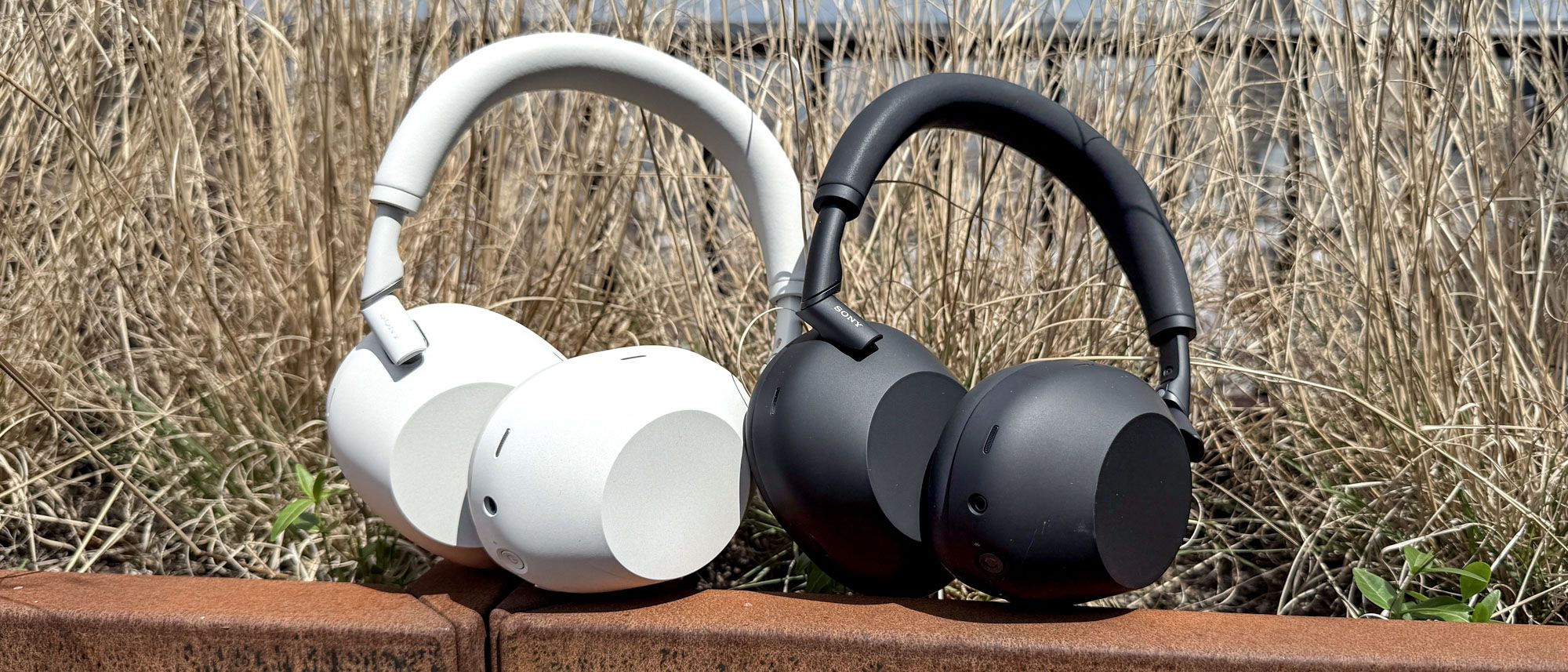
The most visible change in the WH-1000XM6 is the return of the foldable design — a feature Sony controversially removed in the XM5. The XM6 folds into a compact ball shape via articulating hinges, fitting into a magnetic-clasp hard case that’s smaller than the XM5’s flat-fold case. For frequent travelers, this alone might justify the upgrade.
At 254 grams (8.9 ounces), the XM6 is noticeably lighter than the AirPods Max’s 384 grams and slightly lighter than the Bose QC Ultra’s 250 grams. The weight reduction, combined with Sony’s signature plush earpads and minimal clamping force, makes the XM6 one of the most comfortable noise-cancelling headphones available. Tom’s Guide specifically called out “incredible comfort” as a standout feature. Long sessions of 4-5 hours produced zero fatigue in my testing.
One concern flagged by multiple reviewers: the articulating hinges feel somewhat fragile compared to the XM5’s solid build. While I haven’t experienced any durability issues in two months of daily use, the mechanical complexity does introduce a potential failure point that the XM5 simply didn’t have. Time will tell if this becomes a real-world issue.
The XM6 launches in three colors: Black, Platinum Silver, and Midnight Blue. All three feature the same soft-touch matte finish that resists fingerprints admirably.
Battery Life and Connectivity
Battery performance holds steady at 30 hours with ANC enabled and 40 hours without — matching the XM5’s already-excellent numbers. While I’d hoped for a bump here, 30 hours remains class-leading alongside the Bose QC Ultra’s 24 hours and the AirPods Max’s 20 hours. In real-world use, I charge the XM6 roughly every 4-5 days with 5-6 hours of daily use.
The fast-charging capability is genuinely impressive: a 3-minute USB-C charge delivers 3 hours of playback. That’s enough to cover an emergency when you’ve forgotten to charge overnight. Bluetooth 5.3 provides stable connections with multipoint support for two devices simultaneously — switching between my MacBook and iPhone is seamless.
One notable omission: there’s no audio playback via USB-C. In an era where even mid-range headphones offer wired USB-C audio, this feels like an oversight on a $449 flagship. You can still use the included 3.5mm cable for wired listening, but the lack of USB-C audio means you can’t use the XM6 as a high-quality USB DAC.
Sony WH-1000XM6 vs Bose QC Ultra vs AirPods Max: How They Compare
The premium noise-cancelling headphone market in 2025 is a three-way battle, and each contender has distinct strengths:
- Sony WH-1000XM6 ($449): Best ANC performance, lightest weight, longest battery life, foldable design. Sound is neutral-warm with exceptional detail. Missing aptX HD and USB-C audio.
- Bose QuietComfort Ultra ($429): Close second in ANC, slightly more comfortable earpads, Immersive Audio spatial feature. Warmer bass signature, aptX Adaptive support. Shorter battery at 24 hours.
- Apple AirPods Max ($549): Best ecosystem integration for Apple users, premium build quality with aluminum and steel. Spatial Audio with head tracking is excellent. Heaviest at 384g, shortest battery at 20 hours, highest price.
For most users, the Sony WH-1000XM6 offers the best overall package. The combination of class-leading ANC, 30-hour battery life, a lightweight foldable design, and detailed sound at $449 is hard to beat. Bose QC Ultra is the better choice if comfort is your absolute top priority and you prefer a warmer sound. AirPods Max remains the pick for dedicated Apple ecosystem users who value build quality and Spatial Audio above all else.
The Verdict: A Worthy Flagship Upgrade
After two months of daily use, the Sony WH-1000XM6 has earned its place as the best noise-cancelling headphone you can buy in 2025. The QN3 processor’s real-time processing across 12 microphones delivers ANC performance that sets a new standard. The return of the foldable design fixes the XM5’s biggest complaint. Sound quality is technically impressive, with detail retrieval that approaches wired audiophile territory.
The $449 price tag is steep, but competitive against the $549 AirPods Max and close to the $429 Bose QC Ultra. If you’re coming from the XM4 or earlier, the upgrade is transformative. From the XM5, it’s a meaningful but incremental improvement — the kind that rewards daily use rather than A/B comparisons in a store.
The missing USB-C audio output and aptX HD codec support prevent a perfect score, but these are minor complaints against an otherwise outstanding product. Sony has once again set the bar for wireless noise-cancelling headphones — and everyone else is playing catch-up.
Want weekly deep dives on the latest headphones, audio gear, and tech trends? Join thousands of readers who stay ahead of the curve.
Get weekly AI, music, and tech trends delivered to your inbox.