Adobe Firefly 3: The Enterprise-Safe AI Image Model That Changes the Commercial Creative Game
April 23, 2025
7 Best Portable Monitors 2025: USB-C Displays That Actually Boost Remote Work Productivity
April 23, 2025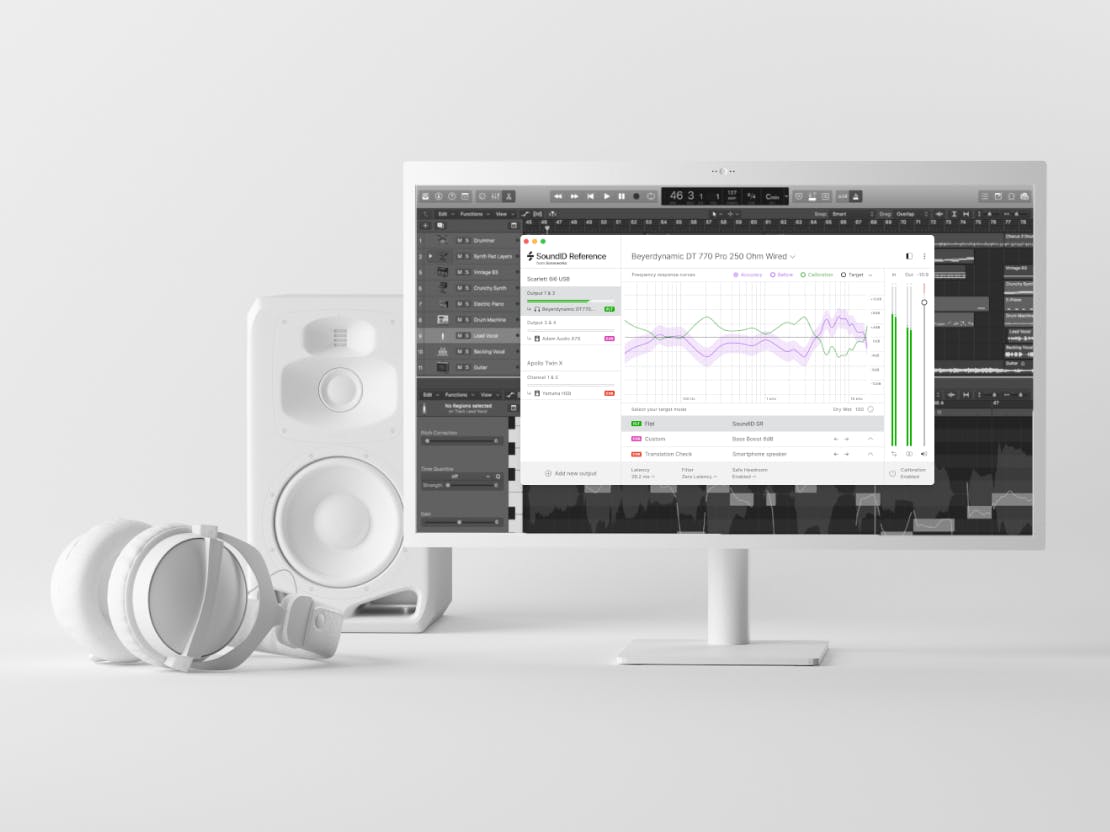
Sonarworks just dropped what might be the most significant SoundID Reference room calibration update in years — and it goes well beyond the usual patch notes. Version 5.12.x brings faster measurement workflows, native Universal Audio Apollo X integration, a headphone profile library that now exceeds 500 models, and a mobile ecosystem that has quietly amassed over 750,000 downloads. If you have been putting off room calibration, spring 2025 just made the case a lot harder to ignore.
What Changed in SoundID Reference Room Calibration 5.12.x
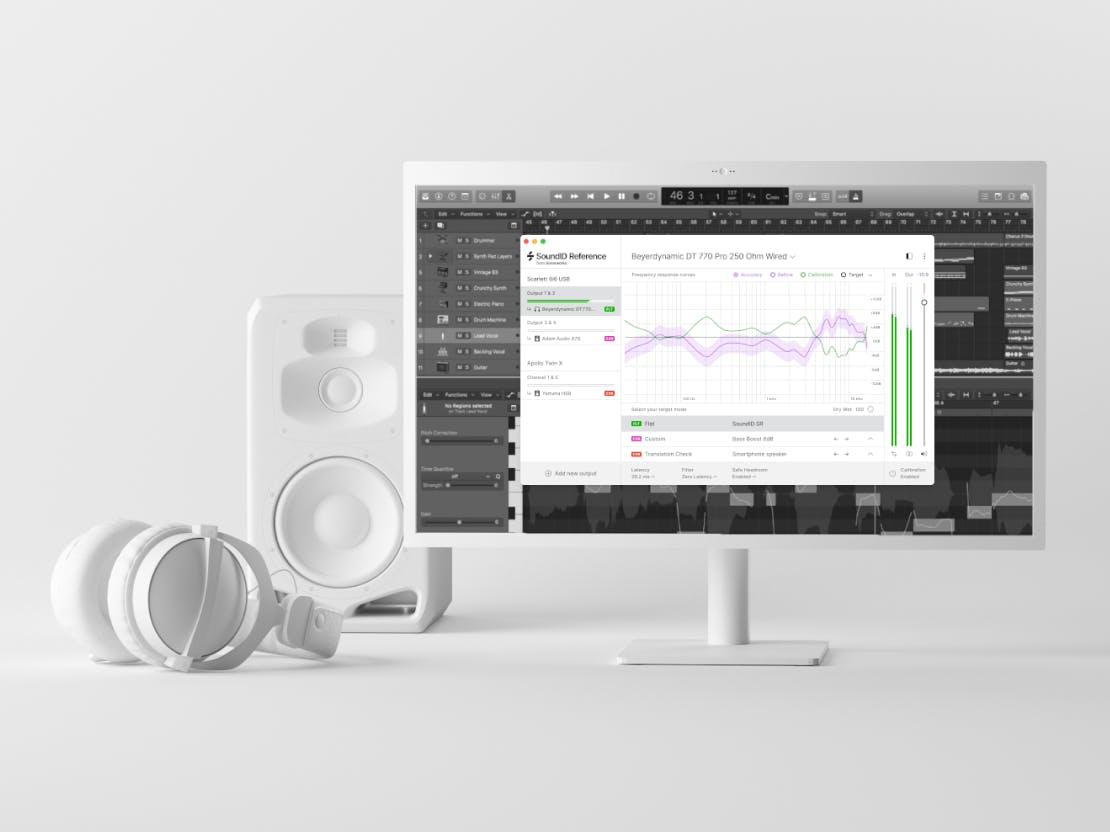
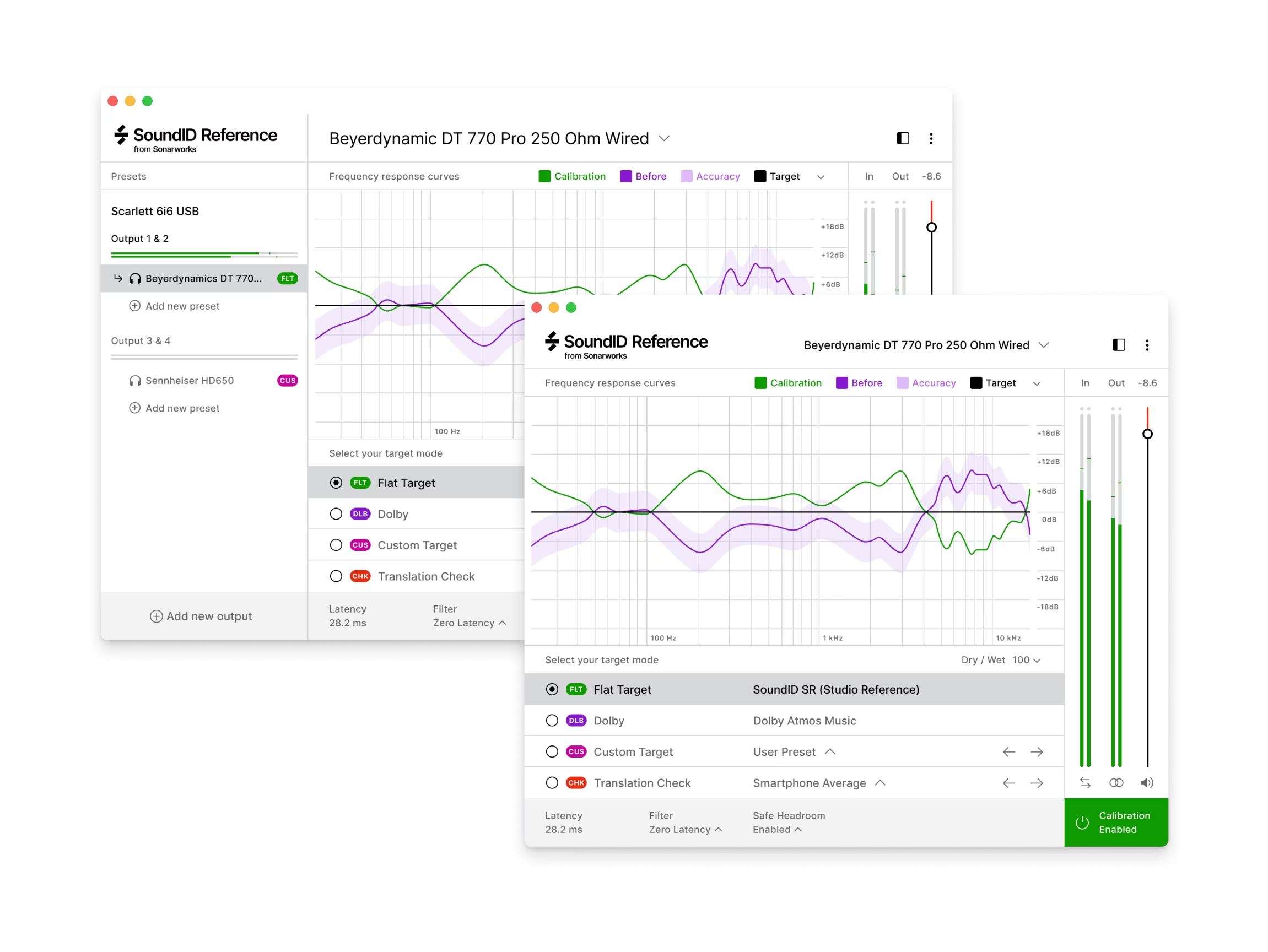
The headline feature is the faster Measurement Mode. Anyone who has calibrated a room knows the routine: grab the measurement mic, position it at ear height in the listening sweet spot, then slowly move through a grid of positions around the primary listening area while the software captures frequency response data at each point. The whole process used to take anywhere from 15 to 30 minutes depending on room size and the number of measurement points. Sonarworks has streamlined this entire workflow in version 5.12.2.31, significantly reducing the time from start to calibrated output. For studios doing frequent recalibrations — say, after rearranging gear, adding acoustic treatment, or setting up in a new room — this is a genuine time saver that makes the difference between calibrating regularly and skipping it because it feels like a chore.
The Universal Audio Apollo X integration is another big win. Apollo X series interfaces are everywhere in professional studios — they represent one of the most popular high-end interface lines in both music production and post-production. The tighter integration means SoundID Reference room calibration now plays more reliably within UA’s DSP-centric workflow. Previously, some users reported routing complications when trying to insert SoundID Reference into their Apollo monitoring chain. Those friction points have been addressed in this update, making the combination of Apollo’s Unison preamps, UAD plugins, and SoundID’s calibration engine feel like a cohesive system rather than separate tools forced to coexist.
Rounding out the update: Translation Check reliability improvements and a Steinberg host freeze fix. The latter is particularly welcome for Cubase and Nuendo users who had been experiencing stability issues — specifically, a freeze condition that could occur when SoundID Reference was loaded as a plugin in certain Steinberg host configurations. According to audioXpress, all these improvements come as a free update for existing license holders, which is a refreshing move in an era where many audio software companies have shifted to subscription models or paid upgrade cycles.
500+ Headphone Profiles — From HEDDphone TWO GT to Valco VMK25
SoundID Reference’s headphone calibration library has crossed the 500-profile threshold, and the latest additions tell an interesting story about where the pro headphone market is heading. The four new profiles include:
- HEDDphone TWO GT — HEDD’s flagship with Air Motion Transformer drivers, representing a new wave of reference-grade planar magnetic alternatives to traditional dynamic driver headphones
- HEDDphone TWO — The more accessible sibling, still featuring HEDD’s distinctive AMT driver technology but at a lower price point
- Valco VMK25 — A studio monitoring headphone from the Finnish brand that has been making waves in the European pro audio market
- Valco VMK20B — Valco’s entry-level studio option, targeting budget-conscious producers who still want accurate monitoring
Five hundred profiles is not just a marketing number. It means that virtually every professional and prosumer headphone on the market is covered. The practical implication is significant: you can buy almost any reputable studio headphone based purely on comfort, build quality, and personal preference, then immediately apply a scientifically measured correction profile to flatten its response. No more choosing headphones based on whether SoundID supports them — it almost certainly does. The full compatibility list is available on the official SoundID Reference product page.
This matters more than it might seem at first glance. Headphone calibration eliminates one of the biggest variables in the mixing and mastering chain. Two engineers using different headphones with SoundID Reference applied should be hearing a much more similar frequency response than they would without it. For remote collaboration — which has become standard in post-pandemic production workflows — this consistency is invaluable.
The SoundID Mobile App — 750K Downloads and a Data Flywheel
While the desktop software gets the headlines, Sonarworks has been quietly building something potentially more transformative. The SoundID mobile app (iOS and Android) has surpassed 750,000 downloads, collecting 2.4 million sound comparisons from over 350,000 participants. The app analyzes your individual hearing characteristics through a series of A/B listening tests and applies personalized audio adjustments — essentially bringing the calibration philosophy from the studio to everyday listening.
The data implications are fascinating. Every one of those 2.4 million comparisons adds to Sonarworks’ understanding of human hearing patterns across different age groups, listening habits, and physiological variations. This is the kind of dataset that machine learning models thrive on, and it gives Sonarworks a potential advantage that goes far beyond what any competitor can replicate without a similar user base.
More significantly, Sonarworks has been expanding device partnerships. SoundID-enabled headphones and earbuds from partner brands are appearing in the consumer market, suggesting that Sonarworks sees its future beyond the pro audio niche. The data they are collecting from hundreds of thousands of hearing profiles could eventually feed back into their professional tools — imagine custom calibration targets based on your personal hearing curve rather than a generic flat response. That future is not science fiction; it is a logical next step given the infrastructure they are building.
Pricing Breakdown — Which Tier Makes Sense for You
SoundID Reference room calibration software maintains a clean tiered pricing structure that makes it easy to choose based on your actual needs:
- Headphones Only — EUR 99 / $99: Pure headphone calibration with access to all 500+ profiles, no room measurement capability
- Speakers + Headphones — EUR 249: The sweet spot for most studios, covering both monitor and headphone calibration with the full measurement workflow
- Multichannel — EUR 449: For immersive audio environments up to 9.1.6 Dolby Atmos configurations, essential for film, TV, and spatial audio work
- Virtual Monitoring — EUR 129 (PRO EUR 199): Simulates speaker environments through headphones, useful for late-night sessions or untreated rooms where speaker monitoring is not practical
For most working producers and engineers, the EUR 249 Speakers + Headphones tier remains the best value. It covers the two most common monitoring scenarios and includes all the core features including Custom Target curves, Translation Check, and multiple phase processing modes. The Multichannel tier at EUR 449 is a must-have for anyone working in Dolby Atmos or surround formats — the ability to calibrate up to a 9.1.6 speaker configuration with a single software solution is remarkably cost-effective compared to the hardware alternatives.
Sonarworks has also introduced the MREF 2025 measurement microphone, a new cost-effective design that lowers the barrier to entry for room calibration. Previous measurement microphones from Sonarworks were individually calibrated and came at a premium. The MREF 2025 aims to maintain measurement accuracy while being more affordable, which should help studios that have been hesitant about the upfront hardware investment. Full pricing details are available on the Sonarworks pricing page.
Translation Check and Custom Targets — The Features That Actually Matter Day to Day
Translation Check remains one of SoundID Reference’s most underrated features. It simulates how your mix will sound on different playback systems — car speakers, earbuds, laptop speakers, Bluetooth devices, phone speakers. The concept is simple but the execution is complex: rather than just applying an EQ curve, Translation Check models the frequency response limitations and distortion characteristics of common consumer playback devices. The 2025 update has improved the reliability and accuracy of these simulations, which is crucial because the whole point is trusting the results. If Translation Check is inconsistent, it defeats the purpose entirely.
Custom Target curves deserve attention too. A perfectly flat frequency response is not always the goal — and experienced engineers know this well. Hip-hop producers might want slightly enhanced low end in their monitoring to better judge bass balance in context. Mastering engineers might prefer a subtle high-frequency shelf to catch sibilance issues earlier. Genre-specific work, personal preference, and client expectations all factor in. SoundID Reference lets you dial in custom curves while maintaining the underlying calibration accuracy, giving you a personalized “truth” rather than an absolute one.
Combined with zero-latency, mixed-phase, and linear-phase processing modes, you get flexibility that adapts to different stages of production. Zero-latency mode is essential for tracking and real-time monitoring. Mixed-phase offers a balance of correction accuracy and minimal pre-ringing. Linear-phase provides the most accurate correction at the cost of some latency, making it ideal for critical mixing and mastering passes. All major DAWs are supported — Pro Tools, Logic, Ableton Live, Cubase, Studio One, FL Studio, and more — and a 21-day free trial is available for anyone wanting to test the full feature set before committing financially.
My Take: What 28 Years in Audio Taught Me About Room Calibration
I have watched room calibration software evolve from unreliable novelty to genuine necessity over nearly three decades in this industry. The early tools were frustrating — measurements varied wildly between takes, and the correction curves sometimes made things sound worse rather than better. You would calibrate your room, start mixing, and then realize the low-mid correction was introducing phase issues that made vocals sound hollow. SoundID Reference is not a game-changer because of better algorithms alone. It is a game-changer because of data. The sheer volume of headphone measurements, room profiles, and now personal hearing data from 750K mobile users creates a feedback loop that competitors simply cannot match overnight.
The 500+ headphone profile library is a competitive moat that is hard to overstate. Compare it to alternatives like Waves Nx or dSONIQ Realphones — the profile count difference is dramatic. In practice, this matters when you are visiting a client’s studio, doing a remote session with borrowed headphones, or quickly switching between multiple monitoring references during a mix review. Having instant calibration for virtually any headphone eliminates one of the biggest variables in critical listening. I have been in sessions where the headphone calibration profile alone resolved a frequency balance disagreement between the producer and the mix engineer — they were simply hearing different things through uncalibrated headphones.
My one reservation: the gap between the mobile app and the professional software. SoundID’s personalization data from the mobile app does not yet flow seamlessly into the Reference software’s Custom Target system. The day Sonarworks bridges that gap — letting your personal hearing profile automatically inform your studio calibration target — that is when the ecosystem truly clicks. They are clearly heading in that direction given the mobile app’s growth trajectory and the device partnership strategy, but we are not there yet. Still, this 2025 update moves SoundID Reference from “nice to have” firmly into “hard to work without” territory. If you have never tried room calibration, the 21-day trial removes every excuse.
Looking to optimize your studio monitoring environment or need professional mixing and mastering? Let’s talk — 28 years of experience at your service.
Get weekly AI, music, and tech trends delivered to your inbox.