WaveLab 13 Dolby Atmos Mastering Deep Dive: 5 Reasons Stereo Engineers Should Go Immersive Now
March 11, 2026
Live Nation’s $280M Ticketmaster Settlement: 3 Reasons 26 States Said No and What It Means for Concert Prices
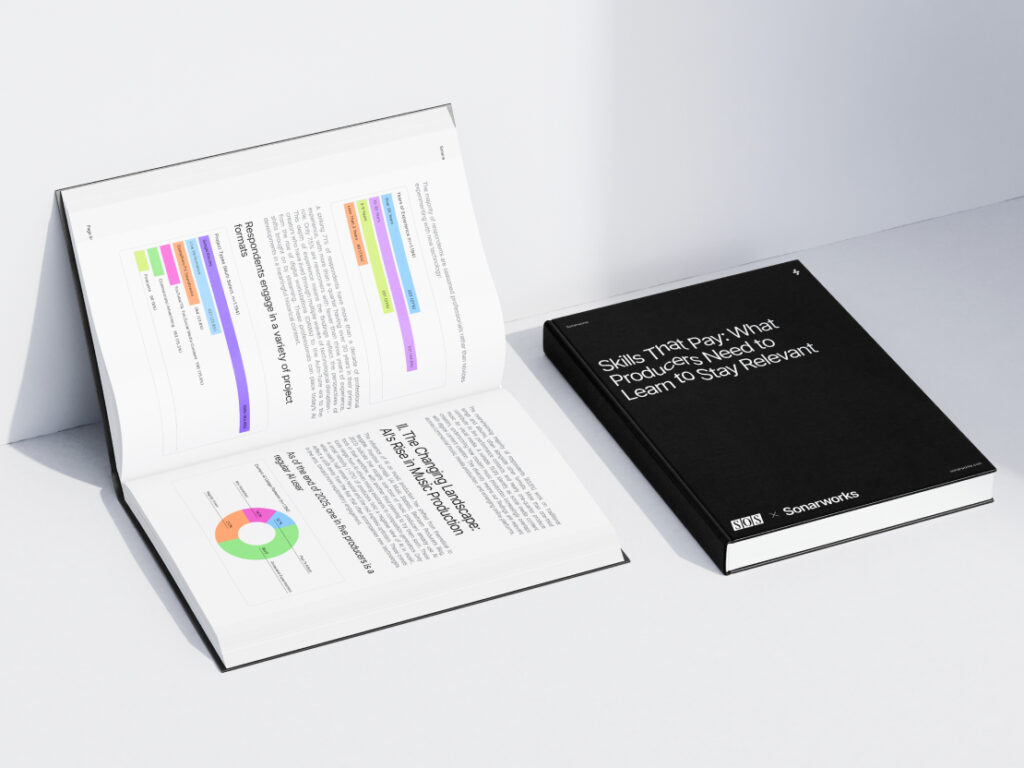
March 11, 2026How do working producers actually feel about AI in 2026? Not the hype, not the doom — the reality. Sonarworks and Sound On Sound partnered to survey 1,194 music creators, and the results paint a picture that’s far more nuanced than either camp would have you believe. Here’s what the data actually says.
Who Took the Survey — And Why It Matters
This isn’t a Twitter poll. Over 70% of respondents are working professionals with more than a decade of experience. The breakdown: producers (43.1%), audio engineers (21.3%), songwriters (13.7%), sound designers (4.1%), and educators (3%). These are people who’ve seen technology waves come and go — from analog to digital, from hardware to plugins, and now from manual to AI-assisted.
Where Producers Actually Use AI: Restoration Leads at 58%
The adoption numbers tell a clear story. Audio restoration tops the list at 58% — think noise reduction, stem separation, and cleanup tasks where AI genuinely saves hours of tedious work. Mixing assistants come in at 38%, followed by mastering services at 33.9%.
But here’s the telling gap: composition tools sit at just 20.9%. Producers are happy to let AI handle the grunt work, but when it comes to actual creative decisions — melody, harmony, arrangement — most prefer to keep their hands on the wheel. It’s a pragmatic divide: automate the boring stuff, protect the creative stuff.
The 77% Problem: Why Originality Is the Biggest Concern
The survey’s most striking finding is the concern hierarchy. 77% of respondents cite loss of originality and creativity as their top worry. Not job loss (42%), not ethics (54%) — originality. Producers fear a future flooded with AI-generated music that sounds polished but generic, accelerating what many already call “musical sameness.”
- Ethical issues: 54% — AI training on musicians’ work without consent
- Generic content flood: 53% — the market drowning in similar-sounding AI tracks
- Job displacement: 42% — especially for technical engineering roles
- Authenticity concerns: 37% — can AI-made music carry genuine human emotion?
The Genre Divide: EDM Says Yes, Jazz Says No
Two-thirds of respondents believe EDM, mainstream pop, ambient, and functional music are the most amenable to AI generation. These genres often rely on repetitive structures, predictable progressions, and production-heavy aesthetics where AI excels.
On the other end, jazz, blues, and classical are seen as the most AI-resistant. The reliance on improvisation, dynamic expression, and decades of human tradition makes these genres fundamentally harder for AI to replicate convincingly. It’s not just about the notes — it’s about the intent behind them.
The Future: Creative Director, Not Button-Pusher
57.9% envision AI as an assistant tool, with the producer retaining creative authority. Another 20.6% see major automation with human oversight. Only 8.8% predict full automation, and a mere 3.6% dismiss AI as a passing fad.
Half of all respondents agree that the most important skill for producers in the AI era is the ability to find and pursue an original creative direction. The producer role is evolving from manual audio manipulation toward a creative director model — where judgment, emotional intelligence, and artistic vision become the primary value drivers.
My Take: 28 Years In, AI Is a Tool — Not a Replacement
As someone who’s spent 28 years behind the console, I’ve watched every major shift in music technology. The pattern is always the same: new tools amplify what good producers do, they don’t replace the need for good producers. iZotope RX revolutionized audio restoration. LANDR democratized mastering. Suno is pushing the boundaries of composition. But none of these tools can sit in a session, read the room, and make the call that turns a good track into a great one.
This survey confirms what many of us feel: AI is here to stay, it’s genuinely useful for technical tasks, and the producers who thrive will be those who use it as leverage — not a crutch. The 77% originality concern isn’t fear of technology. It’s a mature industry saying: don’t let the tools replace the taste.
Read the full report on the Sonarworks blog.
Get weekly AI, music, and tech trends delivered to your inbox.