Linear AI Triage Intelligence: How $82M and LLM Pipelines Are Rewriting Project Management
June 23, 2025
Google Nest Doorbell 2025: Gemini AI Package and Person Detection Changes Everything
June 23, 2025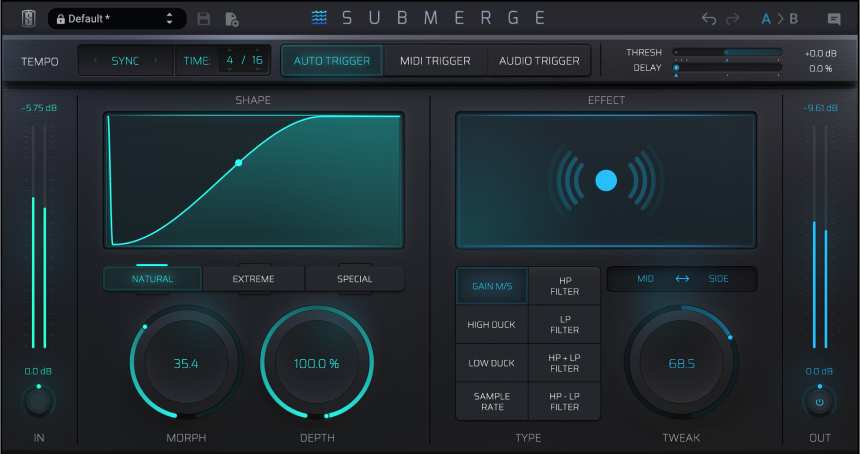
You’ve mastered the classic kick-ducking-bass trick — and honestly, so has everyone else. After 28 years behind consoles and inside DAWs, I can tell you that creative sidechain compression is where the real production magic lives, and most producers barely scratch the surface. These seven techniques will change how you think about dynamics, space, and rhythm in your mixes.
Why Creative Sidechain Compression Matters in 2025
Sidechain compression has been a staple of electronic music since Daft Punk and Eric Prydz turned the pumping effect into a genre-defining sound. But the technique has evolved far beyond its EDM origins. Today, producers across hip-hop, pop, film scoring, and even classical recording use creative sidechain compression to carve space, build rhythm, and design sounds that simply aren’t possible with static processing. The key is understanding that sidechaining isn’t just about ducking — it’s about creating dynamic relationships between elements in your mix.
1. Ghost Triggers: Sidechain Without the Source
This is the technique that separates intermediate producers from advanced ones. Instead of using an audible element like your kick drum to trigger the sidechain, create a dedicated “ghost” or “dummy” track — an audio or MIDI-triggered signal that never reaches the master bus.
Here’s why this matters: when you sidechain to your actual kick, you’re locked into whatever rhythm and velocity pattern that kick plays. A ghost trigger lets you design completely independent rhythmic patterns for your sidechain effect. Try routing a triplet pattern through a dummy track to trigger sidechain on your bass — suddenly your low end bounces in a rhythm that has nothing to do with your four-on-the-floor kick, creating polyrhythmic movement that feels alive.
DAW Workflow: In Ableton Live, create a new audio track, load a short click sample, draw your desired rhythm in MIDI, then route its output to “Sends Only.” In Logic Pro, use a bus send from a muted track. In Pro Tools, create an aux track with the output set to a bus that feeds your compressor’s key input. The source audio never reaches your monitors, but the compressor responds to every hit.
2. Frequency-Specific Sidechaining with Sidechain EQ
Most producers don’t realize that many compressors — including FabFilter Pro-C 2 — offer a full EQ section specifically for the sidechain detection circuit. This is fundamentally different from multiband compression: you’re not splitting the signal into bands, you’re telling the compressor which frequencies to listen to when deciding how much to compress.
The most practical application? Set a high-pass filter on your kick’s sidechain signal between 150–300 Hz. This makes the compressor respond to the transient click of the kick rather than its sustained low-frequency body, resulting in faster, tighter ducking that snaps back almost instantly. The bass dips for the attack of the kick but fills right back in, maintaining low-end energy while still creating separation.
Take it further: use a bandpass filter on the sidechain to make a pad duck only when a vocal hits a specific frequency range. The pad stays full everywhere the vocal isn’t, creating transparent space without audible pumping.
3. Inverse EQ Sidechaining with Trackspacer
Wavesfactory Trackspacer takes a completely different approach to sidechaining. Instead of simple volume ducking, it analyzes the frequency content of your sidechain source in real time and generates an inverse EQ curve on the target track. Only the conflicting frequencies get attenuated — everything else stays untouched.
In practice, this means you can sidechain a vocal against a synth pad, and only the exact frequencies where the vocal lives get carved out of the pad. The moment the vocalist pauses, those frequencies return. It’s the most transparent form of creative sidechain compression available, and it’s become a secret weapon for mix engineers working on dense pop and hip-hop productions where every element needs to be heard clearly.
I’ve been using Trackspacer on nearly every mix for the past two years, and the difference in vocal clarity — without the pumping artifacts of traditional sidechaining — is remarkable.
4. Dynamic Reverb and Delay Ducking
Here’s a technique that instantly makes any mix sound more polished: sidechain your reverb and delay return channels to the dry vocal or instrument signal. When the source is playing, the effects duck down; when it stops, the reverb and delay bloom into the space.
This creates a dramatically cleaner front-to-back dimension in your mix. The dry signal cuts through without competing with its own reflections, while the effects still provide atmosphere and depth between phrases. It’s particularly effective on lead vocals, snare drums, and solo instruments.
Settings to start with: On the reverb return, set a compressor with a fast attack (1–5 ms), medium release (100–300 ms), ratio around 4:1, and pull the threshold until you’re getting 6–10 dB of gain reduction when the dry signal plays. Adjust the release to taste — longer release creates a more dramatic “bloom” effect, shorter keeps things tighter. You can also use a gate on the reverb return with the sidechain set to the dry signal, setting the gate to close when the dry signal plays and open when it stops.
5. Non-Tempo-Based Sidechaining for Sound Design
This is where creative sidechain compression enters sound design territory. Instead of tempo-synced triggers, use irregular audio — field recordings, noise bursts, random MIDI patterns — to trigger sidechain compression on sustained sounds. The result is organic, evolving textures that feel alive and unpredictable.
Imagine a dense atmospheric pad sidechained to a recording of rain hitting a window. Every raindrop creates a micro-duck in the pad, producing a shimmering, breathing quality that’s impossible to program manually. Film composers and ambient producers use this technique constantly — it transforms static synth layers into living, responsive soundscapes.
Tools like Xfer Records LFO Tool and Cableguys VolumeShaper excel here because they let you draw custom volume envelopes that can simulate irregular sidechain patterns without needing an actual audio trigger, offering precise visual control over the modulation curve.
6. Multiband Sidechain Compression
Standard sidechain compression ducks the entire signal — lows, mids, and highs all go down together. Multiband sidechaining lets you duck only specific frequency ranges while leaving the rest untouched. This is particularly powerful for bass-heavy genres where you want the kick to push the sub frequencies of the bass down without affecting the mid-range harmonics that give the bass its character.
In FabFilter Pro-MB or Waves C6, you can set up a sidechain that only affects the 20–150 Hz range of your bass track, triggered by the kick drum. The bass’s midrange presence, top-end grit, and attack transient remain completely unchanged — only the sub frequencies that directly conflict with the kick get ducked. The result is a low end that’s impossibly clean but still feels full and powerful.
This technique works wonders on full mixes during mastering too. Apply gentle multiband sidechain to the low-frequency band of your master bus, triggered by the kick, and you’ll gain headroom without audible pumping. It’s one of those tricks that makes a mix louder without actually compressing harder.
7. Automating Sidechain Parameters for Movement
The least-used but most powerful creative sidechain compression technique is parameter automation. Most producers set their sidechain threshold, ratio, attack, and release once and forget about it. But automating these parameters throughout your arrangement creates dynamic variation that keeps listeners engaged.
Try this: automate the threshold of your sidechain compressor to pull down during builds, creating increasingly aggressive pumping that peaks at the drop, then raise it back up during breakdowns for a more relaxed feel. Automate the release time between sections — faster release in energetic sections, slower in ambient breakdowns — and the groove literally shifts character without changing a single note.
You can also automate between different sidechain sources. Route your verse sidechain from a gentle ghost trigger, then switch to an aggressive kick trigger for choruses. The contrast creates instant energy shifts that your listeners feel even if they can’t articulate what changed.
Putting It All Together: A Practical Workflow
The best mixes don’t use just one of these techniques — they layer several. Here’s a workflow I use regularly: Trackspacer on vocals against pads and guitars for transparent frequency ducking. Traditional sidechain from a ghost trigger on the bass for rhythmic pumping. Dynamic reverb ducking on lead vocals and snare for front-to-back clarity. Multiband sidechain on the master’s low end for clean headroom. And parameter automation on all of them to keep the dynamics evolving across the arrangement.
Start with one technique that solves your biggest mixing problem right now — maybe it’s the ghost trigger for more rhythmic flexibility, or Trackspacer for vocal clarity — and build from there. Creative sidechain compression isn’t about adding complexity for its own sake. It’s about building intelligent, dynamic relationships between the elements in your mix so they breathe, move, and coexist in ways that static processing simply can’t achieve.
Whether you need professional mixing, mastering, or help building a creative sidechain compression workflow tailored to your productions — Sean Kim at Greit Studios has 28 years of hands-on experience.
Get weekly AI, music, and tech trends delivered to your inbox.