GarageBand AI Drummer Gets Smarter in August 2025 iOS Update — Spatial Audio Arrives for Mobile Producers
August 7, 2025
Claude Opus 4.1: Anthropic’s Sharpest Coding Model Scores 74.5% on SWE-bench
August 8, 2025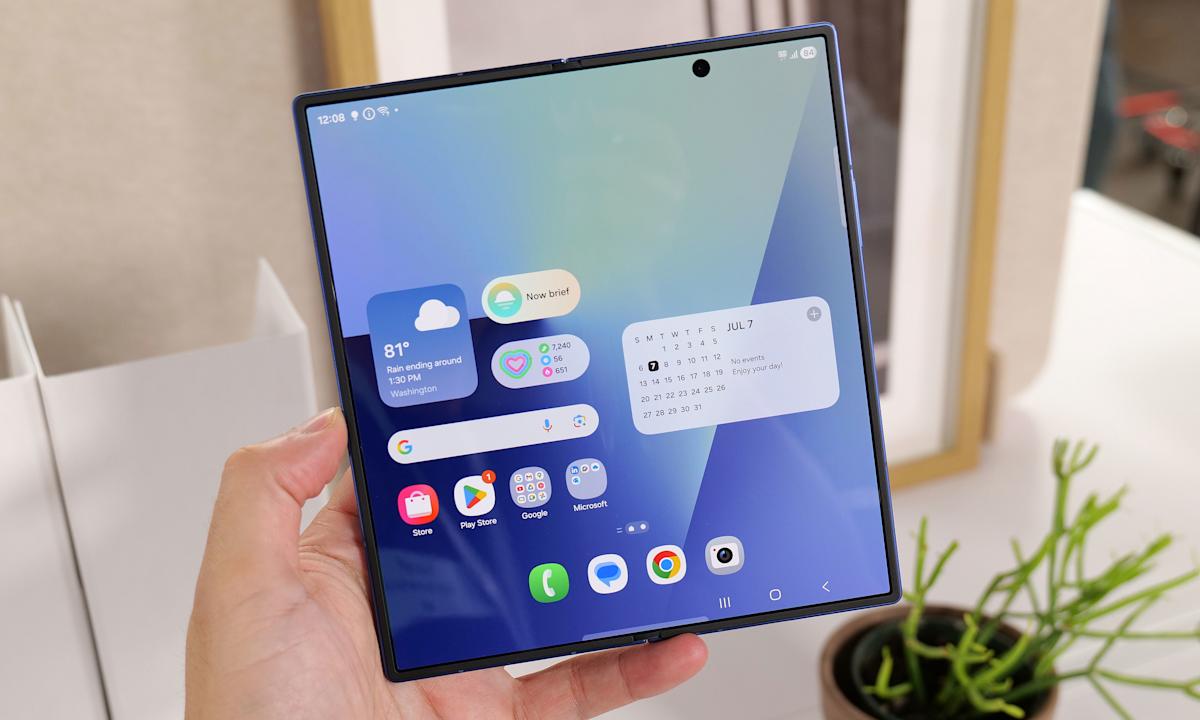
Five devices. One stage. Zero surprises — and that might actually be Samsung’s biggest problem. Samsung Unpacked 2025 dropped on July 9 in Brooklyn, and every single product had already leaked weeks before the curtain rose. But here’s the thing: even with zero mystery, the actual hardware Samsung delivered tells a fascinating story about where foldables, wearables, and the broader Galaxy ecosystem are heading in the second half of 2025.
After spending a decade covering Samsung launches, I can say this Unpacked felt different. Not because of any single revolutionary feature, but because Samsung finally addressed the three biggest complaints about its foldables: thickness, camera quality, and durability. Let’s break down every product, every price, and every spec that matters.
Galaxy Z Fold 7: The $2,000 Foldable That Finally Feels Like a Flagship
The Galaxy Z Fold 7 is the most significant upgrade Samsung has delivered to its foldable lineup since the original Fold. Starting at $2,000, it’s not cheap — but the spec sheet finally justifies the premium.
The headline number: a 200MP main camera, a 4x jump from the Z Fold 6’s 50MP sensor. Samsung paired it with a 10MP telephoto (3x optical zoom) and a 12MP ultrawide. For the first time, a Galaxy Fold camera system rivals what you’d find on the Galaxy S series flagships.
The main display grows to 8 inches (up from 7.6), while the cover display expands to 6.5 inches. Powered by the Snapdragon 8 Elite processor with a 4,400mAh battery, and wrapped in Grade 4 titanium, the Z Fold 7 measures just 8.9mm folded and 4.2mm unfolded — according to TechRadar’s hands-on coverage — 3.2mm thinner and 24 grams lighter than its predecessor.
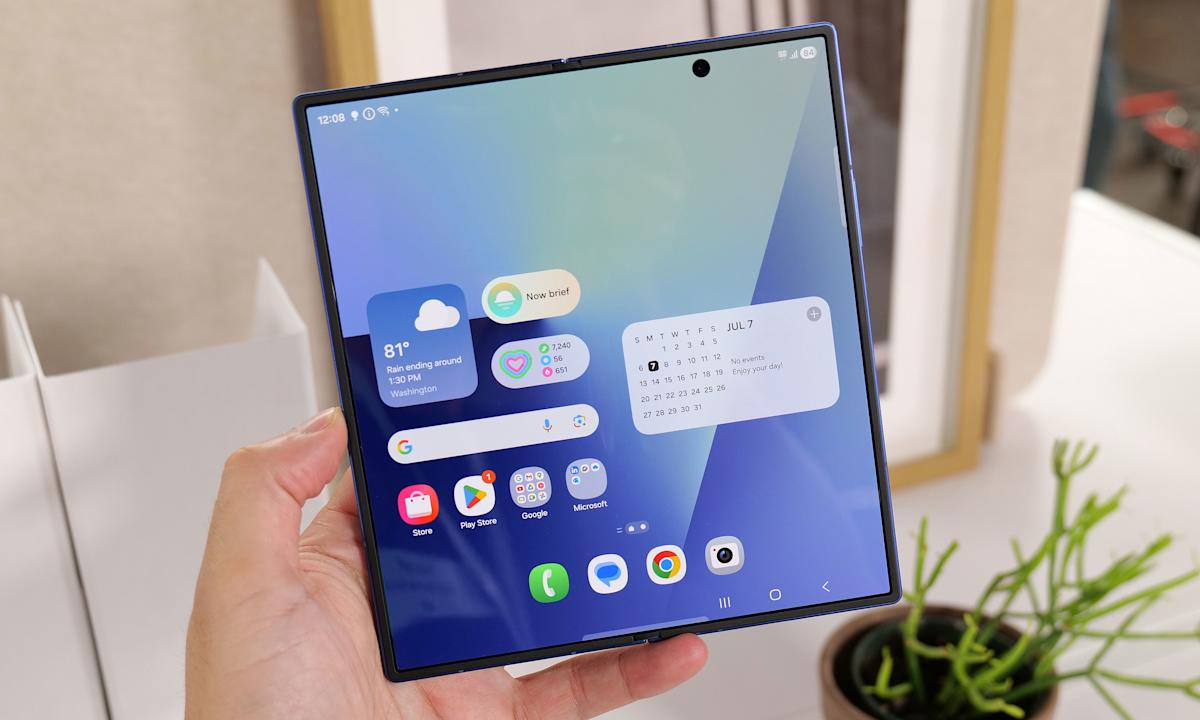
Storage options include 256GB, 512GB, and a 1TB tier. Colors: Blue Shadow, Jet Black, Silver Shadow, and an online-exclusive Mint. One notable omission: S Pen support has been dropped entirely. Samsung clearly decided that shaving millimeters mattered more than stylus compatibility — a trade-off that will divide opinions.
Samsung Unpacked 2025: Z Fold 7 Key Specs at a Glance
- Display: 8-inch main / 6.5-inch cover
- Camera: 200MP main + 10MP telephoto (3x) + 12MP ultrawide
- Processor: Snapdragon 8 Elite
- Battery: 4,400mAh
- Storage: 256GB / 512GB / 1TB
- Thickness: 8.9mm folded, 4.2mm unfolded
- Weight: 215g (Grade 4 titanium)
- Price: From $2,000
- OS: Android 16
Galaxy Z Flip 7: The Cover Display Everyone Wanted
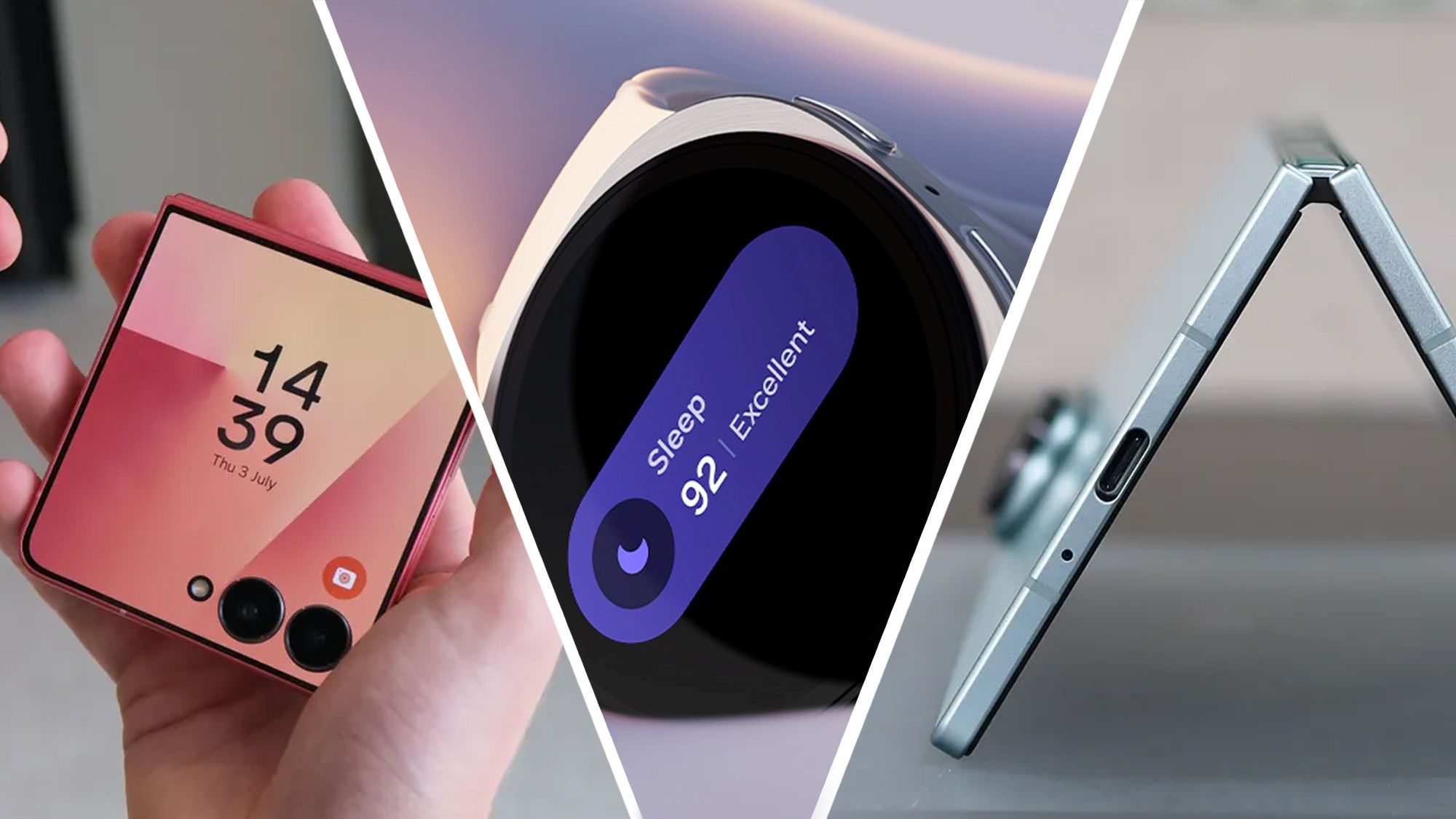
The Z Flip 7 at $1,100 addresses the single biggest complaint about flip-style foldables: the cover screen. Samsung stretched it to a 4.1-inch edge-to-edge flex window with just 1.25mm bezels, 120Hz refresh rate, and 2,600 nits peak brightness. This isn’t a notification ticker anymore — it’s a genuinely usable secondary display.
The main display grows slightly to 6.9 inches (from 6.7), and the battery gets a meaningful bump to 4,300mAh from 4,000mAh. Samsung went with the Exynos 2500 processor here — not the Snapdragon 8 Elite found in the Fold 7. The camera system includes a 50MP main, 12MP ultrawide, and 10MP selfie camera. Available in Coral Red, Blue Shadow, Jet Black, and exclusive Mint.
Galaxy Z Flip 7 FE: A $900 Entry Point to Foldables
The surprise of Unpacked wasn’t a flagship — it was the Z Flip 7 FE at $900. Essentially a repackaged Z Flip 6 with the Exynos 2400 processor, 3,700mAh battery, and Galaxy AI features, it’s Samsung’s answer to the question: “What if foldables weren’t $1,000+?”
Available in White and Black with 128GB or 256GB storage, the FE model won’t win spec comparisons. But at $200 less than the Flip 7 and $300 less than the Fold 7, it might win something more important: market share. Samsung clearly learned from the Galaxy S23 FE’s success and is applying that playbook to foldables.
Galaxy Watch 8 and Watch 8 Classic: Wear OS 6 Arrives
Samsung’s wearable lineup got a comprehensive refresh with three models: the Galaxy Watch 8 (from $350), Watch 8 Classic ($500/$550), and an updated Watch Ultra.
The biggest story here is software: the Watch 8 series runs Wear OS 6, making them the first Samsung wearables on Google’s latest platform. Hardware-wise, both models feature a 3nm processor, 64GB of onboard storage (double the previous generation), and AMOLED displays hitting 3,000 nits peak brightness.
The Watch 8 comes in 40mm and 44mm sizes with 325mAh and 435mAh batteries respectively. IP68 and 5ATM water resistance are standard. Google Gemini integration is built in, enabling AI-powered health insights and conversational queries directly from your wrist.
The Watch 8 Classic brings back the beloved rotating bezel that was absent from the Watch 7 series — a move that will delight longtime Samsung watch fans. At 46mm with a 445mAh battery, it’s the largest in the lineup. The Galaxy Watch Ultra gets an unusual new feature: antioxidant measurement via an LED sensor that estimates the ratio of fruits and vegetables in your diet.
Samsung Unpacked 2025: Pricing and Availability Comparison
Here’s the complete pricing breakdown for everything Samsung announced on July 9, with all devices shipping on July 25, 2025:
- Galaxy Z Fold 7: From $2,000 (256GB) — Snapdragon 8 Elite, 200MP, titanium
- Galaxy Z Flip 7: From $1,100 (256GB) — Exynos 2500, 4.1″ cover display
- Galaxy Z Flip 7 FE: From $900 (128GB) — Exynos 2400, Galaxy AI included
- Galaxy Watch 8: From $350 — Wear OS 6, 3nm chip, 64GB
- Galaxy Watch 8 Classic: $500 (Wi-Fi) / $550 (cellular) — rotating bezel
Pre-orders opened immediately on July 9, with Samsung offering trade-in deals reaching up to $1,200 for the Z Fold 7 and guaranteed $300 trade-in credit for the Z Flip 7.
The Bigger Picture: What Samsung Unpacked 2025 Signals
Beyond individual products, this Unpacked revealed Samsung’s three strategic bets for the second half of 2025:
First, the camera war comes to foldables. The Z Fold 7’s 200MP sensor closes the gap between foldable and slab phones. Samsung is betting that the “foldable camera tax” — the idea that you sacrifice camera quality for the folding form factor — is no longer acceptable at $2,000.
Second, Samsung is building a foldable lineup, not just flagships. With the Z Flip 7 FE at $900, Samsung now has three distinct price tiers for foldables. That’s a mature product strategy you typically see in categories that have moved past early-adopter territory.
Third, Wear OS 6 + Gemini redefines the smartwatch. The Galaxy Watch 8 isn’t just a fitness tracker with a screen — it’s an AI-powered wrist computer. Google Gemini integration means natural language queries, proactive health suggestions, and deeper ecosystem ties between your watch, phone, and Samsung’s broader Galaxy AI platform.
Samsung also teased a tri-fold concept device and “Project Moohan” with Android XR integration, hinting that the company sees foldables as a stepping stone to spatial computing — not the destination.
Should You Buy Now or Wait? Samsung Unpacked 2025 Buying Advice
If you’re coming from a Z Fold 5 or earlier, the Z Fold 7 is a no-brainer upgrade — the 200MP camera alone justifies the switch. Z Fold 6 owners should weigh whether the thinner design and camera bump warrant the $2,000 price tag. For first-time foldable buyers, the Z Flip 7 FE at $900 is the most compelling entry point Samsung has ever offered. And if you’re a Galaxy Watch user who missed the rotating bezel, the Watch 8 Classic was made for you.
With Apple still absent from the foldable market and Google’s Pixel Fold playing catch-up, Samsung’s seven-generation head start in foldables is looking increasingly durable. The question isn’t whether Samsung makes the best foldables — it’s whether the Z Fold 7’s $2,000 price tag and the Flip 7 FE’s $900 entry point can finally make foldables mainstream.
Want to stay ahead of every major tech launch, AI update, and hardware release? Get weekly insights delivered straight to your inbox.
Get weekly AI, music, and tech trends delivered to your inbox.