Shure SM7dB Review: The Built-In Preamp That Finally Solves the SM7B’s Biggest Problem
October 9, 2025
Samsung One UI 7.1: 5 Ways Galaxy AI Cross-Device Intelligence Changes Everything
October 10, 2025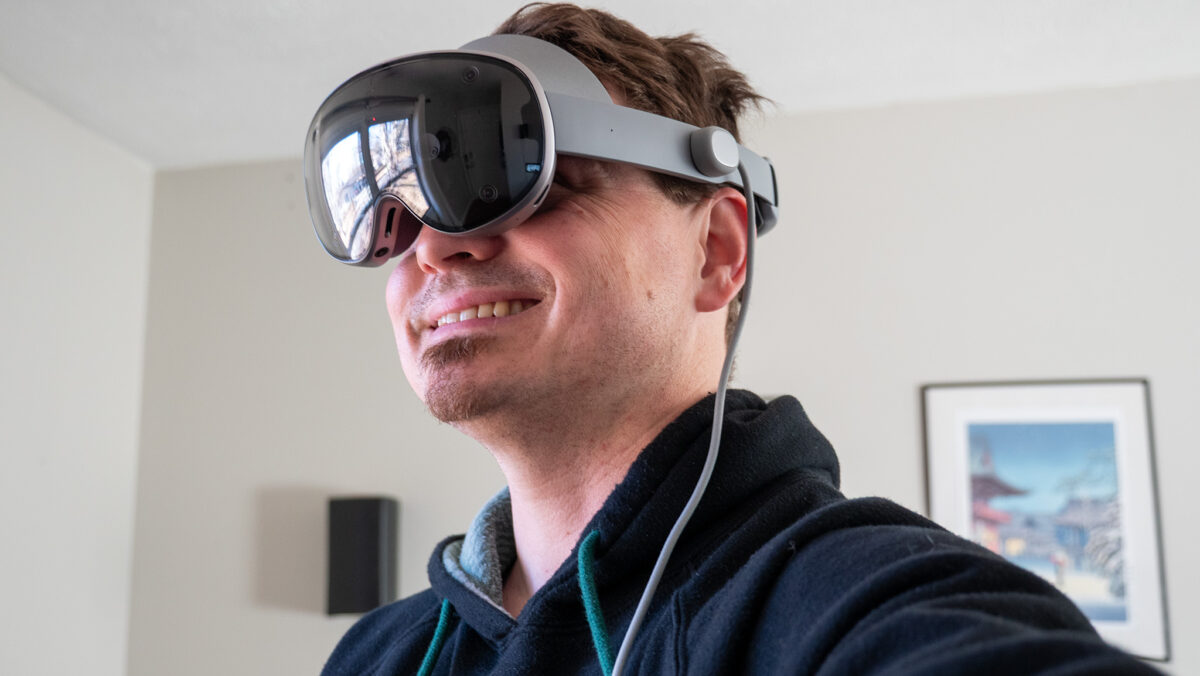
Apple had the mixed reality headset market all to itself — and a $3,499 price tag to prove it. Now Samsung Galaxy XR is crashing the party at $1,799, packing Gemini AI and a display that actually outresolves the Vision Pro. Half the price, arguably better specs on paper. The question is whether Samsung can deliver where it counts.
Samsung, Google, and Qualcomm have joined forces to build the first device on the Android XR platform, and the Samsung Galaxy XR is set to launch on October 21, 2025. Based on the specs revealed so far and early analysis from major tech outlets, this isn’t just a Vision Pro knockoff — it’s a fundamentally different approach to mixed reality, built on the most popular mobile operating system in the world.
Samsung Galaxy XR Specs: The Numbers That Matter
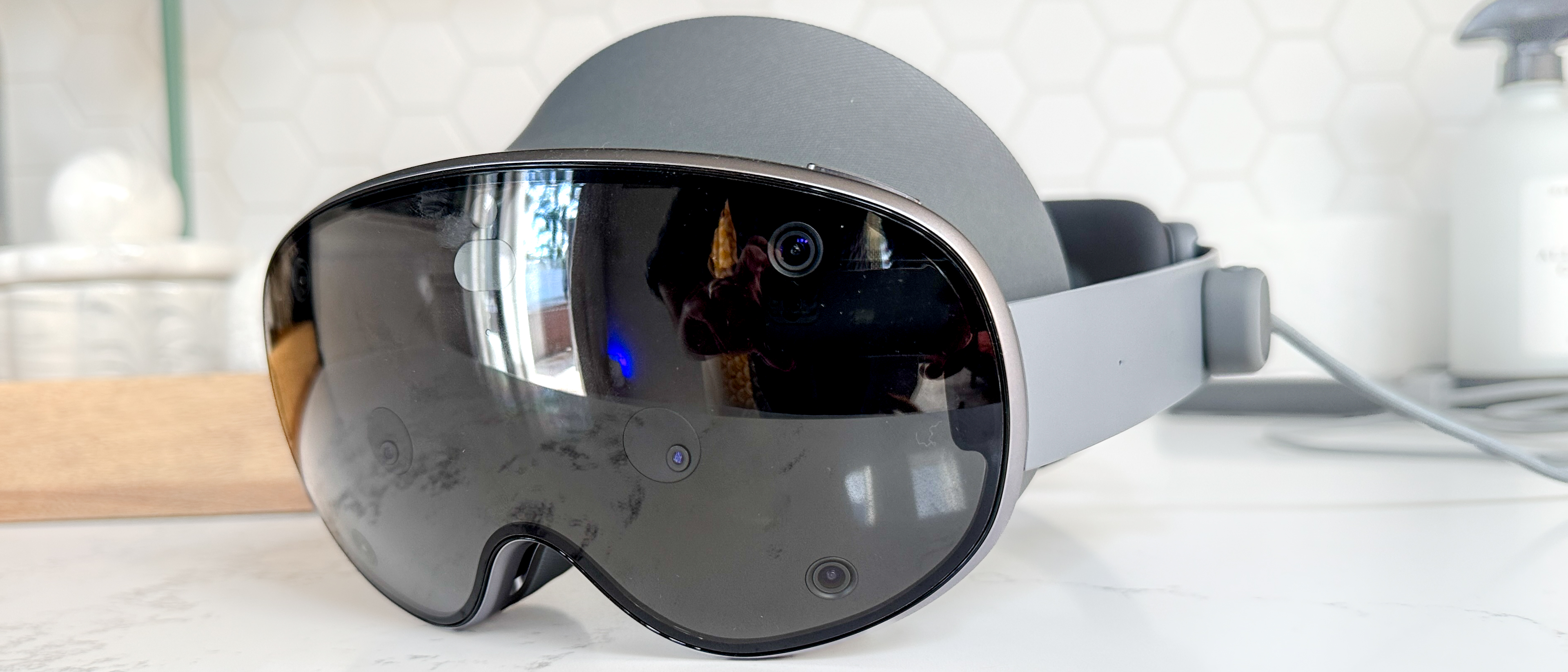
Let’s cut straight to the hardware. The Samsung Galaxy XR features dual 4K micro-OLED displays running at 3,552 x 3,840 resolution per eye — that’s 27 million pixels total. Each display refreshes at 90Hz, and according to GSMArena’s coverage, this puts the Galaxy XR at the top of the resolution chart among consumer MR headsets currently available.
Under the hood sits Qualcomm’s Snapdragon XR2+ Gen 2, a custom chip built specifically for this device. It delivers 20% faster CPU performance and 15% faster GPU performance compared to the standard XR2 Gen 2. Paired with 16GB of RAM and 256GB of internal storage, there’s serious computational muscle here for running complex mixed reality workloads.
The industrial design takes an interesting approach to the weight problem that plagues every headset. Samsung opted for a modular battery design: the headset itself weighs 545g while the external battery pack adds another 302g. By moving the battery off your face, the on-head weight stays manageable during extended sessions. Total battery life sits at approximately 2.5 hours — not spectacular, but better than Vision Pro’s roughly 2-hour runtime.
Samsung Galaxy XR vs Apple Vision Pro: Head-to-Head
- Price: Galaxy XR $1,799 vs Vision Pro $3,499 — nearly half the cost
- Weight (headset): Galaxy XR 545g vs Vision Pro ~650g — about 16% lighter
- Resolution: Galaxy XR 27MP total vs Vision Pro 23MP total
- Battery: Galaxy XR ~2.5 hours vs Vision Pro ~2 hours (both external)
- OS: Android XR vs visionOS
- AI Assistant: Gemini AI vs Siri
- App Ecosystem: Google Play Store (millions of Android apps) vs visionOS App Store
- Controllers: None included (hand tracking only) vs None included
On paper, the Galaxy XR wins in almost every measurable category except, perhaps, the polish of the software experience — which we’ll get to shortly.
Android XR Platform: The Google Play Store Advantage
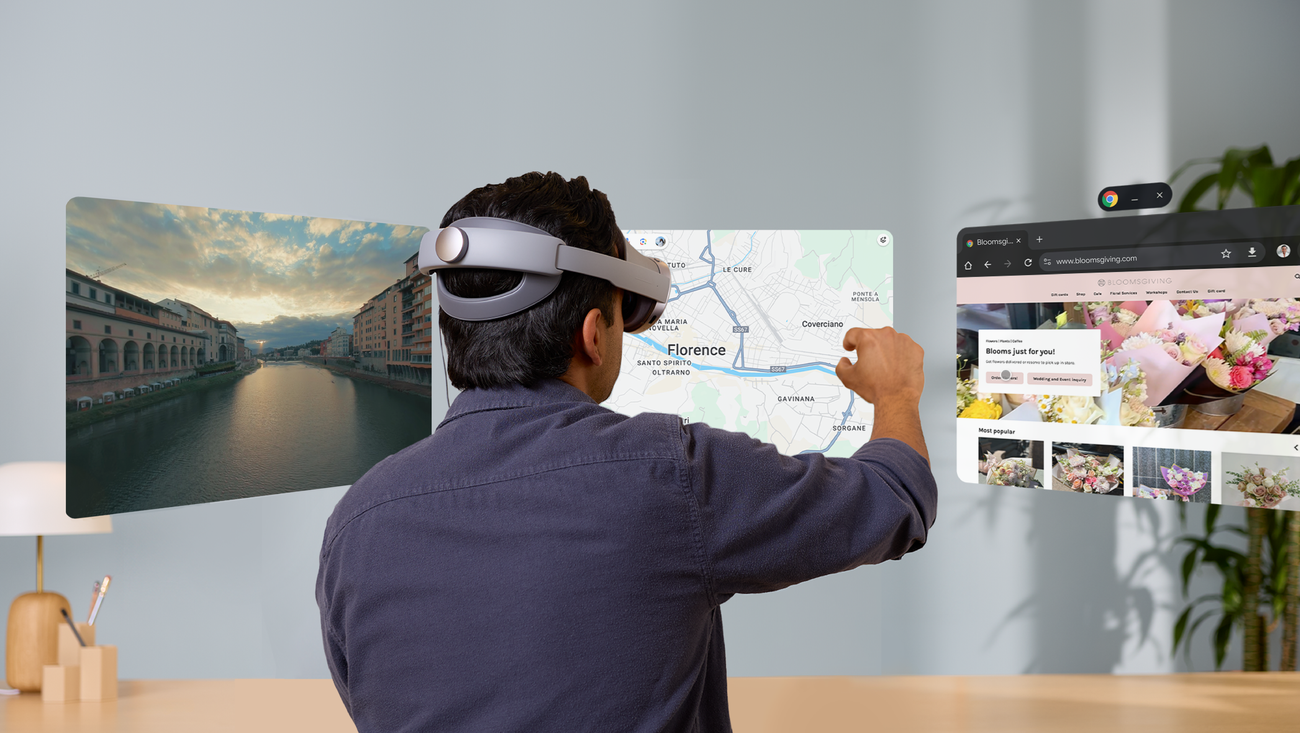
Here’s where things get genuinely interesting. The Samsung Galaxy XR isn’t running some stripped-down, headset-specific operating system. It’s running Android XR — a full Android-based platform that gives you access to the entire Google Play Store. As Google’s official blog post details, this is the first XR device built on a platform designed to leverage the existing Android ecosystem from day one.
Why does this matter so much? The biggest criticism of every XR headset — from Meta Quest to Apple Vision Pro — has been the lack of compelling apps. Vision Pro launched with a handful of native apps and a catalog of iPad apps running in compatibility mode. Meta Quest relies on its own app store, which, while growing, pales in comparison to mainstream mobile platforms.
Android Central went so far as to say Samsung “achieves something Meta and Apple couldn’t” — and they have a point. YouTube, Netflix, Gmail, Google Maps, Chrome, Spotify — the apps people actually use every day are available from launch. Not in some half-baked compatibility mode, but as full Android apps running in a mixed reality environment. For the average consumer who’s been skeptical about XR headsets having “nothing to do on them,” this is a massive deal.
PCVR support is also on the roadmap. Connect the Galaxy XR to a gaming PC and you’ll be able to access SteamVR content, opening the door to the extensive PC VR library. This is functionality Meta Quest 3 already offers, but paired with the Galaxy XR’s superior displays, the experience should be noticeably sharper.
Gemini AI Integration: More Than Just a Voice Assistant
If Android XR is the foundation, Gemini AI is the secret weapon. The Samsung Galaxy XR doesn’t just include Gemini as an app you can open — it’s integrated at the system level, woven into the fabric of how you interact with the headset. Every Galaxy XR purchase includes a one-year Google AI Pro bundle, giving users access to the most capable version of Google’s AI.
Gemini Live enables natural, conversational AI interactions while wearing the headset. Imagine walking through a museum, looking at an exhibit, and simply asking “Tell me about this.” Gemini uses the headset’s cameras to identify what you’re looking at and provides detailed contextual information. It’s the kind of multimodal AI experience that feels genuinely futuristic rather than gimmicky.
Circle to Search also makes the jump to XR. Use eye tracking or hand gestures to highlight any object in your field of view, and Gemini will instantly search for information about it. Need to identify a plant species during a nature walk? Curious about the architect of a building you’re examining in passthrough mode? Circle to Search handles it seamlessly — at least, that’s the promise.
The deeper implication here is that Google is positioning Gemini as the AI layer for spatial computing. While Apple has Siri (which, let’s be honest, remains frustratingly limited) and Meta is pushing its own Meta AI, Google’s multimodal capabilities with Gemini are arguably the most advanced consumer AI currently available. Having that integrated into a mixed reality headset creates possibilities that competitors can’t easily replicate.
Early Concerns: What Reviewers Are Flagging
No product launch is without caveats, and early hands-on reports have surfaced several areas of concern. Tom’s Guide awarded the Galaxy XR a 3.5 out of 5 rating, praising the hardware value but noting significant software rough edges.
The most frequently cited issue is eye and hand tracking reliability. Compared to Vision Pro’s remarkably precise tracking system, the Galaxy XR’s implementation feels noticeably less refined. Eye tracking doesn’t always register where you’re looking accurately, leading to frustrating misclicks in the UI. Hand tracking, while functional, has intermittent recognition failures — particularly with certain gestures or in low-light conditions.
Fan noise is another recurring complaint. The Snapdragon XR2+ Gen 2 generates enough heat during intensive tasks that the internal cooling fan kicks in at an audible level. For a device designed around immersive experiences, having a noticeable whirring sound breaking the illusion is far from ideal. This is a problem Vision Pro largely avoids with its passive cooling design.
The absence of bundled controllers is also a point of contention. While hand tracking is the primary input method (same as Vision Pro), there are scenarios — gaming, precision 3D work, certain productivity tasks — where physical controllers are simply better. Samsung will offer controllers as a separate accessory, but not including them in the box at $1,799 feels like a missed opportunity.
Battery life at 2.5 hours, while better than Vision Pro, still limits the kinds of activities you can comfortably do. Movie nights require planning around charge cycles. Long work sessions demand a nearby power outlet. The modular battery design means you can buy spares and hot-swap them, which is genuinely useful — but that’s additional cost on top of an already significant investment.
The Bigger Picture: What Samsung Galaxy XR Means for Mixed Reality
Stepping back from the spec comparisons and early reviews, the Samsung Galaxy XR represents something important for the mixed reality market regardless of how polished its v1.0 experience turns out to be. It proves that a premium MR headset doesn’t have to cost $3,500. It demonstrates that the Android ecosystem — the world’s most popular mobile platform — can power spatial computing. And it shows that Google’s AI ambitions extend far beyond phones and laptops.
For consumers, the calculus is straightforward. If you’re already invested in the Android and Google ecosystem, the Galaxy XR offers a natural entry point into mixed reality at a price that, while still premium, is significantly more accessible than Apple’s offering. If you prioritize polish, tracking precision, and tight ecosystem integration above all else, Vision Pro remains the benchmark.
For developers and creators, Android XR opens up enormous possibilities. The familiar Android development toolkit, combined with Google’s AI APIs and a rapidly growing installed base, creates a platform with genuine potential. The question is whether Samsung and Google will invest the sustained effort needed to refine the software experience post-launch.
At $1,799, the Samsung Galaxy XR occupies a fascinating “premium midrange” position — more capable than Meta Quest 3, more affordable than Vision Pro. Whether Samsung can nail the software execution to match its impressive hardware remains the open question heading into the October 21 launch. The specs are there. The AI is there. The ecosystem is there. Now it comes down to the experience.
Get weekly AI, music, and tech trends delivered to your inbox.