Korg NAMM 2026: 7 New Products Including Phase8, KAOSS Pad V, and microAUDIO
January 5, 2026
SSL NAMM 2026: ORIGIN EVO Console, UMD192 192-Channel Interface, and TEC Award-Winning Oracle — Full Breakdown
January 6, 2026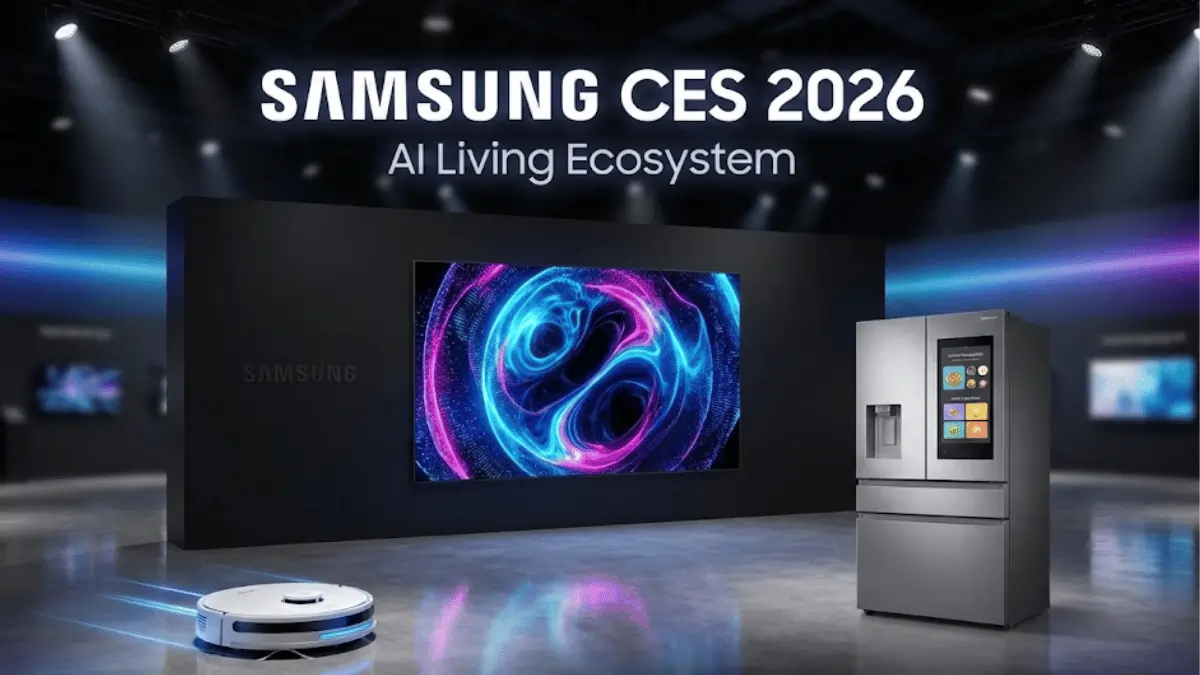
Samsung just turned every appliance in your kitchen into an AI companion — and honestly, it’s about time. At CES 2026 in Las Vegas, CEO TM Roh took the stage to unveil what Samsung calls “Your Companion to AI Living,” a sweeping Samsung Galaxy AI Home vision that connects refrigerators, robot vacuums, washing machines, and even your Galaxy Z TriFold into one seamless, intelligent ecosystem. With over 430 million SmartThings users already on board, this isn’t a concept demo. It’s happening now.
Samsung Galaxy AI Home: The SmartThings Backbone
At the heart of Samsung’s CES 2026 announcements is SmartThings, the platform that quietly became one of the largest smart home ecosystems in the world. The numbers speak for themselves: 430 to 500+ million users, 390 partner brands, and compatibility with over 4,700 device types. Samsung isn’t just building a walled garden — they’re constructing an open city.
What makes this year’s SmartThings update significant is full support for Matter 1.3, the cross-platform smart home standard that lets devices from different manufacturers communicate seamlessly. Whether you’re running Google Home speakers alongside Samsung appliances or mixing in third-party sensors, Matter 1.3 ensures everything plays nice together. Samsung’s explicit commitment to open ecosystems is a direct response to consumer frustration with fragmented smart home setups.
SmartThings now also serves as the central nervous system for Samsung’s new Bespoke AI appliance lineup. Every Bespoke AI device — from the refrigerator to the robot vacuum — connects through SmartThings, sharing data and learning your household patterns over time. The platform doesn’t just control devices; it orchestrates them.
Bespoke AI Home Companions: Appliances That See, Hear, and Understand
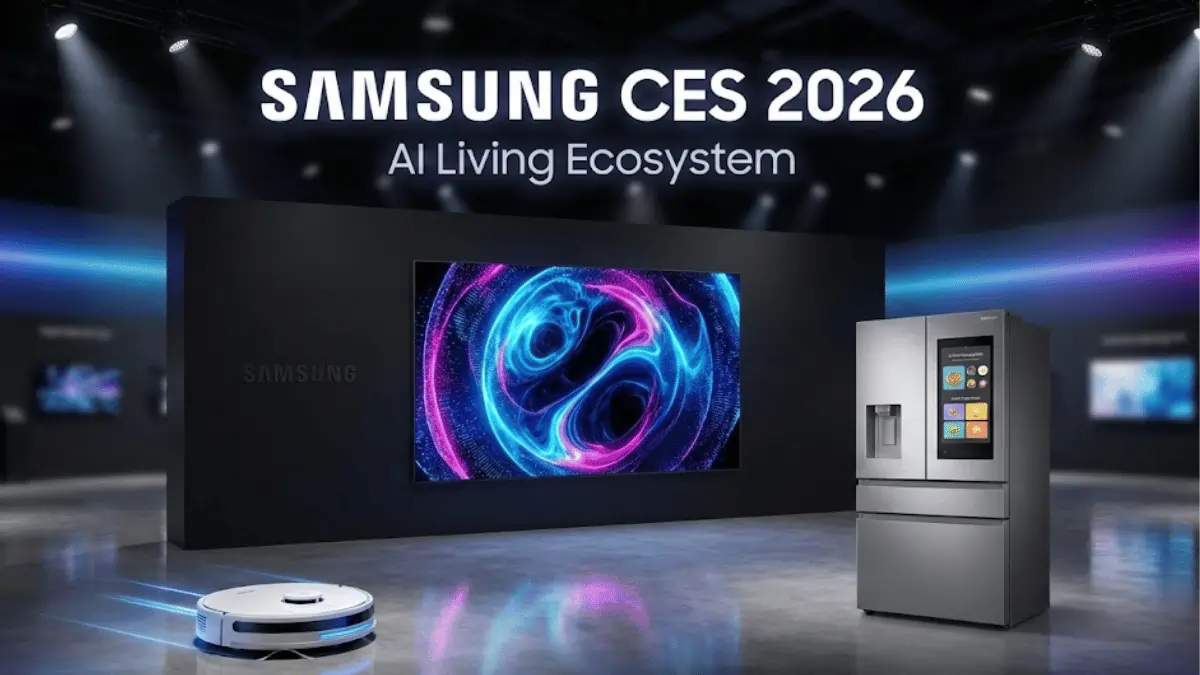
Samsung’s “Home Companion” concept redefines what we expect from household appliances. Instead of dumb machines that follow simple commands, Bespoke AI devices are equipped with Bixby voice recognition, integrated screens, and cameras. They can see what’s happening in your home, hear your requests in natural language, and respond with contextual intelligence.
The standout feature is Bixby Voice ID, which identifies individual family members by voice and delivers personalized responses. Your morning routine briefing will be different from your partner’s, and the kids get age-appropriate content. Each person gets their own experience from the same device — no more one-size-fits-all smart home interactions.
The Bespoke AI Family Hub Refrigerator might be the star of the show. Its 32-inch touchscreen now runs Google Gemini AI Vision, which can recognize the food inside your fridge and suggest recipes, track expiration dates, and even help build shopping lists. It’s a genuine step toward the intelligent kitchen that tech companies have promised for a decade. Samsung partnered with Google specifically for this feature, combining Gemini’s multimodal AI capabilities with Samsung’s hardware expertise.
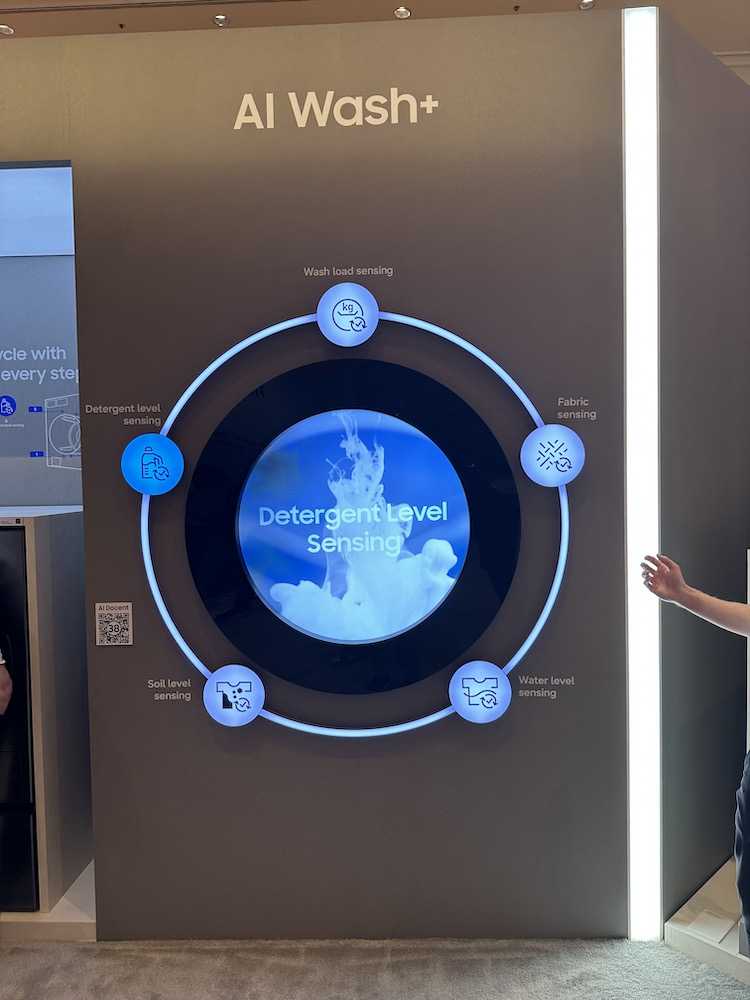
The Bespoke AI Laundry Combo brings automated wash-and-dry optimization with a faster super-speed cycle. The machine analyzes fabric types and load sizes to determine the ideal settings — no more guessing whether to use delicate or heavy-duty mode. The Bespoke AI AirDresser adds specialized garment care with Auto Wrinkle Care, handling items that shouldn’t go in a traditional washer.
Bespoke AI Jet Bot Steam Ultra: The Smartest Robot Vacuum Yet
Robot vacuums have been getting incrementally smarter for years, but Samsung’s Bespoke AI Jet Bot Steam Ultra represents a genuine leap. Powered by the Qualcomm Dragonwing processor — a chip designed specifically for edge AI in robotics — the Jet Bot uses 3D liquid detection to identify and avoid spills before they become a bigger mess. It doesn’t just vacuum; it steam-cleans, combining two cleaning modes in a single pass.
The Dragonwing processor enables real-time object recognition and path planning that previous-generation robot vacuums simply couldn’t match. Samsung claims the Jet Bot can distinguish between pet toys, shoes, cables, and actual debris — a common pain point for anyone who’s found their robot vacuum tangled in a charging cord at 3 AM. The entire Bespoke AI collection earned a CES Innovation Award for connectivity and integration, a recognition that Samsung’s approach to smart home design is resonating with the industry.
Galaxy Z TriFold: Your Mobile Samsung Galaxy AI Home Hub
Samsung also positioned the Galaxy Z TriFold as a mobile home control hub. The foldable’s expansive screen real estate makes it ideal for managing SmartThings dashboards, viewing security camera feeds, or controlling appliance settings on the go. It’s a natural extension of the Samsung Galaxy AI Home ecosystem — your home AI doesn’t stop at your front door.
The integration between Galaxy devices and Bespoke AI appliances runs deep. Bixby commands initiated on your phone carry through to home devices seamlessly. Start a recipe on your Galaxy Z TriFold, and the Family Hub refrigerator picks up where you left off. Ask Bixby on your phone to preheat the oven, and it routes the command through SmartThings without requiring you to open an app. This cross-device handoff represents a level of continuity that Apple’s ecosystem has offered for personal devices, but Samsung is now applying to the entire home.
Displays and Entertainment: Micro RGB TVs, Soundbars, and Projectors
The Samsung Galaxy AI Home ecosystem extends far beyond the kitchen and laundry room. Samsung’s display lineup at CES 2026 was equally ambitious, headlined by the expanded Micro RGB TV range. The lineup now spans from 55 inches all the way up to a flagship 130-inch R95H model, which achieves 100% BT.2020 color gamut coverage — a first for consumer displays. The 130-inch model features a Timeless Frame design with metal easel and embedded speakers, positioning it as both a television and a piece of interior design.
On the audio side, Samsung introduced the Music Studio 5 and Music Studio 7 wireless speakers with both Bluetooth and WiFi connectivity, plus the HW-QS90H all-in-one 7.1.2 channel soundbar featuring a Quad Bass Woofer system. The Freestyle+ portable projector received enhanced brightness and AI-powered image calibration, making it a versatile option for both indoor movie nights and outdoor use. Samsung even showed off a 32-inch 6K gaming monitor with glasses-free 3D capability — a niche product, but one that signals Samsung’s confidence in autostereoscopic display technology.
What ties all of these together is Vision AI Companion, Samsung’s TV-based AI feature that has already achieved a 25% adoption rate within just three months of launch. All 2026 Samsung TVs ship with seven years of Tizen OS updates, meaning the AI capabilities will continue evolving long after purchase. The ultra-thin OLED S95H rounds out the premium lineup, offering Samsung’s thinnest profile yet combined with AI-enhanced picture processing.
Samsung also introduced the Bespoke AI WindFree Pro Air Conditioner, which uses AI to learn temperature preferences and adjust airflow patterns for individual rooms. The WindFree technology disperses cool air through micro-holes to eliminate the discomfort of direct cold air blasts. Combined with SmartThings energy monitoring, it can optimize energy consumption based on occupancy patterns and time-of-use electricity rates — a practical consideration that directly impacts monthly utility bills.
Open Ecosystem Strategy and the Hartford Steam Boiler Partnership
Samsung’s open ecosystem strategy at CES 2026 goes beyond just supporting Matter 1.3. The company made a pointed argument that the next era of home intelligence must be built on open collaboration, not closed ecosystems. With modern homes using devices from dozens of different brands, interoperability isn’t a nice-to-have — it’s essential.
One of the most unexpected announcements was Samsung’s partnership with Hartford Steam Boiler (HSB), an insurance company. SmartThings-connected homes can now qualify for reduced insurance premiums. The logic is straightforward: homes with leak detectors, smart smoke alarms, and connected security systems are statistically less likely to file claims. It’s the first time a major smart home platform has directly translated into financial savings through insurance, and it could become a compelling selling point for consumers on the fence about smart home adoption.
What This Means for the Smart Home Market
Samsung’s CES 2026 presentation wasn’t just a product showcase — it was a strategic manifesto. The Samsung Galaxy AI Home ecosystem represents a shift from “smart devices that do tricks” to “intelligent companions that understand your household.” Bixby Voice ID personalization, Gemini-powered food recognition, Qualcomm Dragonwing edge AI processing, and Matter 1.3 interoperability are all pieces of a larger puzzle that Samsung is assembling faster than any competitor.
The competitive landscape makes Samsung’s timing critical. Apple continues to expand HomeKit, Google is deepening Nest integration with Gemini AI, and Amazon’s Alexa ecosystem remains massive. What sets Samsung apart is hardware breadth — no other company manufactures TVs, refrigerators, washing machines, robot vacuums, air conditioners, smartphones, and tablets under one brand. That vertical integration gives SmartThings a natural advantage: every Samsung product you buy strengthens the ecosystem without requiring you to research compatibility or install third-party bridges.
The real question is whether consumers will embrace the full ecosystem or cherry-pick individual products. Samsung is betting that once you have two or three Bespoke AI devices talking through SmartThings, the convenience becomes self-reinforcing. Your refrigerator knows what you’re cooking, your oven preheats accordingly, and your robot vacuum cleans the kitchen floor afterward — all triggered by a single voice command or, increasingly, by the system anticipating what you need before you ask.
The HSB insurance partnership adds a financial incentive layer that no competitor has matched, and the Matter 1.3 commitment means Samsung isn’t asking you to go all-in on one brand. You can mix and match. That strategic openness, combined with the sheer scale of 430 million SmartThings users, positions Samsung’s Galaxy AI Home ecosystem as the platform to watch in 2026 and beyond. The age of isolated smart gadgets is ending, and the age of AI-orchestrated homes is here.
Get weekly AI, music, and tech trends delivered to your inbox.