Waves V15 Explained: Plugin Format Changes, New Installers, and What Every Producer Needs to Know
September 18, 2025
AI Image Generation September Roundup: FLUX 1.1 vs SDXL vs Midjourney v7 — The Definitive Comparison
September 19, 2025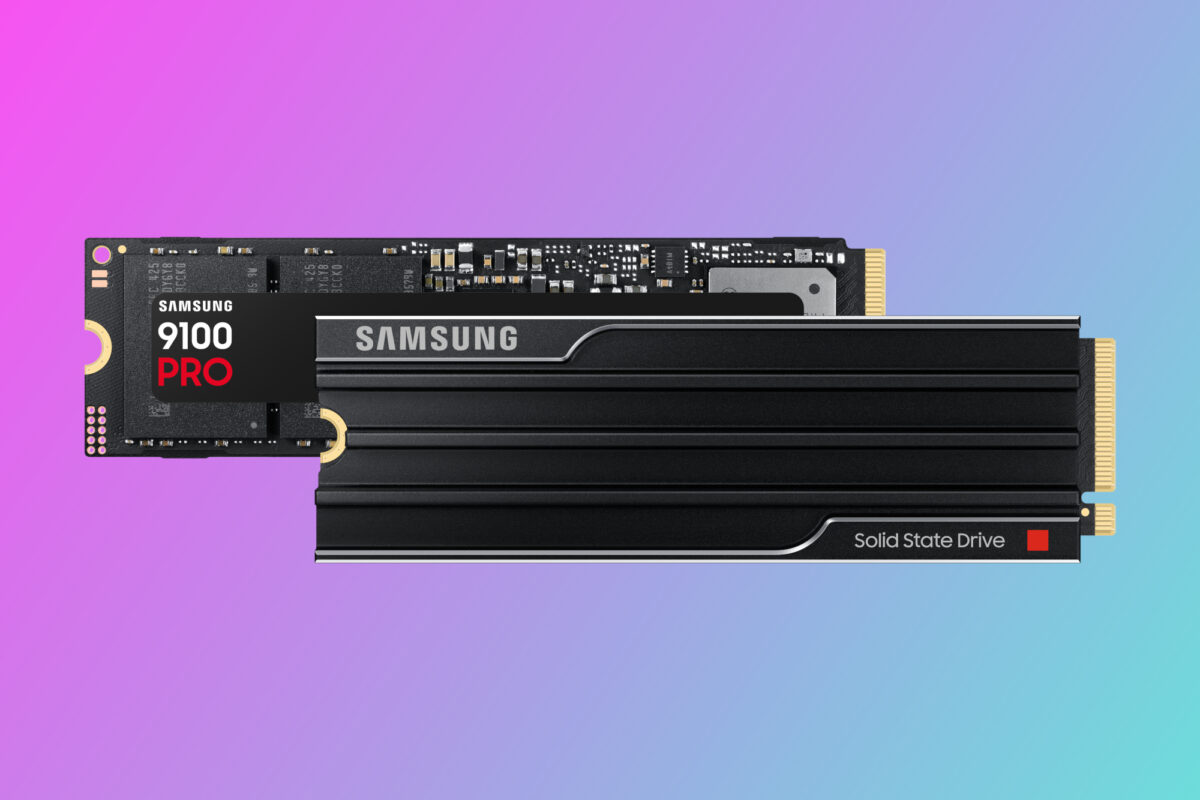
Finally — Samsung’s 8TB M.2 SSD is actually shipping. After months of teasing us with 1TB through 4TB models since March 2025, the Samsung 9100 PRO SSD has finally arrived in its most ambitious capacity: 8 terabytes on a single M.2 2280 stick. At $999, it’s not cheap. But if you’ve been waiting for a consumer Gen5 drive that can swallow your entire game library, 4K video projects, and AI model datasets without blinking, this is the one Samsung built for you.
Samsung took their time entering the PCIe 5.0 consumer space. While competitors like Crucial, Corsair, and Western Digital rushed Gen5 drives to market throughout 2024, Samsung held back — refining their in-house controller, optimizing their latest NAND, and clearly planning something bigger than a mere speed bump. The result is the 9100 PRO: Samsung’s statement that when they show up to the Gen5 party, they bring the biggest capacity option anyone has ever seen in a consumer M.2 form factor.
Samsung 9100 PRO SSD: What’s Under the Label
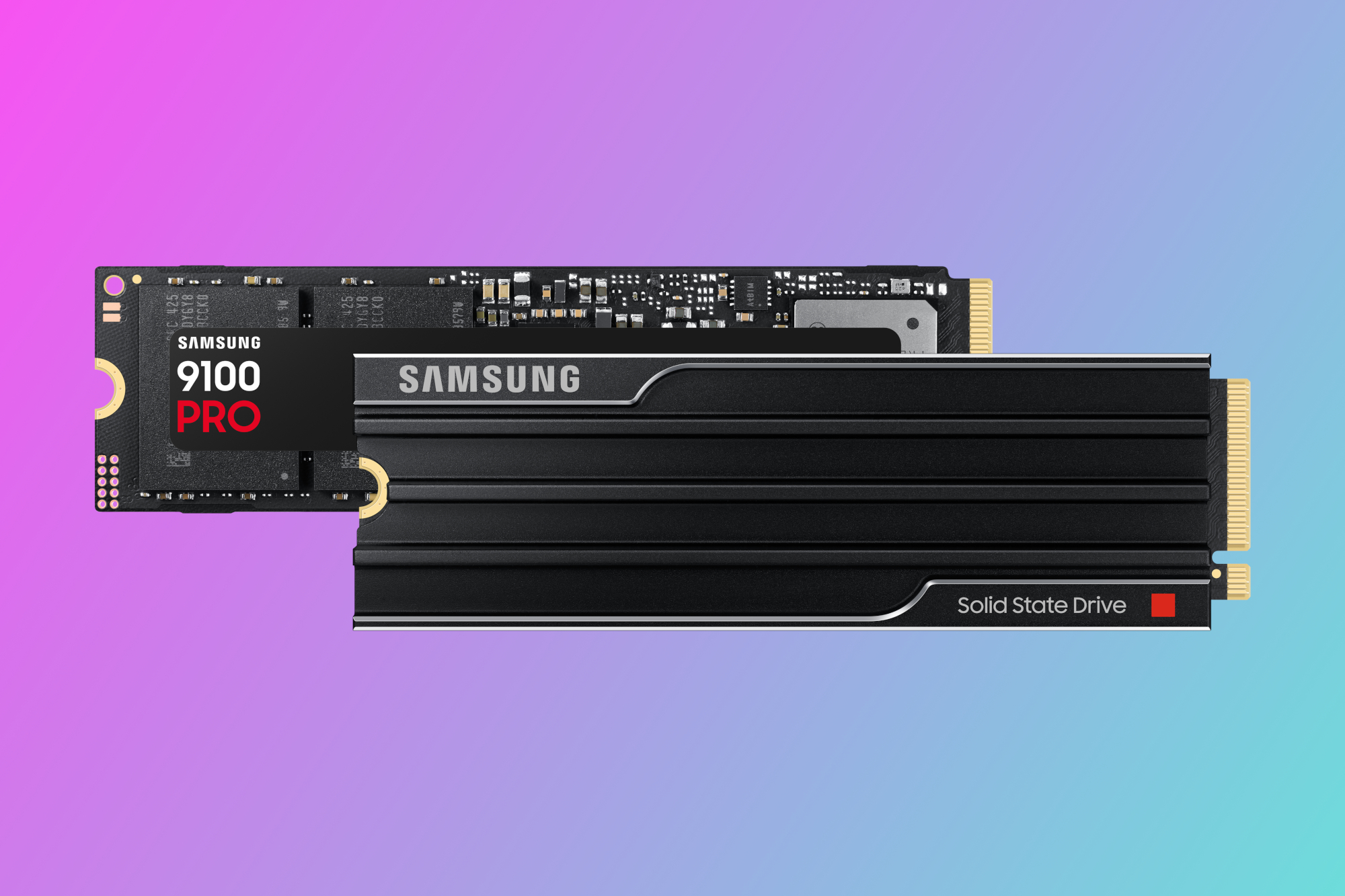
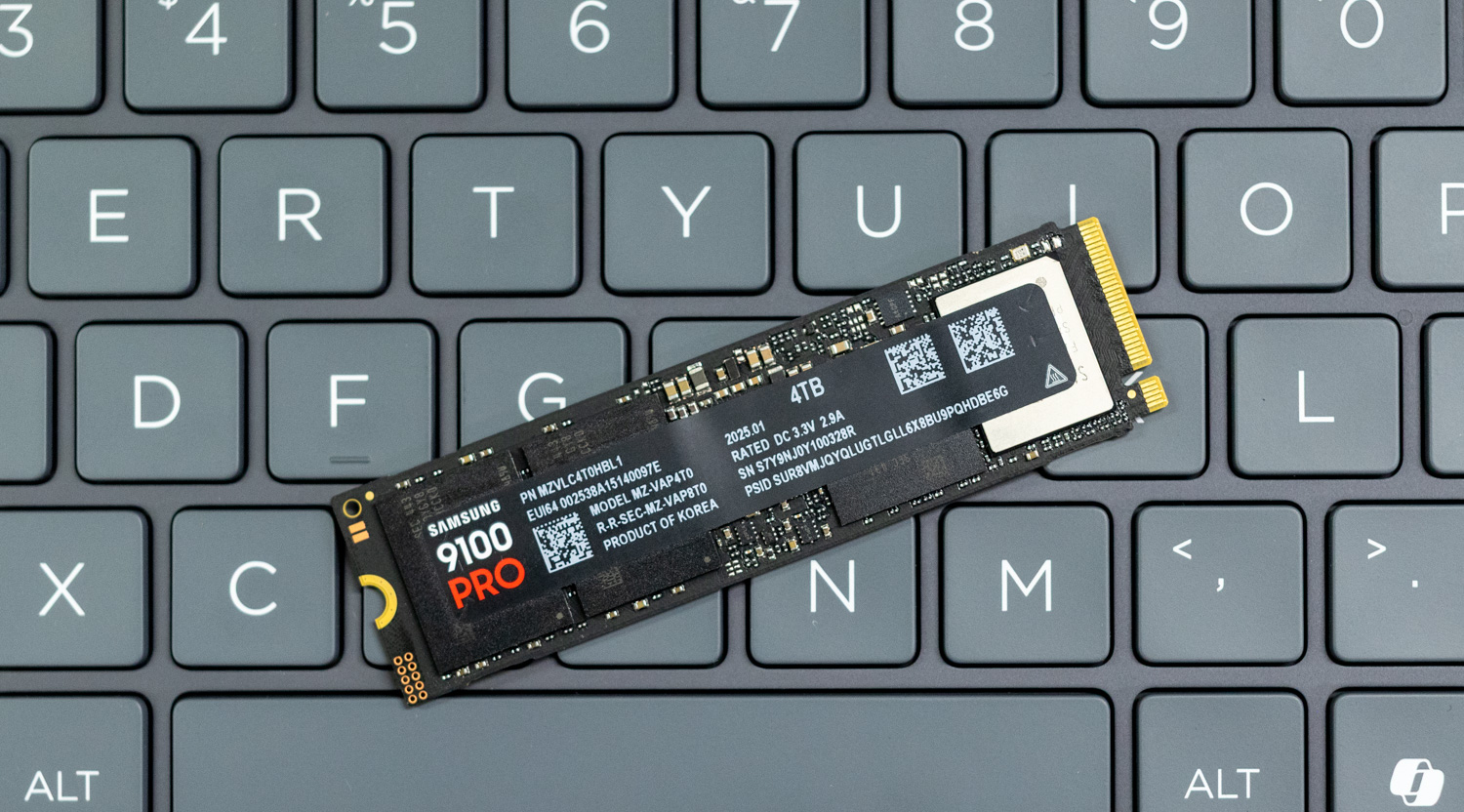
The Samsung 9100 PRO SSD runs on the PCIe 5.0 x4 interface with NVMe 2.0 protocol, which is Samsung’s long-awaited entry into the Gen5 consumer space. At the heart of this drive sits Samsung’s in-house Presto 8-channel controller, paired with their latest V-NAND V8 236-layer TLC flash. Samsung claims sequential read speeds of up to 14,800 MB/s and sequential writes of 13,400 MB/s — numbers that put it squarely in flagship territory alongside the Crucial T705 and Corsair MP700 Pro SE.
Random performance is equally impressive on paper: 2,200K IOPS for reads and a staggering 2,600K IOPS for writes. Each capacity tier gets 1GB of DRAM cache per terabyte, meaning the 8TB model is packing 8GB of dedicated DRAM — a serious commitment to sustained performance under heavy workloads. This is not a DRAM-less budget drive masquerading as a flagship; Samsung went all-in on the hardware bill of materials here.
The Presto controller deserves special attention. Unlike most Gen5 competitors that rely on the Phison E26 controller (a third-party solution), Samsung designed the Presto entirely in-house. This vertical integration — Samsung NAND, Samsung controller, Samsung firmware — gives them tighter optimization control over the entire storage stack. It’s the same strategy that made the 970 EVO and 980 PRO legendary, and Samsung is betting it’ll pay off again with Gen5.
” alt=”Samsung 9100 PRO SSD M.2 2280 PCIe 5.0 NVMe drive close-up”/>
Performance Benchmarks: Samsung 9100 PRO SSD vs the Competition
Let’s talk real numbers. According to Tom’s Hardware’s review, the Samsung 9100 PRO SSD delivers excellent synthetic benchmark scores that match or approach its rated specifications. In sequential workloads, the drive consistently hits near the advertised 14,800 MB/s read and 13,400 MB/s write speeds — a genuine achievement for a consumer M.2 drive. CrystalDiskMark numbers came in right where Samsung promised, and sustained sequential write performance held up well even under extended torture tests.
However, the picture gets more nuanced in multi-queue random performance. Tom’s Hardware noted that the 9100 PRO trails some Phison E26-based competitors in heavily threaded random workloads. The Crucial T705 and Corsair MP700 Pro SE, both using the Phison E26 controller, edge ahead in these specific scenarios. It’s a relatively small margin — we’re talking single-digit percentage differences in most cases — but worth noting for users whose workflows depend on deep queue-depth random I/O, such as database servers or heavy virtualization hosts.
Real-world file transfer tests painted a similar picture. Large file copies and folder transfers showed the Samsung 9100 PRO SSD performing admirably but not dominating. In PCWorld’s testing, mixed workload performance was solid but not category-leading, with the Crucial T705 maintaining a slight edge in scenarios that combine random and sequential access patterns. For the vast majority of desktop users, though, these differences are imperceptible in daily use.
Where the Samsung 9100 PRO SSD really shines is in power efficiency. Samsung claims a 50% reduction in power consumption compared to the 990 Pro, and reviewers have confirmed noticeably lower thermals during sustained workloads. This is a big deal for laptop users and compact builds where heat management is critical. Lower power draw means less thermal throttling under sustained loads, which translates to more consistent performance over time. The 2TB model even comes in a single-sided design with an optional heatsink (+$20), making it one of the most laptop-friendly Gen5 drives available.
Gaming Performance: Is the Samsung 9100 PRO SSD Worth It for Gamers?
PCGamesN called it the “fastest gaming SSD” in their review, and the numbers back that up. In Battlefield V load tests, the 9100 PRO achieved a remarkable 1,526 MB/s average load speed, outperforming the Crucial T705 in direct gaming comparisons. Overwatch 2 loads clocked in at 571 MB/s — numbers that translate to noticeably shorter load screens in practice. These results suggest Samsung’s firmware optimization for sequential read patterns, which is what game loading primarily relies on, is among the best in the business.
For gamers specifically, the 8TB model is the real game-changer (pun intended). Modern AAA titles routinely exceed 100GB, with some approaching 200GB. Call of Duty alone can consume over 150GB, and flight simulators like Microsoft Flight Simulator push well past 200GB with add-ons. An 8TB Gen5 drive means you can keep 40-80 major titles installed simultaneously without playing the install-uninstall shuffle. Pair that with DirectStorage support, and you’ve got a storage solution that won’t bottleneck next-gen gaming for years to come.
It’s worth noting that most current games don’t fully leverage PCIe 5.0 bandwidth — the performance difference between a top-tier Gen4 drive and a Gen5 drive in game loading is often minimal. But as DirectStorage adoption grows and game engines start streaming assets more aggressively from storage, having Gen5 headroom becomes a form of future-proofing. The Samsung 9100 PRO SSD positions itself well for that transition.
” alt=”Samsung 9100 PRO SSD benchmark comparison chart showing PCIe 5.0 speeds”/>
The Full Samsung 9100 PRO SSD Lineup: Pricing and Specs
Samsung launched the 1TB through 4TB models in March 2025, with the flagship 8TB arriving in September 2025. Here’s the complete pricing breakdown:
- 1TB — $199.99 (600 TBW endurance)
- 2TB — $299.99 (1,200 TBW endurance, single-sided design)
- 4TB — $549.99 (2,400 TBW endurance)
- 8TB — $999.99 (4,800 TBW endurance)
All models come with a 5-year warranty and 600 TBW per terabyte of endurance. The endurance rating is adequate but not class-leading — some enterprise-focused NVMe drives offer significantly higher TBW ratings, though those come at substantially higher price points. For the vast majority of consumer and prosumer workloads, 600 TBW per TB is more than sufficient for the warranty period. The 2TB model offers an optional heatsink variant for an additional $20, which is particularly useful for desktop builds without motherboard-integrated heat spreaders.
Compared to the competition, Samsung’s pricing sits at a slight premium. The Crucial T700 2TB can be found for around $20-40 less, and the WD Black SN850X offers excellent Gen4 performance at considerably lower price points for users who don’t need maximum bandwidth. But no competitor currently offers an 8TB consumer M.2 option — that’s Samsung territory alone for now. The closest alternative would be buying two 4TB Gen5 drives, which costs more and requires two M.2 slots.
Samsung 9100 PRO SSD Power Efficiency: The Unsung Hero
One of the most underappreciated aspects of the Samsung 9100 PRO SSD is its power profile. Gen5 SSDs have earned a reputation for running hot — many competitors require beefy heatsinks and active cooling to avoid thermal throttling. Samsung attacked this problem head-on with the Presto controller’s power management architecture.
The 50% power reduction compared to the 990 Pro is remarkable considering the 9100 PRO delivers roughly double the sequential throughput. According to Samsung’s official specifications, the drive achieves this through a combination of more efficient NAND operations (thanks to V8’s architectural improvements), an optimized controller design, and aggressive power state management during idle periods.
For laptop users, this translates to meaningful battery life improvements. A Gen5 SSD that sips power like a Gen4 drive while delivering Gen5 performance is exactly what the mobile workstation market has been waiting for. StorageReview’s testing confirmed that the 9100 PRO’s thermal behavior is among the best in the Gen5 class, making it a strong candidate for thin-and-light laptops that support PCIe 5.0.
Who Actually Needs an 8TB Gen5 SSD?
The $999 question: who is this for? Here are the use cases where the Samsung 9100 PRO SSD 8TB genuinely makes sense:
- Content Creators — 4K and 8K video editors dealing with multi-terabyte project files. A single 8TB Gen5 drive as your scratch disk eliminates the need for RAID arrays in many workflows. One hour of 8K ProRes footage can consume 200-300GB, so an 8TB drive gives you room for entire multi-day shoots on a single drive.
- AI/ML Developers — Large language model training and inference workloads benefit from high-speed sequential reads. Loading multi-gigabyte model weights from NVMe storage is dramatically faster than SATA or even Gen4 alternatives. With models like Llama 3 exceeding 100GB for larger variants, an 8TB drive can house multiple model checkpoints without compromise.
- Power Gamers — The “install everything” crowd who refuse to compromise. 8TB means your entire Steam library lives on one blazing-fast drive. No more deciding which games to uninstall when a new release drops.
- Music Producers — Large sample libraries (Kontakt, Spitfire, EastWest) can easily consume 2-4TB. An 8TB Gen5 drive means instant sample streaming with zero buffer underruns, even in massive orchestral templates with hundreds of simultaneous voices.
- Data Professionals — Database workloads, data science pipelines, and analytics platforms that benefit from high random IOPS and massive capacity in a single drive slot. Having your entire dataset on one NVMe drive simplifies architecture and eliminates network storage latency.
The Honest Verdict: Pros, Cons, and the Competition
After analyzing reviews from PCWorld, Tom’s Hardware, and StorageReview, here’s where the Samsung 9100 PRO SSD stands in the broader Gen5 landscape:
What Samsung got right: Outstanding synthetic performance that meets advertised specs, class-leading power efficiency (50% less than the 990 Pro), reduced heat output that makes Gen5 viable in laptops, excellent gaming load speeds that earned it the “fastest gaming SSD” title from PCGamesN, and the sheer audacity of offering 8TB in a consumer M.2 form factor. The in-house Presto controller and V-NAND V8 combination shows Samsung’s vertical integration advantage — they control every piece of the silicon stack, and it shows in the power efficiency numbers.
Where it falls short: Multi-queue random performance trails the best Phison E26 competitors, particularly the Crucial T705 and Corsair MP700 Pro SE. Real-world file transfer speeds are marginally slower than the T705 in some mixed workload scenarios. The price premium over competitors like the Crucial T700 is noticeable at every capacity tier. Some reviewers felt the 600 TBW/TB endurance rating could be more generous for a flagship product, especially one positioned at this price point. Tom’s Hardware and PCWorld both landed on 3.5 out of 5 — a solid score, but not the home run some expected from Samsung’s Gen5 debut.
The bottom line: The Samsung 9100 PRO SSD is a strong all-around Gen5 drive with unmatched capacity options and excellent power efficiency. It’s not the outright fastest in every benchmark — the Crucial T705 takes that crown in random workloads — but it’s the most complete package when you factor in power consumption, thermal management, capacity options, and Samsung’s track record for firmware reliability. For the 2TB sweet spot, the competition is fierce, and the T705 arguably offers better raw performance per dollar. But at 4TB and especially 8TB, there’s simply no alternative in the consumer M.2 space. If massive, fast storage in a single drive is your priority, the Samsung 9100 PRO SSD 8TB is the only game in town — and it plays that game very well.
Get weekly AI, music, and tech trends delivered to your inbox.