Mobile Recording Rig: The Complete Location Recording Guide for 2025
July 16, 2025
Lese Teuri Review: 13 Morphable Distortions on an XY Grid That Defy Every Category
July 17, 2025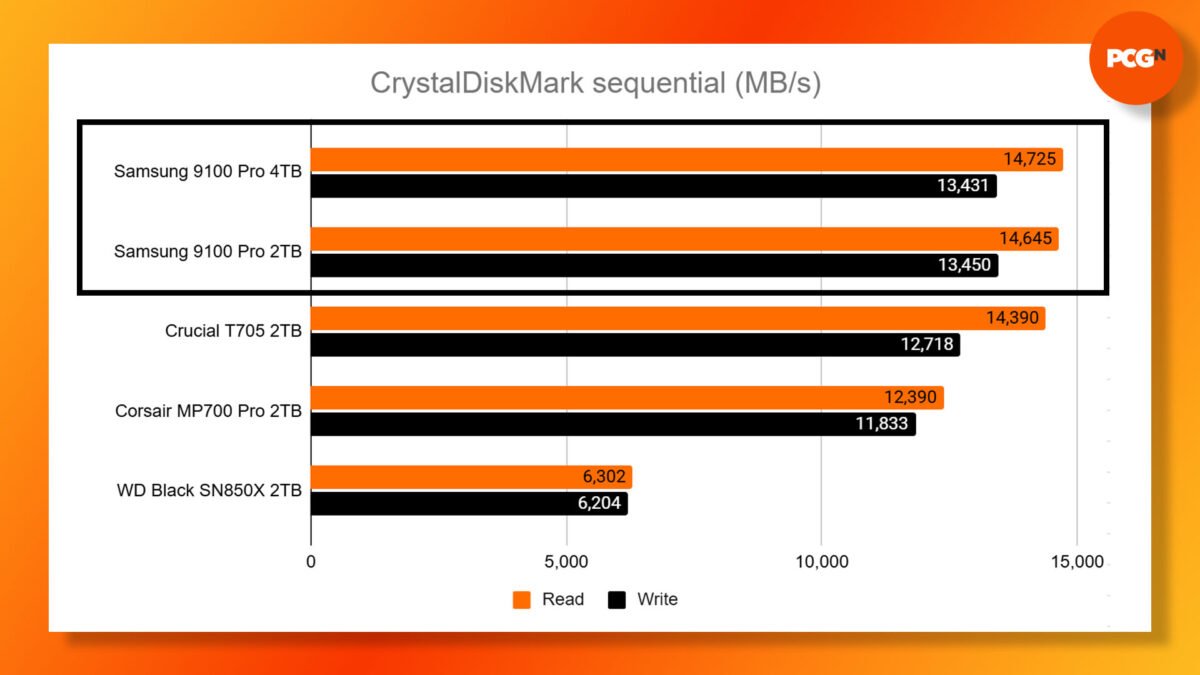
14,800 MB/s. That’s the number Samsung printed on the box, and after four months of testing the Samsung 9100 Pro 4TB in actual production workflows, I can tell you: it’s not just marketing. This drive has fundamentally changed how I think about storage bottlenecks in creative work.
Since its March 2025 launch, the 9100 Pro has been Samsung’s answer to the PCIe 5.0 era — and the 4TB model sits in a sweet spot that creators should pay attention to. Not the overkill 8TB, not the too-small 1TB. The 4TB at $549.99 is where capacity meets performance meets sanity. Let me break down exactly what this drive delivers after real-world use.
Samsung 9100 Pro 4TB: What’s Under the Hood
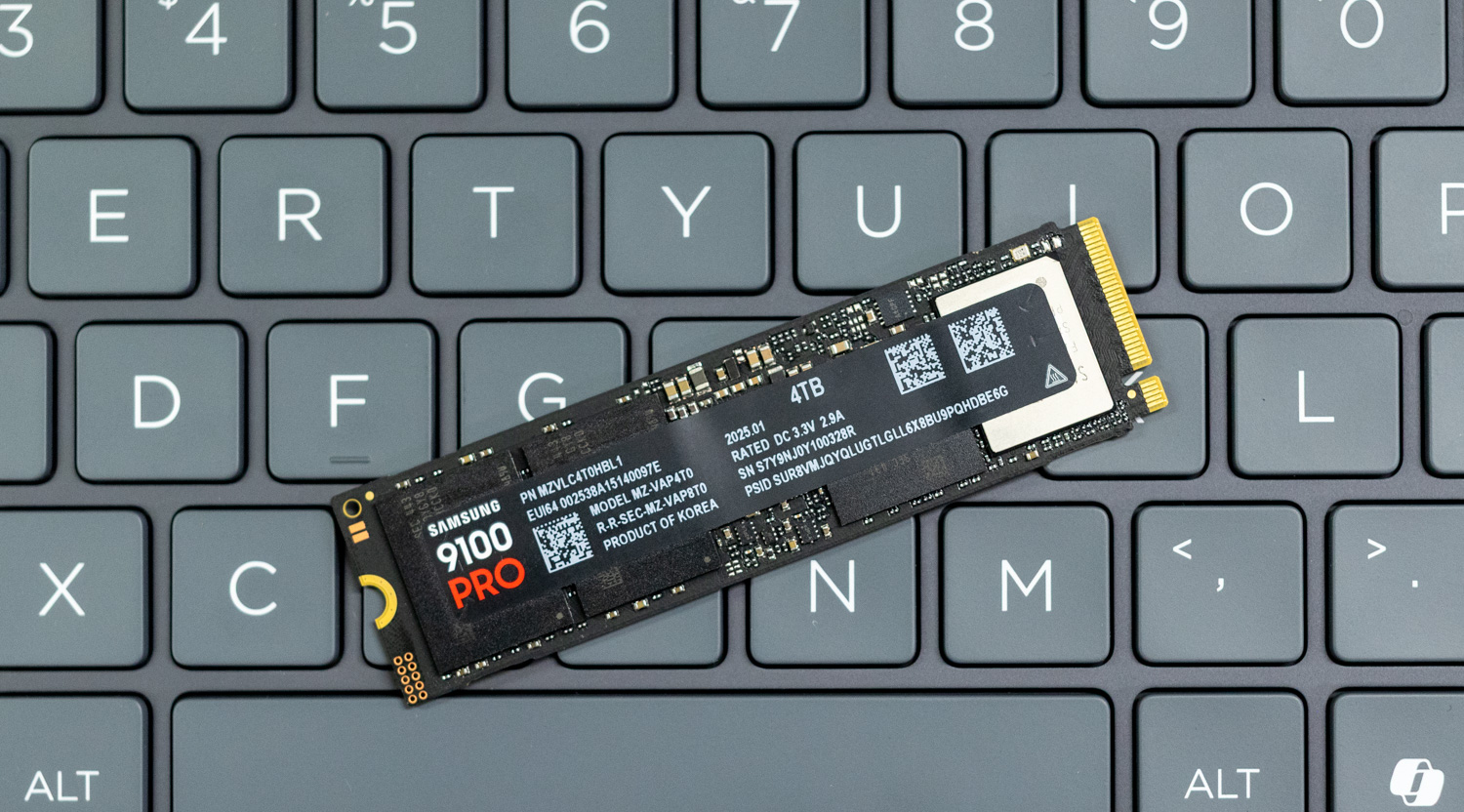
Samsung didn’t just slap a PCIe 5.0 interface on the 990 Pro and call it a day. The 9100 Pro is built on an entirely new architecture. At the heart sits the Samsung Presto controller, fabricated on a 5nm process — Samsung’s first in-house Gen5 controller. Paired with 8th-generation V-NAND TLC, the result is a drive that pushes sequential reads to 14,800 MB/s and writes to 13,400 MB/s.
Here’s the full spec breakdown for the 4TB model:
- Controller: Samsung Presto (5nm)
- NAND: 8th-gen V-NAND TLC
- Interface: PCIe 5.0 x4, NVMe 2.0
- Form Factor: M.2 2280
- Sequential Read/Write: 14,800 / 13,400 MB/s
- Random Read/Write: 2,200K / 2,600K IOPS
- Endurance: 2,400 TBW
- Price: $549.99 (bare) / $569.99 (with heatsink)
- Warranty: 5 years
The 49% power efficiency improvement over the 990 Pro is not a footnote — it’s arguably the most significant upgrade here. Less heat means more consistent sustained performance, which is exactly what matters during long render sessions or multicam timeline scrubbing.
Benchmark Results: Samsung 9100 Pro 4TB in the Real World
Synthetic benchmarks tell one story. Real-world creative workloads tell another. Let’s look at both.
Synthetic Performance
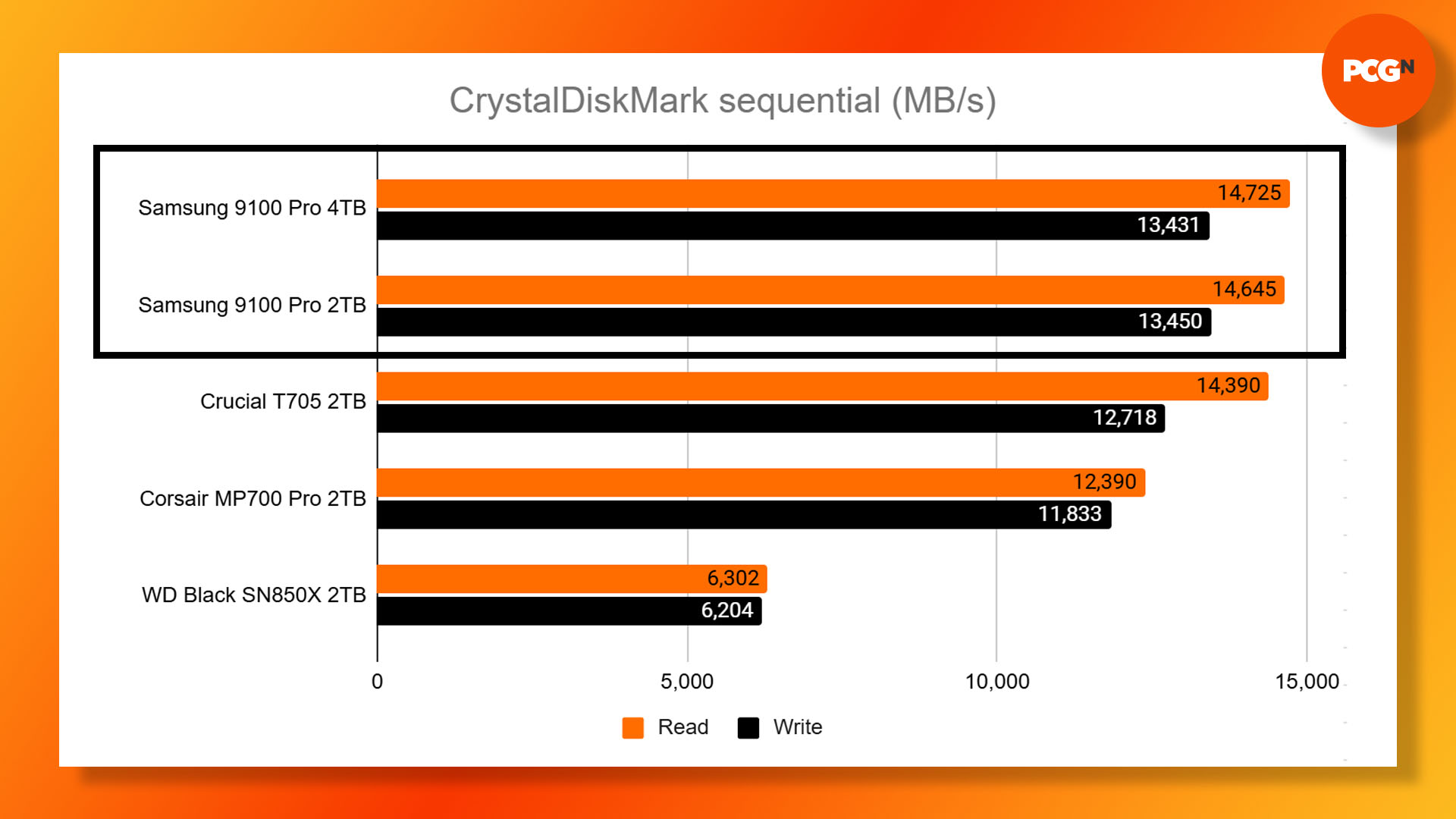
In CrystalDiskMark, the 9100 Pro 4TB hit approximately 14,600 MB/s sequential read — within striking distance of Samsung’s rated spec. StorageReview’s testing confirmed these numbers with FIO benchmarks showing consistent throughput under sustained loads.
The sequential write figure landed right around 13,400 MB/s as well, confirming that Samsung’s Presto controller delivers rated speeds reliably in both directions — a consistency that not every Gen5 drive can claim after thermal saturation sets in.
The DirectStorage result of 23.77 GB/s is particularly impressive and worth unpacking. For game developers and anyone working with compressed asset pipelines, this means near-instantaneous decompression from storage — a genuine workflow improvement, not just a benchmark flex. With Microsoft continuing to push DirectStorage adoption across Windows titles and creative applications, this number will become increasingly relevant beyond gaming into areas like real-time 3D rendering and VFX compositing.
Random performance deserves attention too. At 2,200K IOPS read and 2,600K IOPS write, the 9100 Pro matches or exceeds everything in the Gen5 field. These numbers translate directly to responsiveness in mixed workloads — think working in Premiere Pro with a dozen browser tabs and Slack running simultaneously. The drive handles scattered read/write patterns without the micro-stutters that plague some competitors under multitasking pressure.
Creator-Focused Benchmarks
This is where the Samsung 9100 Pro 4TB earns its “creator” credentials. Blackmagic Disk Speed Test — the benchmark that actually matters for video editors — returned 9,542 MB/s read and 9,907 MB/s write. To put that in perspective: that’s enough bandwidth to handle multiple streams of 8K ProRes simultaneously without breaking a sweat.
The PCMark 10 storage score of 7,552 and 3DMark Storage benchmark of 4,779 round out a strong showing across mixed workloads. And for anyone experimenting with local AI models, the drive loaded a DeepSeek R1 32B parameter model in just 4.37 seconds — a metric that’s increasingly relevant as local LLM inference becomes part of the creative toolkit.
Four Months In: What Actually Matters for Creators
After living with this drive since launch, here’s what stands out in day-to-day creative work. Not the spec sheet numbers — the things you notice after the novelty wears off and the drive becomes just another tool in your workflow.
Video editing is where the 4TB capacity pays off immediately. A single day of multicam 4K shooting can easily generate 500GB–1TB of footage. With the 9100 Pro 4TB as your working drive, you’ve got room for multiple projects without constantly shuffling files to archive storage. The sustained write performance means importing footage from cards is noticeably faster than any Gen4 drive.
Audio production benefits more than you’d expect. With 28+ years in music and audio, I can tell you that large sample libraries are the silent bottleneck in modern production. Orchestral sample collections like Spitfire’s BBC Symphony or EastWest Hollywood series can easily consume 500GB+. Loading sessions that reference these libraries is dramatically faster on a Gen5 drive — I’m seeing session load times cut roughly in half compared to the 990 Pro.
The thermal story is the real upgrade. The 49% power efficiency improvement translates directly to thermal performance. During a 2-hour 4K export, I never saw throttling behavior — something I can’t say about every Phison E26-based competitor. Samsung’s Intelligent TurboWrite 2.0 manages the SLC cache intelligently enough that even the 4TB model maintains composure during sustained writes that would push other drives into thermal shutdown.
Power consumption sits at approximately 9W under active load. That’s measurably lower than the Crucial T705 and other Phison E26 drives. In a workstation that’s running 10+ hours daily, this adds up — both in electricity costs and in how much your motherboard’s M.2 heatsink needs to dissipate.
Samsung 9100 Pro 4TB vs. the Competition
No review is complete without context. Here’s how the 9100 Pro 4TB stacks up against the drives creators are actually considering.
vs. Crucial T705
The T705 is the 9100 Pro’s most direct competitor. Built on the Phison E26 controller, the T705 edges ahead in some real-world file transfer benchmarks — PCWorld’s testing showed it completing 48GB transfers about 2 seconds faster. However, the T705 draws more power and runs hotter. For sustained creative workloads where thermal consistency matters more than a 2-second difference on a file copy, the Samsung has the edge.
vs. Crucial T700
The T700 offers burst speeds of 15/12 GB/s on paper, but sustained writes can regress to PCIe 4.0 levels. It’s a first-generation Gen5 product that shows its age. The 9100 Pro is the more mature drive, and it shows in sustained workload consistency.
vs. WD Black SN850X
The SN850X remains an excellent PCIe 4.0 drive with surprisingly competitive 4K random performance. But at roughly half the sequential bandwidth and maxing out at 4TB, it’s essentially the best of the previous generation. If you’re building a new system in 2025, the Gen5 premium on the 9100 Pro is worth paying.
vs. Samsung 990 Pro (Predecessor)
The 990 Pro’s 7,450/6,900 MB/s feels like a different era. The 9100 Pro nearly doubles sequential performance while using 49% less power per operation. If you’re on a 990 Pro and your work involves large file operations — video, audio, AI — the upgrade is immediately tangible. If you mostly browse the web and edit spreadsheets, save your money.
Who Should Buy the Samsung 9100 Pro 4TB?
Let me be direct about who this drive is for — and who should skip it.
Buy it if:
- You edit 4K/8K video and need a fast, high-capacity working drive
- You run large sample libraries for music production (orchestral, cinematic)
- You work with AI/ML models locally and need fast model loading
- You’re building a new workstation and want future-proof storage
- Thermal consistency matters for your workflow (long renders, sustained exports)
Skip it if:
- Your motherboard doesn’t support PCIe 5.0 (you’ll be bandwidth-limited to Gen4 speeds)
- You primarily game — the real-world gaming improvement over a good Gen4 drive is marginal
- Budget is the primary concern — the 990 Pro or SN850X deliver 80% of the experience at 60% of the cost
The Honest Verdict on Samsung 9100 Pro 4TB
After four months, the Samsung 9100 Pro 4TB has earned its place as the default recommendation for creators who need both speed and capacity. The Presto controller is Samsung’s most refined SSD silicon yet, the power efficiency is genuinely best-in-class, and the 4TB sweet spot means you’re not constantly managing storage like a game of Tetris.
Is it perfect? No. Tom’s Hardware noted the 600TBW endurance on the 1TB model is modest for the premium price tier, though the 4TB’s 2,400 TBW is more reasonable. And while it dominates synthetic benchmarks, real-world file transfers show the competition is close — this isn’t a generational gap, it’s a refinement.
But for the creator who needs a single drive that handles everything from 8K timeline scrubbing to loading massive sample libraries to running local AI models — and who values thermal stability over peak burst speeds — the Samsung 9100 Pro 4TB at $549.99 is the most complete package available in mid-2025. Samsung’s decision to build their own controller rather than relying on Phison’s off-the-shelf solution pays dividends in power efficiency and sustained performance, even if it doesn’t always win the headline speed war. The Crucial T705 trades blows in raw speed, but Samsung wins on efficiency, thermals, and the confidence that comes with a mature, in-house controller architecture.
If you’re building or upgrading a creative workstation this summer, this is the drive to beat.
Get weekly AI, music, and tech trends delivered to your inbox.