Waldorf Attack 3 Review: The 25-Year Drum Synth Legend Reborn with FM Synthesis and 24-Voice Polyphony at €99
March 16, 2026
Django 6.0 Built-In Tasks Framework: How Background Jobs Finally Work Without Celery
March 16, 2026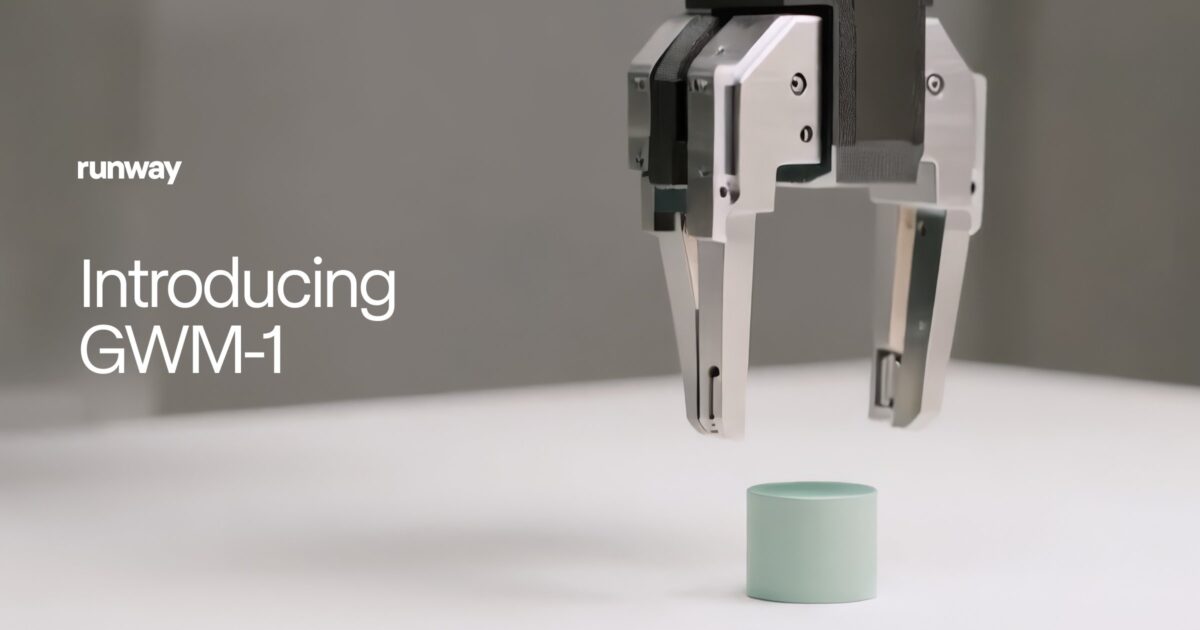
Forget generating 10-second video clips — Runway just leapfrogged the entire AI video industry. Their new GWM-1, the first-ever General World Model, doesn’t just create video. It simulates entire realities you can walk through, talk to, and train robots inside — all running at 24fps in real time. The Runway GWM-1 world model changes the game for creators, developers, and roboticists alike.
What Exactly Is a General World Model?
A world model is an AI system that builds an internal representation of an environment, then uses that representation to simulate what happens next. Think of it as the difference between taking a photograph and building a living, breathing room you can explore. Language models predict the next word. Video models predict the next frame. But a Runway GWM-1 world model predicts the next state of an entire environment — geometry, lighting, physics, sound, and all.
GWM-1 is autoregressive, built on top of Runway’s Gen-4.5 foundation. It generates frame by frame, runs in real time at 720p and 24fps, and can be controlled interactively through camera movements, robot commands, or audio inputs. The output can extend up to two minutes — and it maintains coherent physics throughout.
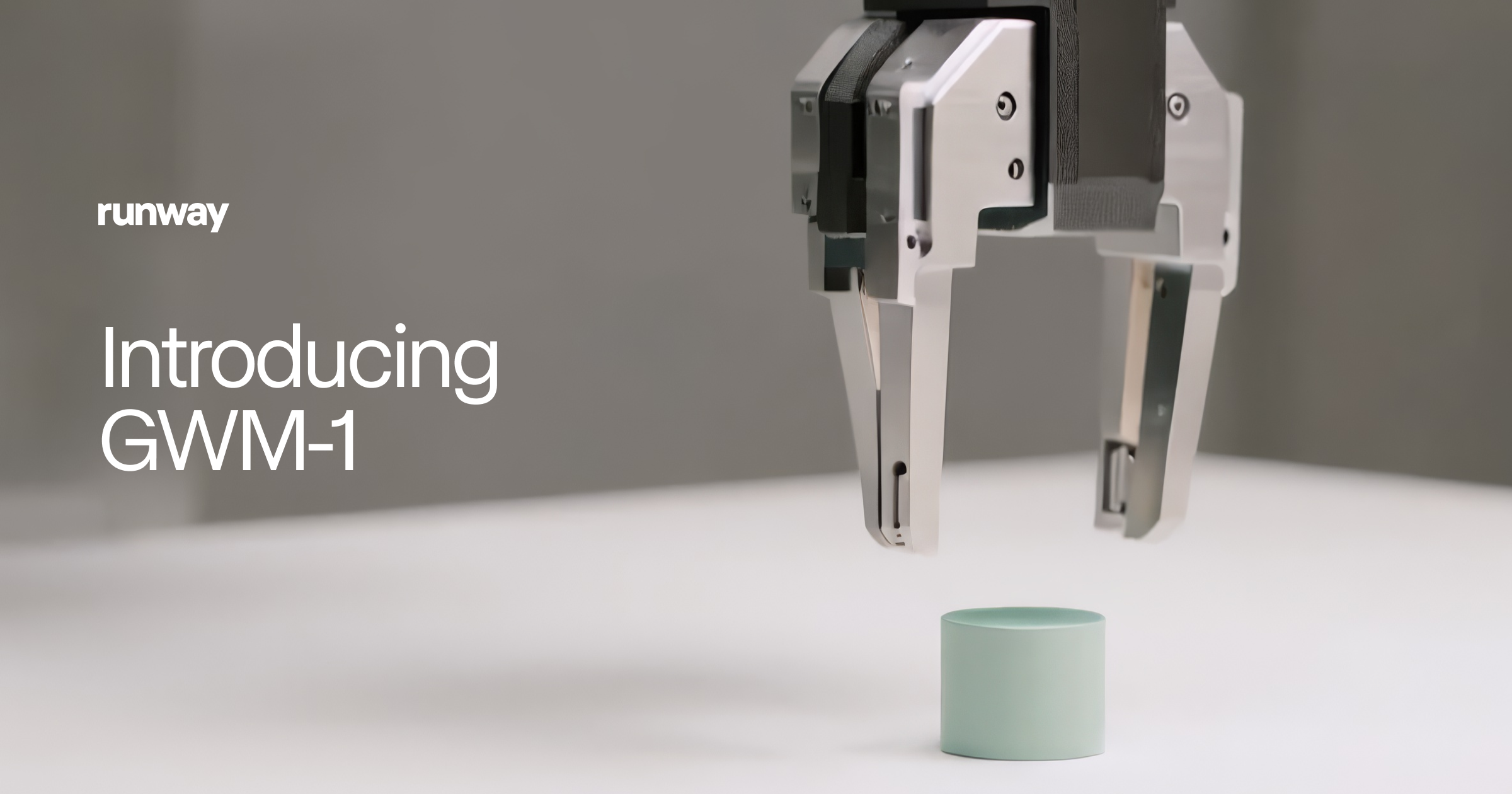
Three Variants, Three Revolutions
Runway didn’t release one model. They released three specialized variants under the GWM-1 umbrella, each targeting a different frontier of interactive AI.
GWM Worlds: Explorable 3D Environments from a Single Image
Hand GWM Worlds a static scene — a photograph, a concept art piece, a rendered frame — and it generates an infinite, explorable 3D space around it. As you move the camera, the model generates new geometry, lighting, and environmental details in real time. The spatial consistency is remarkable: objects stay where they should, shadows behave correctly, and the physics hold up across extended exploration sessions.
The implications for gaming, VR, architectural visualization, and educational simulations are enormous. Imagine handing a game engine a single concept art image and getting a fully explorable level back in seconds.
GWM Avatars: Photorealistic Talking Characters
GWM Avatars is an audio-driven interactive video generation model. Feed it audio and a character reference, and it produces a photorealistic (or stylized) talking head with accurate lip-syncing, natural eye movements, realistic facial expressions, and contextual gestures. The model handles both speaking and listening states — the character doesn’t freeze when it’s “your turn” to talk. It supports extended conversations without quality degradation, which is a significant technical achievement.
For content creators, this means AI-driven hosts, explainer characters, and virtual presenters that look genuinely human. Runway plans to bring GWM Avatars to their web product and API soon.
GWM Robotics: Synthetic Training Data for Physical AI
This is arguably the most transformative variant. GWM Robotics generates synthetic video conditioned on robot actions — essentially creating a virtual physics sandbox where robots can train without touching physical hardware. It supports counterfactual generation, meaning you can ask “what would have happened if the robot turned left instead of right?” and get a plausible video rollout of that alternative trajectory.
Runway provides a Python SDK for integration, making it accessible for robotics researchers and engineers. The potential to slash the cost and time of robot training data collection is massive — physical testing environments are expensive, slow, and limited.
How GWM-1 Connects to Gen-4.5
GWM-1 doesn’t exist in isolation. It’s built directly on top of Gen-4.5, which itself received significant upgrades alongside the GWM-1 launch. Gen-4.5 now features native audio generation and editing — no more bolting on separate audio tools. It also supports multi-shot video editing, where changes applied to one scene propagate consistently throughout an entire video. These upgrades make Gen-4.5 the production backbone while GWM-1 handles the interactive simulation layer.
The Competitive Landscape Is Heating Up
Runway isn’t alone in the world model race. Google DeepMind has been investing heavily in simulation models. World Labs, the startup led by AI pioneer Fei-Fei Li, raised $230 million to build spatial intelligence. Decart, Tencent, Spaitial, and Etched are all pushing into this territory. Even Yann LeCun has launched a new venture focused on world models as a path toward artificial general intelligence.
What sets Runway apart is the integrated approach: three specialized variants sharing a common architecture, with a clear roadmap to unify them into a single general-purpose model. Most competitors are tackling one slice of the problem. Runway is attempting to solve all three simultaneously.
Who Should Care About GWM-1?
- Game developers and VR creators — GWM Worlds could dramatically accelerate environment prototyping and procedural generation
- Content creators and marketers — GWM Avatars enables lifelike AI presenters without expensive motion capture or studio time
- Robotics engineers — GWM Robotics provides cheap, fast, physics-aware synthetic training data
- AI researchers — The architecture demonstrates a viable path from video generation to interactive world simulation
- Enterprise teams — Digital twins, training simulations, and virtual prototyping all become more accessible
Availability and Access
GWM-1 launched on December 11, 2025. Currently, access is through an early inquiry form on Runway’s website. GWM Avatars is planned for the Runway web product and API. GWM Robotics offers a Python SDK for qualified users. Fine-tuning access requires a separate application. Pricing details have not been publicly announced yet, but given Runway’s existing subscription tiers, expect a premium tier or enterprise pricing for GWM-1 capabilities.
The Bottom Line
GWM-1 represents a fundamental shift in what AI video tools can do. We’re moving from “generate a clip” to “simulate a world.” The three-variant approach — environments, characters, and robotics — covers the most commercially valuable applications while building toward a unified model that could eventually do all three at once. For anyone working in video, 3D, robotics, or interactive media, this is the most important announcement to come out of the AI video space since the original Sora demos.
If you’re building anything that involves digital environments, virtual characters, or robot training pipelines, GWM-1 is worth getting early access to now — before the competition catches up and the waitlist gets longer.
Want to explore how AI-driven tools like GWM-1 can transform your creative or technical workflow? Sean Kim helps teams integrate cutting-edge AI into production pipelines.