Model Context Protocol: How Anthropic’s MCP Became the USB-C of AI Tool Integration
May 13, 2025
Google Pixel Watch 4 Preview: Tensor Watch Chip and Health Sensors Revealed in Leaked Renders
May 13, 2025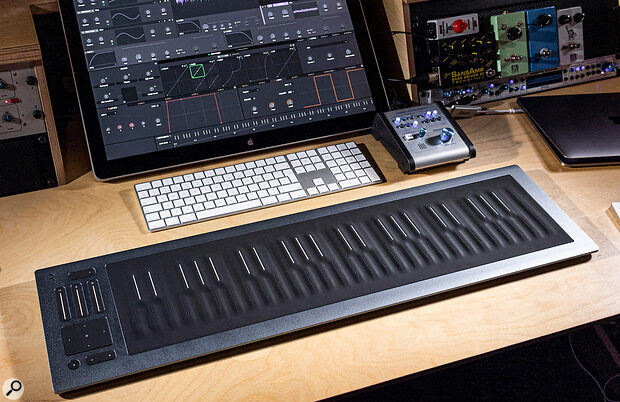
Six months ago, I pressed my fingers into the silicone surface of the ROLI Seaboard Rise 2 for the first time and felt something shift in how I think about MIDI controllers. Not in the “wow, new gadget” kind of way — in the “this fundamentally changes what’s possible” kind of way. Half a year later, the honeymoon is over, the muscle memory is forming, and I have a much clearer picture of where this $1,299 instrument truly excels and where it still frustrates.
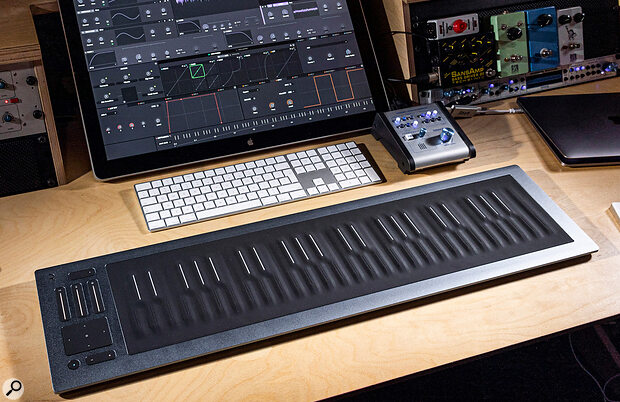
The ROLI Seaboard Rise 2 is the second generation of ROLI’s flagship MPE (MIDI Polyphonic Expression) controller. Unlike traditional keyboards that only capture velocity and aftertouch, the Seaboard captures five dimensions of touch: Strike, Glide, Slide, Press, and Lift. Every single finger movement translates into musical data. After six months of daily use in production sessions, scoring work, and sound design experiments, here’s what I’ve learned about living with this instrument full-time.
ROLI Seaboard Rise 2 Build Quality and Design: Built to Last
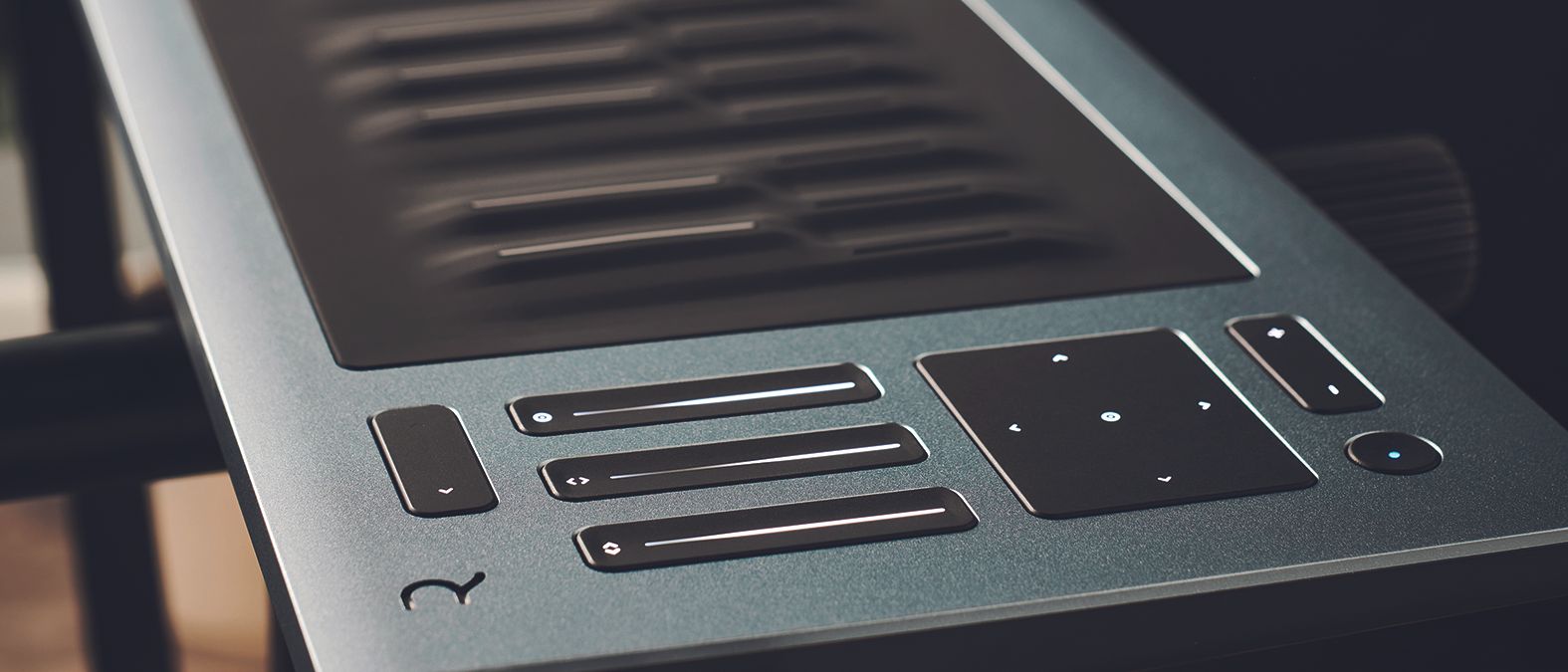
The Rise 2 feels like a premium instrument from the moment you pick it up. The anodised aluminium chassis is a massive upgrade from the original Rise’s plastic construction. At just under 12 pounds for the 49-key model, it’s substantial but not unwieldy. The platinum blue finish looks striking in any studio setup, and after six months of regular use, there’s zero visible wear on the body.
Connectivity options are comprehensive: USB-C for power and data, Bluetooth for wireless performance, and a 3.5mm MIDI out for connecting to hardware synthesizers. The 8-hour battery life is genuinely impressive — I’ve done multiple wireless live performance sessions without worrying about power, and the battery still holds its original capacity after six months of regular charging cycles.
The Keywave2 playing surface is where ROLI’s engineering really shows. The precision frets — subtle ridges between each semitone — were the single most important design change from the original Rise. As Sound On Sound noted in their review, these frets dramatically improve accuracy and chord formation. After six months, I can confirm this is what makes the Rise 2 a viable instrument rather than just an expressive novelty.
The MPE Workflow: How the ROLI Seaboard Rise 2 Changes Production
MPE — MIDI Polyphonic Expression — allows each finger to send independent pitch bend, pressure, and slide data. In practice, this means you can bend one note while holding another steady, add vibrato to individual notes in a chord, or create swelling textures that would be impossible on a traditional keyboard. The Rise 2 implements this through its five gesture dimensions, and the ROLI Dashboard software lets you fine-tune the sensitivity of each parameter.
The bundled Equator2 synthesizer is where the Rise 2 truly comes alive. ROLI designed Equator2 specifically for MPE input, and the integration is seamless. Every preset responds to all five gesture dimensions out of the box. The synthesizer itself is remarkably versatile — everything from lush pads and evolving textures to aggressive basses and crystalline leads. After six months, Equator2 remains my primary sound source when working with the Seaboard, simply because no other plugin matches its level of MPE responsiveness.
Film scoring and ambient production emerged as the Rise 2’s killer workflows during my extended testing. The continuous pitch control makes it perfect for creating eerie, bending textures that would require extensive automation on a standard keyboard. I scored three short film projects using the Seaboard Rise 2 exclusively for melodic and textural elements, and each director commented on the organic, human quality of the performances.
DAW Compatibility and Plugin Support: The MPE Ecosystem in 2025
Here’s where reality gets complicated. MPE support has grown significantly, but it’s still not universal. According to ROLI’s official compatibility documentation, the major DAWs — Logic Pro, Ableton Live, Bitwig Studio, and Cubase — all handle MPE data properly. Bitwig remains the gold standard for MPE workflow, with native per-note expression built into every instrument. Logic Pro has improved dramatically, and Ableton Live 12 handles MPE routing well.
The plugin landscape is where things get trickier. Fully MPE-compatible synthesizers include Equator2, Omnisphere (with configuration), Reaktor, SWAM instruments, Serum, and BT Phobos. That’s a solid list, but it represents a fraction of the synthesizer market. Many popular plugins simply ignore MPE data or treat it as standard aftertouch. In my daily workflow, I found myself gravitating toward the same six or seven MPE-aware plugins rather than exploring my full library.
The Rise 2 can also function as a standard MIDI keyboard when MPE isn’t needed. A quick toggle in the ROLI Dashboard switches it to single-channel mode, and it works perfectly well as a conventional controller. This dual functionality is essential — without it, you’d need two keyboards on your desk.
One practical tip after six months: create dedicated DAW templates with MPE routing pre-configured. Setting up MPE channels every session is tedious, but once you have templates for your main DAW, the workflow becomes much smoother. I have separate Logic Pro and Bitwig templates with Equator2, Omnisphere, and SWAM instruments already mapped and ready to go.
The Learning Curve: What 6 Months of Practice Actually Looks Like
Let me be honest about the learning curve because MusicRadar’s review rated it 4 out of 5 stars but flagged the learning curve as a significant factor, and they were right. The first two weeks were genuinely humbling. Playing chords accurately on a continuous silicone surface is nothing like playing a traditional keyboard. I’ve been playing keyboards for over 25 years, and the Seaboard made me feel like a beginner again.
Here’s the timeline from my experience:
- Week 1-2: Constantly overshooting pitches, struggling with chord accuracy, accidentally triggering Slide gestures. Frustrating but fascinating.
- Month 1: Basic melodies became comfortable. Single-note expressive playing started feeling natural. Chords still required conscious effort.
- Month 2-3: The precision frets started making sense to my fingers. Chord accuracy improved dramatically. I began incorporating Slide and Press gestures intentionally rather than accidentally.
- Month 4-6: MPE expression became semi-automatic. I stopped thinking about the gestures and started thinking about the music. This is when the instrument truly revealed its potential.
The precision frets deserve special credit here. Users in online forums consistently point out that the original Rise lacked these guides, making accurate playing nearly impossible for many musicians. The Rise 2’s frets provide just enough tactile reference to develop muscle memory without interfering with the smooth gliding that makes the Seaboard unique.
One thing that consistently caught me off guard: it’s easy to get lost on the keyboard without visual cues. Traditional keyboards have the obvious black/white key pattern. The Seaboard’s uniform surface means you need to develop spatial awareness purely through touch. After six months, I can navigate reasonably well by feel, but I still occasionally glance down during complex passages.
ROLI Seaboard Rise 2 vs Osmose vs LinnStrument: Choosing Your MPE Path
The MPE controller market has matured significantly. Three main contenders serve different musical backgrounds and workflows:
The Expressive E Osmose (~$1,799) takes the opposite approach from the Seaboard. It looks and feels like a traditional keyboard but adds per-key pressure sensitivity and a unique initial-touch/aftertouch mechanism. If you’re a trained pianist who wants to add expression without abandoning familiar key shapes, the Osmose is the more natural transition. Its built-in EaganMatrix synthesis engine also means it sounds incredible without any external software. However, it can’t match the Seaboard’s continuous pitch control — you’re still limited to discrete semitones for initial note placement.
The Roger Linn LinnStrument ($1,499-$2,299) uses a grid layout that guitar and string players often find intuitive. It excels at isomorphic layouts and offers arguably the most versatile MPE implementation. But the grid paradigm requires a complete mental shift from keyboard thinking, and the playing surface doesn’t offer the same continuous, ribbon-controller-style pitch sweeps that make the Seaboard special.
The Seaboard Rise 2 sits in the middle at $1,299-$1,399 and excels at continuous pitch expression, cinematic textures, and sound design. Community discussions consistently identify it as the best choice for continuous pitch control and sound-design-oriented workflows. If you primarily create atmospheric, cinematic, or experimental music, the Seaboard’s strengths align perfectly.
As Engadget noted, scoring it 84/100, the Seaboard Rise 2 is the “finest MPE MIDI controller available” particularly for film scoring and cinematic work. That assessment holds up after extended use.
Sean’s Take: What 28 Years in Audio Taught Me About the ROLI Seaboard Rise 2
After 28 years working in music production, mixing, and audio engineering, I’ve watched countless “revolutionary” controllers come and go. Most promise to change everything and end up gathering dust within months. The ROLI Seaboard Rise 2 is one of the rare exceptions — not because it’s perfect, but because it solves a real problem that traditional controllers simply cannot address.
The core issue is this: acoustic instruments respond to continuous, nuanced physical input. A violin, a cello, a human voice — they all produce sound through gestures that have infinite gradations. Traditional MIDI keyboards reduce this to binary triggers with velocity and maybe aftertouch. The Seaboard doesn’t fully bridge that gap, but it gets closer than anything else I’ve used in nearly three decades of production work.
In my studio workflow, the Rise 2 has permanently changed how I approach two specific areas. First, string and vocal arrangements. Using SWAM instruments with the Seaboard produces mockups that my clients consistently mistake for live recordings — the per-note vibrato, dynamic swells, and pitch nuances are that convincing. Second, sound design for film and media. The continuous gesture control means I can perform evolving textures in a single take rather than spending hours drawing automation curves. That’s not just a creative improvement; it’s a genuine time savings that impacts project budgets.
The honest limitation is the MPE ecosystem. In 2025, it’s growing but still niche. If you primarily work with sample libraries and traditional plugin instruments, 80% of your toolkit won’t benefit from the Seaboard’s extra dimensions. You need to deliberately build an MPE-friendly production environment. For producers willing to make that investment, the payoff in expressiveness is extraordinary. For those who just need a solid MIDI keyboard, there are better and more affordable options.
My recommendation: if you work in film scoring, ambient music, sound design, or any genre where organic expressiveness matters, the ROLI Seaboard Rise 2 is worth every dollar of its premium price tag. Give yourself at least three months before making a judgment — the instrument reveals its true capabilities only after the learning curve flattens.
The ROLI Seaboard Rise 2 isn’t for everyone, and that’s perfectly fine. It’s a specialized instrument for producers who need expressive depth that traditional controllers can’t deliver. After six months, it has earned a permanent spot in my studio setup — right next to the traditional keyboard I still reach for when I need fast chord progressions and drum programming. The best MPE workflow in 2025 is a hybrid one, and the Seaboard Rise 2 is the expressive half of that equation.
Looking for help optimizing your studio workflow with MPE controllers, or need professional mixing and mastering for your expressive productions?
Get weekly AI, music, and tech trends delivered to your inbox.