NVIDIA Blackwell Ultra at Hot Chips 2025: 208B Transistors, 15 PetaFLOPS, and 1,400W of Raw AI Power
August 15, 2025
Samsung Galaxy Watch Ultra Review: The $649 Titanium Smartwatch That Finally Makes Wear OS Worth Wearing
August 15, 2025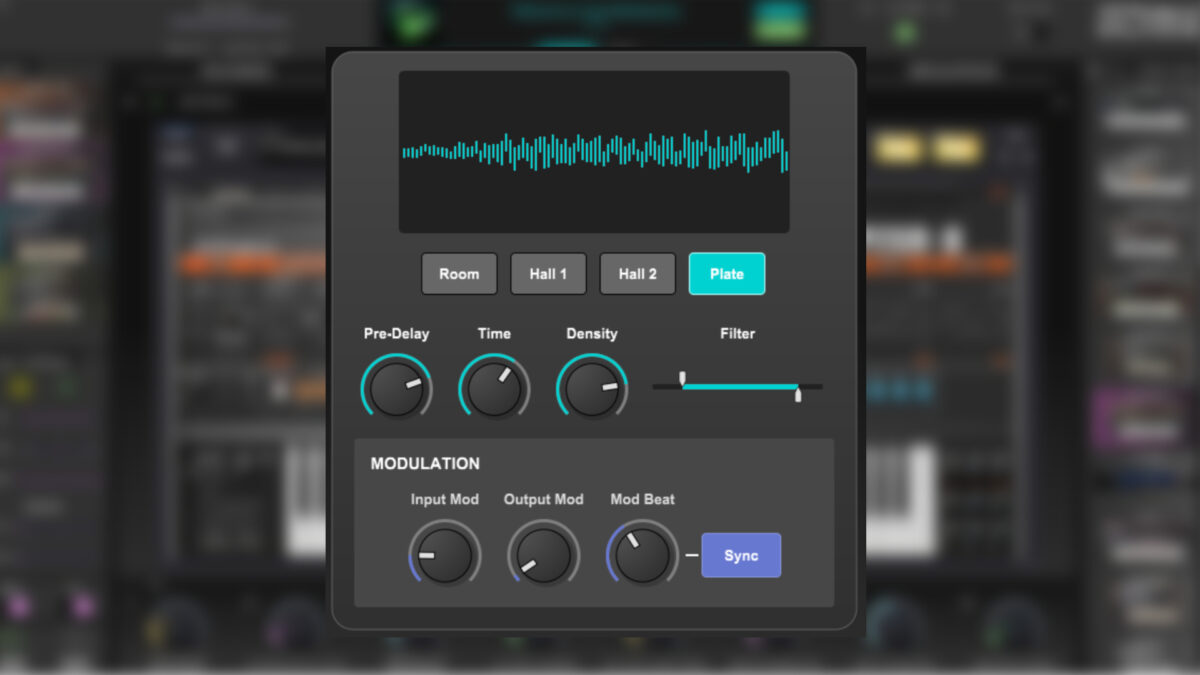
Roland just dropped one of its biggest monthly updates in recent memory. In August 2025, Roland Cloud August 2025 brings GALAXIAS 1.7 with its game-changing MultiVerb V2 modulation reverb, a complete Legendary v2 overhaul for the JUPITER-8, JUPITER-4, and JUNO-106, and a ZENOLOGY Sound Pack Bundle with over 1,000 presets for $49. If you’re a subscriber, this is the update you’ve been waiting for.
GALAXIAS 1.7: MultiVerb V2 Changes the Roland Cloud Reverb Game
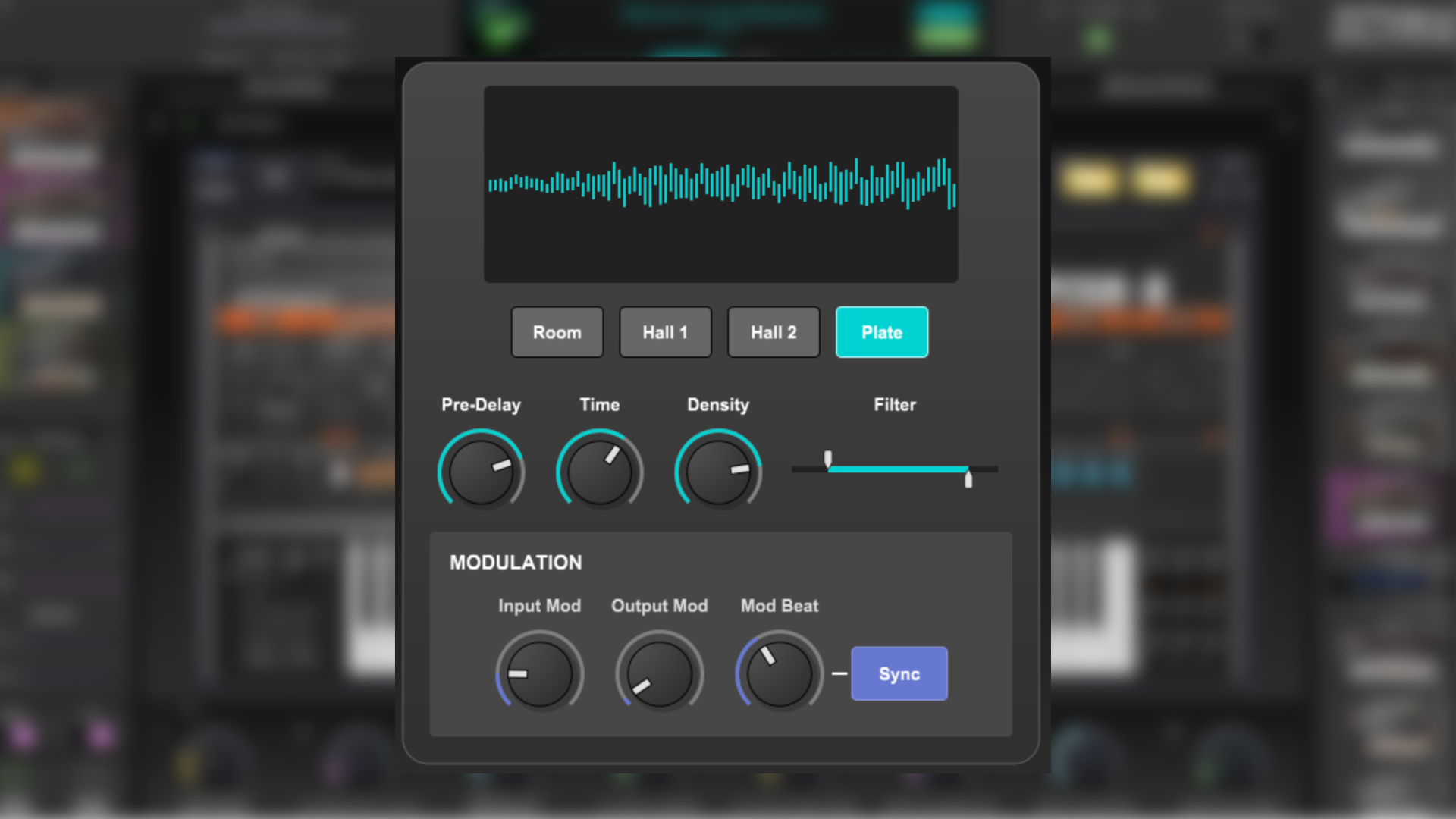
Released on August 22, 2025, GALAXIAS 1.7 introduces a major new effect module that’s going to change how producers think about reverb within Roland’s multi-layer super instrument. MultiVerb V2 isn’t your typical algorithmic reverb — it applies modulation to both the input and output signals, creating reverb tails that breathe, shift, and evolve in real time.
Think about what this means in practice. Apply MultiVerb V2 to a pad layer in GALAXIAS, and instead of a static wash of reverb, you get a living, morphing spatial effect. The input modulation warps the signal before it enters the reverb algorithm, while the output modulation shapes the tail as it decays. This dual-stage approach opens up territory that previously required dedicated modulation reverb plugins like Valhalla Supermassive or Eventide’s Blackhole.
For sound designers working in film scoring or ambient production, this is particularly significant. Traditional reverb plugins force you to choose between static spatial character and dynamic modulation applied after the fact with separate LFO tools. MultiVerb V2 collapses that workflow into a single module. You can create textures where the reverb tail gradually shifts from a tight room into an expansive cathedral-like wash, all within one effect instance. The creative potential for evolving soundscapes and cinematic atmospheres is substantial.
Beyond the flagship MultiVerb V2 addition, GALAXIAS 1.7 includes custom scene folder icons — a welcome quality-of-life improvement for anyone managing complex multi-layer sessions. When you’re juggling dozens of scenes across different projects, visual differentiation makes a real difference. The update also addresses several stability issues: MIDI Learn fixes, nested menu improvements, and crash scenario resolutions that Synth Anatomy reported on in their coverage of the release.
Legendary v2: JUPITER-8, JUPITER-4, and JUNO-106 Reborn
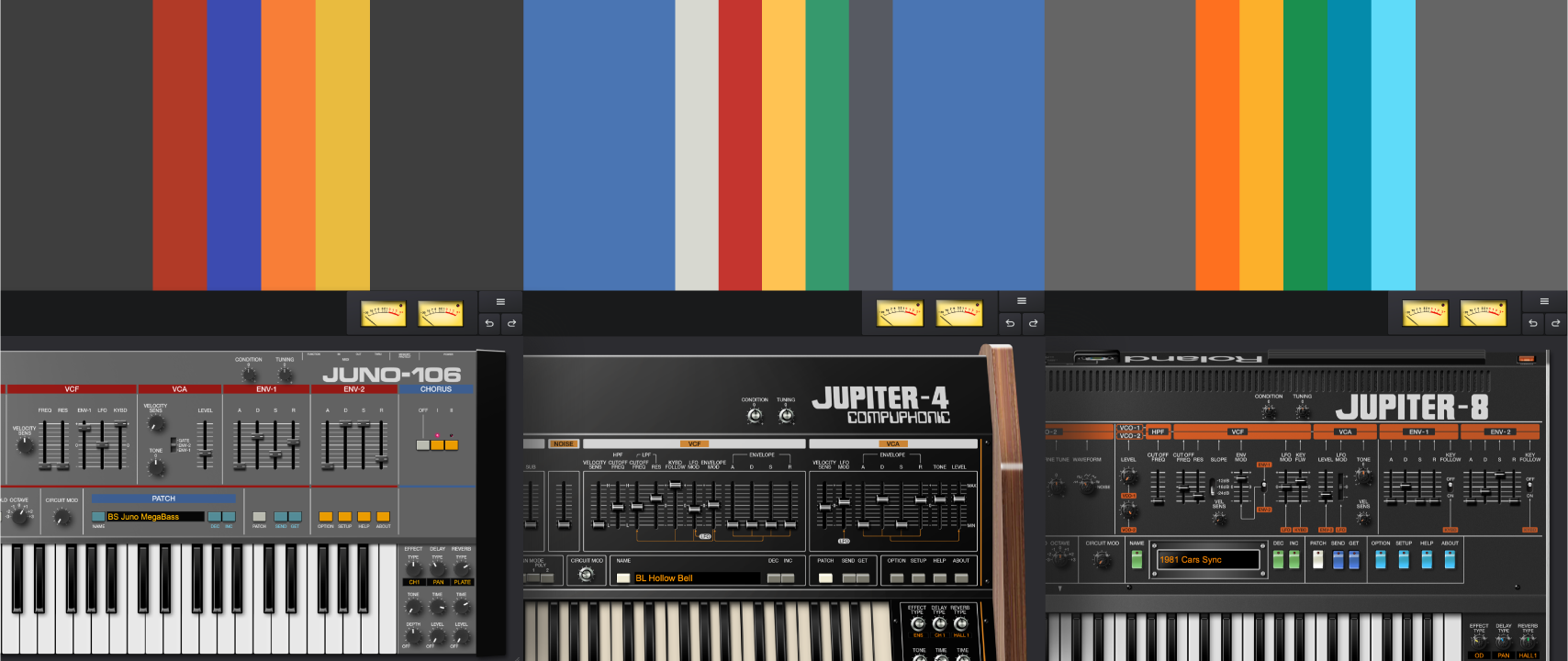
The Legendary instrument line has received its most significant overhaul since launch. JUPITER-8, JUPITER-4, and JUNO-106 — three synthesizers that defined an era of music — now feature High-DPI graphics and completely refined interfaces designed for modern production environments. On 4K and 5K displays, these instruments finally look as good as they sound, with crisp knob renders and pixel-perfect layouts.
But the real story is under the hood. The new Circuit Mod function introduces macro-controlled analog trim sweeping. Here’s why that matters: every original analog JUPITER-8 that rolled off Roland’s production line sounded slightly different. Component tolerances, calibration variations, and aging all contributed to each unit’s unique character. Circuit Mod digitally recreates this phenomenon, letting you sweep through different “instances” of the same synth. It’s fundamentally different from simple detuning — it affects the entire signal path, from oscillator behavior to filter response.
Then there’s the Condition parameter, which simulates hardware aging. Dial it up and you’ll hear the subtle pitch instabilities, slightly nonlinear filter responses, and warm compression that come from decades of capacitor degradation and component drift. Set it to around 50-70% for that sweet spot of vintage warmth without losing musical usability. According to Roland Cloud’s official announcement, the update also includes a universal browser with an integrated Tweak Panel, allowing preset browsing and sound adjustment in a single unified view.
ACB Analog Polysynth Collection: Five Legends for $499
Alongside the Legendary v2 updates, Roland has introduced the Analog Polysynth Collection — a bundle of five classic ACB polysynths: JUPITER-4, JUPITER-8, JUNO-60, JX-3P, and JUNO-106, priced at $499. For producers who want the complete vintage Roland experience, this bundle represents significant savings over individual purchases.
What makes Roland’s ACB (Analog Circuit Behavior) technology particularly credible is the source advantage. Unlike third-party developers who reverse-engineer sounds from the outside, Roland has the original circuit schematics — every transistor, capacitor, and resistor value from the original designs. ACB simulates the behavior of these circuits at the component level, which is why these plugins react to parameter changes with the nonlinear complexity of their hardware counterparts. The collection also supports full PLUG-OUT functionality with the SYSTEM-8 hardware synthesizer, meaning you can load these virtual instruments directly into dedicated hardware for hands-on control and standalone operation.
At $499 for five instruments, the math works out to roughly $100 per synth — each of which would cost significantly more as standalone plugins from other developers attempting similar vintage recreations. The JUNO-60, in particular, has seen renewed interest thanks to its resurgence in modern synthwave and lo-fi productions. Having all five in a single bundle with unified UI conventions and consistent ACB quality makes this collection a practical choice for producers who work across multiple vintage synth aesthetics.
ZENOLOGY Sound Pack Bundle: 1,000+ Presets at an Unbeatable Price
The ZENOLOGY Sound Pack Bundle ZEZ001-030 is arguably the best value proposition in this month’s updates. Thirty sound pack titles containing over 1,000 tones and drum kits, covering pop, soul, techno, cinematic, and electronic genres — all for an introductory price of $49 USD through September 30, 2025. That works out to less than five cents per preset.
The bundle is compatible with ZENOLOGY Pro, ZENOLOGY, and ZENOLOGY Lite. Even free ZENOLOGY Lite users can purchase and use these packs, which significantly lowers the barrier to entry. The genre coverage is impressively broad: you’ll find packs tailored to modern pop production alongside deep techno patches, cinematic orchestral-hybrid textures, and classic soul keyboard tones. For producers who regularly work across multiple genres — scoring a commercial one week and producing an electronic track the next — having this breadth of ready-to-use sounds in a single purchase is genuinely useful.
These aren’t simple static presets, either — each tone comes with pre-configured macro controls and modulation routing, making them performance-ready right out of the box. For live performers and session musicians who need quality sounds without deep-dive programming, this bundle is a no-brainer at this price point.
Play 4 Life Summer 2025: Lessons for Next Time
The Play 4 Life summer 2025 promotion wrapped up on July 7, but it’s worth discussing for future planning. Ultimate members received 2 free Lifetime Keys from the Legendary, AIRA, or SRX collections, while Pro members got 1 free Lifetime Key. The critical detail: Lifetime Keys let you keep those instruments permanently, even if you cancel your Roland Cloud subscription.
Roland typically runs these promotions quarterly, so the next one likely arrives in fall or winter 2025. The strategic move is to time your annual subscription renewal with a promotion period, maximizing the number of Lifetime Keys you accumulate. Over two to three years of strategic renewals, you can build a permanent collection of Roland’s most valuable instruments while maintaining access to the full library during your subscription period. It’s the kind of long-term thinking that transforms a monthly subscription cost into genuine asset accumulation — and it’s a model unique to Roland Cloud among major plugin subscription services.
Practical Guide: Making the Most of Roland Cloud August 2025
Here’s how to get the most value from this month’s updates. Start by updating GALAXIAS to version 1.7 and experimenting with MultiVerb V2 on existing projects. Try it on pad tracks first — slowly increase the input modulation depth and listen to how the reverb character transforms. For electronic producers, automating the modulation parameters over time creates evolving spatial textures that would otherwise require complex effect chains.
For the Legendary v2 synths, spend time with Circuit Mod and the Condition parameter before diving into presets. Set JUPITER-8’s Condition to around 50-70% for that warm, slightly unstable vintage character that sits perfectly in a mix without sounding broken. For tracks that need pristine precision, keep it below 20%. The Circuit Mod function pairs beautifully with subtle automation — try sweeping it slowly over an 8-bar phrase to add organic movement to otherwise static synth parts.
The ZENOLOGY Sound Pack Bundle promotion runs through September 30, so there’s time — but at $49 for 1,000+ presets, there’s no reason to wait. Install genre-relevant packs first rather than downloading all 30 at once, which helps manage system resources. The pop and electronic packs are particularly strong starting points for most producers.
Roland Cloud August 2025 represents a meaningful evolution across the platform. The Legendary v2 line’s Circuit Mod and Condition parameters offer depth that competing vintage plugins simply don’t match, GALAXIAS 1.7’s MultiVerb V2 opens genuinely new creative territory, and the ZENOLOGY bundle’s pricing makes expanding your sound library almost effortless. Whether you’re a long-time subscriber or considering your first Roland Cloud membership, August 2025 makes a compelling case.
Looking to optimize your Roland Cloud workflow or need help setting up your studio plugin chain? Get personalized guidance from a 28-year audio engineering veteran.
Get weekly AI, music, and tech trends delivered to your inbox.