Apple Intelligence Image Wand: 2 Months In, Here’s What Actually Works (and What Doesn’t)
May 22, 2025
Corsair iCUE Link Ecosystem: The Complete Guide to Cable-Free PC Building in 2025
May 22, 2025
Two weeks after Superbooth 2025 wrapped up in Berlin, an unexpected name keeps coming up in conversations among producers and developers. Not Ableton. Not Native Instruments. It’s Reason Studios. Quietly, almost without fanfare, the Reason 13 Rack Extension SDK has received a series of updates that are creating ripples across the developer community — and they point toward something much bigger than a routine version bump.
Reason 13: A Workflow-First Comeback
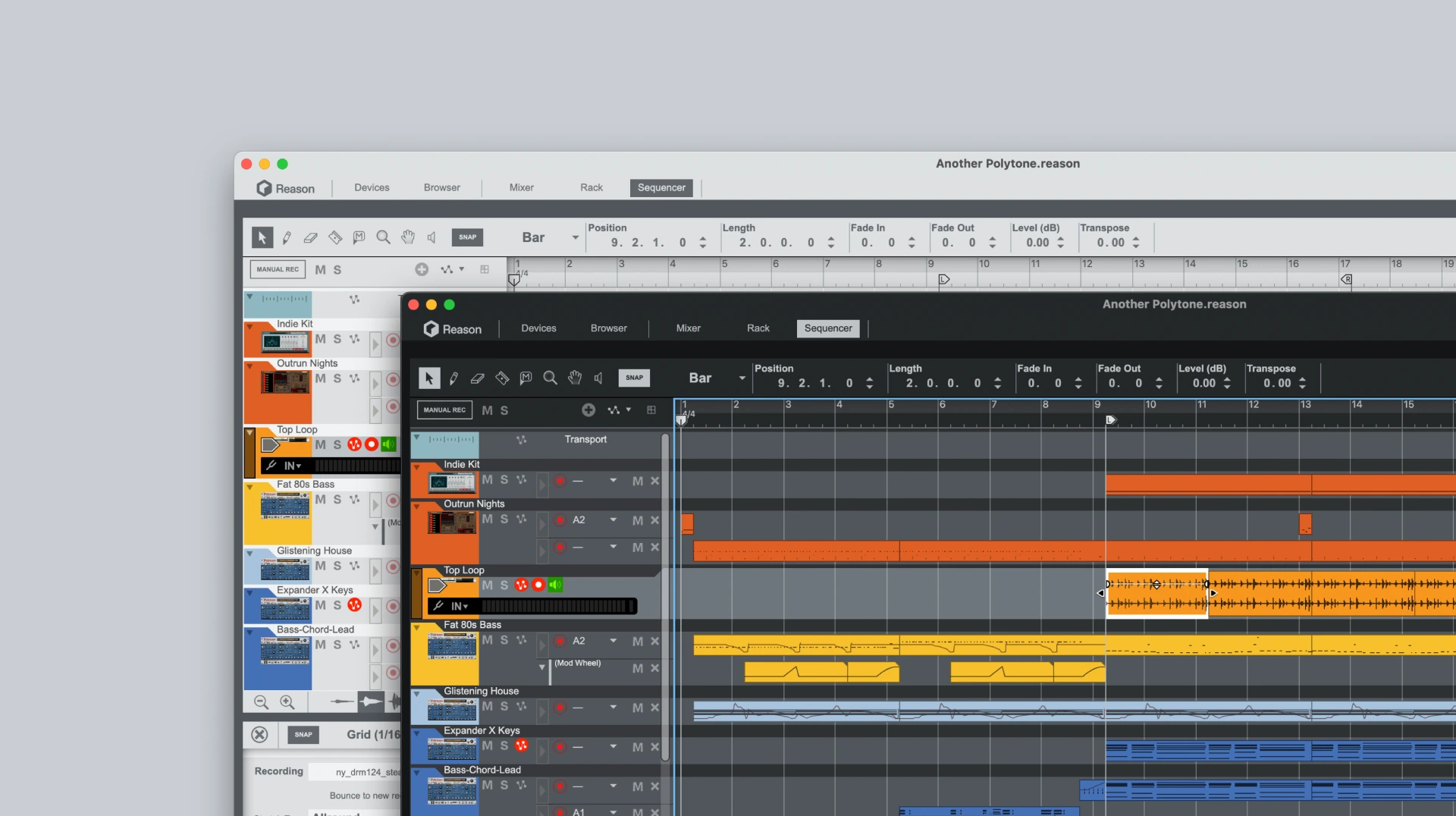
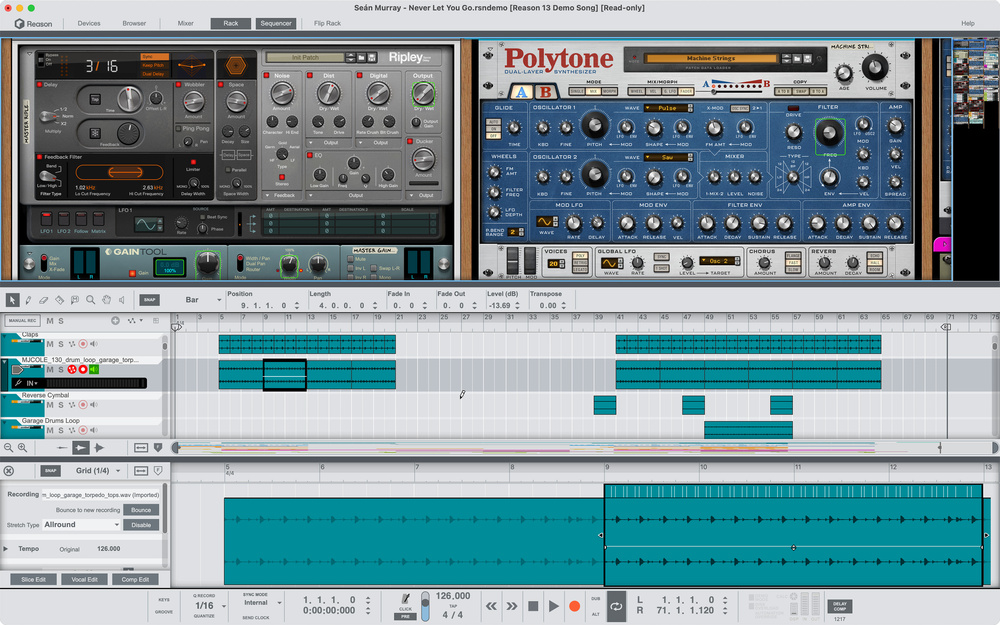
When Reason 13 launched in June 2024, it arrived with a clear message from Product Manager Mattias Haggstrom Gerdt: this update is about workflow, not feature bloat. The completely redesigned unified browser, sequencer split view, Device Palette with VST3 filtering, and seven new devices all serve that philosophy. Rather than chasing trendy features, Reason Studios went back to basics — asking what actually slows producers down and fixing those friction points.
The redesigned browser alone is a game-changer for longtime Reason users. Context-sensitive search means the browser shows relevant content based on what you’re doing — if you’re working on a synth track, it surfaces synth presets. If you’re in the mixer, it prioritizes effects. Tag-based filtering replaces the old hierarchical folder diving that used to break creative flow. For a DAW that houses thousands of patches, samples, and Rack Extensions, this kind of intelligent content surfacing matters more than most realize.
The standout instruments deserve attention. Polytone, a dual-layer morphing synthesizer, earned praise from Sound On Sound as the crown jewel of the update. Its bitimbral architecture lets you morph between two completely different sound layers in real time — something that’s been available in high-end hardware synths but rarely implemented this elegantly in software. Ripley Space Delay packs five integrated mini-effects into a single delay unit — distortion, modulation, filtering, reverb, and ducking all baked into the delay feedback path. It’s a creative tool that goes far beyond your typical echo plugin, and sound designers are already using it as a standalone sound-mangling device.
Three utility devices round out the hardware-side additions. The dedicated Sidechain Tool simplifies what used to require complex routing — a welcome change for electronic music producers who rely heavily on sidechain compression. Combined with over 1,000 new patches and samples, the content library expansion alone justifies the upgrade for many users.
At roughly $135-139, Reason 13 remains competitively priced in a DAW market where annual subscriptions are becoming the norm. The Reason Rack Plugin standalone option at $199 also gives producers who prefer other DAWs access to the entire Rack Extension ecosystem without switching.
What’s Actually Changed in the Reason 13 Rack Extension SDK
The real story, however, is happening beneath the surface. With Rack Extension SDK version 4.6.0 now available on the developer portal, the infrastructure supporting over 800 Rack Extensions has received meaningful upgrades that signal where Reason Studios is heading. These aren’t flashy consumer-facing features — they’re the plumbing that determines what kinds of devices developers can build next.
Here’s what developers are working with in the updated Reason 13 Rack Extension SDK:
- Enhanced FFT and memory handling — More complex signal processing algorithms can now run within Rack Extensions without hitting performance walls. Fast Fourier Transform improvements are particularly significant because FFT is the backbone of spectral analysis, pitch detection, and frequency-domain processing — all foundational for AI-based audio analysis.
- Instrument Development Toolkit — Perhaps the most impactful addition for ecosystem growth. This new toolset significantly lowers the barrier to RE development, allowing developers with limited C++ experience to build functional instruments. Think of it as Reason’s answer to the question “how do we get more developers building for our platform?”
- CV auto-routing APIs (upcoming) — Expected in a future update, this feature will automate signal flow between Rack Extensions, reducing the manual cable-patching workflow that has defined Reason’s rack for decades. For AI applications, automated routing opens the door to devices that can intelligently connect themselves based on context.
- Improved sandbox and routing APIs — Better security without sacrificing flexibility, giving developers more room to build sophisticated devices while maintaining the stability that Reason users expect.
- Export metadata for Rack Extensions — Also coming in an upcoming update, this lets RE developers embed richer information about their devices, enabling smarter search, categorization, and potentially recommendation systems.
Why does this matter? While most DAW companies are racing to embed AI directly into their software, Reason Studios is taking a fundamentally different approach: building the infrastructure that lets third-party developers create AI-powered devices. With an ecosystem of 800+ Rack Extensions and an active developer community that’s been contributing for over two decades, this platform strategy could prove more sustainable than any single proprietary AI feature.
Bassline Generator: Data-Driven Music Creation in Practice
Want to see what this Reason 13 Rack Extension SDK infrastructure looks like in practice? Look at the Bassline Generator Player device — it’s the clearest example of data-driven music creation currently available in the Reason ecosystem.
This RE was built by analyzing hundreds of real basslines to reverse-engineer the patterns that make them work musically. The development team didn’t just write an algorithm — they studied actual bass parts across genres, identified the rhythmic and melodic patterns that recur in effective basslines, and encoded those patterns into a generative engine. It ships with 64 OnBeat patterns and 64 OffBeat source patterns, and its Variator function generates near-infinite variations from these foundations. At $69 with over 100 presets, it’s an accessible entry point into pattern-based composition.
The workflow is straightforward: select a pattern category, choose your base pattern, adjust the Variator parameters to determine how far from the source pattern you want to go, and the device generates basslines that feel musically coherent — not random. The patterns respond to incoming MIDI notes, so they integrate naturally into your existing composition workflow rather than operating as an isolated generative tool.
Is it machine learning in the strict sense? No. But the underlying philosophy — extract patterns from data, generate new outputs that maintain the statistical properties of the training set — aligns directly with AI-driven music creation. It’s telling that Reason Studios has built this without ever using the word “AI” in its marketing. The substance is there; the buzzword isn’t. And that restraint might actually be the smartest positioning move of all, given how much skepticism the term “AI” generates among working musicians.
Reason 13.2 Update and the Superbooth 2025 Response
The Reason 13.2 update, released on March 21, 2025, added an important milestone: Windows on Arm support. With Qualcomm Snapdragon-powered Windows laptops entering the mainstream — devices like the Surface Pro and Lenovo’s Snapdragon X Elite machines gaining traction — Reason became one of the first major DAWs to officially support this new platform. For producers who want to work on ultra-portable, fanless devices with all-day battery life, this is a meaningful development. Device Palette improvements came along for the ride, refining the VST3 management experience introduced in version 13.0.
Then came Superbooth 2025 (May 8-10 at FEZ in Berlin), where Reason Studios showed up with a presence that surprised many attendees. Live demos showcased the Reason 13 workflow improvements in real-time production scenarios, and the community meetup with the Reason Germany User Group drew a solid crowd. Coverage from Sonic State and Reverb brought the Superbooth demos to a wider online audience, and the overall reception was warmer than many industry observers expected from a brand that some had written off as stagnant.
The Superbooth timing was strategic. With major synth manufacturers launching new hardware at the event and Gearnews running their review coverage, Reason Studios positioned itself as a bridge between hardware modular culture and software production — exactly the niche that the virtual rack metaphor has always occupied.
That said, Sound On Sound’s thorough review didn’t shy away from noting what’s still missing: MPE support (critical for expressive controllers like the Roli Seaboard and Linnstrument), CLAP plugin format (the open-source alternative to VST that Bitwig championed), and ARA integration (which would enable tighter integration with vocal processing tools like Melodyne). These aren’t minor gaps — they represent the cutting edge of plugin interoperability, and Reason will need to address them to stay competitive with the likes of Bitwig and Ableton in the long run.
Reason’s Position in the DAW AI Race
In the first half of 2025, AI integration in music production software has gone from “interesting experiment” to “table stakes.” Most competitors are embedding AI directly into their DAW cores — automatic stem separation, AI-assisted mixing, intelligent arrangement suggestions. Reason Studios is charting a distinctly different course, and it comes down to three strategic pillars:
- Platform over product — Instead of building proprietary AI features that lock users into one workflow, build the SDK and developer tools that let hundreds of third-party developers create AI-powered devices. The diversity of approaches that emerges from an open ecosystem almost always outperforms a single company’s AI roadmap.
- Data-driven devices — Products like Bassline Generator demonstrate that you can ship “smart” tools without requiring cloud inference, massive language models, or ongoing subscription fees. Local, lightweight intelligence that runs in the signal path is more practical for real-time music production than cloud-dependent AI.
- Developer ecosystem expansion — The Instrument Development Toolkit lowers barriers to entry, potentially bringing AI and machine learning researchers into the RE development space. A Python developer who understands neural networks but not C++ audio programming now has a more accessible path to building for Reason’s platform.
This strategy makes architectural sense when you examine Reason’s DNA. The virtual rack system is essentially a modular hardware environment in software — each Rack Extension operates as an independent signal processing unit with its own DSP, its own UI, and its own internal state. That modularity is ideal for AI integration: rather than one monolithic AI engine embedded in the DAW, imagine specialized lightweight AI modules sitting in the rack, each handling a specific task like intelligent EQ matching, pattern generation, adaptive compression, or real-time timbre transfer.
The modular approach also solves a practical problem that monolithic AI DAW features face: when AI is baked into the DAW core, users are stuck with whatever the developer built. When AI lives in swappable rack modules, producers can choose the specific AI tools that match their workflow and swap them out as better alternatives emerge. It’s the difference between a smartphone with built-in apps and one with an app store.
The challenge? The SDK’s sandbox environment restricts external API calls, which limits access to cloud-based AI models. Everything has to run locally within the RE’s allocated resources. The viability of this approach depends heavily on advances in lightweight, locally-executable AI models — a field that’s moving remarkably fast (edge AI inference is improving monthly) but isn’t quite production-ready for complex real-time audio tasks at the quality levels professionals demand.
Reason Studios’ decision to quietly strengthen SDK infrastructure rather than chase AI headlines may not generate the most buzz in the short term. But with 800+ Rack Extensions and a developer community that’s been building for over two decades, the groundwork being laid here could yield something far more interesting than any single AI feature drop. The next few updates will tell us whether this patient, platform-first bet pays off — and whether the Rack Extension ecosystem can deliver on the promise of modular, user-chosen AI in music production.
Looking for help with DAW workflow optimization or professional mixing and mastering? Let’s talk.
Get weekly AI, music, and tech trends delivered to your inbox.