SSL Fusion Review: 6 Analog Color Tools That Transform Your Mix Bus and Mastering Chain
May 19, 2025
Devin AI Review: From $500 to $20 — 6 Weeks With Cognition’s AI Software Engineer
May 20, 2025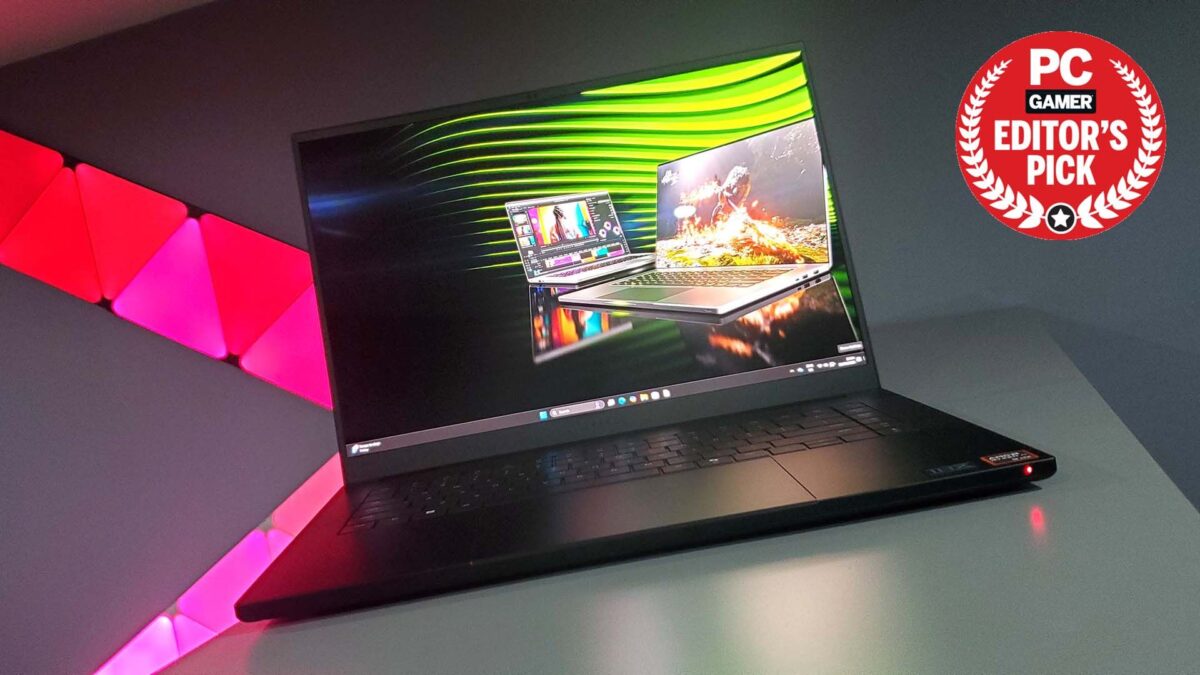
Save a thousand dollars and only lose 13% performance — that’s the pitch behind the Razer Blade 16 RTX 5080, and after weeks of testing, benchmarking, and daily-driving this machine, I can tell you it’s not just marketing spin. This might be the smartest $3,500 you can spend on a gaming laptop in 2025.
Razer Blade 16 RTX 5080: Complete Specs Breakdown
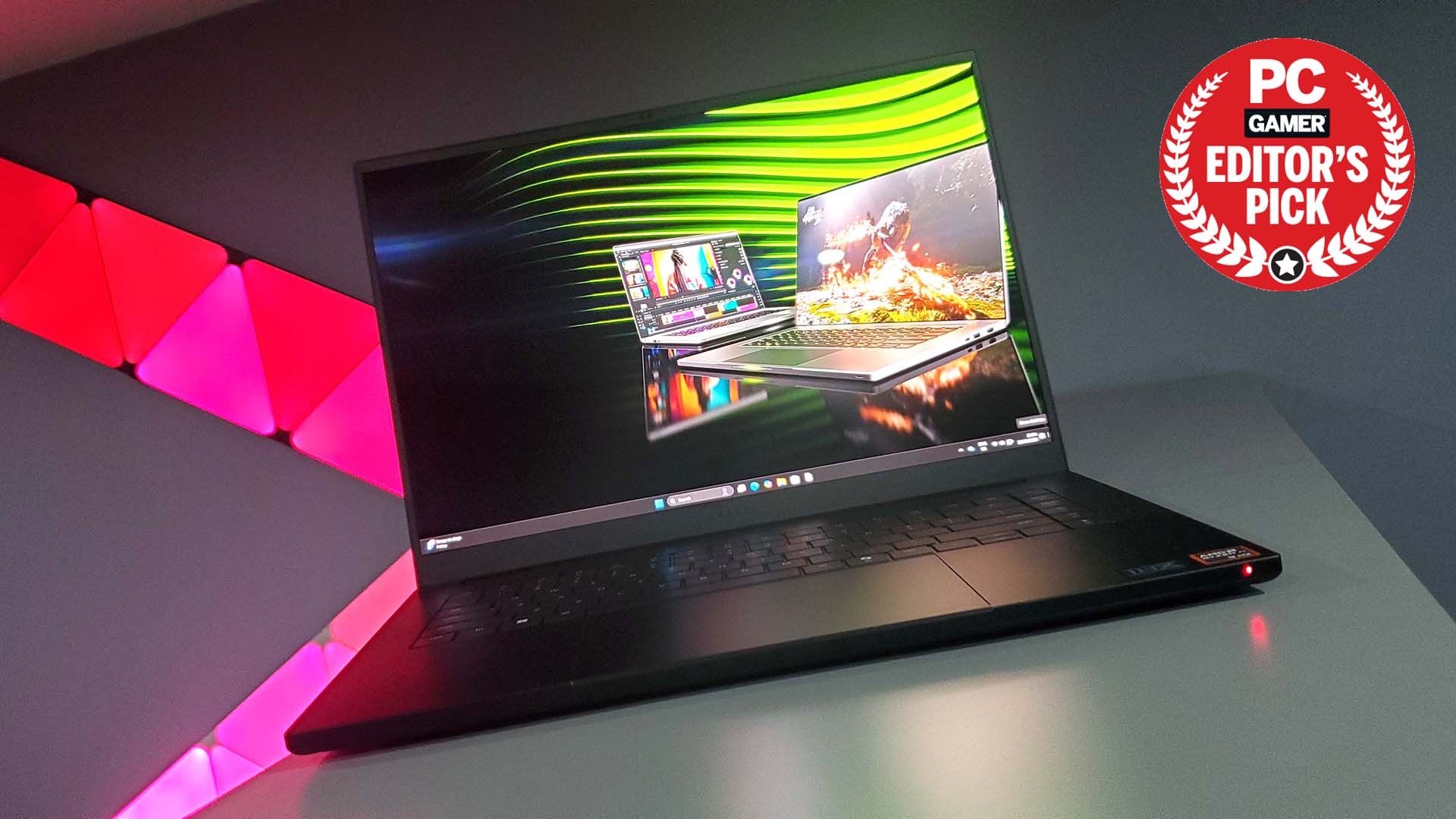
Razer completely redesigned the Blade 16 for 2025, and the spec sheet reflects that ambition. Under the hood, you get an AMD Ryzen AI 9 365 processor paired with NVIDIA’s GeForce RTX 5080 Laptop GPU packing 16GB of GDDR7 memory. The 32GB of LPDDR5X-8000 RAM is soldered — no upgrades there — but the 2TB PCIe Gen4 SSD provides ample fast storage out of the box.
The display is where Razer really flexes: a 16-inch QHD+ (2560×1600) 240Hz OLED panel that PC Gamer called one of the best laptop displays they’ve ever tested. All of this is crammed into a chassis that measures under 15mm thin and weighs just 4.6 pounds (2.09 kg). For context, last year’s Blade 16 was noticeably thicker and heavier.
RTX 5080 Gaming Benchmarks: Real-World Performance Numbers
Let’s cut straight to the numbers everyone wants to see. The Razer Blade 16 RTX 5080 handles demanding titles with impressive frame rates, especially considering the ultra-thin form factor.
Gaming FPS Results
- Shadow of the Tomb Raider (1080p): 166 fps — buttery smooth
- Shadow of the Tomb Raider (QHD): 162 fps — barely any drop at native res
- Cyberpunk 2077 Ultra (1080p): 66 fps — playable at max settings
- Cyberpunk 2077 Ultra (QHD): 43 fps — DLSS recommended here
These results tell an interesting story. In GPU-bound scenarios like Cyberpunk at QHD, you’ll want to lean on DLSS 4 to maintain 60+ fps. But in CPU-limited or moderately demanding titles, the RTX 5080 essentially matches the RTX 5090’s output. According to NotebookCheck’s detailed analysis, the maximum performance deficit between the two SKUs tops out at roughly 13% — and that’s in the most demanding scenarios.
The $1,000 Question: RTX 5080 vs RTX 5090
Here’s where the Razer Blade 16 RTX 5080 becomes genuinely compelling. The RTX 5090 variant costs $4,499.99 — a full thousand dollars more. For that premium, you get roughly 13% more GPU performance. NotebookCheck’s analysis concluded that the performance-per-dollar is “roughly comparable” between the two SKUs, which means the RTX 5080 isn’t just the budget option — it’s arguably the smarter option.
Battery life and noise levels are nearly identical between the two configurations. Both deliver over 7 hours of web browsing and approximately 2.5 hours of gaming. The thermal management system handles both GPUs effectively, though the chassis does get warm under sustained load — an inevitable trade-off for a sub-15mm design.
Design and Build Quality: A Complete Transformation
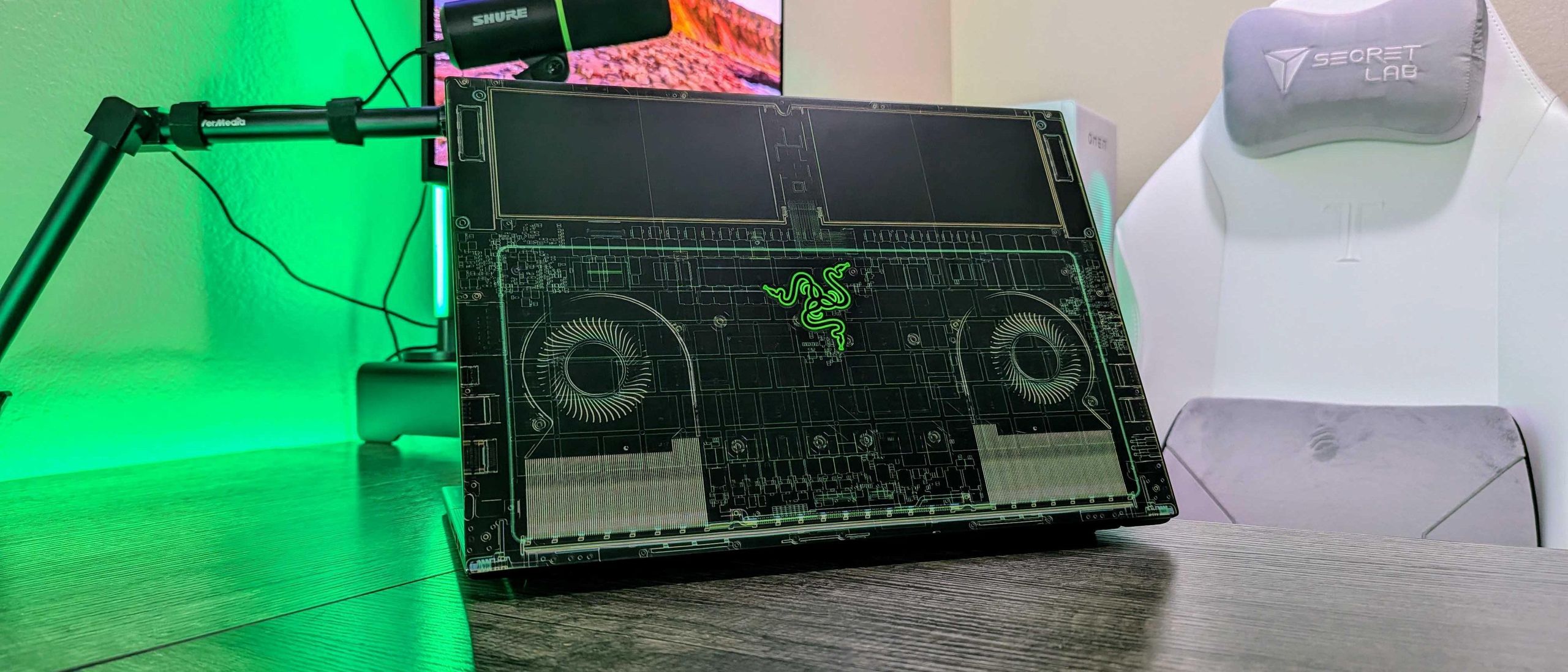
The 2025 Razer Blade 16 isn’t an incremental update — it’s a ground-up redesign. The CNC-machined aluminum unibody is thinner, lighter, and more refined than anything Razer has produced before. At under 15mm thick, it’s approaching ultrabook territory while packing desktop-class GPU performance.
Windows Central highlighted the substantially improved keyboard with per-key RGB backlighting. The key travel is noticeably better than previous Blade models, and the typing experience finally feels worthy of the premium price tag. Laptop Mag praised the bouncy keyboard and impactful audio system.
Display and Audio: The OLED Advantage
The 16-inch QHD+ 240Hz OLED display is, without exaggeration, stunning. True blacks, vibrant colors, excellent contrast ratios, and a refresh rate that makes both gaming and content creation feel effortlessly smooth. PC Gamer awarded the Blade 16 a 90/100 score, calling it “simply the best gaming laptop I’ve ever used” — and the display was a major factor in that assessment.
For creative professionals, the OLED panel delivers accurate color reproduction that makes photo editing, video grading, and design work viable without an external monitor. The 240Hz refresh rate with low response times means competitive gamers won’t need to compromise either.
How the Razer Blade 16 Stacks Up Against Competitors
The 2025 premium gaming laptop market is fiercely competitive, and the Blade 16 RTX 5080 faces some serious contenders.
vs ASUS ROG Zephyrus G16 (2025)
This is the primary rival. Both share 16-inch 240Hz QHD+ OLED displays and slim designs. PC Gamer’s head-to-head comparison gave the edge to Razer for raw gaming performance, while acknowledging the Zephyrus G16 offers a better keyboard, longer battery life, and superior speakers for multimedia consumption. If gaming is your priority, the Blade 16 wins. If you want a more balanced machine, the Zephyrus deserves a close look.
vs MSI Raider 16 HX (2025)
The MSI Raider takes the opposite approach — a thicker chassis with more aggressive cooling that allows higher sustained GPU clock speeds. If you’re primarily gaming at a desk and portability isn’t a concern, the Raider can deliver slightly better sustained performance. But it’s heavier and bulkier, which defeats the purpose of the Blade 16’s engineering triumph.
vs Alienware 16 Area-51 (2025) and ASUS ROG Strix Scar 16
Both are strong competitors with aggressive cooling solutions and flashy gamer aesthetics. The Alienware brings heavier build quality with Dell’s premium support network, while the Strix Scar 16 delivers strong RTX 5080 performance with a more aggressive design language. Neither matches the Blade 16’s combination of thinness, weight, and performance.
Battery Life: Real-World Expectations
Razer claims 7+ hours for web browsing, and Laptop Mag’s testing confirmed this is achievable with brightness around 50% and power-saving profiles engaged. Gaming drops that to roughly 2.5 hours — typical for any RTX 50-series laptop. One notable finding from Tom’s Hardware: performance doesn’t meaningfully degrade when unplugged, which isn’t always the case with thin gaming laptops.
Thermal Management: The Thin Laptop Trade-Off
Physics hasn’t been fully defeated yet. The sub-15mm chassis manages to exploit the RTX 5080’s full power envelope while keeping fan noise controlled during moderate workloads. However, Laptop Mag noted the laptop “gets very hot under pressure” — sustained gaming sessions will warm up the keyboard deck and bottom panel. This is the expected trade-off for cramming this much power into this little space, and every competitor in this weight class faces the same challenge.
Sean’s Take: Why the RTX 5080 Is the One to Buy
After 28 years working with creative and production tools — from running demanding DAW sessions to processing real-time video — I’ve learned that the “best” spec sheet rarely translates to the best experience. The Razer Blade 16 RTX 5080 is a perfect case study in diminishing returns. That extra $1,000 for the RTX 5090 buys you roughly 13% more GPU headroom, but it doesn’t change the display, the keyboard, the build quality, or the battery life. It’s the same machine with a marginally faster GPU.
What genuinely impresses me about this generation is Razer’s engineering restraint. They didn’t chase maximum TDP at the expense of acoustics. They didn’t bulk up the chassis to add more cooling. They found the balance point — and the RTX 5080 sits squarely in that sweet spot. For anyone running creative workloads alongside gaming, the 16GB GDDR7 on the 5080 is more than sufficient for video editing, 3D rendering previews, and even moderate AI inference tasks.
My honest recommendation: unless you’re benchmarking for YouTube content or need absolute maximum frame rates for competitive esports at 4K, the RTX 5080 SKU is the one to buy. Pocket the $1,000 and put it toward a great external monitor or a solid pair of headphones. You’ll get more tangible improvement from those investments than from a 13% GPU bump.
Final Verdict: Premium Done Right
The Razer Blade 16 RTX 5080 earns its $3,499.99 asking price by delivering an exceptional combination of performance, portability, and build quality. It’s 87% of the RTX 5090’s performance at 78% of the price, wrapped in the thinnest, most refined gaming laptop chassis on the market. The QHD+ 240Hz OLED display is world-class, the keyboard is finally worthy of the price, and the redesigned chassis proves that thin gaming laptops don’t have to compromise on power.
If you’re in the market for a premium gaming laptop in 2025, the Razer Blade 16 RTX 5080 should be at the top of your list. It’s not perfect — the thermal heat under sustained load and soldered RAM are legitimate concerns — but nothing else in this form factor comes close to matching the total package.
Want to stay ahead of the latest gaming hardware launches and benchmark analysis? Get weekly updates on tech that actually matters.
Get weekly AI, music, and tech trends delivered to your inbox.