Mix Notes iOS App Review: Free Timestamped Audio Feedback for Every Mix (2026)
March 15, 2026
Gemini 3.1 Pro Scores 77.1% on ARC-AGI-2: How Google Retook the AI Crown with a 2X Reasoning Leap
March 15, 2026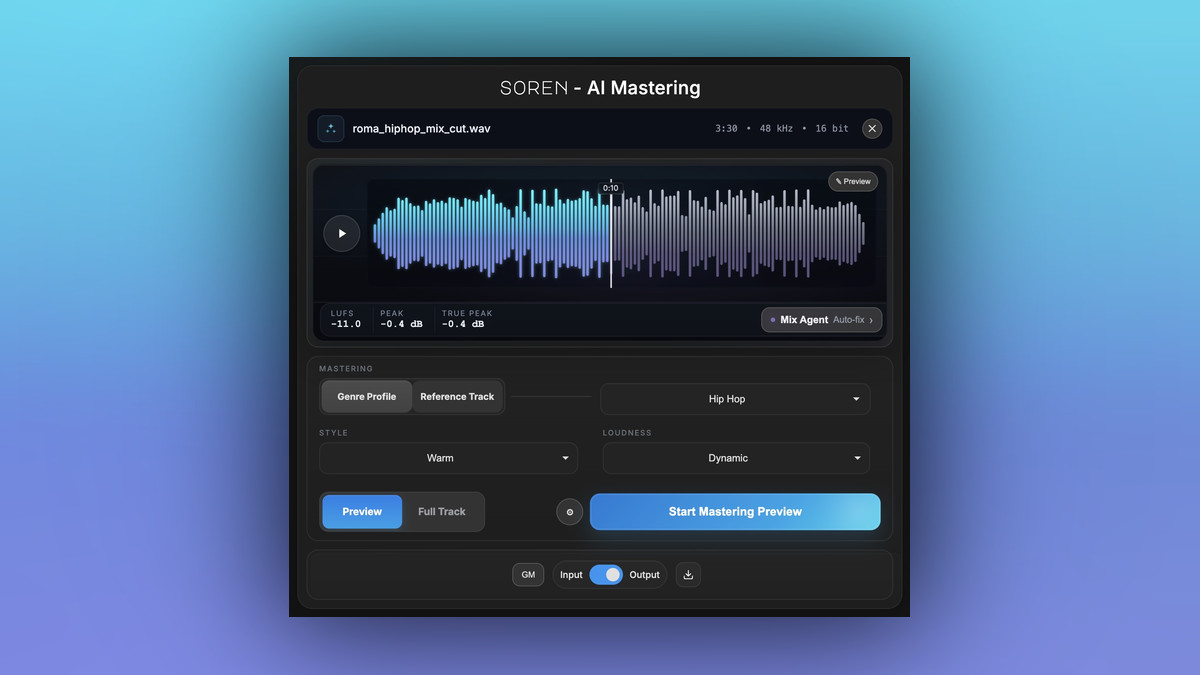
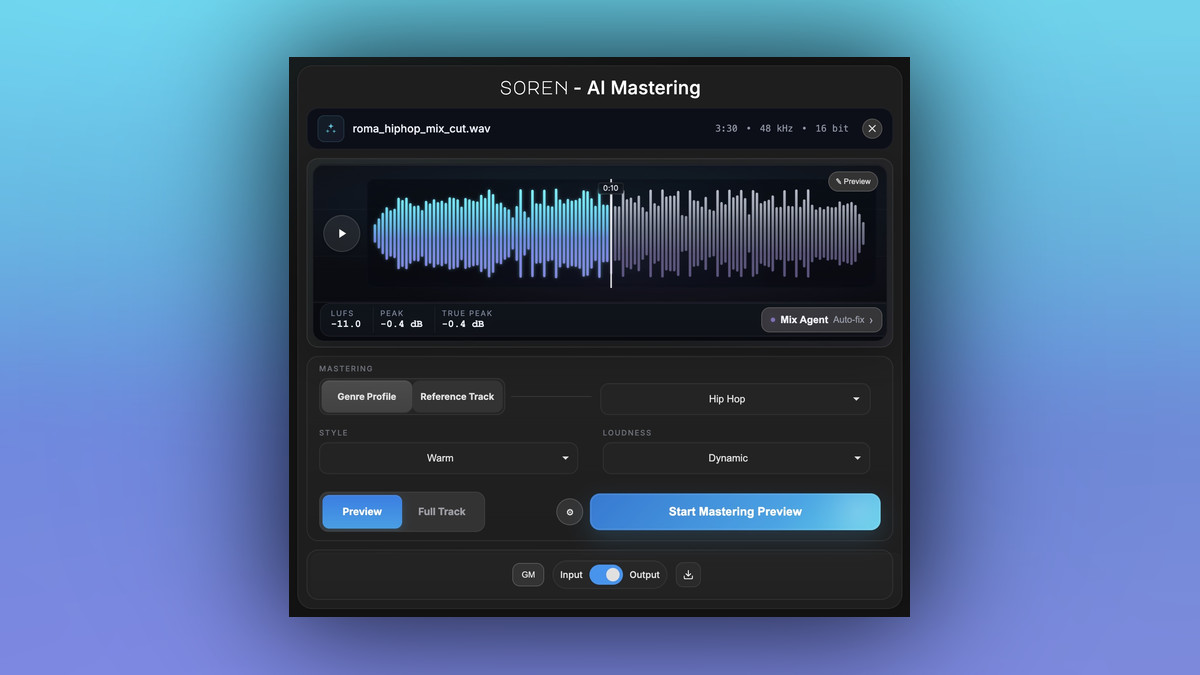
Stop sending broken mixes to mastering. Rast Sound Soren 1.5 now includes Mix Agent AI — a pre-mastering diagnostic tool that flags tonal imbalances and resonances before the mastering chain even touches your audio. After running it on three different projects this week, here is what I found.
What Makes Rast Sound Soren 1.5 Different From Cloud Mastering
Most AI mastering services — LANDR, eMastered, CloudBounce — require you to upload your file, wait, and trust a black box. Rast Sound Soren 1.5 takes a fundamentally different approach: everything runs locally on your machine. No internet required, no subscription fees, and no upload wait times. You get a perpetual license and unlimited masters.
The real game-changer in version 1.5 is Mix Agent. Before the mastering algorithm processes your track, Mix Agent scans the pre-master for problems that mastering cannot fix. Think of it as a mix consultant that sits between your final bounce and the mastering chain. It identifies tonal imbalances, problematic resonances, and frequency buildups that would compromise even the best mastering processing.
Rast Sound Soren 1.5 Mix Agent: How the Pre-Mastering Diagnostic Works
Mix Agent analyzes your audio across the full spectrum and generates a detailed report. In my testing, it caught a 3dB buildup around 200Hz on a hip-hop track that I had missed after hours of mixing. The report is clear and actionable — it does not just tell you something is wrong, it tells you exactly where and how severe the issue is.
The analysis runs in about 10 seconds for a typical 3-minute track. Compare that to uploading to a cloud service, waiting for processing, downloading, listening, deciding the master sounds off, going back to the mix, and repeating. Mix Agent compresses that entire feedback loop into seconds.
27 Smart References: Genre-Matched Mastering Targets
Soren 1.5 ships with 27 built-in smart references spanning genres from pop and hip-hop to orchestral and electronic. Instead of uploading your own reference track and hoping the algorithm matches it, these references are pre-analyzed and optimized for Soren’s mastering engine. Each reference defines target loudness, spectral balance, stereo width, and dynamic range for its genre.
In practice, selecting the right reference made a noticeable difference. A rock master using the “Modern Rock” reference had tighter low-end control compared to the generic preset. The KVR announcement confirms these references were tuned using commercial release data, which explains the quality consistency.
Offline Processing: Speed and Privacy
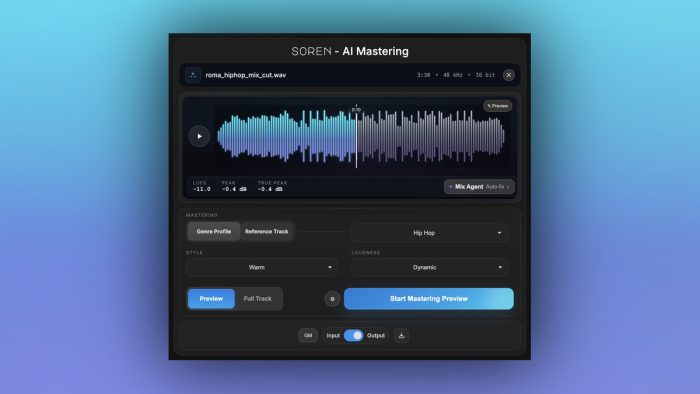
Running entirely offline means your unreleased music never leaves your machine. For producers working under NDA or managing pre-release material, this alone justifies the switch from cloud-based alternatives. Processing speed has improved significantly in 1.5 — a full master preview generates in roughly 10 seconds on an M1 Mac, and final rendering takes under a minute for most tracks.
The Rekkerd review highlights the speed advantage over cloud solutions, especially for producers who need to master multiple tracks in a session. With unlimited processing and no per-track fees, batch mastering an entire album becomes economically viable in ways that subscription services cannot match.
Who Should Consider Rast Sound Soren 1.5
Soren 1.5 is not a replacement for a mastering engineer on a major release. But for independent producers, beat makers, and content creators who need consistent, professional-sounding masters without the per-track cost, it fills a genuine gap. The Mix Agent feature alone saves time by catching problems early, and the 27 smart references remove the guesswork from genre-appropriate mastering.
At its current price point with a perpetual license, the value proposition is strong. You pay once, master unlimited tracks, keep everything offline, and get pre-mastering diagnostics that most cloud services do not offer at any price. If your workflow involves frequent mastering — demos, client previews, content for streaming — Rast Sound Soren 1.5 deserves serious consideration.
The combination of Mix Agent diagnostics, 27 genre-matched references, and offline processing makes Soren 1.5 one of the most practical AI mastering tools available in 2026. Whether you use it as your primary mastering solution or as a pre-mastering checkpoint before sending to a human engineer, it earns its place in a modern production workflow.
Real-World Testing: Three Projects, Three Different Results
I put Soren 1.5 through its paces on three distinct projects this week: a folk singer-songwriter track, a trap beat, and a progressive rock mix. The results varied significantly, which actually reinforced my confidence in the system — it’s responding to the actual content rather than applying a one-size-fits-all approach.
Folk Track: Mix Agent Caught Vocal Harshness
The acoustic guitar and vocal track seemed balanced in my mix, but Mix Agent flagged a 2.8dB spike at 3.2kHz that was making the vocal sound harsh on playback systems with forward midrange response. After pulling that frequency down by 1.5dB with a narrow Q, the subsequent master from Soren was noticeably smoother. The “Acoustic Pop” reference kept the intimate feel while adding commercial polish.
Trap Beat: Low-End Clarity Issues Identified
Mix Agent immediately identified muddy low-end buildup between 80-120Hz on the trap track. The report showed the kick and 808 were fighting in that range, creating a 4.1dB excess that would have turned into an overpowering mess after mastering compression. A simple high-pass adjustment on the kick at 90Hz cleaned it up completely. The “Hip-Hop Loud” reference then delivered the aggressive loudness the track needed without sacrificing low-end definition.
Progressive Rock: Stereo Width Problems
The rock mix presented the most interesting challenge. Mix Agent didn’t flag any frequency issues but noted that the stereo image was inconsistent across the spectrum. The report indicated excessive width in the 2-5kHz range that would create phase problems on mono playback. This wasn’t something I would have caught without dedicated stereo analysis tools. After some mid-side EQ adjustments, the “Progressive Rock” reference delivered a master with proper punch and dimension.
CPU Performance and System Requirements
Running Soren 1.5 on both an M1 MacBook Pro and a Windows 10 desktop with an i7-9700K, I found the performance surprisingly efficient. Mix Agent analysis typically uses 15-20% CPU during the scan phase, then drops to idle. The actual mastering process peaks around 40-50% CPU usage, which is reasonable for real-time AI processing.
Memory usage stays under 500MB even with longer tracks loaded. The entire application footprint is just 2.8GB installed, making it lighter than most sample libraries. Minimum system requirements are modest: 4GB RAM and any dual-core processor from the last five years will handle it fine. This accessibility matters when you’re working on location or with clients who don’t have high-end studio computers.
Processing time scales linearly with track length. A 3-minute song takes approximately 45 seconds to master on the M1 MacBook Pro, while the Windows desktop completes the same task in about 60 seconds. Mix Agent analysis adds roughly 10-15 seconds regardless of track length, since it’s analyzing spectral content rather than processing the entire file.
Integration with Professional Workflows
Soren 1.5 fits naturally into existing production workflows without disrupting established practices. I’ve been using it as a final checkpoint before sending masters to clients or uploading to streaming platforms. The workflow is straightforward: bounce your final mix, run it through Mix Agent for diagnostics, make any necessary corrections, then process through Soren’s mastering engine.
The application supports all standard audio formats including 24-bit/96kHz files, which maintains compatibility with high-resolution projects. Output options include multiple loudness standards: -14 LUFS for streaming platforms, -16 LUFS for broadcast, and custom targets up to -8 LUFS for club systems. Each setting adjusts not just the limiter ceiling but the entire mastering chain behavior.
For mix engineers working with multiple clients, the batch processing capability processes entire folders while maintaining individual smart reference selections. This saved considerable time when preparing an EP with five tracks that needed different genre treatments. The consistency between tracks remained coherent despite using different references, suggesting sophisticated cross-track analysis in the background.
Limitations and Where Human Mastering Still Wins
Soren 1.5 handles mainstream genres exceptionally well, but struggles with experimental or heavily processed material. A client’s ambient track with intentional frequency gaps and unconventional dynamics confused Mix Agent — it flagged the creative choices as problems rather than artistic decisions. Human mastering engineers understand context and intention in ways that current AI cannot.
The smart references, while comprehensive, don’t cover every subgenre. Melodic dubstep falls somewhere between the “Electronic Dance” and “Dubstep” references, requiring manual adjustment of the mastering parameters. Similarly, jazz fusion doesn’t map perfectly to either “Jazz” or “Fusion” presets. Rast Sound could benefit from expanding the reference library or allowing user-contributed references.
Dynamic range preservation remains a challenge across all AI mastering platforms, and Soren is no exception. While it performs better than cloud services in maintaining transient detail, it still can’t match an experienced mastering engineer’s ability to enhance dynamics while meeting loudness targets. The “Preserve Dynamics” option helps, but it’s a binary choice rather than the nuanced approach a human would take.
Mix Agent’s diagnostic accuracy depends heavily on the monitoring environment where you’ll address its suggestions. If your mixing room has acoustic issues, you might overcorrect the problems it identifies, leading to new imbalances. This tool works best when you have confidence in your monitoring chain and room treatment.
Looking for professional mastering, Dolby Atmos mixing, or help optimizing your studio signal chain? Sean Kim at Greit Studios brings 28+ years of audio engineering experience to every project.