UAD Apollo x4 Heritage Edition Review: Is the $2,400 Plugin Bundle Worth the Premium?
June 20, 2025
Linear AI Triage Intelligence: How $82M and LLM Pipelines Are Rewriting Project Management
June 23, 2025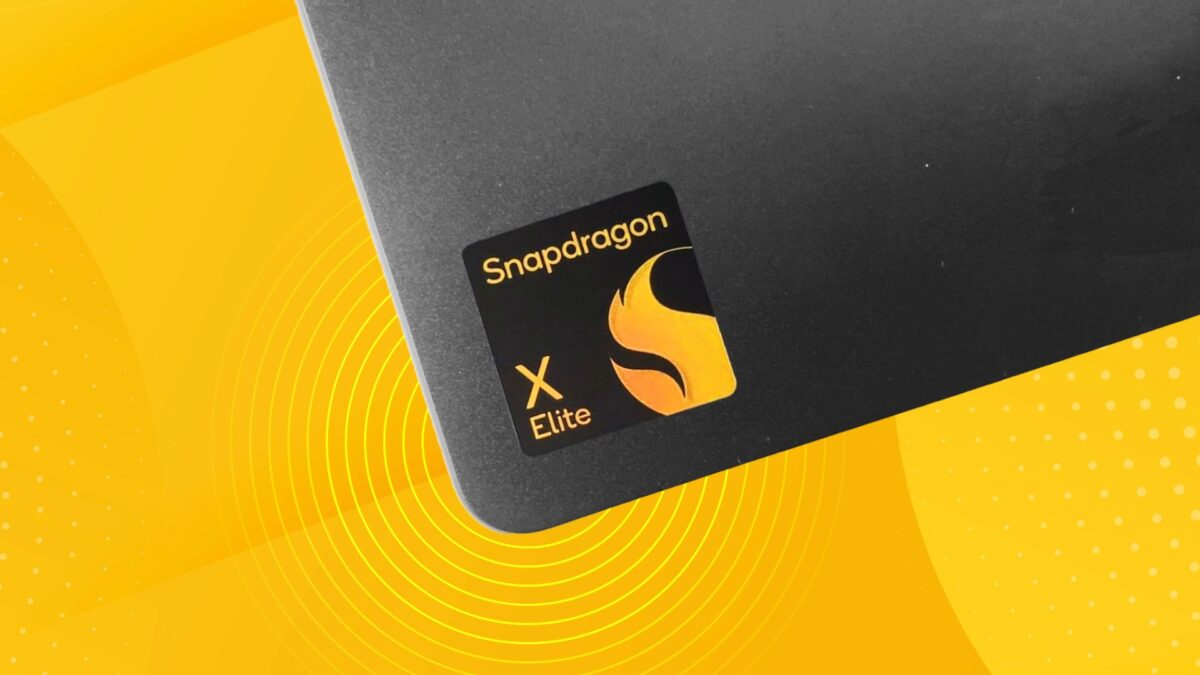
A single-core score of 4,033. That’s over 30% faster than both AMD’s Ryzen AI Max+ 395 and Intel’s upcoming Panther Lake. The Snapdragon X2 benchmark leaks have landed, and the numbers are telling a story that Intel and AMD probably don’t want to hear right now. While Qualcomm spent Computex 2025 celebrating the first-generation Snapdragon X momentum, leaked Geekbench results for the next-generation chip have already started reshaping expectations for ARM Windows laptops.
Computex 2025: Where Snapdragon X Stands Right Now
At Computex 2025 in late May, Qualcomm took a victory lap. According to Qualcomm’s official announcement, over 100 popular Windows applications now run natively on ARM, and users spend more than 90% of their time in native apps. The company doubled down on its “multi-day battery life” claims, positioning ARM laptops as a fundamentally different computing experience from traditional x86 machines.
But here’s the thing — Qualcomm didn’t announce the Snapdragon X2 at Computex. Windows Central reported that Qualcomm’s GM confirmed the official unveil would happen at Snapdragon Summit in September 2025, expressing confidence in the company’s tick-tock development strategy. The official launch is still months away — but the leaked benchmarks are already making waves.
Snapdragon X2 Benchmark Leaks: The Numbers That Changed Everything
Leaked under the codename SC8480XP, the Snapdragon X2 Elite represents a massive step up from its predecessor. Laptop Mag reported on the leaked specs: an 18-core CPU configuration (up from 12 cores in the first-gen X Elite) with support for up to 64GB of LPDDR5X RAM. That’s workstation-class memory in a laptop chip designed for all-day battery life.
The Geekbench scores are where things get really interesting. PC Gamer highlighted the Snapdragon X2 Elite Extreme’s single-core score of approximately 4,033, and here’s how it stacks up against the x86 competition:
- Snapdragon X2 Elite Extreme: ~4,033 (single-core)
- AMD Ryzen AI Max+ 395: ~3,048 (single-core)
- Intel Panther Lake: ~3,066 (single-core)
A 30%+ single-core lead over both AMD and Intel in the laptop space isn’t just an incremental improvement — it’s a generational leap. For context, single-core performance directly impacts everyday tasks like web browsing, app launching, and document editing. This is the kind of gap that forces the competition to fundamentally rethink their roadmaps.
Oryon 2 Architecture: Qualcomm’s Custom Silicon Matures
Tom’s Guide reports that the Snapdragon X2 is expected to feature the Oryon 2 architecture. If the first-generation Oryon was Qualcomm’s opening statement after the Nuvia acquisition — proving they could build competitive custom cores — then Oryon 2 is the refinement that turns potential into dominance.
The jump from 12 to 18 cores is significant (a 50% increase), but the 30%+ single-core improvement is arguably more important. This tells us that Qualcomm hasn’t just bolted on more cores — they’ve fundamentally improved IPC (instructions per clock) at the architectural level. Apple Silicon proved that ARM-based laptops could compete with x86. Qualcomm is now proving they can lead the Windows ecosystem with the same approach.
What makes this particularly interesting is the memory configuration. With support for up to 64GB of LPDDR5X on a wide memory bus, the X2 Elite addresses one of the first generation’s key limitations for power users. Video editors working with 4K timelines, developers running multiple Docker containers, and data analysts processing large datasets all need substantial memory bandwidth. The combination of 18 high-performance cores and 64GB of fast memory puts the Snapdragon X2 squarely in competition with workstation-class Intel and AMD chips — except it does so at a fraction of the power draw.
The thermal and efficiency story is equally compelling. ARM architectures inherently consume less power per instruction than x86, and Qualcomm’s TSMC 4nm process (likely N4P or N3E for the X2) should further reduce power consumption. This means the same 18-core chip that outperforms Intel’s latest in benchmarks could also deliver 15-20+ hours of real-world battery life — something no x86 laptop can realistically match at equivalent performance levels.
AI Performance: Enhanced NPU and the Copilot+ PC Vision
The Snapdragon X2 is expected to feature an enhanced NPU (Neural Processing Unit) exceeding 45 TOPS. The first-gen X Elite already met Microsoft’s Copilot+ PC requirements with its 45 TOPS NPU, enabling on-device AI features like real-time translation, image generation, and intelligent code suggestions. The X2 should push these capabilities even further.
On-device AI processing matters more than most people realize. Running AI workloads locally instead of routing everything through the cloud means faster response times, better privacy, and the ability to work offline. As Microsoft continues to weave AI features throughout Windows, having a more powerful NPU becomes increasingly critical. Qualcomm’s years of mobile AI experience give them a structural advantage here — they’ve been optimizing neural processing for smartphones long before laptop chips entered the picture.
Windows on ARM Software Ecosystem: How Far Has It Come?
Hardware performance means nothing without software to match, and this has historically been ARM Windows’ Achilles’ heel. But the landscape has shifted dramatically. Qualcomm’s claim of 100+ native apps and 90%+ native usage time represents genuine progress. Adobe Creative Suite, Microsoft Office, all major browsers, and an increasing number of developer tools now run natively on ARM.
Microsoft’s Prism emulation layer handles the remaining legacy x86 applications, and its performance has improved significantly since launch. For the average business user or content creator, the “it won’t run on ARM” excuse is rapidly becoming obsolete. The app compatibility gap that plagued Windows RT and early ARM efforts has largely been closed.
That said, specialized professional software — particularly in engineering, scientific computing, and niche creative workflows — may still encounter compatibility issues. Audio production software is a mixed bag: major DAWs like Ableton Live and FL Studio run well, but many third-party VST plugins still require x86 emulation, which can introduce latency. If you rely on specific professional software that hasn’t been updated for ARM, it’s worth verifying compatibility before committing to the platform.
Developer tooling has also made significant strides. Visual Studio Code, JetBrains IDEs, Docker, and most popular programming language runtimes now offer native ARM builds. For web developers and software engineers, an ARM Windows laptop is already a viable daily driver — and the Snapdragon X2’s performance improvements would make it an even more attractive option for compiling large codebases and running resource-intensive development environments.
The Elephant in the Room: Gaming on ARM Windows
Not everything is rosy, and it would be dishonest to pretend otherwise. Gaming remains the most significant weakness of ARM Windows laptops. Anti-cheat software like Riot’s Vanguard still lacks ARM drivers, which means popular titles like Valorant and League of Legends simply won’t run. This is a deal-breaker for a significant portion of the laptop market.
Beyond anti-cheat issues, native ARM gaming support for AAA titles is still in its infancy. GPU performance and driver maturity both lag behind x86 platforms, and the Adreno GPU — despite improvements — hasn’t yet reached parity with NVIDIA’s mobile GeForce lineup or AMD’s Radeon integrated graphics for serious gaming workloads.
That said, the situation is improving. Microsoft has invested heavily in ARM-compatible DirectX layers, and an increasing number of indie and mid-tier titles run well through emulation. Casual gamers may find ARM Windows laptops perfectly adequate, but anyone who considers gaming a primary use case should still look at x86 platforms. How quickly Qualcomm can work with game developers and anti-cheat providers to close this gap will be a critical factor in the platform’s long-term mainstream adoption.
What to Expect: X2 Laptops Arriving Early 2026
The Snapdragon X2 is expected to be officially unveiled at Snapdragon Summit in September 2025, with the first laptops hitting the market in early 2026. Given the OEM development cycle, CES 2026 could be where we see the first wave of X2-powered devices from Samsung, Lenovo, HP, ASUS, and Dell — all of whom shipped first-gen Snapdragon X laptops.
The 18-core configuration with 64GB RAM support opens up workstation-class use cases that weren’t practical on the first-gen platform. Combined with ARM’s proven battery efficiency advantage and a 30%+ single-core performance boost, the X2 could create a compelling value proposition for business professionals and content creators who prioritize productivity and portability over gaming.
For anyone in the market for a new laptop in late 2025 or early 2026, the Snapdragon X2 benchmark leaks paint a clear picture: ARM Windows laptops are no longer a novelty or a compromise — they’re becoming the performance leaders. The combination of a 30%+ single-core advantage, 18 CPU cores, 64GB memory support, and multi-day battery life creates a compelling package that no x86 chip can currently match in its entirety.
The September Snapdragon Summit may be the most important chip announcement of 2025. If these leaked benchmarks translate into production silicon performance — and Qualcomm’s track record with the first-gen X Elite suggests they will — Intel and AMD will need to respond with something extraordinary. The laptop market is about to get a lot more interesting, and ARM is leading the charge.
Want to stay ahead of ARM laptop developments, AI hardware trends, and tech industry shifts? Subscribe to the newsletter.
Get weekly AI, music, and tech trends delivered to your inbox.