SoundBridge 3.0 vs Splice vs AudioMovers: Best Remote Studio Tool in 2026
March 11, 2026
Rhodes Pianology Plugin Review: 3 Pianos, Zero Sampling Artifacts — Worth It for $149?
March 12, 2026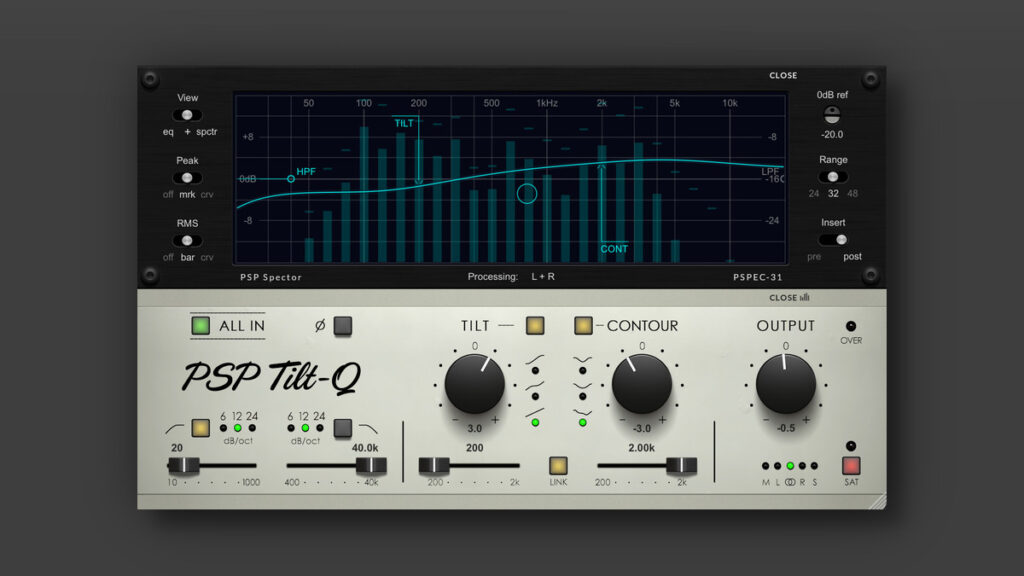
Stop reaching for that parametric EQ every time your mix needs a tonal shift. PSP Tilt-Q tilt EQ just dropped at $49, and it is rewriting the rules of what a single-knob tone shaper can do. With Tonelux Tilt and Softube Tilt already holding their ground, 2026 has become the most exciting year for tilt equalizer fans in a decade.
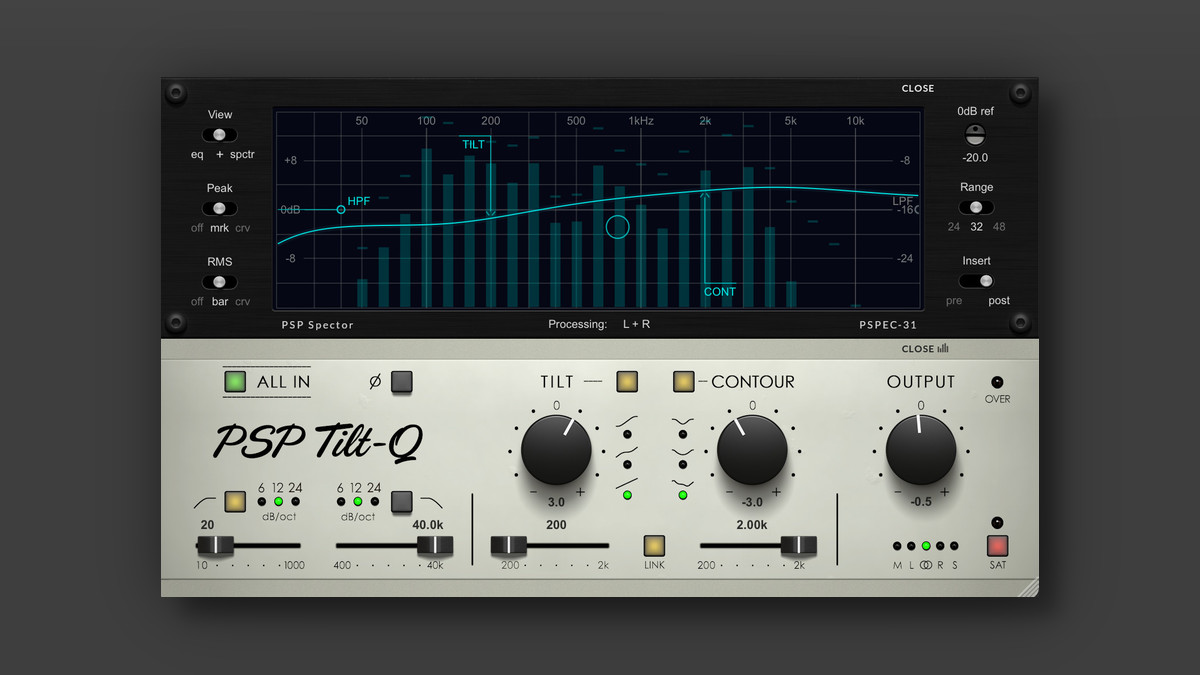
PSP Tilt-Q Tilt EQ — Flexibility Taken to the Extreme
PSP Audioware’s Tilt-Q is not just another tilt EQ. It packs three distinct tilt curve shapes, three contour (loudness) EQ characteristics, high-pass and low-pass filters ranging from 6 to 24 dB per octave, full M/S and L/R processing, and a 64-bit double-precision engine. Add the built-in SAT saturation module and FAT oversampling, and you have a plugin that bridges the gap between clinical precision and analog warmth.
The integrated 31-band real-time analyzer lets you see exactly how your curve choices affect the signal. Authentication runs through iLok with three activations, and the plugin supports VST, VST3, AU, and AAX on both Windows and Mac, including native Apple Silicon support. At an introductory price of $49 (regular $69), the value proposition is hard to ignore.
Over on Gearspace, engineers are already reporting that they replaced entire bus EQ chains after loading Tilt-Q on their drum bus. That is not marketing copy — that is real-world feedback from working professionals.
Softube Tonelux Tilt — The Hardware Purist’s Choice
Softube’s Tonelux Tilt takes a fundamentally different approach. Endorsed by Paul Wolff himself, this is the official software recreation of the Tonelux hardware. The frequency seesaw concept makes operation dead simple: push one way for brighter, the other for darker. But the real magic lives in the transformer modeling, borrowed from the MP1a mic preamp circuit. When you push the low end, you get a saturation character that no algorithm can fake convincingly — because this one was modeled from the real thing.
The package includes Tilt Live for stage and broadcast use. However, at $99 it costs nearly double the PSP’s introductory price, and it lacks multi-curve options, M/S processing, or built-in filtering. What you get instead is character — pure, undiluted hardware character.
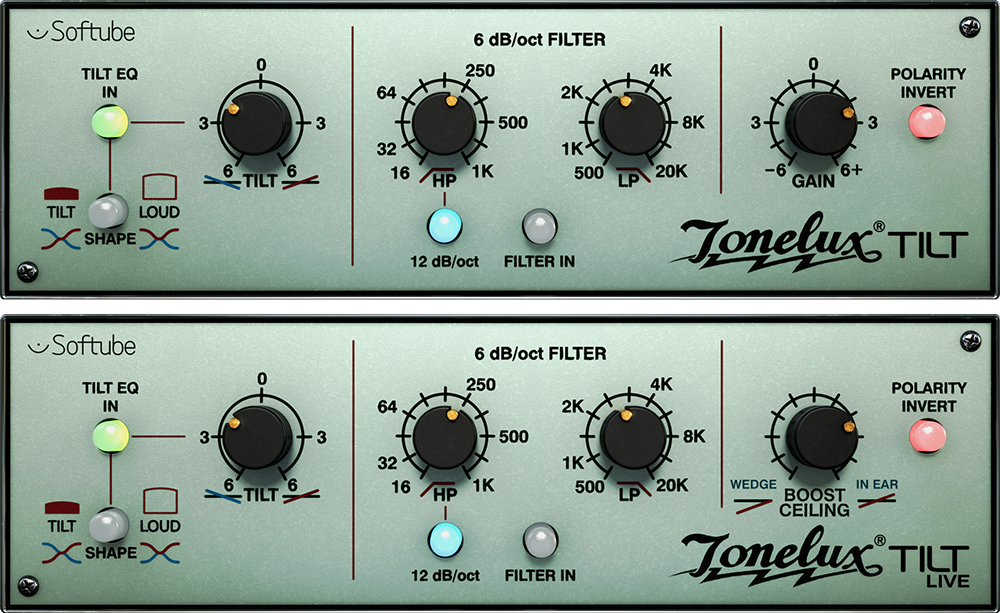
Head-to-Head Comparison — Flexibility vs Character
After 28 years of mixing and mastering, I have learned that the best EQ is not the one with the most features. It is the one that gets you to the right musical decision fastest. Here is how these three stack up:
- Flexibility: PSP Tilt-Q wins decisively. Three curve types, M/S processing, a contour section, and built-in filters give you surgical control without leaving the plugin.
- Character: Softube Tonelux Tilt takes this round. The transformer saturation on the low end has a weight and texture that PSP’s cleaner engine does not replicate.
- Price: PSP Tilt-Q at $49–$69 significantly undercuts Softube’s $99 price tag.
- Mix bus suitability: If you need precision, PSP. If you want vibe, Softube. Both are excellent — they just solve different problems.
Who Should Buy What in 2026
If you are a mix engineer who loves options and wants one plugin to handle tilt, contour, filtering, and mid-side duties, PSP Tilt-Q is the clear winner. If you are chasing that analog transformer warmth and want the closest thing to racking up a Tonelux hardware unit, Softube remains unmatched. And honestly? The smartest move might be owning both — using PSP Tilt-Q for balance and Softube Tonelux Tilt for the final character pass. At a combined cost under $170, that is a mix bus EQ section that rivals setups costing ten times more.
Alternatives like Goodhertz Tiltshift and TDR SlickEQ deserve mentions, but neither offers the dedicated tilt-focused workflow that PSP and Softube have built. For anyone serious about mix bus processing in 2026, these two plugins deserve a spot in your template.
Whether you are rethinking your mix bus chain or building a new studio template from scratch, hearing these plugins in context — on your own material, through your own monitors — is the only way to make the right call.
Real-World Testing: Three Mix Scenarios That Tell the Story
Testing plugins in isolation tells you nothing about their musical impact. I ran all three tilt EQs through identical scenarios using stems from recent projects — a dense electronic track, a sparse acoustic arrangement, and a drum-heavy rock mix — to see how they handle different frequency challenges.
Dense Electronic Mix: CPU and Clarity Under Pressure
The electronic track had typical EDM frequency buildup around 200-400 Hz, plus harsh digital synth content above 8 kHz. PSP Tilt-Q’s three curve shapes made quick work of this — the “wide” curve setting provided gentle broad strokes, while the high-pass filter at 24 dB/octave cleaned up sub-bass rumble that wasn’t musical. The built-in analyzer showed exactly where the problematic midrange was clustering, making surgical adjustments intuitive.
Softube Tilt handled the same content with more character but less precision. The transformer modeling added welcome saturation to the low-mid content, making the bass synths feel more analog. However, the single curve approach meant compromising — fixing the muddy mids also affected the top end more than I wanted. CPU usage stayed remarkably low at 0.8% on my M2 Mac Studio, compared to Tilt-Q’s 1.2%.
Acoustic Arrangement: Where Subtlety Matters
The acoustic track featured fingerpicked guitar, upright bass, and vocals — exactly the kind of material where heavy-handed EQ destroys the organic feel. Here, Softube Tilt’s transformer modeling proved invaluable. A subtle push toward the bright side added air and presence without the digital harshness that parametric EQs often introduce. The saturation characteristics became musical around +3 to +4 on the tilt control, adding harmonic content that made the guitar strings more present in the mix.
PSP Tilt-Q’s “narrow” curve setting focused the tilt effect around a tighter frequency range, which worked well for targeted adjustments. The M/S processing became crucial here — tilting the sides slightly brighter while keeping the center warmer created width without sacrificing vocal intelligibility. This kind of spatial control is impossible with traditional tilt EQs.
Rock Mix: Power vs. Polish
The rock track pushed all three plugins hardest — aggressive drums, distorted guitars, and dense arrangements demand both power and clarity. PSP Tilt-Q’s SAT saturation module became the star, adding analog-style compression and harmonics when pushed. The combination of tilt EQ and saturation in one plugin eliminated the need for separate harmonic enhancement, streamlining the mix bus chain.
Softube Tilt delivered the most immediate gratification. The hardware-modeled transformer behavior compressed transients naturally, taming harsh snare hits while maintaining punch. However, the lack of high-pass filtering meant dealing with low-end buildup required additional plugins.
Workflow Integration: How Each Plugin Fits Your Studio
Plugin choice isn’t just about sound — it’s about how tools integrate into your existing workflow. After running these three tilt EQs across multiple projects, clear usage patterns emerged.
Mix Bus vs. Individual Tracks
PSP Tilt-Q excels on mix buses where you need broad tonal shaping without disrupting individual element relationships. The three curve options mean you can match the EQ behavior to the source material — wide curves for full mixes, narrow curves for focused group buses like drums or vocals. The real-time analyzer eliminates guesswork when making tonal decisions across complex arrangements.
Softube Tilt works better on individual tracks or smaller submixes where its character can shine without overwhelming the mix. I found myself reaching for it on drum overheads, acoustic guitars, and vocal buses — sources where the transformer modeling adds musicality rather than just correction.
Template Integration Strategies
In my mixing templates, PSP Tilt-Q has earned permanent placement on the mix bus, typically after compression but before limiting. The default settings work well enough that I rarely need to adjust anything beyond the main tilt control and occasional curve switching. The high-pass filter at 6 dB/octave around 30 Hz stays engaged by default — gentle enough to avoid pumping, effective enough to clean up unnecessary sub-bass content.
Softube Tilt lives on my drum room bus and acoustic instrument submixes. The character it adds works best when it has space to breathe, making it ideal for sources that benefit from analog-style saturation without needing surgical precision.
Industry Context: Why Tilt EQs Are Having a Moment
The tilt EQ renaissance isn’t coincidental. Modern productions increasingly demand broad tonal shifts that maintain musical balance — exactly what tilt EQs excel at. Streaming platform loudness standards have also shifted focus from peak limiting to tonal balance, making gentle broad-stroke EQ more valuable than surgical cuts and boosts.
Major mixing engineers like Chris Lord-Alge have been advocating for tilt EQ approaches in recent interviews, specifically citing their ability to make tracks work across different playback systems without destroying transient response. When you’re mixing for everything from earbuds to car stereos, broad tonal adjustments often translate better than narrow parametric moves.
The Loudness War Aftermath
Spotify’s -14 LUFS target and Apple Music’s Sound Check have fundamentally changed how we approach mix bus processing. The days of smashing everything through brick-wall limiters are over — now the focus is on tonal balance and dynamic integrity. Tilt EQs align perfectly with this philosophy, offering broad tonal shaping without the phase distortion and transient smearing that aggressive parametric EQ can introduce.
PSP Tilt-Q’s 64-bit processing and oversampling options directly address these concerns. The plugin maintains phase coherence even with extreme tilt settings, crucial when your mix needs to sound balanced at streaming-friendly loudness levels. Softube Tilt’s transformer modeling adds the harmonic richness that helps tracks cut through at lower overall levels — a significant advantage in today’s streaming landscape.
The Verdict: Choosing Your Tilt EQ Strategy
After extensive testing, the choice between these three isn’t about finding a single winner — it’s about matching tools to specific needs. PSP Tilt-Q delivers unmatched flexibility and precision, making it ideal for engineers who need one plugin to handle diverse tonal shaping tasks. At $49, it offers the best feature-to-price ratio in the category.
Softube Tilt remains the character champion. If your work benefits from analog-style saturation and transformer modeling, the $99 investment delivers hardware authenticity that no algorithm-based approach can match. The simplicity can be an advantage — fewer options mean faster decisions when inspiration strikes.
For engineers building their first professional plugin collection, PSP Tilt-Q offers the most versatility per dollar. Established professionals working in genres where character matters more than flexibility will find Softube Tilt’s focused approach more musically satisfying. Either choice represents a significant upgrade over stock DAW EQs for broad tonal shaping tasks.
From mix bus setup to mastering chains — 28 years of engineering experience, applied to your project.