Google DeepMind 2025 in Review: AlphaFold’s Nobel Legacy, Gemini Breakthroughs, and the Future of AI Research
December 29, 2025
NVIDIA Nemotron 3 Deep Dive: How Nano 30B, Super 100B, and Ultra 500B Are Redefining Open AI Models
December 31, 2025
After 28 years of making music, I’ve made the same January promise roughly 28 times: “This year will be different.” By March, I’m back to the same habits. But here’s what three decades in the studio actually taught me about producer new year resolutions 2026 — the ones that stick aren’t the ambitious ones. They’re the ones you can’t avoid once you build the right systems around them.

1. Make Finished Tracks Your Only KPI
You have 200 unfinished projects on your hard drive but you’re shopping for a new synth plugin. Sound familiar? SoundGym’s analysis puts it perfectly: finishing creates skill, not the other way around. Good production is the ability to make clear decisions and keep them long enough to complete something. This isn’t motivational fluff — it’s mechanics. The act of finishing forces you to make arrangement decisions, commit to mix balances, and develop the instinct for “good enough to ship.”
Set a target of one finished track per month. Quality follows quantity — an imperfect finished song teaches you more than a perfect 8-bar loop ever will. The system is simple: create a “FINISH” folder in your DAW. Every month, a bounced file goes in. Twelve files by December means you won the year. The metric isn’t how good each track is — it’s whether you completed it at all.
2. Build Project Templates That Do the Heavy Lifting
Starting every session from a blank project means burning roughly 30% of your creative energy on routing, bus setup, and loading your go-to plugins. As Swerve Collective emphasizes, templates aren’t a convenience — they’re a workflow weapon. Build 3-5 templates with your go-to drum buses, vocal chains, send effects, and master bus processing already loaded and configured.
- Hip-hop/Trap template: 808 sub bass track, hi-hat roll group, sidechain compressor, stereo bus
- Pop/Singer-songwriter template: piano track, acoustic guitars, vocal doubling chain, reverb/delay sends
- Electronic/EDM template: synth layer groups, riser tracks, FX return chains, sidechain bus
- Ambient/Synthwave template: pad layers, granular processing, long reverb chains
The real payoff of templates isn’t saving time — it’s getting into creative mode within 5 minutes of opening your DAW. When the technical scaffolding is already there, you’re far more likely to capture an idea before the inspiration fades. I’ve found that the difference between a productive session and a wasted one often comes down to how quickly I reach the creative zone.
3. Make Reference Tracks a Non-Negotiable Habit
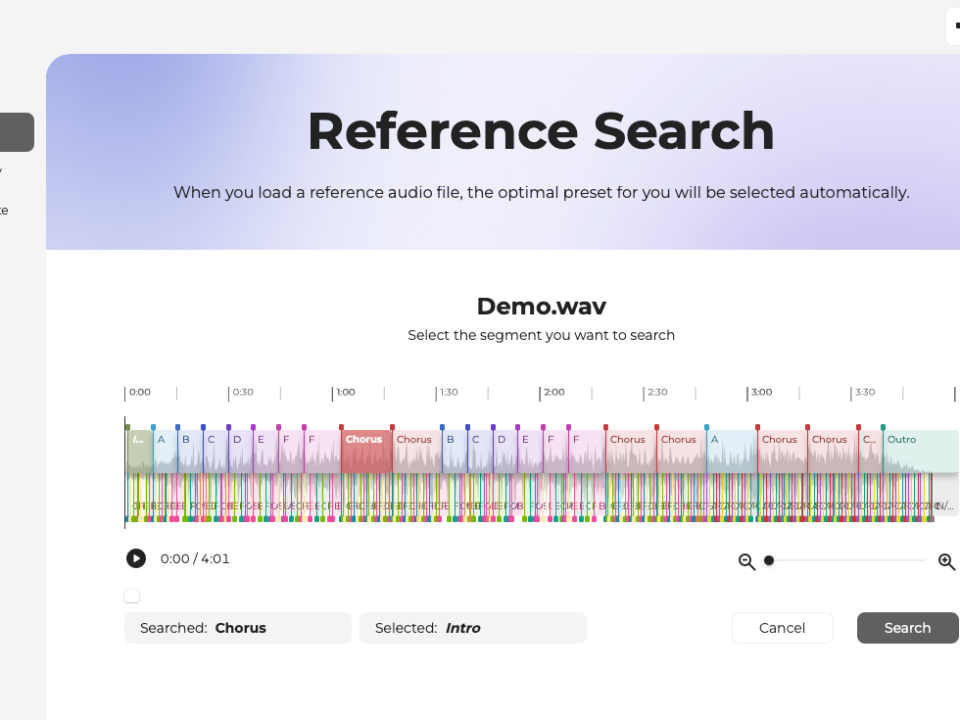
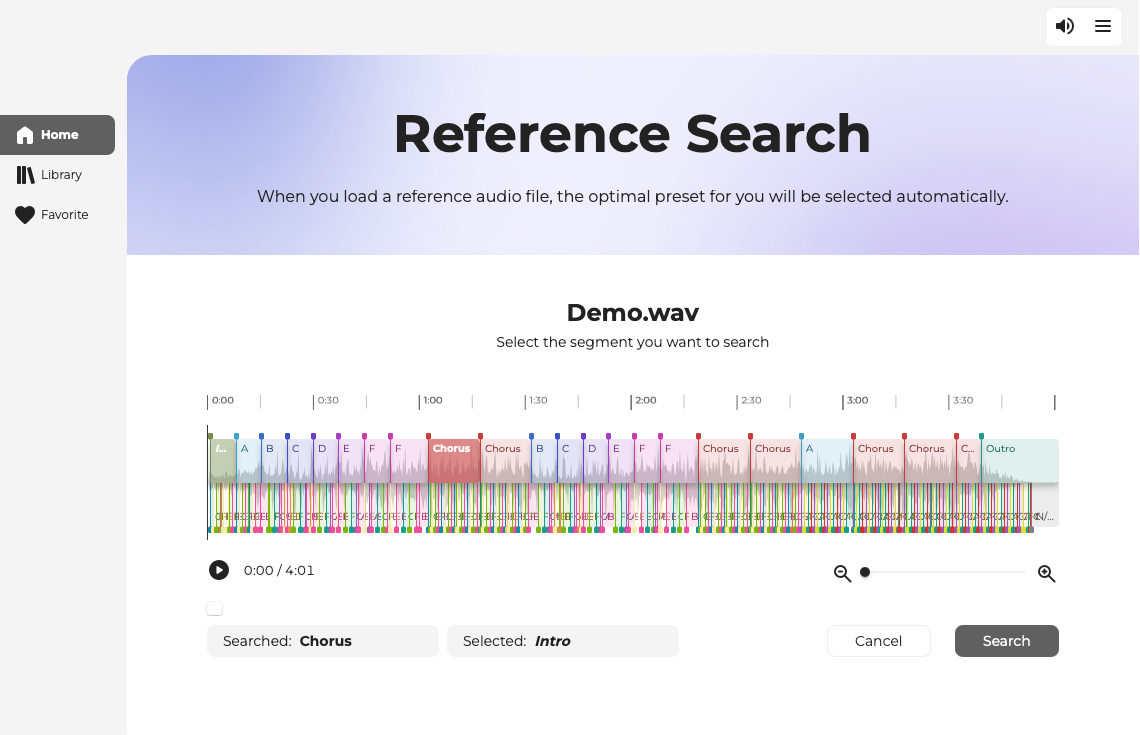
About 80% of “why doesn’t my mix work?” moments happen because there’s no reference point. SoundGym argues that comparison teaches faster than explanation — and after decades of mixing, I can confirm they’re absolutely right. Import 2-3 reference tracks into every single project and A/B compare against your work constantly. Gain-match them first so you’re comparing apples to apples. Your low-end balance, vocal level instincts, and stereo width judgment will improve dramatically within weeks, not months.
Here’s how to build the habit: pick 10 of your favorite songs on Spotify and create a “Reference” playlist. Download them as WAV files and keep them in every project. Maintain separate reference libraries by genre for maximum effectiveness. When your subjective judgment drifts — and it will — these references act as objective anchors that keep your mixes grounded.
4. Invest Real Time in Original Sound Design
Stacking presets is not sound design — not even close. Swerve’s analysis makes the case clearly: original sound design builds a sonic fingerprint that over time becomes your brand. Listeners might not consciously identify what makes your tracks unique, but they will absolutely feel it. This is where branding meets production.
Dedicate 2 hours per week to creating synth patches from init presets in Serum or Vital. Start from the oscillator wavetable selection, shape the filter curve, design LFO modulations, and build your own FX chains. Through this process, you’ll internalize how synthesizers actually work at a fundamental level. Build a library of 5-10 signature sounds that become your personal palette. Once you have them, you won’t need to spend 30 minutes scrolling through preset browsers — you’ll reach for your own sounds first, and that’s when your tracks start sounding unmistakably yours.

5. Use AI Tools Strategically — Not Blindly
Ignoring AI in 2026 is like refusing to use a DAW in 2010. But the key word here is “strategically.” Point Blank Music School nails it: the producers who thrive in 2026 are those who use AI for the technical heavy lifting while focusing their own energy on creative decisions that make their music unique.
Where does AI actually help? Use LANDR for quick mastering references, iZotope RX’s AI modules for noise cleanup, and AI-powered stem separation to accelerate your sampling workflow. Harmonic analysis, chord detection, and automatic beat matching can also dramatically speed up your process. The critical boundary: never let AI make the final creative call. Use it as a tool, but let your ears make the creative direction decisions. AI handles the tedious parts so you can stay in the creative lane — that’s the sweet spot.
6. Apply the 3-Question Mixing Framework Every Session
Forget memorizing 100 complex mixing techniques. Three simple questions will improve your mixes more than any plugin purchase: (1) What’s the main element right now? (2) What’s obscuring it? (3) What can I remove? This framework from SoundGym works for beginners and intermediate producers alike, and honestly, I still use it on every session after 28 years.
Most mixing problems aren’t solved by adding something — they’re solved by removing something else. Before you boost an EQ frequency, try cutting that frequency on a competing track first. Before you reach for a compressor, check if a simple volume balance adjustment fixes the issue. Subtractive thinking is the core of good mixing. Write these three questions on a sticky note and put it on your monitor. You’ll be surprised how automatically they become part of your workflow within a few weeks.
7. Build a Realistic Schedule — And Actually Follow It
True Underground makes a sharp observation: unless you’re a full-time producer, goals like “4 hours of production every day” will collapse within three weeks. The biggest mistake is building a schedule based on an imaginary full-time scenario instead of your actual available hours. Be honest about your time, then plan within those constraints.
Three sessions per week at 1.5 hours each is plenty. That’s 18 hours a month — more than enough to finish one track monthly. Consistency beats marathon sessions every time. The producers who grow fastest aren’t the ones with the most hours available — they’re the ones who show up regularly, session after session, week after week. Treat your studio time like a recurring calendar appointment that you don’t cancel.
8. Collaborate at Least Once Per Quarter
Working alone is comfortable, but it caps your growth rate. Abstrakt Music Lab puts it simply: every collaboration is a chance to learn. You’ll pick up production tricks, sound selection philosophies, and arrangement ideas you’d never encounter inside your own creative bubble. Each collaborator brings a different workflow, different references, and different instincts that expand your musical vocabulary.
Set a target of four collaborations in 2026 — one per quarter makes it manageable. Tools like SoundBridge for real-time collaboration and Splice for project sharing make remote collaboration frictionless, so geography is no longer a valid excuse. The first collaboration is always the hardest to initiate, but once you start, your network expands naturally, and future collaborations become easier to arrange.
9. Build a Feedback Loop Outside Your Studio
“Export frequently and listen away from screens.” SoundGym’s advice is simple but most producers completely ignore it. Bounce your work and listen on walks, in the car, in the kitchen, through earbuds on the subway. Balance problems, awkward transitions, excessive reverb — issues you miss on studio monitors will jump out immediately in different listening environments. This is one of the cheapest and most effective quality checks available to any producer.
After every export, write one sentence about what to improve next. Use your phone’s notes app, a physical notebook, whatever works. This one-line practice log, accumulated over three to six months, becomes both a personal growth tracker and a dataset revealing your recurring mistake patterns. Simple practice, profound results.
10. Stop Using Preparation as Avoidance
The sharpest insight from True Underground: “Preparation becomes avoidance when it has no endpoint.” Installing new plugins, watching YouTube tutorials, organizing sample packs, optimizing your DAW settings — all of these feel productive but produce zero music. Learning and organization matter, but they cannot become substitutes for the actual work of making music.
Ask yourself honestly: how many hours last week did you actually spend working on a track in your DAW? Subtract the time spent browsing plugins, checking sales, and watching tutorials. That remaining number is your real production time. Every item on this producer new year resolutions 2026 list ultimately converges on one truth: make it, finish it, ship it. Everything else is support infrastructure for that core action.
The Real Resolution: Systems Over Willpower
These 10 producer new year resolutions for 2026 aren’t grand ambitions — they’re systems. After 28 years in the studio, the one lesson that stuck harder than any other is that consistency beats talent. A little progress each week, one finished track per month, one new technique per session. Stack those small wins for 12 months and you’ll be a fundamentally different producer by next December. This year, let your output speak louder than your intentions.
Ready to level up your production in 2026? If you need professional mixing and mastering, Greit Studios is here to help.
Get weekly AI, music, and tech trends delivered to your inbox.