AWS re:Invent 2025 Preview: 5 Key Updates Coming to Bedrock and SageMaker AI
November 20, 2025
SSL Native Bus Compressor 2 Review: 5 New Ratios and X Mode Redefine Glue Compression
November 21, 2025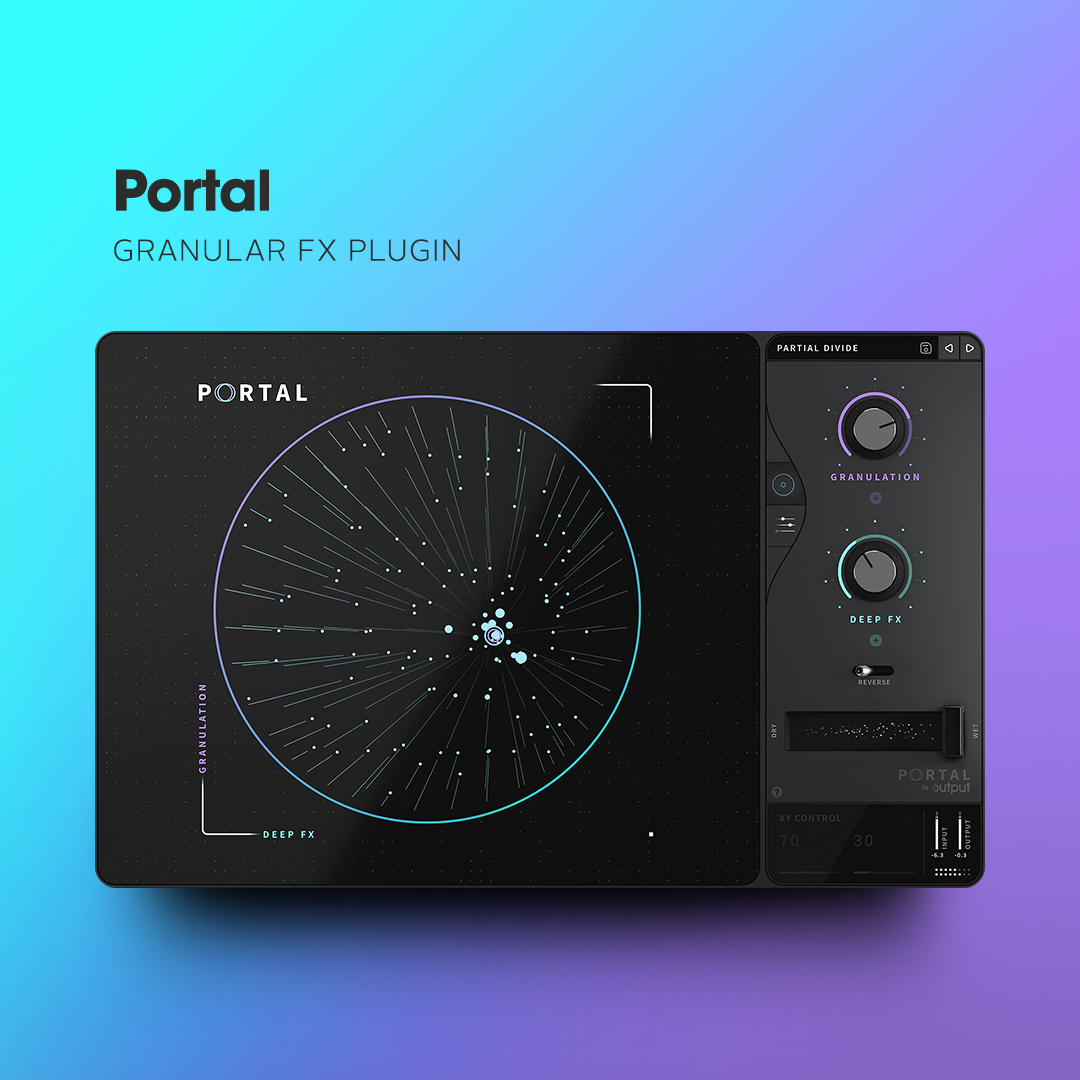
I’ve been running Portal on every vocal chain and synth bus for three years — and the moment I loaded the 2.0 update, the very first preset told me Output had rebuilt the engine from the ground up. The grain artifacts that used to creep in at extreme density settings? Gone. The pitch tracking that occasionally drifted on transient-heavy material? Rock solid. This isn’t a point update — it’s a reinvention.
What Output Portal 2.0 Actually Changes
Output Portal first launched in 2019 as one of the first granular effects plugins designed for musicians rather than sound designers. Where tools like Granulator II or Quanta treated granular synthesis as an academic exercise, Portal made it playable. The original circular XY pad, scale-locked pitch quantization, and tempo-synced grain delay turned abstract grain clouds into something you could actually use in a mix. MusicRadar gave it a perfect 5/5 score, calling the granular engine “stunning.”
Portal 2.0 builds on that foundation with five significant algorithm changes that affect every aspect of the grain engine.
1. Adaptive Grain Interpolation
The original Portal used fixed crossfade curves between grains. Version 2.0 introduces adaptive interpolation that analyzes the spectral content of adjacent grains in real time. When processing a vocal with vibrato, for example, the crossfade shape automatically adjusts to preserve the natural pitch movement rather than introducing the choppy artifacts that granular processing is infamous for. The result is dramatically smoother output at grain sizes below 10ms — exactly where most creative granular effects live.
2. Transient-Aware Grain Triggering
Previously, grain triggering was strictly time-based: density controlled how many grains per second, and that was it. Portal 2.0 adds a transient detection layer that can lock grain boundaries to the actual transients in your audio. Feed a drum loop through the new engine and each grain starts precisely at a hit, preserving the attack character that older granular processors smeared into mush. This single feature transforms Portal from “creative effect” to “legitimate remix tool.”
3. Spectral Grain Filtering
Each grain now passes through an independent spectral filter before recombination. You can isolate specific frequency bands within the granular process — keeping the low-end intact while only granulating the harmonics above 2kHz, for instance. This is something that previously required routing Portal through a multiband splitter, burning three plugin instances for what 2.0 handles internally.
4. Phase-Coherent Reconstruction
The reconstruction algorithm now maintains phase coherence across the grain output. In practical terms, this means the wet signal no longer cancels frequencies when blended with the dry signal at moderate mix levels. The old version had a persistent comb-filtering issue at 30-60% wet/dry — a problem that forced many producers to either go fully wet or barely touch the mix knob. Version 2.0 eliminates this completely through phase alignment during grain recombination.
5. Pitch-Formant Decoupling
Portal’s scale-locked pitch modulation was already its strongest feature. Version 2.0 separates pitch from formant, allowing you to shift pitch without the chipmunk effect on vocals or the unnatural timbre shifts on instruments. The formant preservation algorithm analyzes the spectral envelope of each grain independently, maintaining the natural character of the source material even at extreme pitch shifts of ±12 semitones.
The Redesigned XY Pad and Modulation Engine
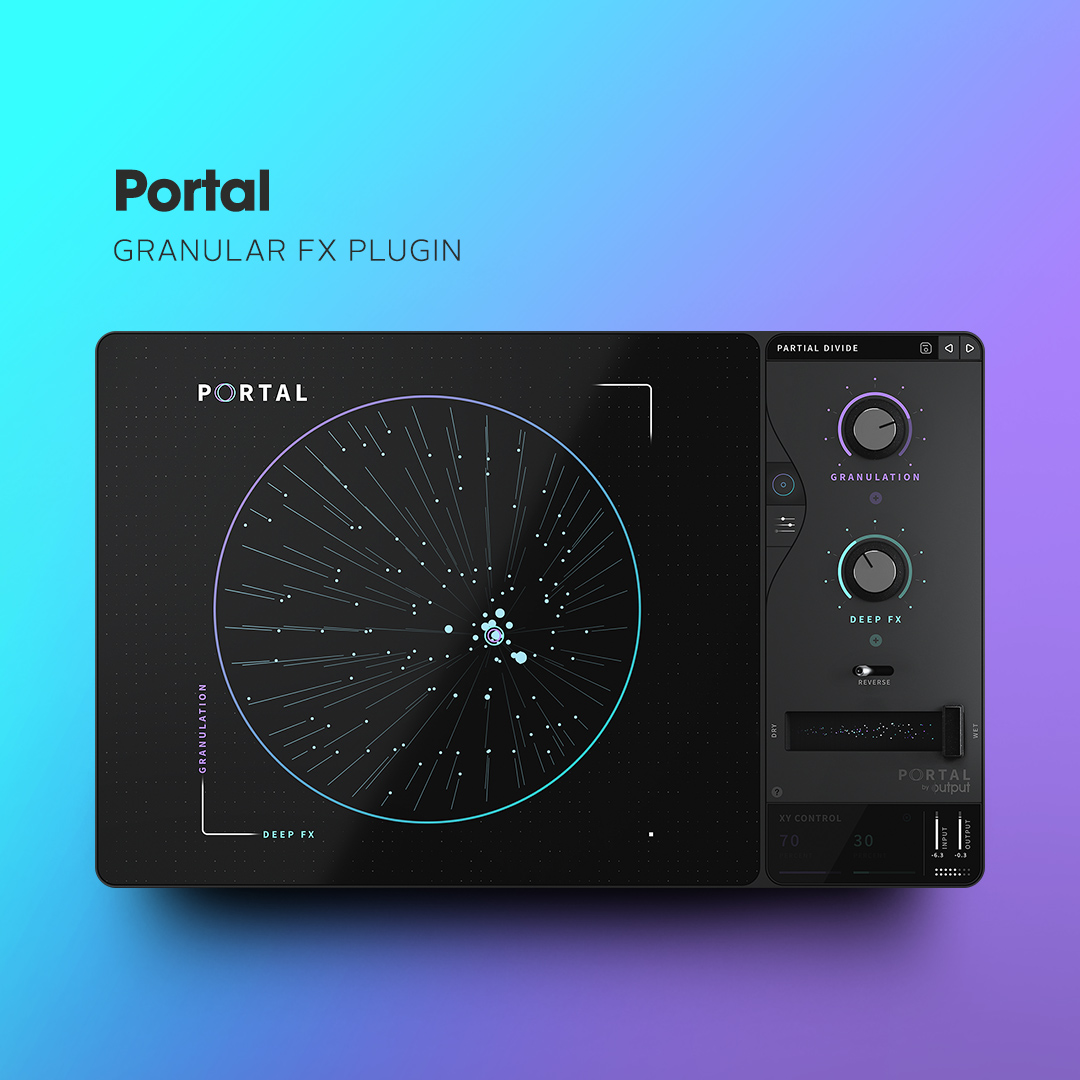
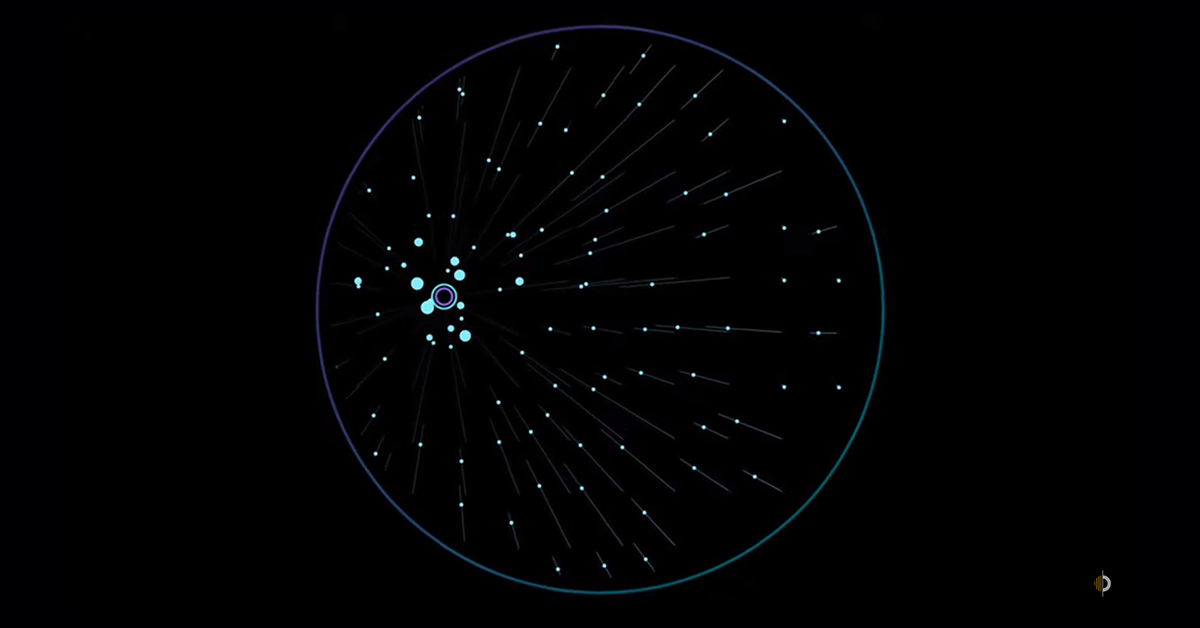
The circular XY control — Portal’s signature interface element — now supports eight macro assignments instead of four. The visual feedback has been overhauled with real-time spectral display overlaid on the grain visualization, so you can see exactly what the granular engine is doing to your audio’s frequency content as you drag the control point.
The two modulation envelopes remain but gain several new capabilities. Envelope shapes can now be drawn freehand with up to 64 breakpoints (up from the original 32). A new “humanize” depth control adds per-cycle variation that ranges from subtle drift to complete randomization. Speed ranges have been extended down to 0.01 Hz for slow evolving textures — particularly useful for ambient production and film scoring.
Built-in Effects: What’s New in the Chain
Portal’s seven built-in effects (multimode filter, bit reducer, chorus, distortion, phaser, reverb, delay) all remain, but the reverb algorithm has been replaced entirely. The new reverb uses a convolution-algorithmic hybrid that delivers significantly more realistic spaces without the CPU overhead of pure convolution. The delay now supports ping-pong and multi-tap modes with per-tap filtering.
A new saturation module sits at the end of the effects chain before the master compressor. It offers three modes: tape, tube, and digital clipping. Combined with the granular processing, the tape saturation mode produces particularly warm results on pad sounds and sustained instruments.
250+ Presets Expanded to 400+
Output expanded the preset library from 250 to over 400, organized into new categories that reflect the updated engine’s capabilities. Highlights include a “Cinematic” folder with presets designed for trailer sound design, a “Lo-Fi” collection that leverages the new bit reducer and tape saturation combination, and a “Rhythmic” section that uses transient-aware grain triggering to create beat-synced granular patterns from any input.
The preset browser now includes tags and a search function — something that should have been there from version 1.0 but is welcome nonetheless. Preset favoriting remains, and Output has added A/B comparison with instant switching between two loaded presets.
Performance and Compatibility
Portal 2.0 finally delivers native Apple Silicon support, running natively on M1, M2, M3, and M4 Macs without Rosetta translation. CPU usage on Apple Silicon drops by approximately 40% compared to the Rosetta-translated version 1.x. On Intel and AMD systems, Output reports a 15-20% CPU reduction thanks to SIMD-optimized grain processing.
System requirements have been updated: macOS 11+ (previously 10.9+), Windows 10+ (previously Windows 7+). The plugin supports VST3, AU, and AAX formats. VST2 has been dropped, which may affect users of older DAWs, but this aligns with the broader industry shift. The installer has moved to Output Hub, Output’s centralized plugin manager.
Output Portal 2.0 Black Friday 2025: The Best Time to Buy
Portal 2.0 launches at the same $149 price point as the original. Existing Portal owners get a free upgrade — a move that builds significant goodwill considering competitors like iZotope and Arturia charge for major version updates. New buyers benefit from Output’s Black Friday sale: 50% off brings Portal 2.0 down to $74.50. For context, Plugin Boutique is running the same discount through November 30th.
At $74.50, Portal 2.0 sits in a unique position. Its closest competitors — Glitchmachines Polygon ($99), Sugar Bytes Effectrix ($99), and Native Instruments’ free Granulator II — don’t match the combination of musical granular processing, built-in effects, and the new algorithm improvements. MusicRadar’s original 5/5 review praised the engine’s musicality, and the 2.0 algorithms make a strong case for an even higher hypothetical score.
Who Should Upgrade — and Who Should Buy New
If you already own Portal, the upgrade is free. Install it. The phase-coherent reconstruction alone fixes the most common complaint about the original.
If you’re new to granular effects, Portal 2.0 at the Black Friday price is the entry point I’d recommend over any competitor. The transient-aware grain triggering and pitch-formant decoupling are features you won’t find in any other single plugin at this price. And unlike academic granular tools, Portal is designed to produce musically useful results from the moment you load a preset.
The only users who might want to wait are those locked into DAWs that require VST2 support — the format drop means Portal 2.0 won’t load in older hosts like FL Studio versions before 20.7 or legacy Pro Tools installations. For everyone else, this Black Friday window represents the best value Portal has ever offered.
Looking for professional mixing, mastering, or help integrating granular effects into your production workflow?
Get weekly AI, music, and tech trends delivered to your inbox.