Thomann Software Spring Sale 2026: 15 Best Plugin and Studio Gear Deals Before April 8
March 20, 2026
Visual Studio 2026 March Update: Custom AI Agents, Profiler Agent, and C++ Compiler Gains Up to 6.5%
March 20, 2026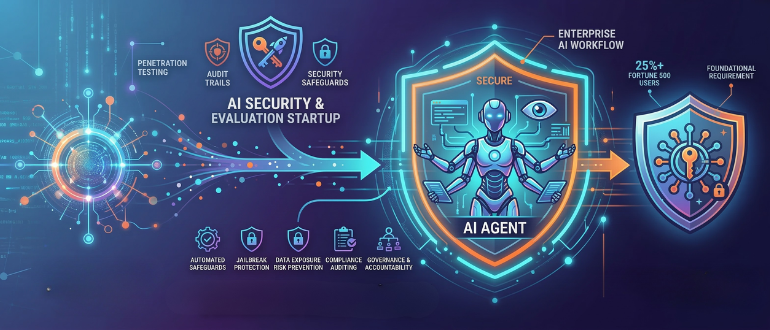
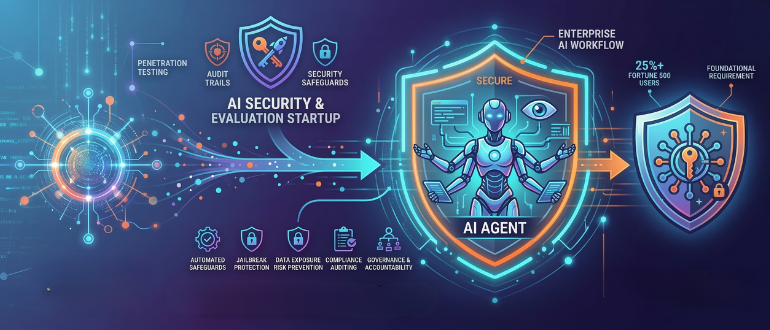
OpenAI just bought the tool that hackers — and Fortune 500 security teams — use to break AI. On March 9, 2026, OpenAI quietly announced it is acquiring Promptfoo, the open-source red-teaming platform that stress-tests large language models for prompt injections, jailbreaks, and data leaks. If you run AI agents in production, this OpenAI Promptfoo acquisition will reshape how you think about safety, compliance, and shipping speed.
What Is Promptfoo and Why Did OpenAI Want It?
Promptfoo was founded in 2024 by Ian Webster and Michael D’Angelo as an open-source interface and testing library specifically designed for red-teaming LLMs. Think of it as a penetration-testing suite, but instead of probing network firewalls, it probes the behavioral boundaries of language models. The platform automates adversarial testing — sending thousands of carefully crafted prompts designed to trigger failures, extract training data, bypass safety filters, or manipulate agents into unauthorized actions.
The numbers tell the story of why OpenAI moved fast. According to TechCrunch, more than 25% of Fortune 500 companies already use Promptfoo to validate their LLM deployments before they go live. That is not a niche developer tool — that is critical enterprise infrastructure. When one in four of the world’s largest corporations trusts a platform to find holes in their AI, acquiring it means acquiring trust.
The acquisition price was not disclosed, but the strategic logic is unmistakable. OpenAI’s enterprise customers have been demanding built-in security guarantees as they deploy increasingly autonomous AI agents. Buying Promptfoo lets OpenAI offer those guarantees natively rather than telling customers to bolt on third-party testing after the fact.
The OpenAI Promptfoo Acquisition and the Frontier Agent Platform
The timing of this deal is not accidental. OpenAI has been building Frontier, its enterprise platform for deploying AI agents that can take real-world actions — browsing the web, executing code, managing workflows, interacting with APIs. Agents that act autonomously carry fundamentally different risk profiles than chatbots that just generate text. A chatbot that hallucinates is embarrassing. An agent that gets jailbroken and starts exfiltrating customer data is a lawsuit.
Promptfoo’s integration into Frontier means automated red-teaming becomes a native layer of the deployment pipeline. Here is what that looks like in practice:
- Prompt injection detection — Automated scanning for adversarial inputs that trick agents into ignoring their system instructions
- Jailbreak prevention — Continuous testing against known and emerging jailbreak techniques to ensure safety filters hold
- Data leak monitoring — Real-time checks that agents are not exposing sensitive information from their context windows or tool calls
- Tool misuse detection — Verifying that agents use their granted tools (APIs, databases, file systems) only within authorized boundaries
- Out-of-policy behavior monitoring — Flagging when agent behavior drifts from the policies set by the deploying organization
For enterprise teams, this collapses what used to be a multi-vendor security review into a single pre-deployment gate. Instead of running Promptfoo externally, then checking logs manually, then auditing tool calls separately, the entire security validation pipeline lives inside the platform where agents are built and shipped.
Open Source Stays Open — But for How Long?
OpenAI has explicitly committed to continuing Promptfoo’s open-source offering. That commitment matters because the open-source community is what made Promptfoo credible in the first place. Thousands of security researchers contribute adversarial test cases, and the collective intelligence of that community is what keeps the platform ahead of new attack vectors.
But history teaches skepticism. When large platforms acquire open-source tools, there is almost always a gravitational pull toward premium features that only exist in the commercial version. The likely outcome is a two-tier system: the core Promptfoo library remains open-source for individual developers and researchers, while the deeply integrated Frontier version — with real-time monitoring, compliance dashboards, and enterprise audit trails — becomes a paid feature of OpenAI’s platform.
That is not necessarily a bad outcome. If the open-source core stays genuinely maintained and the commercial layer adds value that enterprises would have to build anyway, both communities benefit. The risk is if OpenAI slows open-source development to create artificial gaps. The AI security community will be watching closely.
The Bigger Picture: AI Platform Vendors Are Swallowing the Security Stack
This acquisition fits a pattern that has been accelerating throughout 2025 and into 2026. AI platform vendors are systematically acquiring the governance, security, and compliance capabilities that enterprises need for production deployments. The logic is simple: if you control both the AI runtime and the security layer, you own the entire trust relationship with the customer.
For competitors like Anthropic, Google DeepMind, and Meta, the OpenAI Promptfoo acquisition raises the stakes. They will need to either build or buy equivalent capabilities. Anthropic has leaned heavily on constitutional AI and internal safety research, but has not yet offered a comparable automated red-teaming product for enterprise customers. Google has its own internal testing frameworks but has not productized them as aggressively.
The broader context is also worth noting. As CNBC reported, this acquisition came in the same week that over 30 employees from OpenAI and Google DeepMind filed a brief supporting Anthropic in its dispute with the Pentagon — where Anthropic refused to allow its AI to be used for mass surveillance or autonomous weapons systems. The AI industry is actively wrestling with where to draw safety lines, and security testing infrastructure is central to that conversation.

What This Means for Developers and Enterprise Teams
If you are building on OpenAI’s platform, expect Promptfoo-powered security testing to become available inside Frontier within the next few months. Early access will likely roll out to existing enterprise customers first, with broader availability following. The practical impact is significant:
- Faster compliance approval — Automated red-team reports give security teams concrete evidence that agents have been tested against known attack vectors
- Lower security overhead — Teams no longer need to maintain separate testing infrastructure alongside their AI deployment platform
- Continuous validation — Instead of point-in-time security audits, agents can be continuously tested as models are updated and prompts evolve
- Standardized benchmarks — Promptfoo’s test suites become a shared language for measuring agent safety across organizations
If you are building on competing platforms or using open-source models, the Promptfoo library will remain available — at least for now. The smart move is to integrate it into your CI/CD pipeline today. Red-teaming should not be a one-time audit; it should run on every model update, every prompt change, and every new tool integration.
How Promptfoo Actually Works: Inside the Red-Team Testing Pipeline
For those unfamiliar with the technical details, understanding how Promptfoo operates reveals why the OpenAI Promptfoo acquisition carries such weight. The platform works by defining test configurations in YAML files that specify which models to test, what adversarial strategies to deploy, and what success or failure looks like for each scenario. A typical red-team configuration might include hundreds of test cases covering prompt injection variants, role-play jailbreaks, encoding-based attacks, and context manipulation techniques.
The testing process runs automatically. Promptfoo fires each adversarial prompt at the target model or agent, captures the response, and evaluates whether the response violates defined safety policies. Results are aggregated into a dashboard that shows pass and fail rates across categories, highlights the most dangerous vulnerabilities, and provides specific examples of failed responses that security teams can review. This is not abstract — these are concrete, reproducible test results that map directly to real-world attack scenarios.
What makes this particularly valuable for agent workflows is the tool-use testing capability. Modern AI agents do not just generate text — they call APIs, query databases, write files, and interact with external services. Promptfoo can simulate adversarial scenarios where a user attempts to manipulate an agent into calling tools it should not call, accessing data it should not access, or performing actions outside its authorized scope. With agents becoming more autonomous in 2026, this kind of tool-level security validation is not optional.
The Competitive Landscape After the Acquisition
The competitive implications extend beyond just security testing. By integrating Promptfoo, OpenAI gains a significant advantage in the enterprise procurement conversation. When a CISO evaluates whether to approve an AI agent deployment, the question is not just whether the model is accurate — it is whether the deployment can demonstrate it has been tested against known attack vectors and passed. Native red-team testing built into the platform makes that conversation dramatically easier for OpenAI sales teams.
Anthropic, which has positioned itself as the safety-focused alternative, now faces an interesting challenge. Its constitutional AI approach addresses training-time safety, but enterprises also need deployment-time security validation — exactly what Promptfoo provides. Google’s Vertex AI platform has internal testing capabilities but has not packaged them into a customer-facing product with the depth and community backing that Promptfoo offers. Smaller players like Cohere and Mistral, focused primarily on model performance, may find themselves at a significant disadvantage if security testing becomes a table-stakes platform feature.
The Bottom Line: Security Is Becoming a Platform Feature, Not an Afterthought
The era of shipping AI agents first and worrying about security later is closing. The OpenAI Promptfoo acquisition signals that automated red-teaming is moving from a nice-to-have DevSecOps practice to a default platform capability. For enterprises evaluating AI agent platforms in 2026, security testing depth will become a key differentiator — not just model performance or pricing.
The question is no longer whether your AI agents will be tested for vulnerabilities. The question is whether you want that testing built into the platform you deploy on, or bolted on afterward. OpenAI just made its answer very clear — and the rest of the industry will have to respond.
Navigating AI security, agent deployment, or automation architecture for your team? Sean Kim helps organizations build production-ready AI systems.
Get weekly AI, music, and tech trends delivered to your inbox.