
VS Code Goes Weekly: How Microsoft’s Shift from Monthly to Weekly Releases Changes Extension Development and AI Tooling
March 26, 2026
RIAA 2025 Year-End Report: US Recorded Music Revenue Hits $11.5 Billion as Paid Streaming Subscriptions Cross 106 Million
March 26, 2026
NVIDIA hasn’t made a laptop processor in over a decade. That silence is about to end in spectacular fashion. The N1X — a 20-core ARM chip with an integrated GPU packing 6,144 CUDA cores — is arriving this spring inside eight confirmed Dell and Lenovo laptops. If the benchmarks hold up, this could be the most disruptive thing to happen to the Windows laptop market since Apple dropped the M1.

What Exactly Is the NVIDIA N1X?
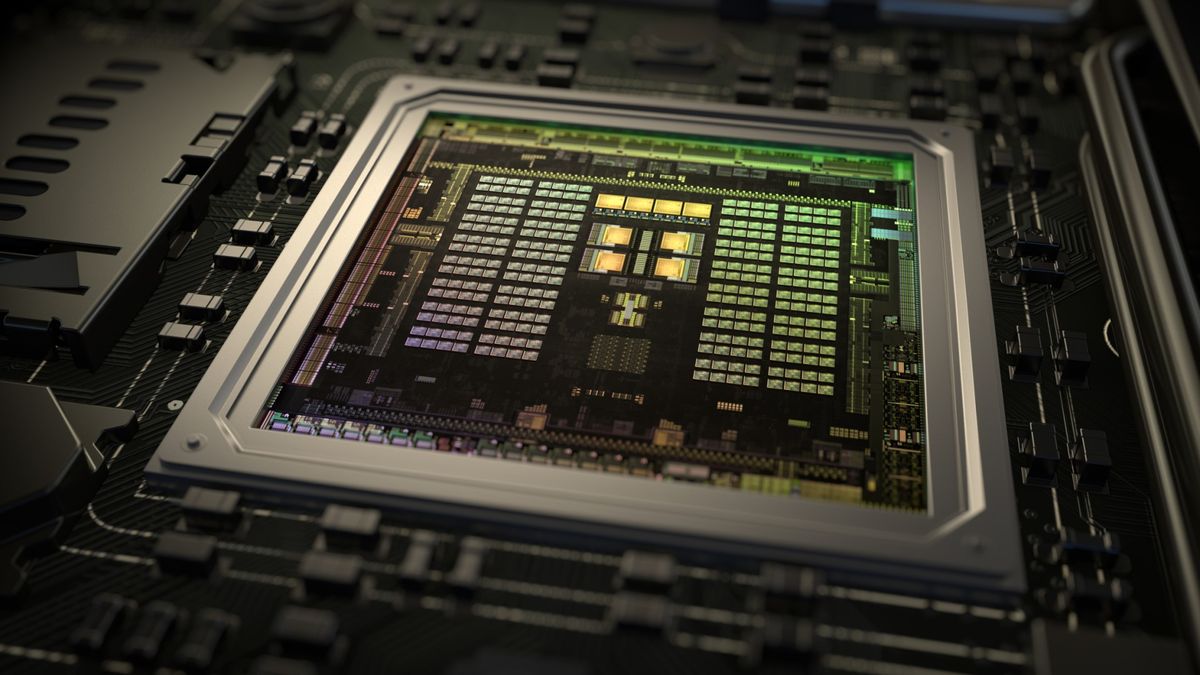
The N1X is a system-on-chip (SoC) built through a collaboration between NVIDIA and MediaTek. It integrates CPU, GPU, and NPU into a single package fabricated on TSMC’s cutting-edge 3nm (N3) process node. Think of it as NVIDIA’s answer to Apple Silicon — but for Windows.
The CPU side uses a hybrid big.LITTLE configuration: 10 high-performance ARM Cortex-X925 cores paired with 10 energy-efficient ARM Cortex-A725 cores. This 20-core setup delivers a Geekbench 6 single-core score of 3,096 and a multi-core score of 18,837 — numbers that put it in direct competition with Intel’s Arrow Lake-HX and AMD’s Ryzen AI MAX processors.
But the CPU isn’t even the headline feature. The integrated GPU is.
RTX 5070-Class Graphics — Built Into the Chip
The N1X’s integrated GPU carries 6,144 CUDA cores arranged across 48 streaming multiprocessors, built on NVIDIA’s Blackwell architecture. That’s the same core count as the desktop GeForce RTX 5070. Let that sink in for a moment — a laptop chip with desktop RTX 5070 core counts, integrated directly into the SoC.
Now, before you start planning to sell your desktop GPU: reality requires some nuance. Early OpenCL benchmarks show the N1X’s iGPU scoring around 46,361 points. That makes it the most powerful integrated GPU ever tested — obliterating every current iGPU from Intel, AMD, and Qualcomm — but it’s roughly 25% of the discrete RTX 5070’s performance. Lower clock speeds and shared memory bandwidth mean you’re getting RTX 5070 core architecture, not RTX 5070 frame rates.
Still, for a chip that doesn’t need a dedicated graphics card, that’s a massive leap. We’re talking playable AAA gaming at 1080p medium settings, serious creative workloads in DaVinci Resolve and Blender, and CUDA-accelerated AI inference — all without a discrete GPU eating your battery.
Eight Confirmed Laptop Models from Dell and Lenovo
Leaked shipping manifests and Lenovo support pages have confirmed eight launch models spanning productivity, premium, and gaming categories:
Lenovo (6 models):
- IdeaPad Slim 5 14-inch — budget-friendly productivity
- IdeaPad Slim 5 16-inch — larger screen productivity
- Yoga Pro 7 15-inch (two variants) — creator-focused
- Yoga 9 2-in-1 — premium convertible
- Legion 7 15-inch (model 15N1X11) — gaming powerhouse
Dell (2 models):
- Dell XPS — premium ultrabook
- Alienware — dedicated gaming laptop
The range tells you everything about NVIDIA’s strategy. They’re not testing the waters with a single model — they’re flooding the market across every price point and use case simultaneously. Spring 2026 is the target launch window, with broader availability expected by summer.
Why This Matters: The ARM Windows Laptop Finally Gets a GPU
Qualcomm’s Snapdragon X Elite proved that ARM Windows laptops could deliver excellent CPU performance and battery life. But it had a glaring weakness: graphics. The Adreno GPU inside the X Elite was adequate for productivity but hopeless for anything beyond light gaming or basic creative work.
The N1X changes this equation entirely. NVIDIA is bringing its core competency — GPU design — to the ARM Windows ecosystem. For the first time, an ARM-based Windows laptop can realistically handle gaming, video editing, 3D rendering, and AI workloads without needing a separate discrete GPU.
This has cascading implications. Thinner designs. Longer battery life under GPU-heavy workloads. Lower price points (no separate GPU to buy). And because it’s NVIDIA silicon, the CUDA ecosystem — the most extensive GPU computing platform in the world — comes along for the ride.
What to Watch: App Compatibility and the Road to N2
The biggest question mark isn’t the hardware — it’s software. Windows on ARM has made significant strides with its x86 emulation layer (Prism), but game compatibility and driver support remain ongoing challenges. NVIDIA’s involvement could accelerate this significantly, given their deep relationships with game developers and the existing CUDA software ecosystem.
NVIDIA is already planning the N2 series for Q3 2027, suggesting this isn’t a one-off experiment. They’re building a roadmap. If the N1X delivers on its promise, we could be looking at a fundamental three-way split in the laptop processor market: Intel and AMD holding x86, Qualcomm owning the thin-and-light ARM segment, and NVIDIA dominating the performance ARM category.
For consumers, the message is straightforward: if you’re shopping for a Windows laptop in 2026, the N1X-equipped models deserve serious consideration. A 20-core ARM CPU with RTX 5070-class integrated graphics, built on 3nm — that’s not an incremental upgrade. That’s a paradigm shift.
Get weekly AI, music, and tech trends delivered to your inbox.
Get weekly AI & tech trends