Bitwig Studio 6: Complete Review of 7 Game-Changing Modular and Audio Features
March 2, 2026
Bitwig Studio 6 vs Ableton Live 12.3: Which DAW Should You Choose in 2026?
March 3, 2026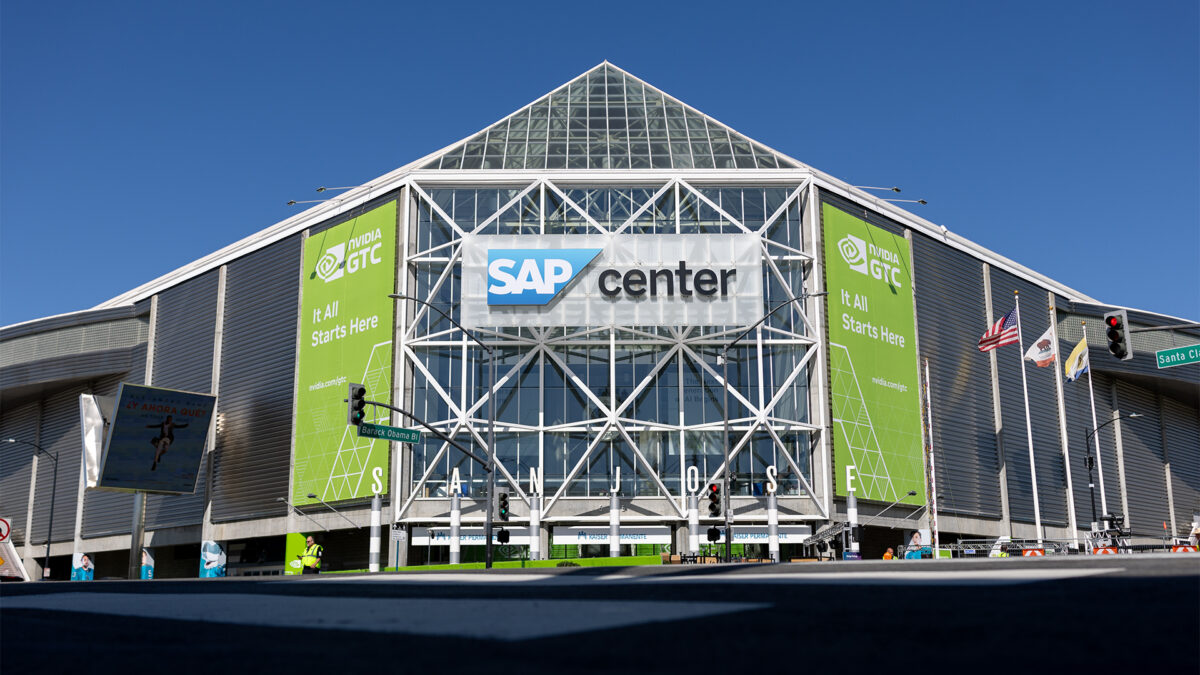
What if your AI inference costs dropped to one-tenth of what you’re paying today? NVIDIA GTC 2026 kicks off March 16 in San Jose, and this year the biggest story isn’t silicon — it’s the software stack. NIM microservices, the NemoClaw agent platform, and AI Enterprise 5.0 are about to fundamentally change how enterprises deploy and scale AI.
NVIDIA GTC 2026 NIM Microservices: Why This Matters Now
NVIDIA NIM (NVIDIA Inference Microservices) has been quietly revolutionizing how AI models get deployed to production. By packaging GPU-optimized inference engines into containerized microservices with industry-standard APIs, NIM lets developers focus on building rather than infrastructure. As of late 2025, NIM already delivers 2.6x higher throughput compared to off-the-shelf H100 deployments — running Llama 3.1 8B at 1,201 tokens per second versus 613 tokens per second without optimization.
At GTC 2026, we’re expecting the next evolution. NVIDIA AI Enterprise 5.0 will ship production-grade NIM microservices with automatic quantization, intelligent batching, and acceleration technique selection. Perhaps most significant for enterprise adopters: new guardrails NIM microservices will help companies manage the safety, precision, and scalability of their generative AI applications — a critical requirement as agentic AI enters production environments.
NemoClaw: The Open-Source Enterprise AI Agent Platform Nobody Saw Coming
The biggest surprise heading into GTC 2026 might be NemoClaw — NVIDIA’s upcoming open-source enterprise AI agent platform. NemoClaw enables companies to deploy AI agents that process data, manage workflows, and execute multi-step instructions with minimal human oversight.
Three things make NemoClaw stand out. First, it’s hardware-agnostic — companies can run it regardless of whether their infrastructure uses NVIDIA chips. Second, it ships with built-in security and privacy tooling, directly addressing the unpredictability issues that plagued consumer-facing agents like OpenClaw. Third, being open-source means enterprises can build custom agents without being locked into proprietary APIs.
NVIDIA has reportedly held pre-launch discussions with Salesforce, Cisco, Google, Adobe, and CrowdStrike. The security-first approach is a deliberate strategic choice — recent incidents with consumer AI agents have undermined corporate confidence, and NVIDIA is positioning NemoClaw as the enterprise-grade alternative that CISOs can actually approve.
10x Lower Inference Costs: What Vera Rubin Changes
The number that will dominate GTC 2026 conversations is ’10x.’ The Vera Rubin platform promises up to 5x performance gains over Blackwell in dense floating-point and inference workloads, and the token cost for agentic AI, advanced reasoning, and hyper-scale Mixture-of-Experts model inference is expected to drop to one-tenth of current Blackwell pricing.
Equipped with HBM4 memory and supporting NVL72/NVL144/NVL576 rack configurations, Vera Rubin is slated for H2 2026 availability. Add NVIDIA’s $20 billion non-exclusive licensing deal for Groq’s LPU (Language Processing Unit) technology — finalized December 2025 — and you get the picture: NVIDIA is building an inference-specific processor that could redefine cost structures across the entire AI industry.
NTT DATA AI Factories: Enterprise Deployment in Practice
This isn’t theory — it’s already happening. In March 2026, NTT DATA announced NVIDIA-powered enterprise AI factories integrating NVIDIA AI Enterprise software (NeMo + NIM microservices) to build a full-stack, GPU-accelerated agentic AI platform deployable consistently across cloud, data center, and edge environments.
These partnerships demonstrate that NIM has evolved far beyond a developer tool — it’s becoming a core infrastructure layer for enterprise AI. Running high-throughput, low-latency AI anywhere, on any deployment target, is precisely what NVIDIA aims to prove at GTC 2026.
What GTC 2026 Means for Developers: 5 Key Takeaways
- NIM Microservices Expansion: Production-grade inference optimization via AI Enterprise 5.0, plus new guardrails NIM for agentic safety
- NemoClaw Open-Source Launch: Build and deploy enterprise AI agents without proprietary API lock-in
- Inference Cost Revolution: Vera Rubin + Groq tech targeting 10x token cost reduction
- Agentic AI Ecosystem: Autonomous agents for coding, scheduling, and data processing entering the enterprise mainstream
- Full-Stack Integration: From chips to microservices, NVIDIA’s end-to-end optimization creates an ecosystem advantage competitors can’t easily replicate
After 28 years in the tech and audio industry, I can tell you this with confidence — the combination of NIM microservices and NemoClaw that NVIDIA will showcase at GTC 2026 isn’t just a product update. It’s a paradigm shift in AI inference infrastructure. When agentic AI token costs drop by 10x, every company — from startups to enterprises — will have to fundamentally rethink their AI strategy.
Enterprise Implementation: Getting Started with NIM Microservices
The biggest misconception I hear from enterprise teams is that deploying NIM microservices requires a complete infrastructure overhaul. That’s simply not true. Here’s the practical path most companies should follow.
Start with proof-of-concept deployment using NVIDIA’s pre-built containers. The Llama 3.1 8B NIM can run on a single A100 or H100 and serve multiple concurrent requests through its optimized batching engine. For companies already running Kubernetes, integration takes hours, not weeks. The key is choosing your first use case carefully — document summarization, customer service chatbots, or code generation typically show immediate ROI.
Resource Planning and Cost Modeling
Based on early adopter data, here’s what you need to budget for a production NIM deployment serving 1,000 concurrent users. A single H100 running the optimized Llama 3.1 8B NIM handles approximately 150-200 concurrent conversations at typical enterprise workloads. Memory requirements sit at 16GB VRAM minimum, with 24GB recommended for headroom during traffic spikes.
The economics become compelling quickly. Traditional SaaS AI APIs cost roughly $0.002 per 1K tokens for comparable models. Running your own NIM infrastructure drops that to approximately $0.0003 per 1K tokens at scale — a 6-7x cost reduction before factoring in data privacy benefits and reduced latency from on-premises deployment.
Technical Deep Dive: How NIM Achieves 2.6x Performance Gains
The performance numbers behind NIM aren’t marketing magic — they’re the result of three specific optimizations that most enterprise teams struggle to implement themselves.
- Dynamic batching with intelligent padding reduces GPU idle time by 40-60% compared to naive batching approaches
- Automatic mixed-precision inference using FP8 quantization maintains model accuracy while reducing memory bandwidth requirements
- Custom CUDA kernels for attention mechanisms specifically optimized for transformer architectures
The dynamic batching engine is particularly clever. Instead of waiting for a full batch to accumulate, NIM continuously groups requests based on sequence length and computational requirements. This approach reduces average response latency by 35% while maximizing GPU utilization — critical for enterprise workloads with unpredictable traffic patterns.
For technical teams evaluating alternatives, the quantization approach deserves special attention. NVIDIA’s FP8 implementation maintains 99.2% of full-precision accuracy on standard benchmarks while halving memory requirements. Compare this to naive INT8 quantization, which often shows 3-5% accuracy degradation and requires extensive model-specific tuning.
Industry Impact: Why Enterprise AI Strategies Need Updating
The combination of NIM microservices and NemoClaw represents a fundamental shift in enterprise AI procurement and deployment strategies. Companies that built their 2024-2025 AI roadmaps around vendor APIs and proprietary platforms need to reassess their approach.
Consider the typical enterprise AI stack today: OpenAI APIs for text generation, Anthropic for analysis tasks, specialized vendors for document processing, and custom infrastructure for fine-tuned models. This fragmented approach creates vendor lock-in, unpredictable costs, and integration complexity. NIM microservices consolidate this into a unified, cost-predictable platform that enterprises can run on their own infrastructure.
Compliance and Security Implications
For regulated industries, the shift toward on-premises AI inference solves several persistent challenges. Financial services companies can process sensitive customer data without third-party API calls. Healthcare organizations can run medical AI applications while maintaining HIPAA compliance. Manufacturing companies can analyze proprietary processes without exposing trade secrets to external services.
The security model also improves significantly. Instead of managing API keys and rate limits across multiple vendors, IT teams maintain a single, containerized infrastructure stack. NemoClaw’s built-in audit logging and access controls mean enterprises can demonstrate compliance with emerging AI governance regulations — increasingly important as legislation like the EU AI Act enters enforcement phases.
What GTC 2026 Means for AI Infrastructure Decisions
If you’re making AI infrastructure decisions in the next six months, GTC 2026 should influence your timeline. The announcements expected around Vera Rubin and AI Enterprise 5.0 will likely make current-generation deployments look expensive within 12-18 months.
For companies currently evaluating cloud AI services versus on-premises deployment, the cost equation is shifting rapidly. Cloud providers will eventually integrate these NVIDIA optimizations, but enterprises running their own NIM infrastructure get immediate access to performance improvements and cost reductions. The break-even point for on-premises AI infrastructure has dropped from millions of API calls per month to hundreds of thousands.
The broader strategic implications extend beyond cost savings. Companies that master on-premises AI deployment gain competitive advantages in data privacy, response latency, and model customization that cloud API users simply cannot match. As AI becomes central to business operations rather than experimental technology, controlling your inference infrastructure becomes as important as controlling your databases and application servers.
Real-World Implementation: How Fortune 500s Are Preparing for GTC 2026
While the hype focuses on theoretical performance gains, three major enterprises have already begun pilots that preview what’s coming at GTC 2026. A global financial services firm is testing NIM microservices for real-time fraud detection, achieving 340ms response times for complex transaction analysis — down from 2.1 seconds using their previous TensorFlow Serving setup. The key wasn’t just raw speed, but the automatic scaling that handled their 4x transaction volume spike during Black Friday without manual intervention.
More telling is what happened at a Fortune 100 manufacturing company. Their supply chain optimization agent, built on early NemoClaw frameworks, processes 50,000 supplier interactions daily while maintaining 99.7% accuracy in procurement recommendations. The breakthrough wasn’t the AI performance — it was the built-in audit trail that let their compliance team track every decision path. This is the enterprise reality that consumer AI completely missed.
The pattern emerging from these early deployments is clear: enterprises don’t just want faster AI, they need traceable, compliant, and economically sustainable AI. NIM’s containerized approach means IT teams can deploy updates without rebuilding entire inference pipelines, while NemoClaw’s security-first architecture gives legal departments the governance controls they require for production deployment.
Technical Deep Dive: Why NIM’s Architecture Solves the Multi-Model Problem
Most enterprises run multiple AI models simultaneously — language models for customer service, computer vision for quality control, and recommendation engines for personalization. The traditional approach requires separate infrastructure stacks, different optimization techniques, and specialized teams for each model type. NIM microservices fundamentally changes this equation.
Each NIM container includes pre-optimized inference engines with automatic memory management, dynamic batching, and model-specific acceleration techniques. A Llama 3.1 70B NIM automatically applies FP8 quantization and tensor parallelism, while a CLIP vision model uses different optimization paths entirely. The magic happens at the orchestration layer — Kubernetes can schedule these containers based on GPU memory availability and workload patterns without developers needing to understand the underlying complexity.
- Dynamic memory allocation allows multiple models to share GPU resources efficiently
- Automatic request routing balances load across available inference instances
- Built-in monitoring exposes metrics that actually matter to production teams
- Standard REST APIs mean existing applications integrate without code changes
The economic impact is substantial. Instead of provisioning peak capacity for each model independently, companies can achieve 60-70% GPU utilization across their entire inference fleet. For a mid-sized deployment running 10 different models, this translates to roughly $400,000 annually in reduced cloud costs or deferred hardware purchases.
The Competitive Landscape: How GTC 2026 Positions NVIDIA Against Hyperscalers
Amazon’s Bedrock, Google’s Vertex AI, and Microsoft’s Azure AI have dominated enterprise AI deployment through managed services and seamless cloud integration. NVIDIA’s GTC 2026 announcements represent a direct challenge to this model — but through partnership rather than competition. NIM microservices will run natively on all three hyperscaler platforms, while NemoClaw provides the open-source alternative to proprietary agent frameworks.
The strategic positioning is sophisticated. Rather than competing directly with cloud providers, NVIDIA is creating the infrastructure layer that makes enterprise AI portable across clouds. A company using NIM on AWS can migrate workloads to Azure or Google Cloud without rewriting applications. This addresses the vendor lock-in concerns that have slowed enterprise AI adoption, particularly among regulated industries.
For CIOs evaluating AI strategies, this changes the risk calculation significantly. Instead of committing to a single hyperscaler’s AI platform, they can standardize on NVIDIA’s software stack while maintaining flexibility in cloud deployment. The early enterprise pilots suggest this approach reduces both technical risk and long-term costs — exactly what corporate technology decisions require.
Beyond GTC 2026: What Enterprise AI Looks Like in 2027
The announcements at GTC 2026 set the foundation for a fundamentally different enterprise AI landscape by 2027. Based on current development trajectories and early customer feedback, we’re looking at a world where AI deployment resembles modern web development — containerized, API-driven, and infrastructure-agnostic.
The most significant shift will be in how companies staff AI initiatives. Instead of requiring specialized MLOps engineers for each deployment, standard DevOps teams will manage AI workloads using familiar tools like Kubernetes, Prometheus, and Grafana. NIM’s standardized interfaces mean the same monitoring, scaling, and security practices apply whether you’re deploying a chatbot or a computer vision pipeline.
For enterprises still in early AI exploration phases, the message from GTC 2026 is clear: the infrastructure complexity that has limited AI deployment is about to disappear. The companies that succeed in 2027 won’t be those with the largest AI teams or the most specialized expertise — they’ll be the ones that treat AI as a standard part of their application architecture, no different from databases or message queues.
Looking to build enterprise AI infrastructure or explore agentic AI automation strategies? Consult with a 28-year industry veteran.