WordPress 7.0 RC1: Real-Time Collaboration, Device-Specific Blocks, and Everything You Need to Know Before April
March 17, 2026
UMG NVIDIA Music Flamingo: The Company That Called AI Music ‘Platform Pollution’ Just Partnered With the World’s Biggest AI Chip Maker
March 17, 2026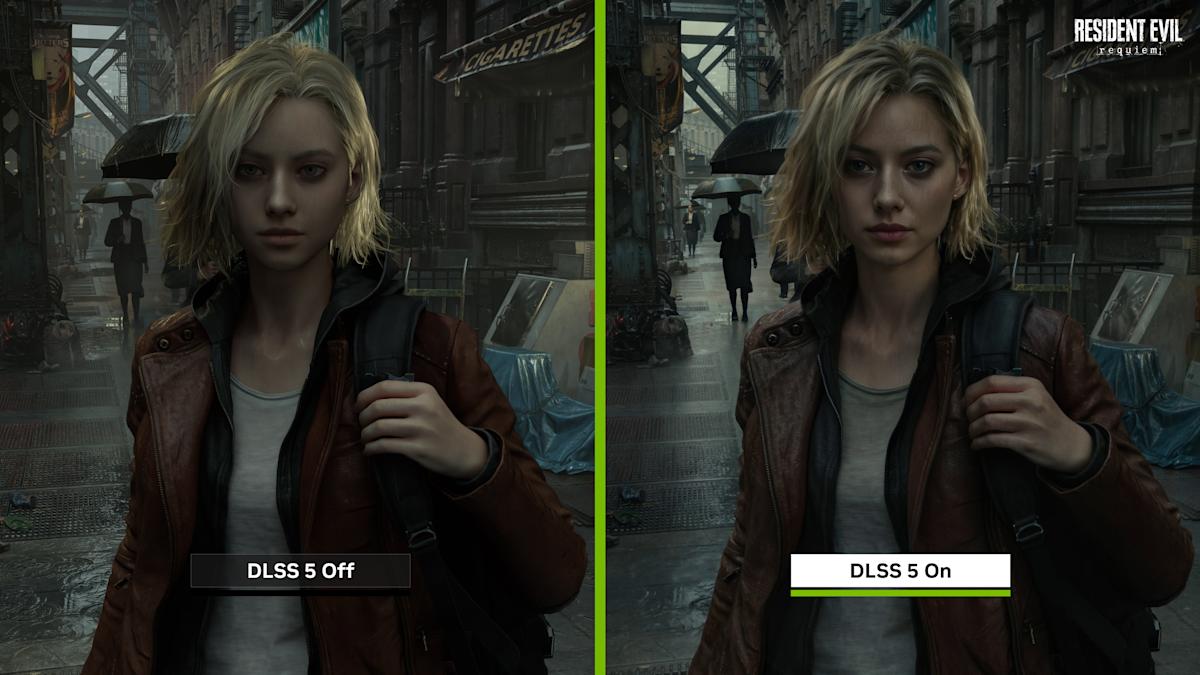
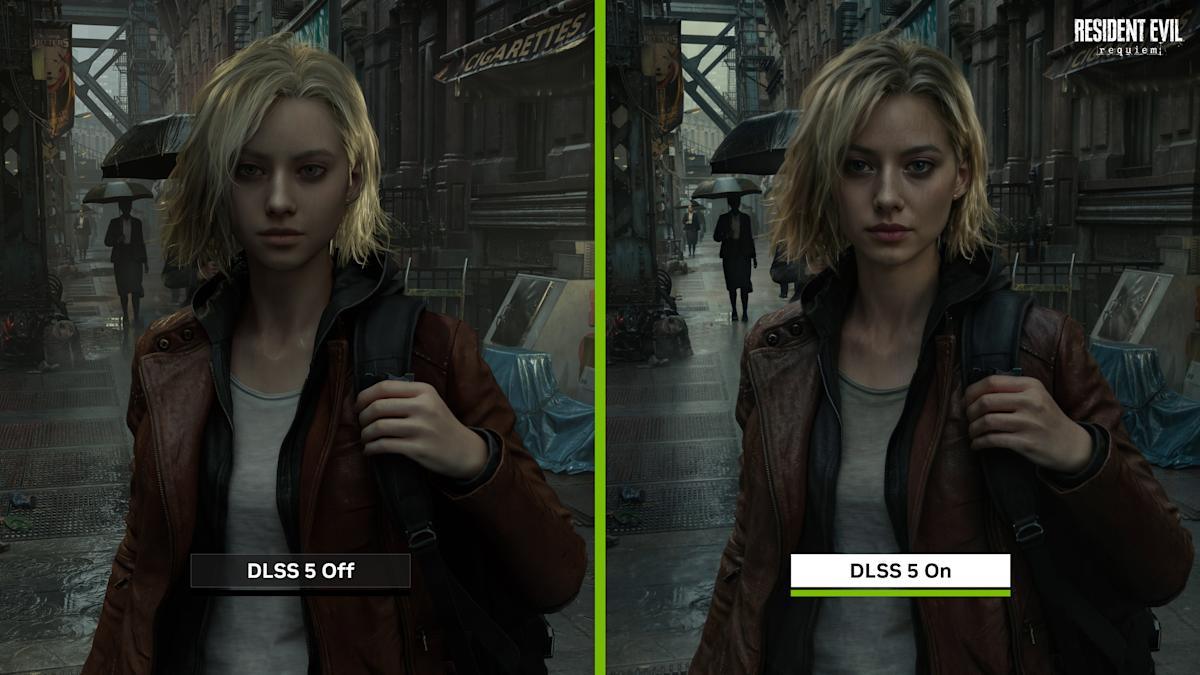
“The GPT moment for graphics.” When NVIDIA uses that kind of language, you pay attention. At GTC 2026, the company unveiled NVIDIA DLSS 5 — and this is not just another upscaling update. It is a fundamental rethinking of how game graphics are rendered, with AI generating photoreal lighting in real time. If real-time ray tracing in 2018 opened a new chapter for game visuals, DLSS 5 might be starting an entirely new book.
What NVIDIA DLSS 5 Actually Is: From Frame Generation to Lighting Generation
To appreciate what DLSS 5 represents, you need to understand where the technology has been. DLSS 1.0, launched alongside the RTX 2080 in 2018, was straightforward AI upscaling — render at a lower resolution, let neural networks reconstruct the missing detail, and reclaim some of the performance lost to ray tracing. It worked, but it was blurry and inconsistent. DLSS 2.0 was the real turning point, introducing temporal feedback that dramatically improved image quality. DLSS 3.0 added frame generation — the AI started creating entirely new frames between rendered ones, effectively multiplying your framerate.
By DLSS 4.5, Multi Frame Generation meant the AI was generating 23 out of every 24 pixels you saw on screen. Let that sink in — only one in twenty-four pixels was actually rendered by the game engine. The rest were hallucinated by a neural network in real time. Impressive, but still fundamentally about one thing: framerate and resolution.
DLSS 5 goes somewhere entirely different. Instead of generating more frames, it generates the lighting itself.
At the core is what NVIDIA calls a “neural rendering model” — an end-to-end AI system trained to understand visual scenes the way large language models understand text. It takes a game’s color buffer and motion vectors as input and produces photoreal lighting and materials as output. Where traditional ray tracing simulates the physical path of individual light rays — a computationally brutal process — DLSS 5’s neural renderer understands the semantics of the entire scene and infers how light should interact with every surface, every material, every strand of hair.
Scene Semantics: The AI Knows the Difference Between Hair and Skin
This is where DLSS 5 gets genuinely remarkable. The neural rendering model doesn’t just see pixels — it understands what those pixels represent. From analyzing a single frame, it can identify characters, hair, fabric, translucent skin, and environmental elements. It understands the semantic meaning of a scene.
Why does this matter so much? Consider subsurface scattering — the way light penetrates below a surface and scatters before exiting. Hold your hand up to a bright light and notice how the thin parts glow red. That’s subsurface scattering, and it’s what makes skin look like skin in games rather than painted plastic. Traditionally, computing this effect accurately requires enormous processing power. With DLSS 5, the moment the AI recognizes skin, it automatically applies appropriate subsurface scattering behavior.
The same principle applies to fabric sheen. A silk dress and a leather jacket reflect light in fundamentally different ways — different specular patterns, different falloff characteristics, different responses to direct versus ambient illumination. The neural rendering model recognizes the material type and generates accurate light-material interactions for each. Hair gets its own specialized treatment too, with the AI handling individual strand reflection and transmission that would traditionally require dedicated strand-based rendering pipelines.
And all of this works across different environmental lighting conditions. Front-lit scenes, back-lit dramatic silhouettes, overcast diffuse lighting — the model analyzes the lighting environment from a single frame and generates contextually appropriate results. Consider a backlit character: the rim lighting along hair edges, the translucent glow through ears and thin skin, the way different fabric types create different silhouette characteristics. Traditional game engines need dozens of shaders and light probes to handle this. DLSS 5 does it with one neural network.
4K Resolution, Real-Time Performance, and Developer Control
Breakthrough visual quality means nothing if it tanks your framerate. According to NVIDIA’s official announcement, DLSS 5 supports up to 4K resolution while maintaining real-time gameplay performance. The neural rendering pipeline is designed to run alongside the game engine without introducing perceptible latency.
For developers, NVIDIA has integrated DLSS 5 through the Streamline framework — the same middleware layer used by previous DLSS versions. This means studios already using DLSS can upgrade without rebuilding their rendering pipelines from scratch. The framework provides granular control through several key parameters:
- Intensity — How aggressively the neural renderer modifies the scene lighting
- Color Grading — Allows developers to maintain their artistic color palette while benefiting from neural lighting
- Masking — Selective application, letting developers exclude specific scene elements from neural rendering
This level of developer control is critical. Game directors spend years crafting specific visual aesthetics — the desaturated horror palette of a Resident Evil title is radically different from the vibrant fantasy world of Hogwarts Legacy. A one-size-fits-all AI filter would undermine that artistry. The intensity slider lets developers dial in exactly how much neural rendering they want: subtle enhancement for stylized games, aggressive transformation for photorealistic titles. The masking system is equally important, allowing developers to protect UI elements, particle effects, or intentionally stylized objects from neural processing.
DLSS 5’s approach through the Streamline framework also means developers are not locked into NVIDIA’s ecosystem for their core rendering pipeline. Streamline acts as an abstraction layer — the game engine does its work, and neural rendering enhances the output. This architecture makes adoption significantly easier than if studios had to rebuild their lighting systems from the ground up.
20+ AAA Games Confirmed: The Biggest Publisher Support DLSS Has Ever Had
Technology is only as good as its adoption, and NVIDIA has secured an impressive roster for the DLSS 5 launch. As reported by Engadget, major publishers including Bethesda, CAPCOM, Hotta, NetEase, NCSOFT, S-GAME, Tencent, Ubisoft, and Warner Bros. have all committed to DLSS 5 support.
The confirmed game list reads like a catalog of the most anticipated titles of 2026 and beyond:
- AION 2 (NCSOFT)
- Assassin’s Creed Shadows (Ubisoft)
- Black State
- CINDER CITY
- Delta Force (Tencent)
- Hogwarts Legacy (Warner Bros.)
- Justice (NetEase)
- NARAKA: BLADEPOINT
- Phantom Blade Zero (S-GAME)
- Resident Evil Requiem (CAPCOM)
- Starfield (Bethesda)
- Oblivion Remastered (Bethesda)
- Where Winds Meet
Several of these titles are particularly well-suited to showcase DLSS 5’s capabilities. Resident Evil Requiem, with CAPCOM’s tradition of hyper-detailed character models and atmospheric lighting, could be a defining showcase for neural rendering’s subsurface scattering and environmental lighting. Phantom Blade Zero’s martial arts combat with flowing fabrics and dynamic lighting scenarios is another natural fit. And Bethesda bringing both Starfield and Oblivion Remastered to the platform suggests significant confidence in the technology’s ability to enhance both new and remastered titles.
The Biggest Leap Since Real-Time Ray Tracing in 2018
NVIDIA called DLSS 5 “the most significant breakthrough since real-time ray tracing in 2018,” and for once, the marketing language might actually be understating things. When RTX 2080 brought real-time ray tracing to consumer GPUs, it was a paradigm shift — but one with a painful trade-off. Turn on ray tracing and watch your framerate get cut in half. That bargain has defined PC gaming graphics for nearly eight years.
DLSS 5 sidesteps this dilemma entirely. Rather than simulating physics more accurately (and more expensively), it uses AI inference to produce equal or superior visual results. This is exactly why the “GPT moment for graphics” framing makes sense. Just as GPT models don’t simulate the rules of grammar but instead learn language patterns end-to-end, DLSS 5’s neural renderer doesn’t simulate light physics — it has learned what light looks like.
The implications extend well beyond just prettier games. If neural rendering can replace significant portions of traditional lighting pipelines, it fundamentally changes the economics of game development. Building a AAA-quality lighting system today requires teams of specialized graphics engineers, months of shader development, and extensive per-scene optimization. Smaller studios that could never afford those engineering resources could potentially achieve comparable visual fidelity through DLSS 5 integration. It democratizes visual quality in a way that raw hardware power alone never could.
There is also the question of what this means for the broader GPU landscape. AMD and Intel have been developing their own upscaling solutions — FSR and XeSS respectively — but neither has attempted anything approaching neural lighting generation. If DLSS 5 delivers on its promises, it could significantly widen NVIDIA’s competitive moat in the gaming GPU market. The value proposition shifts from “buy our GPU for better ray tracing performance” to “buy our GPU for an entirely different category of visual quality.”
The GTC 2026 announcement also signals something about NVIDIA’s broader strategic direction. The same neural rendering principles that power DLSS 5 in gaming have clear applications in film production, architectural visualization, and digital twin simulation. Gaming is the consumer-facing showcase, but the underlying technology — AI models that understand scenes and generate physically plausible lighting — has implications across every industry that works with 3D visuals.
Launching this fall with 20-plus supported titles from major publishers, NVIDIA DLSS 5 is not just promising better-looking games. It is proposing a fundamental shift in how game engines handle lighting — from physics simulation to AI inference, from hardware brute force to learned visual understanding. Ray tracing opened the door to realistic game lighting. DLSS 5 is walking through it.
Get weekly AI, music, and tech trends delivered to your inbox.