Free Music Production Software 2026: 7 Best Free DAWs for Beginners
January 16, 2026
Music Production Resolutions 2026: 7 Studio Workflow Upgrades to Make Before NAMM
January 19, 2026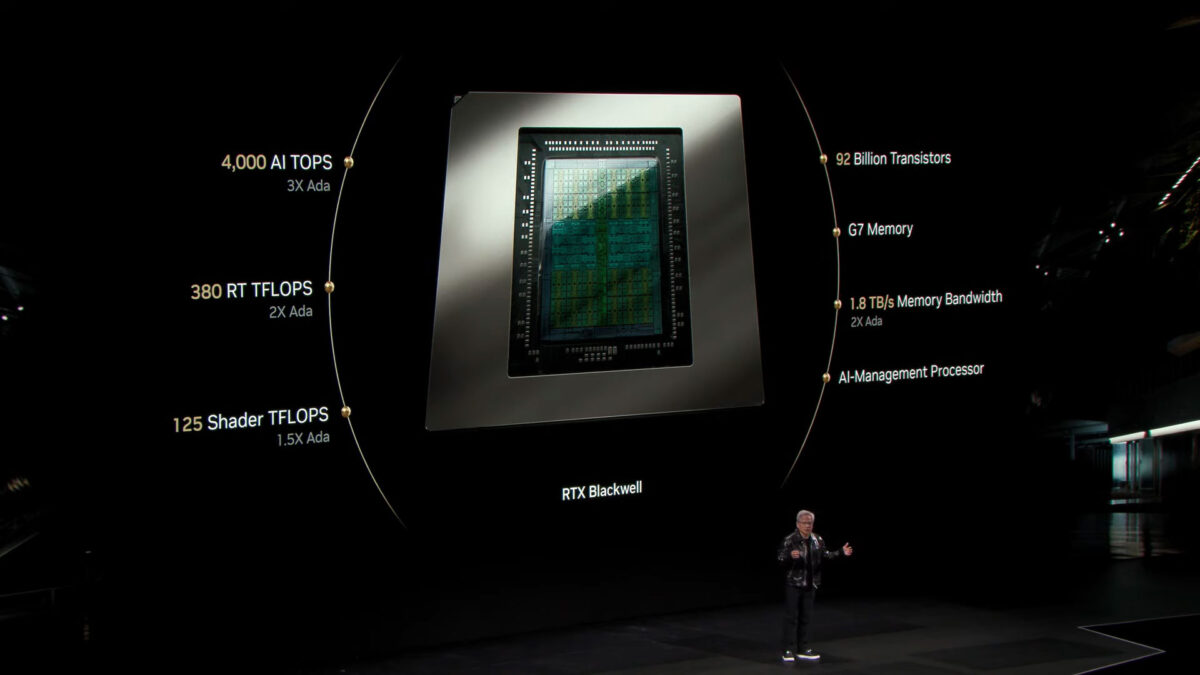
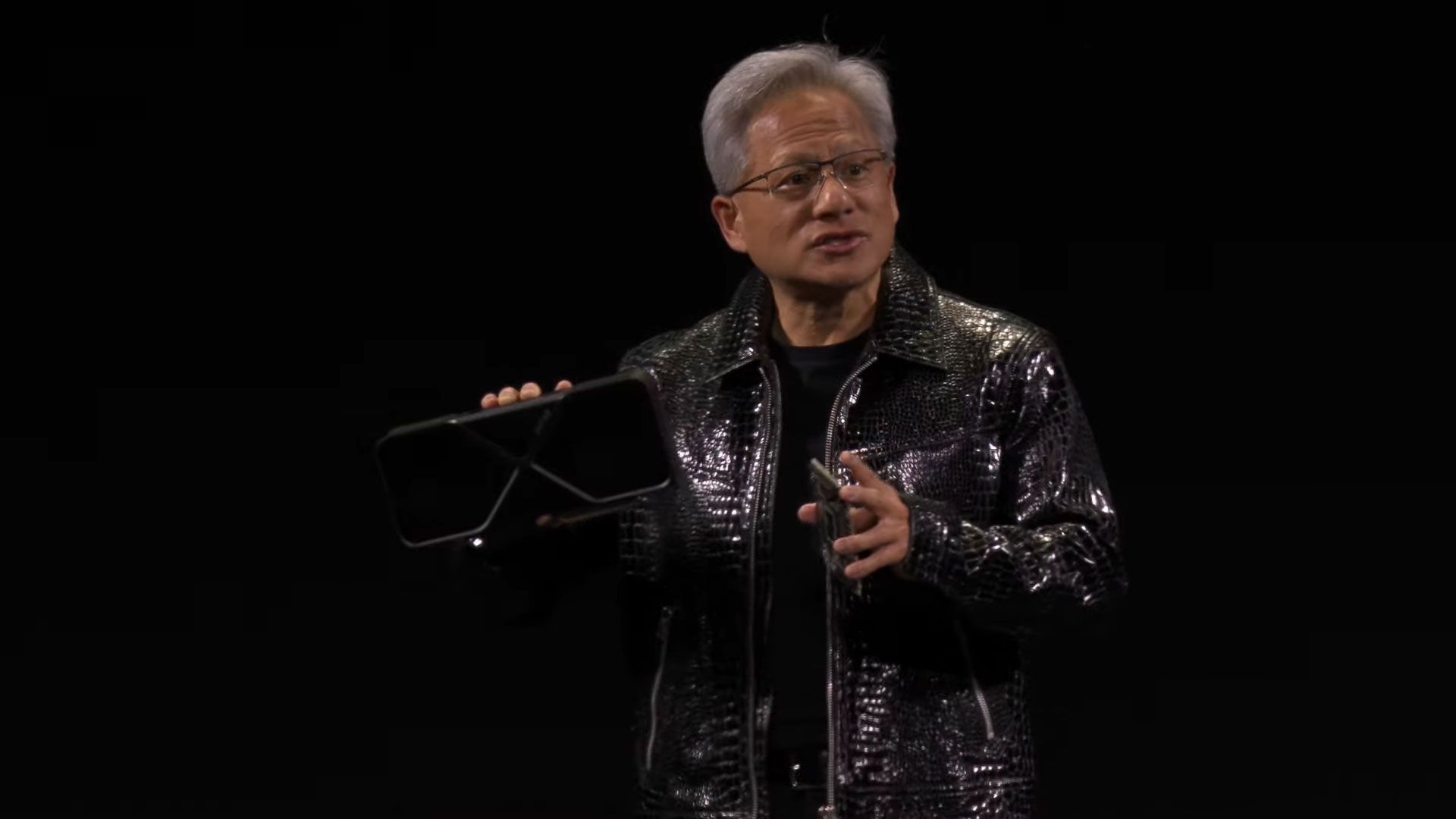
988 AI TOPS for $549. If those numbers are real, we’re looking at a seismic shift in the GPU market. At CES 2025, Jensen Huang took the stage to unveil the complete GeForce RTX 50 series lineup, and the RTX 5070 RTX 5060 stole the show. Built on the new Blackwell architecture, these GPUs promise to democratize AI-powered graphics at prices that actually make sense. Here’s everything you need to know about what might be the most consequential GPU launch in years.
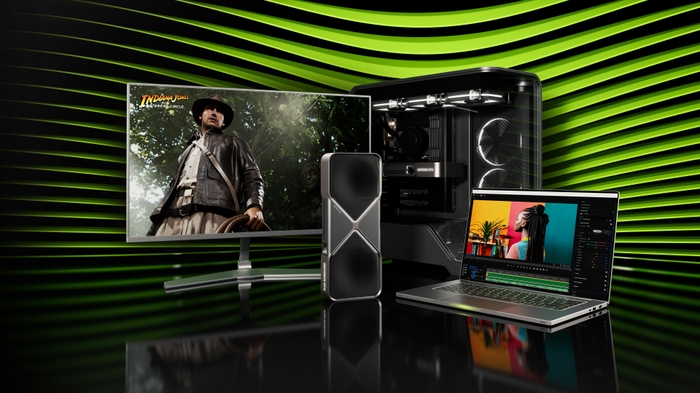
Blackwell Architecture — The Engine Behind RTX 50 Series
At the heart of every RTX 50 series card is NVIDIA’s new Blackwell architecture. This isn’t just a die shrink or a minor tweak — it’s a fundamental rethinking of how GPUs handle both traditional rasterization and AI workloads. The architecture introduces 4th generation RT Cores for hardware-accelerated ray tracing and 5th generation Tensor Cores that support FP4 (4-bit floating point) computation. The result? 3x faster AI performance compared to the previous Ada Lovelace generation.
To put FP4 support in context: previous-generation Tensor Cores primarily worked with FP8 and INT8 precision for AI inference. By halving the bit width to FP4, Blackwell’s Tensor Cores can effectively double the throughput for compatible AI models while maintaining acceptable accuracy. This is the same principle that has driven the AI industry’s push toward quantization — running models at lower precision to maximize performance per watt. For desktop GPU users, this translates directly into faster local AI inference, whether you’re running large language models, image generation pipelines, or real-time AI upscaling.
What makes Blackwell truly different is its focus on neural rendering. Rather than relying solely on traditional shader pipelines, these GPUs can leverage AI models in real-time to generate, enhance, and reconstruct visual data. Think of it this way: traditional rendering calculates every pixel through mathematical equations. Neural rendering uses trained AI models to predict and generate visual information, often producing better results at a fraction of the computational cost. According to NVIDIA’s official announcement, this represents “a new world of AI computer graphics” — and based on the specs, that’s not just marketing talk.
DLSS 4 Multi Frame Generation — The Real Game Changer
DLSS has been NVIDIA’s secret weapon for a while now, but DLSS 4 takes the concept to an entirely new level. Where DLSS 3’s Frame Generation created one additional frame between each rendered frame, DLSS 4’s Multi Frame Generation can produce up to three additional frames simultaneously. Combined with Super Resolution and Ray Reconstruction, the theoretical frame rate multiplication reaches up to 8x.
The obvious concern with frame generation is input latency. Nobody wants buttery-smooth visuals that feel sluggish to control. NVIDIA addresses this directly with NVIDIA Reflex integration, which keeps latency to imperceptible levels even with multiple generated frames. In competitive gaming scenarios, this is non-negotiable — even a few milliseconds of additional latency can mean the difference between landing a shot and missing it. NVIDIA claims that Reflex-enabled DLSS 4 maintains latency comparable to native rendering, which would be a significant technical achievement if benchmarks confirm it.
The critical detail here: DLSS 4 Multi Frame Generation is supported across the entire RTX 50 lineup, from the $1,999 RTX 5090 all the way down to the $299 RTX 5060. Every buyer gets access to the same AI frame generation technology. This is a deliberate strategy from NVIDIA — by making DLSS 4 universal across the product stack, they incentivize game developers to implement it, knowing the potential user base spans every price tier. For consumers, it means the value proposition of even the cheapest RTX 50 card gets a massive boost in every DLSS 4-supported title.
RTX 5070 — Flagship Performance at Mid-Range Prices
The RTX 5070 generated the most buzz at CES 2025, and for good reason. NVIDIA boldly claimed it delivers performance comparable to the previous-generation RTX 4090 — at a fraction of the price. While that comparison includes DLSS 4, it’s still a remarkable achievement for a $549 GPU.
- Price: $549
- CUDA Cores: 6,144
- RT Cores: 50 (4th generation)
- VRAM: 12GB GDDR7
- Memory Bandwidth: 672 GB/s
- AI Performance: 988 AI TOPS
- Availability: February 2025
Let’s talk about that 988 AI TOPS figure for a moment. This goes far beyond gaming. Local AI model inference, AI-powered video upscaling, real-time neural rendering for 3D workflows — the RTX 5070 is as much a creative and development tool as it is a gaming GPU. To put 988 AI TOPS in perspective, that’s roughly comparable to what data center accelerators offered just a few years ago, now sitting in a single-slot consumer graphics card. For anyone experimenting with local LLMs, running Stable Diffusion, or processing AI-enhanced video pipelines, this level of compute power at $549 was unthinkable in the previous generation.
NVIDIA’s own benchmarks show fully ray-traced gaming at over 120 FPS, and video export speeds up to 6x faster than the previous generation. The 12GB GDDR7 with 672 GB/s bandwidth ensures the processing pipeline stays fed. GDDR7 itself is a generational leap over GDDR6X — offering higher bandwidth at lower power consumption, which contributes to the overall efficiency gains that define Blackwell.
RTX 5060 Ti and RTX 5060 — Blackwell for the Mainstream
While the RTX 5070 targets enthusiasts, the RTX 5060 Ti and RTX 5060 target the price points where most gamers actually buy. The RTX 5060 Ti launched on April 16, 2025, while the RTX 5060 followed on May 19, 2025.
The RTX 5060 Ti comes in two variants: an 8GB model at $379 and a 16GB model at $429. Given how VRAM-hungry modern games and AI workloads have become, the 16GB variant at just $50 more looks like the smarter long-term investment.
Then there’s the RTX 5060 — the card that might matter most in the long run:
- Price: $299
- CUDA Cores: 3,840
- VRAM: 8GB GDDR7
- Boost Clock: 2,497 MHz
- TDP: 145W
- Availability: May 19, 2025
At $299, you get every core Blackwell feature — DLSS 4 Multi Frame Generation, neural rendering, 4th gen RT Cores, 5th gen Tensor Cores with FP4. According to NVIDIA’s official specs, it delivers 2x the performance of the previous generation. The 145W TDP means most systems won’t even need a power supply upgrade — just drop it in and go.
Which RTX 50 Series Card Should You Buy?
With three models (and the flagship RTX 5090 at $1,999 for those with deeper pockets), picking the right card comes down to your use case and budget. Here’s a straightforward breakdown.
RTX 5070 ($549) is the sweet spot if you want 4K gaming, run local AI inference (LLMs, Stable Diffusion), or work in video editing and 3D rendering. The 988 AI TOPS makes it a legitimate workstation-class accelerator at a consumer price. The only caveat is the 12GB VRAM, which could be limiting for very large AI models — but for the vast majority of use cases, it’s more than sufficient.
RTX 5060 Ti 16GB ($429) is the smart choice for 1440p gamers who want VRAM headroom. The 16GB buffer handles modern AAA ultra texture packs and gives you breathing room for AI workloads without breaking the bank.
RTX 5060 ($299) is the best value proposition in the entire lineup. Targeting 1080p to 1440p gaming, it delivers Blackwell’s full feature set at the most accessible price point. The 145W TDP makes it perfect for compact builds and systems where power efficiency matters. DLSS 4 effectively lets you punch well above your weight class in supported titles.
As Tom’s Hardware noted in their coverage, the RTX 5070 stands out as the most compelling value in the lineup, while the RTX 5060 sets a new bar for what $299 gets you in mainstream GPU performance.
Availability and Market Reality
One important caveat: NVIDIA’s suggested retail prices are just that — suggested. The RTX 5070 launched in February 2025, and initial demand significantly outstripped supply. Early adopters reported difficulty finding cards at MSRP, with some retailers listing them at premiums. The RTX 5060 Ti followed in April 2025, and the RTX 5060 in May 2025. By the time the full lineup was available, supply had stabilized considerably, and street prices settled closer to MSRP in most markets.
For buyers considering a purchase now, the good news is that availability has normalized. Partner cards from ASUS, MSI, EVGA, and Gigabyte offer various cooling solutions and factory overclocks at slight premiums over the Founders Edition pricing. The RTX 5060 at $299 and RTX 5060 Ti at $379/$429 represent particularly strong value propositions now that supply constraints have eased.
The Bigger Picture — AI Computing Goes Mainstream
What makes the RTX 50 series significant isn’t just faster frame rates or better ray tracing. It’s the fact that NVIDIA is putting serious AI compute power — 988 TOPS in the RTX 5070, Tensor Cores with FP4 across the board — into GPUs that regular consumers can actually afford. Neural rendering, DLSS 4 Multi Frame Generation, and local AI inference aren’t exclusive to $1,999 flagships anymore. They start at $299.
This matters beyond the individual consumer. When millions of desktop GPUs ship with serious AI acceleration capabilities, it creates an ecosystem effect. Developers are more likely to optimize for DLSS 4 when the addressable market spans from $299 to $1,999. AI researchers and hobbyists can experiment with local models without investing in expensive data center hardware. Content creators gain AI-accelerated editing and rendering workflows that previously required workstation-class GPUs. The ripple effects of democratizing this much AI compute power will play out across the entire tech landscape for years to come.
For gamers, this means visually stunning experiences at accessible price points. For creators and developers, it means AI-accelerated workflows without needing dedicated compute cards. The RTX 5070 and RTX 5060 aren’t just GPU upgrades — they’re the inflection point where AI-powered computing becomes genuinely accessible to the mainstream. Whether you’re rendering neural-enhanced graphics, running local AI models, or simply want the smoothest gaming experience possible, Blackwell delivers at every price tier. The CES 2025 announcement wasn’t just about new hardware — it was about redefining what affordable GPU performance looks like in the age of AI.
From GPU selection to system builds and AI workflow optimization — feel free to reach out if you have any technical questions.
Get weekly AI, music, and tech trends delivered to your inbox.