Serum 2 After 6 Weeks: 5 Oscillator Modes, Free Upgrade, and Everything That Changed
April 30, 2025
Pixel 10 Tensor G5: Google’s TSMC Gamble Could Change Everything at I/O 2025
May 1, 2025
After 8 years of waiting, Nintendo finally showed its hand — and the Nintendo Switch 2 pre-order frenzy that followed on April 24 crashed every major retailer’s website simultaneously. At $449.99 for the standard console and $499.99 for the Mario Kart World bundle, this is Nintendo’s biggest hardware launch since the original Wii. Here’s everything you need to know before the June 5 release date.
Nintendo Switch 2 Pre-Order: Pricing and Where to Buy
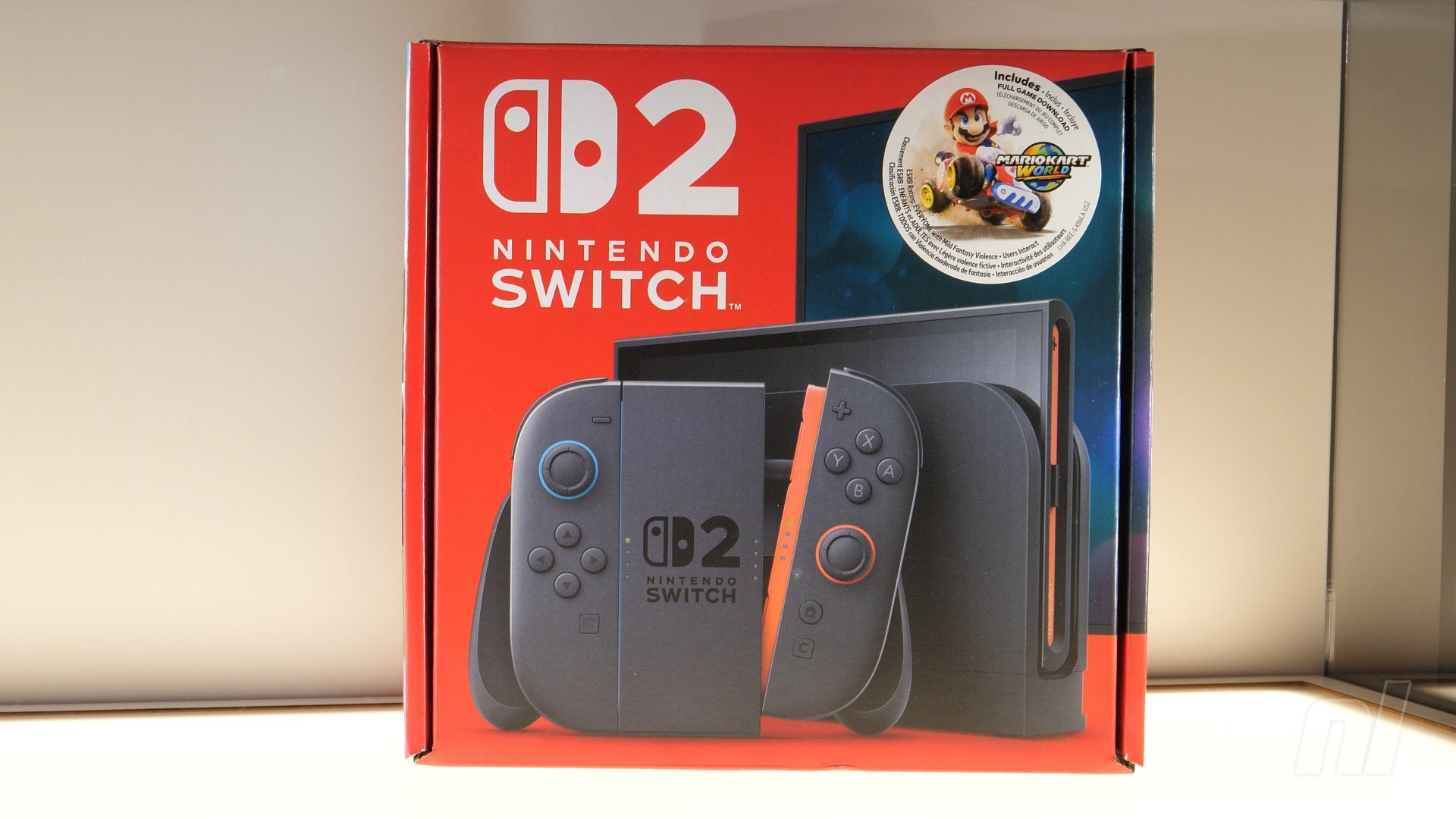
Let’s start with the numbers. The standard Nintendo Switch 2 comes in at $449.99, while the Mario Kart World bundle runs $499.99. What makes this pricing noteworthy is the backstory: Nintendo initially planned pre-orders for April 9, but postponed them indefinitely due to tariff concerns from the Trump administration’s new import duties. When they finally resumed on April 24, Nintendo made the bold decision to absorb any tariff costs and keep prices unchanged.
The pre-order launch was nothing short of chaotic. Walmart and Target went live at midnight ET on April 24, with GameStop following at 11 AM ET. According to Engadget, the overwhelming demand brought down multiple retailer websites within minutes. Best Buy also opened pre-orders on April 24, and every major retailer reported traffic surges that rivaled Black Friday levels.
If you missed the initial wave, don’t panic — but don’t wait around either. Your best strategy is setting up restock alerts at Walmart, Target, Best Buy, and GameStop immediately. Additional pre-order waves are expected before the June 5 launch. Nintendo has also confirmed significant day-one retail stock, so showing up at your local store on launch morning remains a viable option for the determined.
Hardware Specs: How Nintendo Switch 2 Compares to the Original
The Nintendo Switch 2 isn’t just an incremental upgrade — it’s a generational leap that puts it in the same conversation as the PS5 and Xbox Series X for the first time. At the heart of the system sits a custom Nvidia T239 processor with an 8-core ARM Cortex-A78C CPU, delivering roughly 10 times the graphics performance of the original Switch. Here’s how every major spec compares between the two generations:
- Display: 6.2-inch 720p → 7.9-inch 1080p screen capable of 120fps — a massive leap in both size and visual clarity
- Processor: Nvidia Tegra X1 → Nvidia T239 with 8-core ARM Cortex-A78C (10x GPU performance increase)
- Docked Output: 1080p@60Hz → 4K at 60Hz or 2K at 120Hz — 4K gaming arrives on a Nintendo console for the first time
- Storage: 32GB → 256GB internal (an 8x capacity increase that was desperately needed)
- Connectivity: 802.11ac → Wi-Fi 6 for significantly more stable online multiplayer experiences
- Joy-Con Controllers: Rail slide mechanism → Magnetic attachment replacing the notorious rail system, plus new mouse-like functionality for strategy and FPS games
- Backward Compatibility: Plays both physical and digital Nintendo Switch games — your entire library carries forward
- Price: $299.99 → $449.99 (a $150 increase reflecting 8 years of hardware evolution)
The docked 4K@60Hz output is particularly significant. It means Nintendo is no longer asking you to compromise on visual fidelity when playing on your TV. And in handheld mode, the 1080p@120fps display outpaces the Steam Deck’s 800p screen — a notable advantage for the portable gaming audience. The $150 price increase might give some buyers pause, but context matters. Eight years of inflation alone accounts for a significant portion of that difference. More importantly, the Switch 2 at $449.99 is both a 4K home console AND a premium handheld gaming device — two roles that would cost well over $800 if purchased separately. When the PS5 launched at $499 for the disc edition, it didn’t fit in your backpack.
Launch Games: The Strongest Day-One Lineup in Nintendo History
The April 2 Nintendo Direct didn’t just reveal a console — it unveiled a launch lineup that obliterates every previous Nintendo launch by a wide margin. With 46 confirmed partner titles and over 25 games available on day one (June 5), there’s no waiting around for “the games to come” this time.
First-Party Headliners:
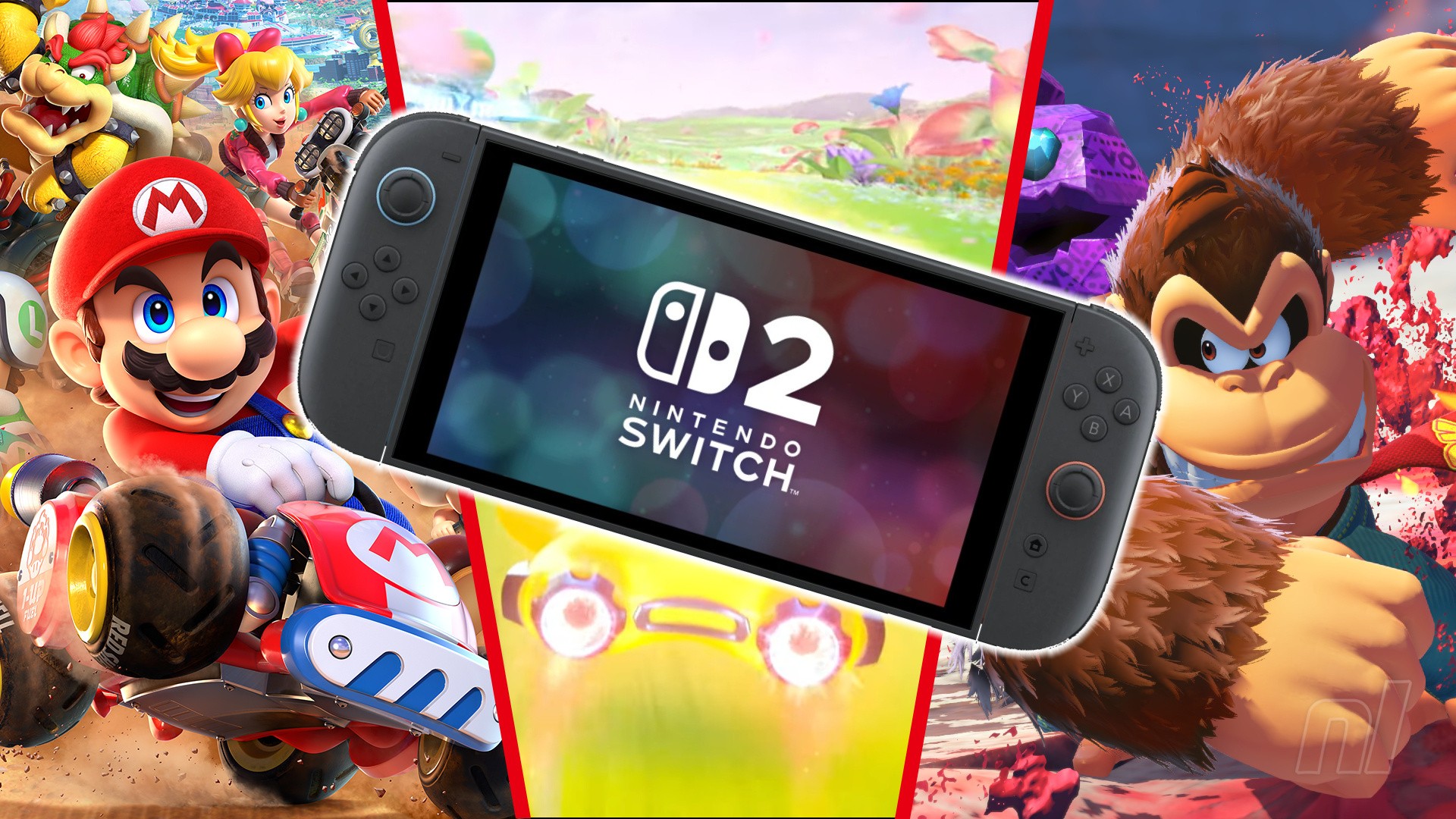
- Mario Kart World ($79.99) — The series’ first open-world racing experience and Nintendo’s flagship launch title. This isn’t just another Mario Kart — it’s a complete reimagining of the franchise with explorable environments, dynamic weather, and an expanded roster
- Donkey Kong Bananza ($69.99) — A brand-new Donkey Kong adventure built from the ground up for Switch 2’s hardware capabilities
- Metroid Prime 4 — After over 7 years in development, including a complete restart at Retro Studios, the long-awaited sequel finally arrives as a launch title
Third-Party Heavy Hitters:
- Cyberpunk 2077 Ultimate Edition — CD Projekt Red’s open-world RPG running on a handheld console is a genuine technical showcase that proves the Nvidia T239’s capabilities
- Elden Ring Tarnished Edition — FromSoftware’s masterpiece gets a portable version with exclusive content, something unthinkable on the original Switch
- Final Fantasy VII Remake Intergrade — Square Enix confirms full AAA support for the platform with one of the most visually demanding games of the previous generation
- Hades II — Supergiant’s critically acclaimed roguelike sequel, perfect for handheld play sessions
- FromSoftware Exclusive (New IP) — Perhaps the biggest surprise: a completely new intellectual property exclusive to Nintendo Switch 2, signaling a deeper partnership between FromSoftware and Nintendo
This lineup sends a clear and unmistakable message: the “Nintendo consoles don’t get third-party AAA games” era is definitively over. The fact that Cyberpunk 2077 and Elden Ring are running on Nintendo hardware is proof enough of what the Nvidia T239 can do. And a FromSoftware exclusive new IP? That’s the kind of deal that sells consoles to audiences who would never have considered a Nintendo platform before.
My Take: A Producer’s Perspective on Nintendo’s Hardware Strategy
After 28 years working in music, audio, and technology, I’ve watched countless hardware generation transitions — and the Nintendo Switch 2 is one of the smartest I’ve seen. What Nintendo did here isn’t just a spec bump. They defended a market category they invented — the “hybrid console” — while closing the performance gap with competitors that had been widening for years. It’s the equivalent of what Universal Audio did with the Apollo interface line: building an ecosystem where hardware and software lock-in feels like a feature, not a limitation. The backward compatibility play is especially shrewd — in the music production world, we call this “protecting your investment,” and it’s the reason producers stick with platforms like Pro Tools even when alternatives emerge.
The magnetic Joy-Con redesign resonates with me on a practical level. In my studio, I switched to magnetic cable connectors years ago because the wear-and-tear on traditional connectors was a constant maintenance headache. Nintendo applying this same principle to their controllers — eliminating the notorious rail-slide mechanism that degraded over time — shows they’re thinking about long-term user experience, not just launch-day impressions. It’s a small design decision that won’t show up on a spec sheet but will make a huge difference in real-world daily use over the console’s lifetime.
One thing I’m watching closely is the Nvidia T239’s audio processing potential. Nintendo’s announcements have been heavily focused on 4K visuals, but there’s been almost no mention of spatial audio or high-resolution sound capabilities. As someone who lives at the intersection of audio and technology, I see this as a missed opportunity in the marketing — the hardware almost certainly supports far more than Nintendo has revealed. With gaming audio increasingly converging with immersive music experiences (Dolby Atmos gaming is already standard on Xbox Series X, and spatial audio is transforming how we experience both music and games), I’ll be very interested to see if Nintendo delivers spatial audio support in a post-launch firmware update. The silicon can almost certainly handle it, and it would be a meaningful differentiator for the handheld gaming experience.
Missed the Nintendo Switch 2 Pre-Order? Your Realistic Buying Strategy
If you didn’t secure a Nintendo Switch 2 pre-order on April 24, you’re not alone — demand far exceeded supply at every retailer. Here’s a practical, no-nonsense approach to getting your hands on one:
- Set up restock alerts immediately: Walmart, Target, Best Buy, and GameStop all offer notification systems for when new pre-order waves go live. Enable them on every platform to maximize your chances
- Bundle vs. Standard — do the math: If you’re planning to buy Mario Kart World anyway (and let’s be honest, most people are), the $499.99 bundle saves you $30 compared to buying them separately ($449.99 console + $79.99 game = $529.98)
- Launch day in-store: The classic strategy of lining up at your local retailer on June 5 morning still works. Nintendo has confirmed significant day-one retail stock specifically for walk-in customers
- Avoid resellers at all costs: Scalper prices are already hitting $700-800+ on secondary markets. Be patient and buy through official channels — additional stock waves will come throughout June and July
The Nintendo Switch 2 isn’t just a hardware refresh — it’s a definitive statement that hybrid gaming is the future, backed by the strongest launch lineup in Nintendo’s history and hardware that finally closes the gap with PlayStation and Xbox. Whether you’re a day-one buyer or waiting for the post-launch dust to settle, June 5, 2025, marks the beginning of a genuinely new chapter in gaming. The only real question is whether you’ll be playing Mario Kart World on launch day or watching everyone else do it on social media.
Get weekly AI, music, and tech trends delivered to your inbox.