GPT-5 Free Users Get Reasoning AI: OpenAI’s Biggest Model Is Now Available to Everyone
August 5, 2025
Back-to-School Tech Deals August 2025: Save Up to $520 on Tablets, Headphones, and Accessories
August 5, 2025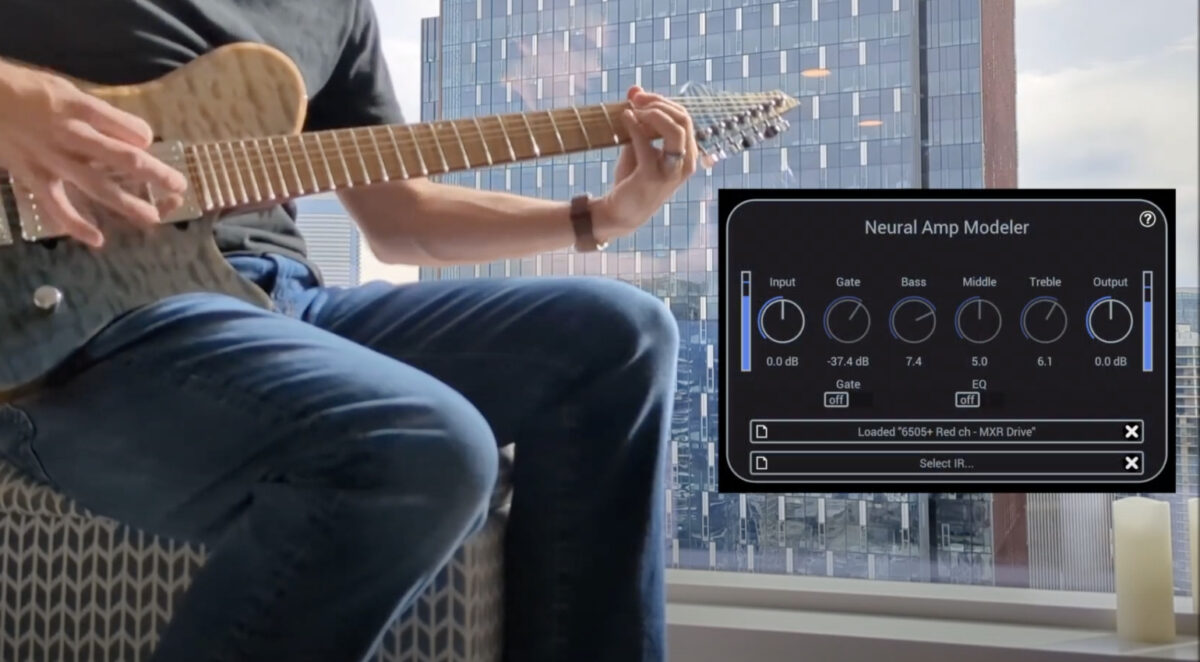
Neural Amp Modeler 2.0 just made a $1,899 Kemper Stage look like an overpriced paperweight. That’s not hyperbole — in blind A/B tests, NAM captures are now hitting 99%+ accuracy against real tube amps, and the entire platform is completely free. After 28 years in professional audio, I’ve watched gear companies build empires on incremental updates and premium price tags. NAM is doing something I’ve rarely seen: genuinely disrupting the market from the ground up.
What Is Neural Amp Modeler 2.0 and Why Should You Care?
Neural Amp Modeler is an open-source project that uses machine learning to create digital recreations of real guitar amplifiers, pedals, and cabinet configurations. Unlike traditional circuit modeling — which attempts to mathematically simulate each component in a signal chain — NAM takes a fundamentally different approach. It trains a neural network on actual recordings of your specific amp at various gain stages, capturing not just the frequency response but the nonlinear behavior, the sag, the breakup characteristics, and all those subtle quirks that make a real amp feel alive under your fingers.
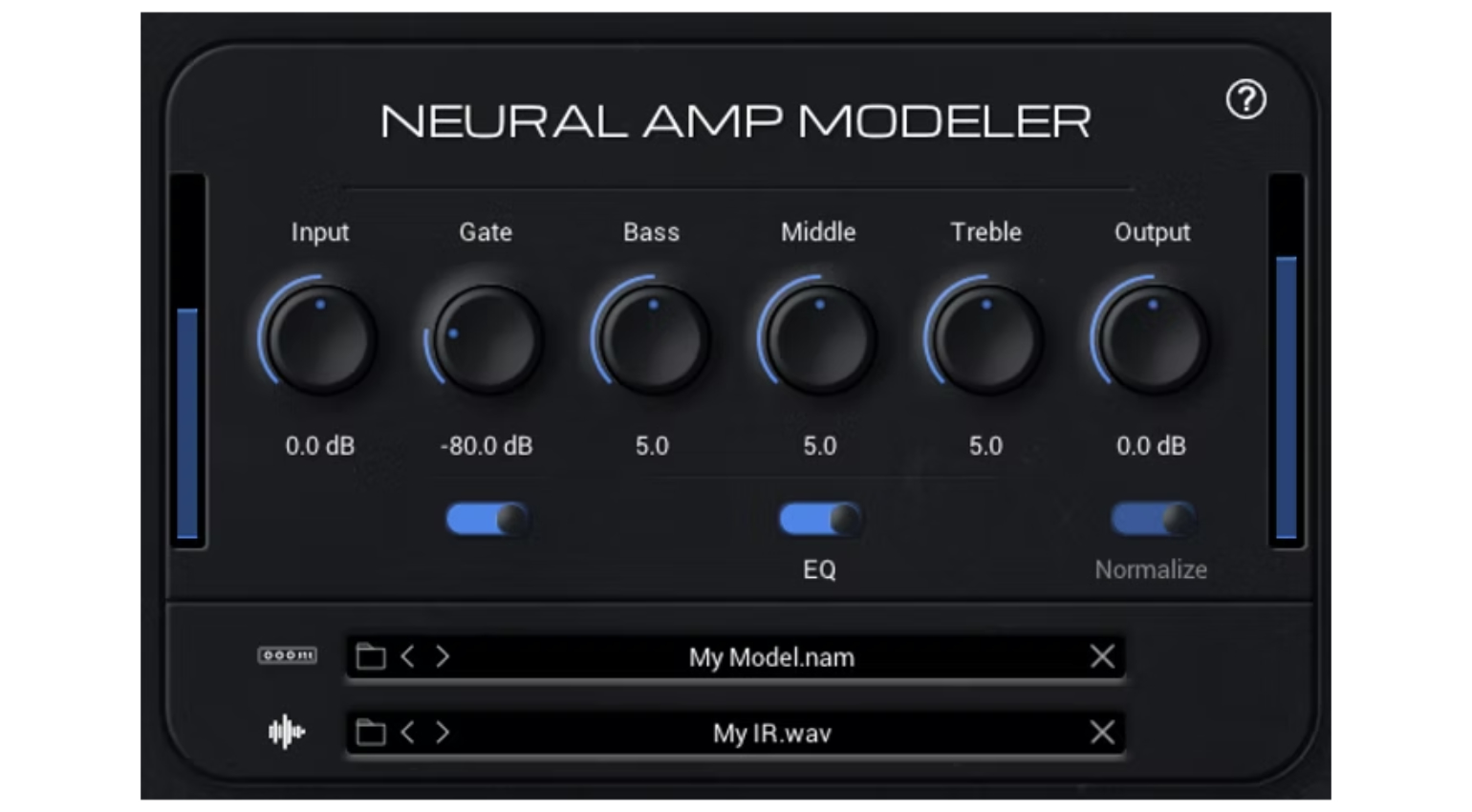
The plugin is available as both VST3 and AU formats via neuralampmodeler.com, meaning it runs in virtually every DAW on Windows, Mac, and Linux. It includes an integrated EQ section and an impulse response loader, so you can pair your amp captures with specific cabinet simulations for a complete signal chain right inside your session.
The Numbers That Are Shaking the Industry
Let’s talk about the elephant in the room: pricing. Here’s what the competitive landscape looks like in mid-2025:
- Kemper Profiler Stage: $1,899
- Kemper Profiler Rack: $1,649
- IK Multimedia ToneX Pedal: $399–$500
- Neural DSP plugins: $99–$149 each
- Neural Amp Modeler: Free. Completely, utterly, no-strings-attached free.
And it’s not just free — it’s competitive. The community-refined training methods have pushed NAM captures to a point where they often edge out commercial alternatives in touch sensitivity and dynamic response. When you play through a well-made NAM capture of a vintage Fender Deluxe, you feel the compression shift as you dig in harder. You hear the harmonics bloom when you roll back your volume knob. These aren’t static snapshots of a tone — they’re living, breathing recreations of amplifier behavior.
275,000+ Free Profiles: The TONE3000 Ecosystem
One of the most remarkable developments in the Neural Amp Modeler 2.0 ecosystem is the explosion of TONE3000, the community platform that now hosts over 275,000 free amp profiles. To put that in perspective, that’s more captures than Kemper’s Rig Exchange and ToneX’s ToneNET combined — and every single one is free to download.
The library spans an extraordinary range: vintage Fender blackface and tweed circuits, Marshall JCM800 and Plexi variants, modern high-gain Mesa Boogie Dual Rectifiers, boutique gems like Friedman BE-100 and Bogner Ecstasy, and even bass amp captures from Ampeg SVT rigs. Users have captured everything from pristine clean tones to the most saturated doom metal distortions imaginable.
Quality does vary — as with any community library, some captures are better than others. But the top-tier profiles genuinely rival what you’d get from a $2,000 commercial solution. The community has developed best practices for training, and experienced capture creators are producing results that consistently pass blind listening tests against their source amps.
The Hardware Revolution: NAM Goes Beyond the Plugin
Perhaps the most exciting development in 2025 is that Neural Amp Modeler 2.0 profiles are no longer confined to your DAW. A growing wave of hardware manufacturers have embraced the .nam file format, bringing these AI-powered amp models to your pedalboard.
Here are the standout hardware options available right now:
- Dimehead NAM Player: Purpose-built for NAM with a staggering 0.5ms latency — that’s near-zero, practically indistinguishable from plugging directly into a real amp. Full .nam model support with no compromises.
- Valeton GP-200: A full-featured multi-effects processor that added NAM compatibility, giving you access to 275,000+ profiles alongside conventional effects.
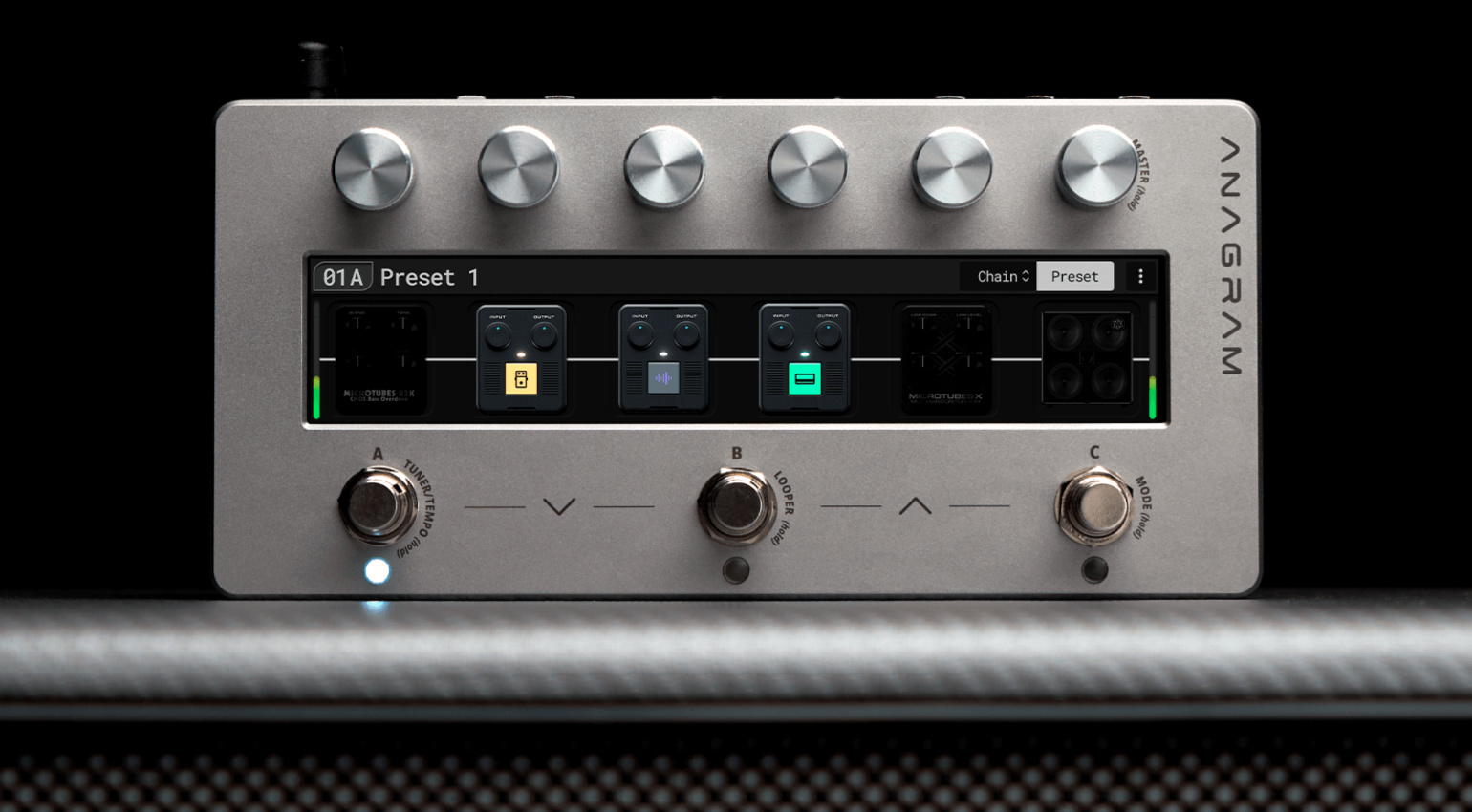
- Darkglass Anagram: The world’s first bass guitar pedal platform with native NAM support. Bass players finally have a hardware solution for AI-modeled amp tones.
- NUX Amp Academy Stomp: A compact stomp-box format with NAM file loading capabilities.
- Sonicake Pocket Master: At just $65, this is the most affordable entry point into NAM hardware. Firmware 1.1 added NAM support, making professional amp modeling accessible to virtually any budget.
- MOD Dwarf: An open-source hardware platform that embraces NAM as part of its modular effects ecosystem.
- Hotone Ampero II: Another multi-effects unit that has joined the NAM-compatible hardware lineup.
NAM vs. ToneX: The Real Comparison
The question I get asked most often is: “Should I use NAM or ToneX?” Both platforms use machine learning to recreate amplifier response, but they take fundamentally different philosophical approaches.
ToneX is IK Multimedia’s proprietary solution. It’s polished, well-integrated with their AmpliTube ecosystem, and comes with curated professional captures. The ToneX pedal hardware is solid. But it’s a closed ecosystem — you’re locked into IK’s platform, their pricing, and their roadmap decisions.
NAM, on the other hand, is entirely community-driven. The training code is open source. The plugin is open source. The file format is open. This means anyone can improve the core technology, any hardware manufacturer can implement .nam support, and the entire platform evolves at the speed of collective innovation rather than corporate product cycles.
In terms of raw sonic quality, NAM often has an edge in realism and touch sensitivity. The community-refined training methods have been continuously improved by hundreds of contributors, and the captures retain the quirks and imperfections that make real amps feel authentic. That slight asymmetry in the power amp clipping, the way the bass response tightens up at higher gain — these are the details that separate a great amp sim from a merely good one.
Machine Learning Under the Hood
What makes Neural Amp Modeler 2.0 technically fascinating is its approach to modeling. Traditional amp sims use component-level circuit simulation — they model each resistor, capacitor, and tube in the signal path. This can be accurate, but it’s computationally expensive and sometimes misses the emergent behavior that comes from component interactions.
NAM skips the circuit modeling entirely. Instead, it feeds a carefully designed test signal through the real amplifier, records the output, and trains a neural network to reproduce that exact input-to-output relationship. The result is a model that captures the amp’s actual behavior — including all the nonlinear distortion characteristics, the power supply sag, the speaker impedance interactions, and the subtle frequency-dependent compression that gives each amp its unique character.
The training process has become increasingly refined. With the right setup, you can capture your own amp in about 10–15 minutes. The NAM Trainer application walks you through the process: connect your amp’s output to your interface, run the training signal, and let the neural network learn. The latest training algorithms produce models that consistently achieve that 99%+ accuracy threshold.
Real-World Studio Integration
From a production standpoint, NAM fits into modern studio workflows remarkably well. I’ve been integrating it into sessions at Greit Studios, and there are several practical advantages worth highlighting.
First, recall. When a client comes back six months later wanting to adjust their guitar tone, you load the same .nam file and you’re exactly where you left off. No re-miking, no hoping the amp’s tubes haven’t drifted. The capture is frozen in time.
Second, experimentation speed. Instead of spending 45 minutes setting up a mic on a cabinet, you can audition dozens of amp characters in minutes. Start with a clean Fender capture, try a cranked Marshall, test a high-gain Mesa — all without moving from your chair. This isn’t about replacing real amps; it’s about expanding your palette.
Third, collaboration. When you’re working remotely with a guitarist in another city, you can share the exact .nam file you’re using. They hear what you hear. No guessing, no “can you make it sound more like a Vox AC30” — just load the file and play.
What’s Next for the NAM Ecosystem
The Neural Amp Modeler project shows no signs of slowing down. The development team is actively working on slimmable neural models — an architecture that would allow a single capture to be dynamically scaled based on available computing resources. This is particularly relevant for the hardware ecosystem, where different pedals have different processing capabilities.
The plugin itself continues to receive regular updates, with the latest v0.7.13 release focusing on stability improvements across different VST hosts. The open-source development model means bugs get identified and fixed quickly, and new features can come from any contributor in the community.
Industry observers have noted that NAM’s growth trajectory in 2025 mirrors what happened with open-source software in the enterprise world a decade ago: initial skepticism from established players, followed by rapid adoption once the quality became undeniable. With seven hardware manufacturers already on board and a quarter-million profiles in the community library, the tipping point may have already passed.
The Bottom Line
Neural Amp Modeler 2.0 represents something genuinely rare in the music technology world: a product that is simultaneously the cheapest option and arguably the best-sounding one. The open-source model has created a flywheel effect — more users create more captures, which attract more hardware partners, which bring more users. Whether you’re a bedroom guitarist looking to access world-class amp tones for the first time or a studio professional seeking a reliable, recallable amp modeling solution, NAM deserves a serious audition.
The tools are free. The profiles are free. The barrier to entry is literally zero. In a market where companies have been charging thousands for amp modeling technology, that’s not just refreshing — it’s revolutionary.
Need professional tone setup, amp profiling assistance, or studio recording with expertly captured tones?
Get weekly AI, music, and tech trends delivered to your inbox.