CES 2026 AI Announcements: The 5 Biggest Reveals That Will Shape This Year
January 30, 2026
CES 2026 AI Announcements: 9 Groundbreaking Products That Define the Year Ahead
January 30, 2026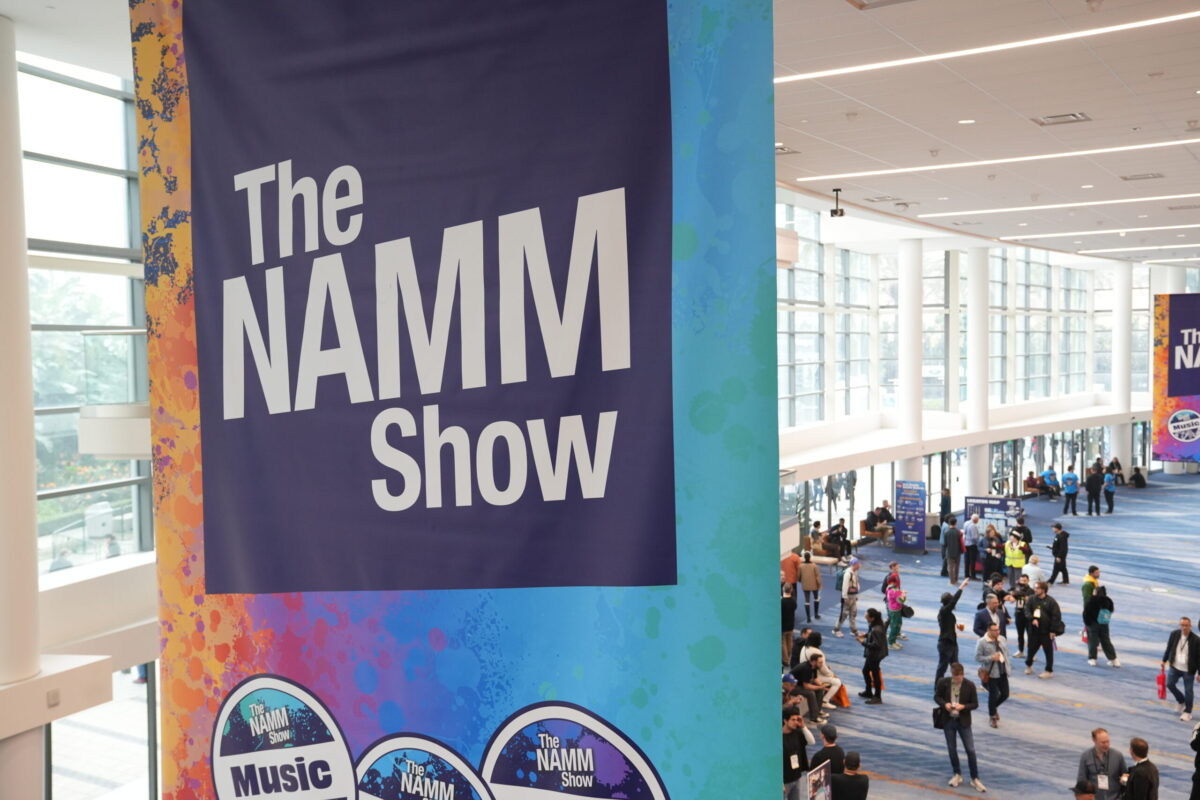
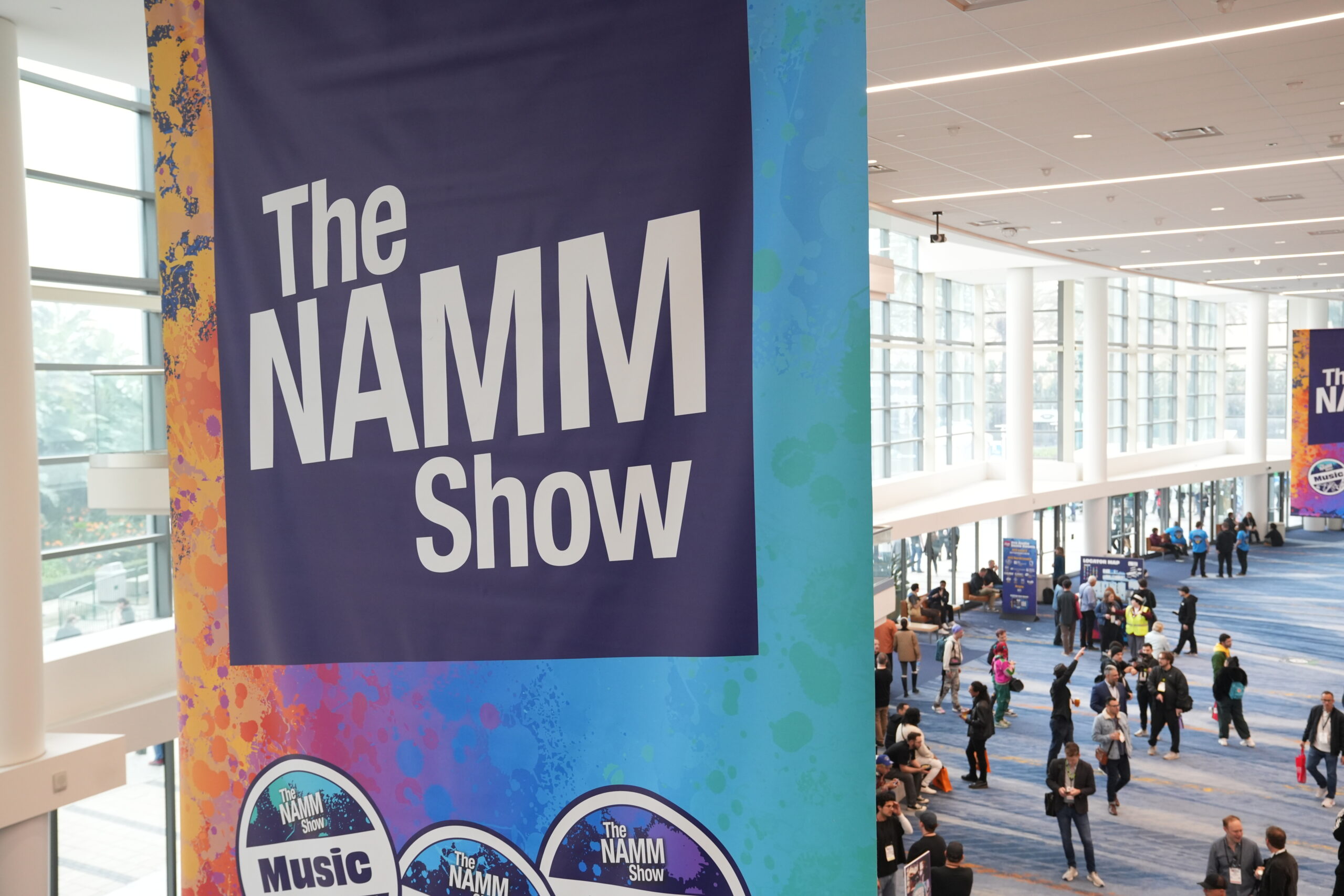
Over 60,000 attendees from 122 countries. More than 1,650 exhibitors representing 5,400 brands. NAMM 2026 was massive by every metric — but the real story isn’t in the numbers. It’s in the gear. From the resurrection of a legendary EMI console that hasn’t been manufactured in over 50 years to a hybrid synthesizer that’s already being called the most ambitious synth launch of the decade, this year’s NAMM Show delivered announcements that will reshape studios worldwide. Here are the top 10 NAMM 2026 new gear and plugin releases you need to know about.
1. ASM Leviasynth — The Biggest Synth Launch of NAMM 2026
ASM shook the synthesizer world with the Hydrasynth, and the Leviasynth is the long-awaited successor that takes everything further. This is a 16-voice polyphonic hybrid synthesizer with 8 oscillators per voice, analog filters, and a built-in 3-track sequencer. To put that in perspective, most polyphonic synths offer 2-3 oscillators per voice. Eight per voice opens up a universe of sound design possibilities that simply didn’t exist in a desktop form factor before.
Synthtopia immediately named Leviasynth the clear standout of the show, and MusicRadar placed it at the top of their best new music tech gear roundup. If you’ve ever played a Hydrasynth, you already know ASM’s build quality and their superb polyphonic aftertouch keybeds. The Leviasynth carries that DNA forward while blurring the line between analog warmth and digital versatility in ways we haven’t seen before. Pricing and exact release date are still TBA, but expect availability in the first half of 2026.
2. Chandler Limited REDD Mixing System — The EMI Console Returns After 50+ Years
This is the one that had seasoned engineers doing double-takes on the show floor. Chandler Limited unveiled the REDD Mixing System — the first EMI recording console to be released in over 50 years. The Beatles recorded on EMI consoles at Abbey Road. Pink Floyd. The Hollies. The sound of those REDD and TG desks defined an era of recorded music, and now Chandler Limited has combined the REDD, TG, and RS desk architectures into a single fully modular system.
According to Vintage King’s NAMM Top 10, this isn’t a simple reissue — it’s a complete reimagining designed for modern studio workflows while preserving the harmonic richness and midrange weight that made the original consoles legendary. If you’ve ever wondered what it would be like to mix through genuine EMI circuit topology in 2026, Chandler Limited just made that a reality.
3. Fender Studio Pro 8 — PreSonus Studio One Gets a Fender-Powered Rebirth
Fender’s acquisition of PreSonus raised a lot of questions. The answer arrived at NAMM 2026 in the form of Fender Studio Pro 8 — and it’s far more than a rebrand. The DAW now ships with 39 native Fender Mustang guitar amps, 18 Rumble bass amps, and 125 modelled effects pedals built directly into the software. No third-party plugins needed.
But the real headline feature, as reported by Output, is the AI Chord Assistant and audio-to-MIDI conversion engine. Pair this with the new Fender Motion 16/32 MIDI controllers — which support polyphonic aftertouch — and you have a complete production ecosystem that bridges the gap between traditional guitar recording and modern DAW-based production. For guitarists who’ve always felt like outsiders in the DAW world, Fender Studio Pro 8 might finally be the invitation they’ve been waiting for.
4. Roland CR-78 Software Rhythm Composer — That “In the Air Tonight” Drum Machine, Now in Your DAW
Phil Collins. Blondie. Orchestral Manoeuvres in the Dark. The Roland CR-78 shaped the sound of an entire era, and now Roland has created an official software emulation using their ACB (Analog Circuit Behavior) technology. Available through Roland Cloud, the plugin launches at an introductory price of just $49 for a Lifetime Key (regular price $199).
Synth Anatomy reports that the plugin goes well beyond a simple sample library — it offers full tuning control, decay adjustment, dynamics processing, sub-steps, flams, and pattern variations that actually exceed what the original 1978 hardware could do. If you’ve ever tried to recreate that iconic CR-78 sound using sample packs, you know how difficult it is to capture the organic feel of the original machine. This plugin solves that problem at a price point that’s essentially a no-brainer.
5. SSL Origin Evo Console — E-Series Dynamics Meet Modern Flexibility
SSL has evolved the Origin lineup with the Origin Evo, available in 16-channel and 32-channel configurations. The new Evo channel strip features E-Series dynamics — the same compression and gating topology that made SSL consoles the standard in professional studios worldwide. Updated HPF and LPF sections complement the classic SSL inline architecture, while new routing options add the flexibility that modern hybrid studios demand.
Perfect Circuit’s NAMM coverage highlighted the Origin Evo as one of the most significant pro audio releases of the show. While an SSL console is a serious investment, the Origin Evo represents the most accessible entry point into genuine SSL analog mixing that the company has offered in this form factor. For mid-to-large studios considering an analog console backbone, this is the one to audition in 2026.
6. Empirical Labs EL8-XXX 30th Anniversary Distressor
The Distressor has been a studio staple for three decades. To celebrate, Empirical Labs released the EL8-XXX 30th Anniversary Edition — a limited-run model with a striking red faceplate, Stereo Image Link functionality, Brit Mode, a Triad HS-56 input transformer, and the full 7 compression ratios plus the legendary Nuke mode. Featured in Vintage King’s top picks, this anniversary edition adds meaningful sonic improvements (particularly the input transformer) while maintaining the Distressor’s renowned versatility. If you already own a Distressor, the 30th Anniversary is a compelling complement. If you don’t own one yet, there may never be a better version to start with.
7. Akai Professional MPC XL — The Most Powerful MPC Ever Built
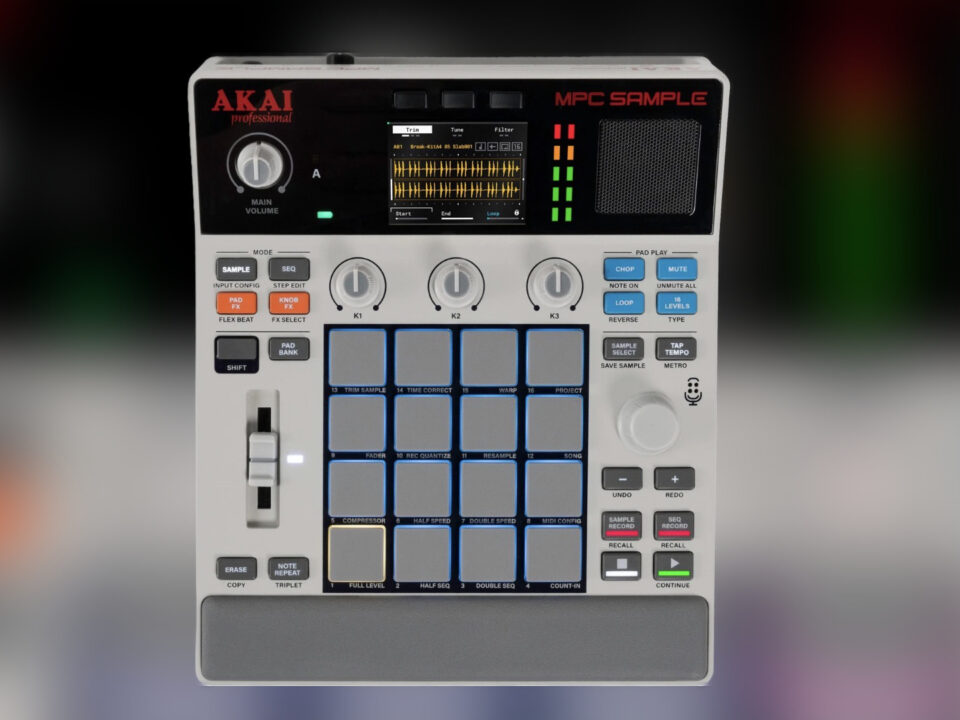
Akai has pulled out all the stops with the MPC XL. This is a true production powerhouse: 10.1-inch touchscreen, 8-core processor, 16GB of RAM, and 256GB of onboard storage, all priced at $2,899. The MPC XL operates fully standalone — you can produce, arrange, mix, and perform without ever touching a computer. When connected to a DAW, it transforms into one of the most capable MIDI controllers and samplers on the market.
MusicRadar positioned it as the ultimate tool for beatmakers and live performers, and the specs back that up. An 8-core processor with 16GB of RAM means you won’t be hitting the ceiling on complex arrangements with heavy sampling and effects chains. For producers who want their production hub to be tactile, standalone, and future-proof, the MPC XL makes a strong case.
8. Behringer JN-80 — A Juno-60 Clone at Behringer Pricing
The Roland Juno-60 is one of the most sought-after vintage synths in existence, with used prices regularly exceeding $4,000. Behringer’s JN-80 aims to democratize that sound with 8 voices, 49 velocity-sensitive keys, and channel aftertouch — all at a fraction of the original’s current market value. The faithful analog sound recreation targets the lush pads, shimmering arpeggios, and warm basses that made the Juno-60 a studio and stage legend.
Vintage purists will debate the authenticity, as they always do with Behringer clones. But for working musicians and producers who need that Juno character without spending four figures on a 40-year-old instrument, the JN-80 could be the most practical synth announcement of NAMM 2026.
9. Neve 88R LBEQ 500 Series EQ — Console Legend in a Lunchbox
Neve took the legendary four-band parametric EQ from their 88RS console and shrunk it into a 500 Series module. That’s significant because the 88RS is one of the most revered large-format consoles ever made, and its EQ section is a major reason why. The silky top end, the solid low-frequency control, and the musical midrange shaping that Neve EQs are known for — now available in a compact format that fits in any 500 Series rack. For engineers who’ve always wanted Neve console EQ in their outboard chain, this is the most direct path to that sound.
10. Korg Phase8 Acoustic Synthesis Instrument — Something Entirely New
The most experimental product on this list, and arguably the most innovative announcement at NAMM 2026. The Korg Phase8 uses electronics to control the physical vibrations of real strings, creating acoustic sounds that would be physically impossible through conventional means. It’s not a synthesizer. It’s not a traditional acoustic instrument. It’s a new category entirely.
Both Synthtopia and Perfect Circuit praised the Phase8’s originality and sonic character. In a world where most “new” instruments are variations on existing architectures, Korg has genuinely created something that sounds like nothing else. Whether it becomes a mainstream production tool or a niche sound design instrument remains to be seen, but its ambition alone earns it a spot on this list.
What NAMM 2026 Tells Us: Analog Revival Meets AI Integration
If there’s one throughline connecting these 10 announcements, it’s the coexistence of analog heritage and forward-looking technology. Chandler Limited, Neve, and SSL are breathing new life into classic analog designs. Fender Studio Pro 8 is embedding AI directly into the DAW workflow. ASM and Korg are pushing into entirely new sonic territories. And Roland is using advanced modeling to perfectly preserve vintage instruments in software form.
According to Music Connection, the NAMM Foundation also committed $250,000 to music education funding this year — a reminder that the industry isn’t just about gear, but about nurturing the next generation of creators who’ll use it.
Which of these 10 products would you bring into your studio first? Personally, I think the ASM Leviasynth’s 8-oscillator-per-voice architecture and the Chandler REDD’s EMI heritage are the two announcements most likely to have a lasting impact on how we produce music in 2026 and beyond. But regardless of which gear catches your eye, this year’s NAMM made one thing abundantly clear: the tools available to music creators have never been more diverse, more powerful, or more exciting.
Thinking about upgrading your studio setup or optimizing your production workflow? Let’s talk — 28 years of audio engineering experience at your service.
Get weekly AI, music, and tech trends delivered to your inbox.