CES 2026 AI Announcements Preview: 7 Must-Watch Keynotes, Demos, and Breakthroughs
January 1, 2026
CES 2026: NVIDIA Jensen Huang Keynote — What to Expect from Next-Gen AI Hardware
January 2, 2026
It’s finally happening — the NAMM 2026 preview season is in full swing, and manufacturers are already dropping bombshell announcements weeks before the show floor opens on January 20. We’re talking a 16-voice hybrid poly synth, a standalone workstation with AI stem separation, a sub-$500 Juno clone, and a compact amp modeler that could dethrone your pedalboard. If your wallet wasn’t already nervous, it should be.
I’ve combed through every early announcement, leak, and confirmed reveal to bring you the 10 most exciting products heading to NAMM 2026. Whether you’re a producer, guitarist, or keyboard player, there’s something here that will make you reconsider your 2026 gear budget. (Sources: Output, MusicRadar, Gearnews)
1. ASM Leviasynth — The Hydrasynth Successor We’ve Been Waiting For
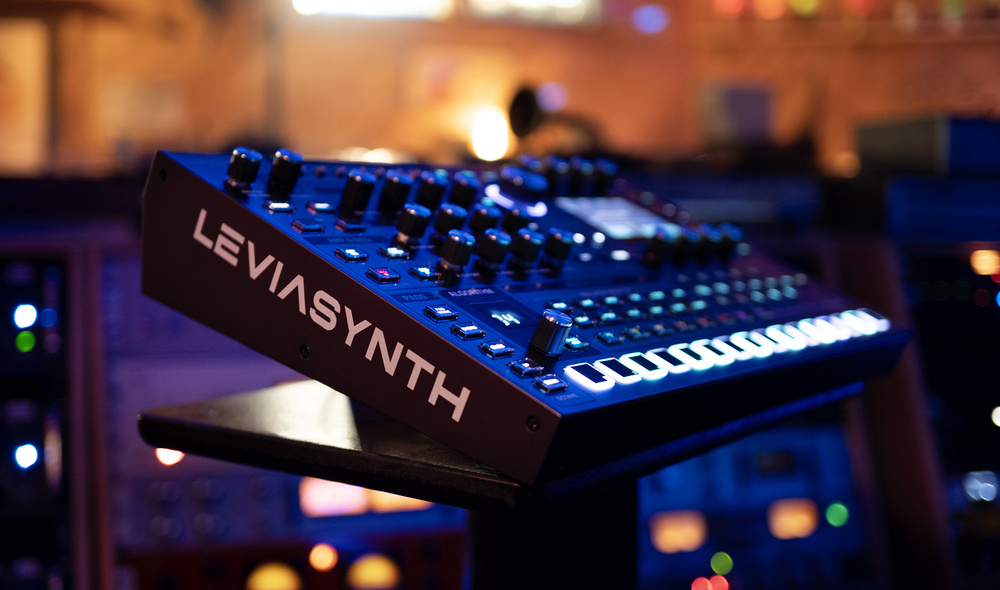
Ashun Sound Machines just raised the bar. The Leviasynth is a 16-voice polyphonic synthesizer packing 8 oscillators per voice and analog filtering — a combination that puts it in a league of its own. The desktop version comes in at $1,799 while the keyboard variant sits at $2,499.
If the Hydrasynth democratized wavetable synthesis, the Leviasynth takes that philosophy further by marrying digital oscillators with genuine analog filters. Eight oscillators per voice means layering possibilities that most competitors simply can’t match. For sound designers who felt limited by the Hydrasynth’s architecture, this is the upgrade you’ve been asking for — and then some.
The price point positions it firmly in the premium segment, but considering what you’d pay for comparable poly counts and analog filtering in other flagship synths, it’s competitive. Expect this to be one of the most crowded demo stations at the show.
2. Akai MPC XL — Standalone Production Gets a Massive Upgrade
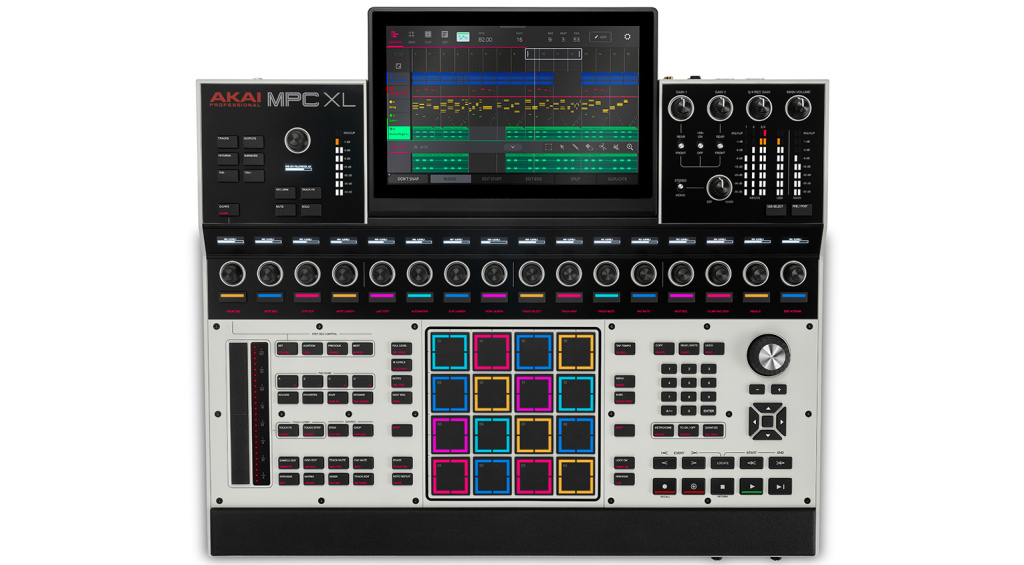
The Akai MPC XL is everything the MPC faithful have been requesting: a bigger touchscreen, more processing power, and — here’s the headline feature — built-in stem separation. That means you can isolate vocals, drums, bass, and other elements from any audio track directly on the hardware, no computer required.
For hip-hop producers, this is a dream scenario. Sample a vinyl record, separate the elements on the spot, and rebuild the beat with surgical precision — all without opening a laptop. For live performers, the possibilities are equally compelling: real-time stem manipulation opens the door to entirely new performance workflows. The MPC already dominated the standalone production space, and the XL just widened that gap considerably.
3. Behringer JN-80 — The Juno Clone Everyone’s Been Talking About
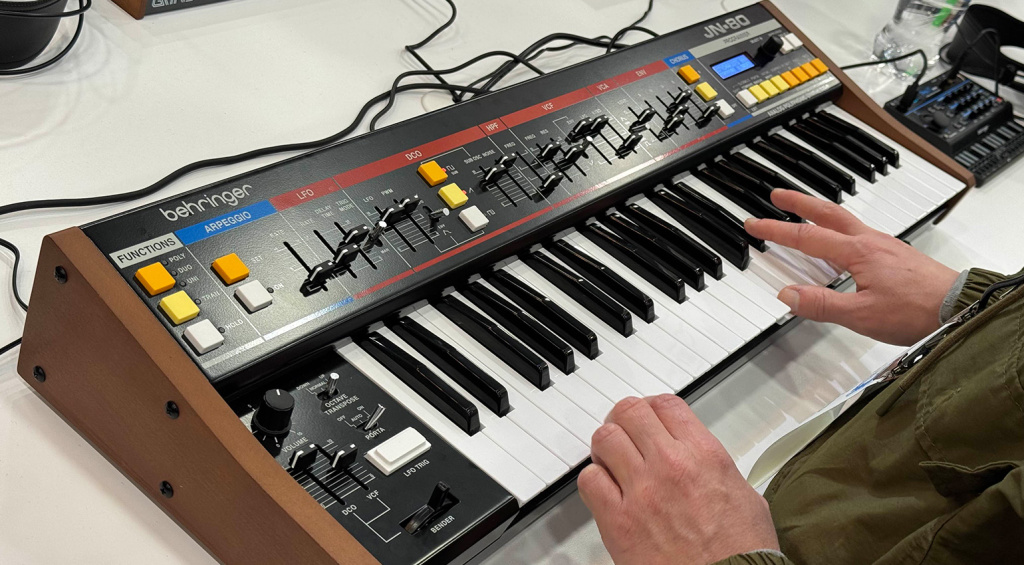
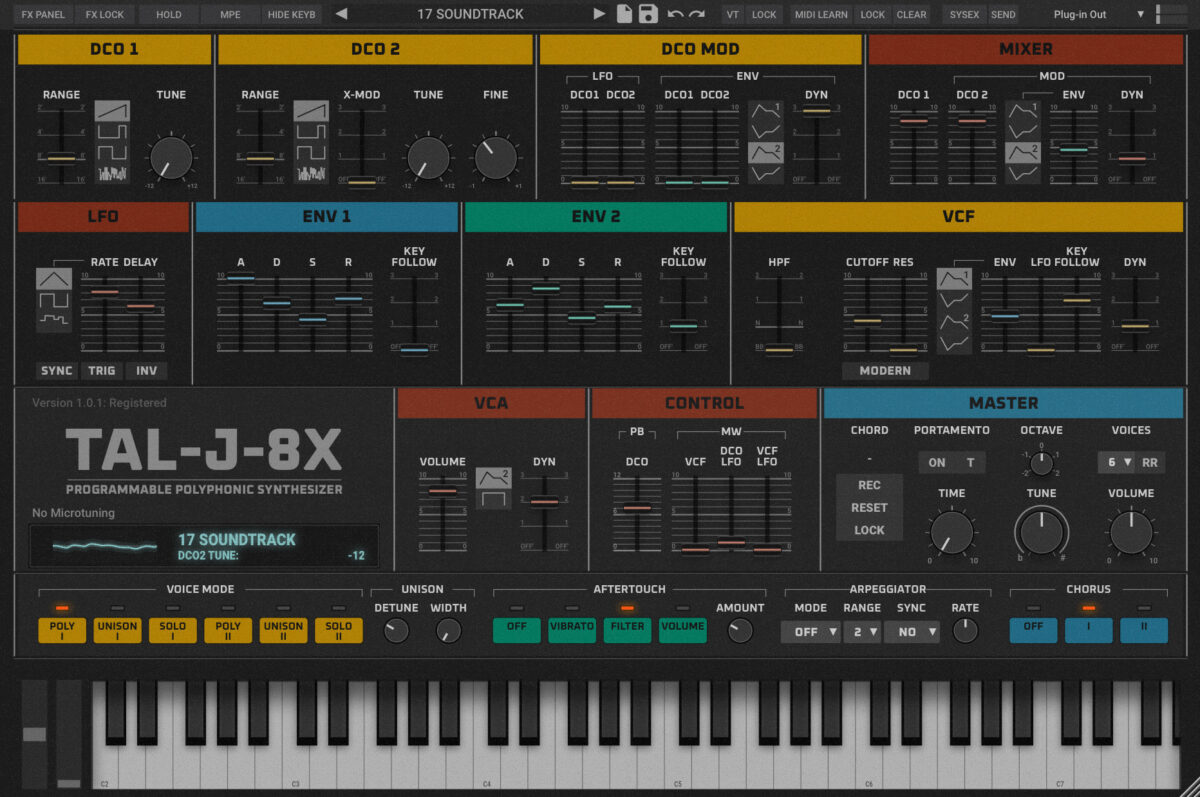
Behringer’s JN-80 is making its official NAMM 2026 debut, and it’s exactly what vintage synth fans have been hoping for — a faithful recreation of the Roland Juno-6/60 sound engine at a fraction of the cost. With original Juno-60 units regularly selling for $3,000+ on the secondhand market, a budget-friendly analog polysynth that captures that lush, chorus-drenched sound is bound to turn heads.
Love them or hate them, Behringer’s clone catalog has proven it can deliver impressive results. The Model D and DeepMind series both earned respect from skeptics, and the JN-80 could follow suit. The real test will be how accurately it recreates that iconic Juno chorus — the sound that defined an entire era of synth-pop and continues to appear on modern productions worldwide.
4. Korg Phase8 — Acoustic Synthesis Enters the Chat
Korg is doing something genuinely different with the Phase8. Rather than another subtractive or wavetable synth, this instrument uses acoustic synthesis — physical modeling that simulates the behavior of real-world acoustic instruments and materials. The result is organic, evolving tones that feel alive in a way that traditional synthesis often doesn’t.
The hands-on interface is designed for expressive performance, making it particularly appealing for live musicians who want to move beyond preset surfing and actually play their synth. Korg has decades of synthesis expertise, and the Phase8 feels like a bold statement about where they see the future of electronic instruments heading.
5. Nord Electro 7 — The Stage Keyboard Evolves
The Nord Electro 7 adds a proper synth section, per-section independent effects, and — for the first time in Nord’s history with this line — a color display. The Electro series has long been the go-to for gigging keyboardists who need organ, piano, and basic synth sounds in one reliable package, and the 7th generation significantly expands what’s possible without adding complexity.
The addition of per-section effects is particularly significant. Previously, effects were applied globally, forcing compromises when layering sounds. Now you can run a rotary speaker on your organ, reverb on your piano, and chorus on your synth — simultaneously, without routing headaches. The color display may seem like a small thing, but after years of squinting at red LED readouts, Nord users will appreciate the improved visibility and preset management.
NAMM 2026 Preview: Software and Interfaces
6. Fender Studio Pro 8 (Formerly PreSonus Studio One)
The Fender Studio Pro 8 represents the official rebrand of PreSonus Studio One following Fender’s acquisition. Beyond the name change, it brings new amp and effects plugins built on Fender’s legendary amp modeling technology, plus a revamped UI. For guitarist-producers who already live in Studio One, getting Fender’s tone modeling baked directly into your DAW is a significant value add.
The bigger question is how Fender’s stewardship will shape the DAW’s future direction. PreSonus built Studio One into a serious Ableton/Logic competitor through relentless innovation, and early signs suggest Fender plans to continue that trajectory while leveraging their deep understanding of guitar and amp tone.
7. Korg microAUDIO 22/722 — Budget USB-C Interfaces Done Right
Korg enters the budget interface race with the microAUDIO 22 and 722. The standout feature is built-in effects processing — reverb, compression, and more available without loading a single plugin. For bedroom producers and mobile recording setups, this eliminates the need for a separate effects chain during tracking, streamlining the workflow significantly.
8. Neural DSP Quad Cortex Mini — Big Tone, Small Footprint
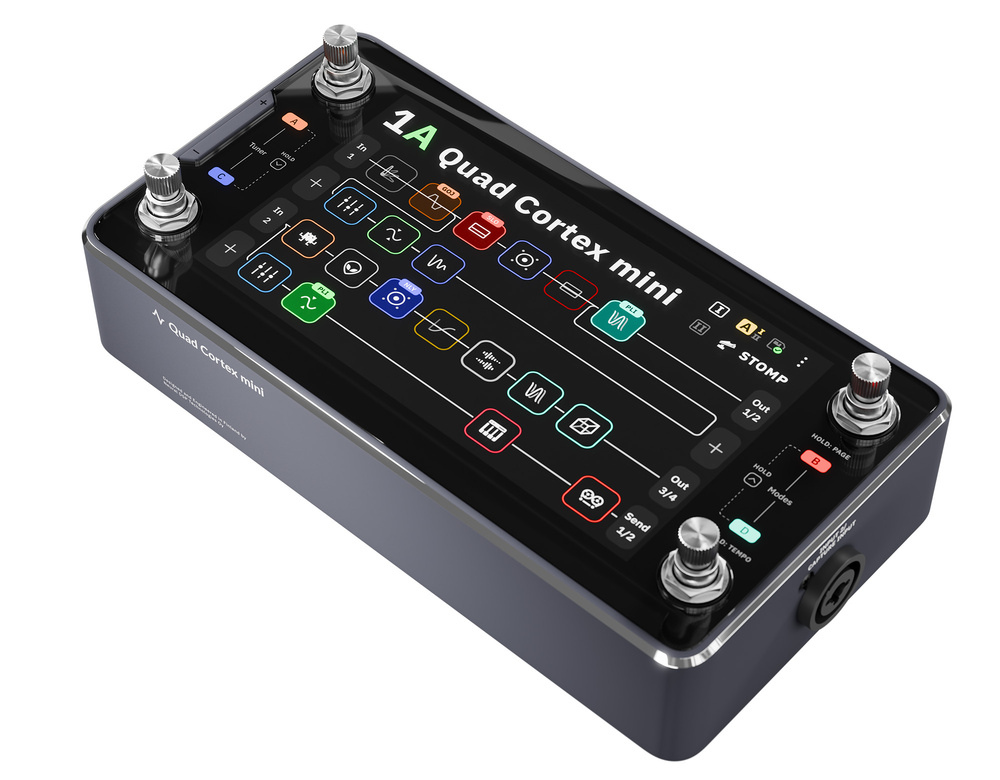
Neural DSP’s Quad Cortex Mini takes the company’s acclaimed capture technology — where a neural network learns the exact tonal characteristics of a real amplifier — and packages it into a pedalboard-friendly form factor. The original Quad Cortex earned its reputation as one of the best-sounding modelers on the market, and the Mini aims to deliver that same quality at a more accessible size and price.
For guitarists and bassists who want studio-quality amp tones on stage without lugging a full-size unit, the Mini could be the tipping point. Neural DSP’s cloud-based tone library — with thousands of user-created captures — gives it an ecosystem advantage that few competitors can match.
9. Electro-Harmonix Effects Interface — Bridging DAW and Pedalboard
EHX’s Effects Interface introduces a “Hardware Plugin” mode that routes audio from your DAW through physical analog pedals and back. It’s an elegant solution for producers who love the character of analog effects but don’t want to leave the convenience of their DAW workflow. Send a track out through your favorite distortion pedal, capture the results back in your session, and maintain full recall — the best of both worlds.
This is genuinely innovative territory. While reamping has existed forever, the EHX approach integrates it so seamlessly that analog pedals essentially become plugins in your signal chain. For anyone who’s accumulated a drawer of beloved stompboxes, this is the product that finally makes them relevant in a modern DAW-centric workflow.
10. Yamaha URX Interfaces + MODX M — A Full Ecosystem Refresh
Yamaha is refreshing multiple product lines simultaneously: the URX audio interface series, the updated MODX M synths, and the new CC1 controller. The URX interfaces draw on Yamaha’s mixing console heritage for preamp quality in a compact format, while the MODX M retains its powerful FM-X/AWM2 engine with improved connectivity and workflow features. The CC1 controller completes the ecosystem, offering hands-on control that ties everything together.
Key Trends from the NAMM 2026 Preview
Looking at the NAMM 2026 preview landscape as a whole, three clear trends emerge. First, hybrid synthesis is the new normal — the Leviasynth’s digital-meets-analog architecture represents where the industry is heading. Second, AI integration is becoming practical rather than gimmicky, with MPC XL’s stem separation being a prime example. Third, accessibility continues to improve across the board, from Behringer’s budget analog polysynths to Korg’s affordable interfaces.
We’re also seeing a fascinating convergence of hardware and software — EHX’s Effects Interface and Fender’s DAW play both point toward a future where the line between your pedalboard and your plugin chain barely exists.
When the NAMM Show opens on January 20, there will undoubtedly be surprise announcements that didn’t make this preview list. But based on what’s already been revealed, 2026 is shaping up to be one of the most exciting years for music technology in recent memory. Start updating that gear wishlist — you’re going to need it.
Curious how these NAMM 2026 announcements sound in a real studio environment? We test and compare new gear firsthand.
Get weekly AI, music, and tech trends delivered to your inbox.