AI Regulation 2026: Every Federal and State Law That Just Changed the Game on January 1
January 14, 2026
AI Regulation 2026: 7 New Federal and State Laws Taking Effect This January — From California’s $1M Fines to Trump’s Preemption Order
January 14, 2026
NAMM 2026 Eurorack modules just rewrote the rulebook. Walking the Anaheim Convention Center floor this January, one thing became crystal clear—modular synthesis has officially crossed the threshold from niche experimentation to mainstream production tool. From a $319 hybrid oscillator that sounds like it should cost three times the price to a $2,399 complete skiff system that eliminates every excuse for not diving into modular, this year’s crop of Eurorack releases sets a new bar for what’s possible at every price point. Here are the five modules that dominated the conversation at NAMM 2026.
BASTL Citadel Alchemist: Hybrid Synthesis for $319
Czech boutique manufacturer BASTL Instruments dropped jaws at NAMM with the Citadel Alchemist, a 16HP hybrid synthesis module packing four digital oscillators into a form factor that fits comfortably into even the most crowded cases. At $319, this thing punches absurdly above its weight class.
The Alchemist offers five distinct synthesis modes: FILTER, FM, HYPERSINE, SUPERSAW, and GLITCHNOISE. Each mode fundamentally changes the character of the module, effectively giving you five different sound engines in a single unit. The FM mode produces the kind of metallic, bell-like tones that usually require dedicated FM modules costing twice as much. GLITCHNOISE mode, meanwhile, ventures into genuinely unpredictable territory—perfect for sound designers chasing textures that don’t exist yet.
The dual effects processor is the cherry on top. Built-in delay and reverb mean fewer modules needed in your signal chain, and MIDI via USB integration makes it trivially easy to sequence from your DAW. For ambient producers, the HYPERSINE mode paired with the internal reverb creates lush, evolving pads that rival dedicated granular processors. For harder-edged electronic genres, stacking SUPERSAW with the delay yields massive, detuned leads straight out of a 90s rave.
If you’re building a compact system focused on maximum sonic variety per HP, the Citadel Alchemist might be the most efficient module released this year. The fact that BASTL managed to squeeze this much functionality into 16HP at this price point signals a broader shift in what boutique manufacturers can deliver in 2026. Check out GearNews’ detailed breakdown for audio demos of each synthesis mode.
Acid Rain Ziggurat: The Quad Quantizer That Changes Everything
Acid Rain Technology has been quietly building a reputation for brilliantly designed utility modules, and the Ziggurat might be their magnum opus. This 14HP, $399 quad-voice pitch quantizer and sequencer borrows its interface philosophy from the legendary SH-101, making it one of the most immediately intuitive quantizers on the market.
What sets Ziggurat apart from the pack is its four independent voices, each capable of running its own scale and key. This opens up polyphonic patching possibilities that previously required multiple single-voice quantizers and a headache-inducing web of patch cables. The 35 save slots mean you can store and recall complex quantization setups instantly during live performances—no menu diving, no awkward pauses between songs.
The assignable CV modulation adds another layer of real-time control. Route an LFO to shift scales on the fly, or use an envelope to create pitch quantization that responds dynamically to your playing. For generative patch enthusiasts, this is the missing piece that transforms random voltages into musically coherent melodies. Perfect Circuit’s product page has the full specification sheet and ordering information.
Make Noise NUSS: The Complete NAMM 2026 Eurorack Modules System
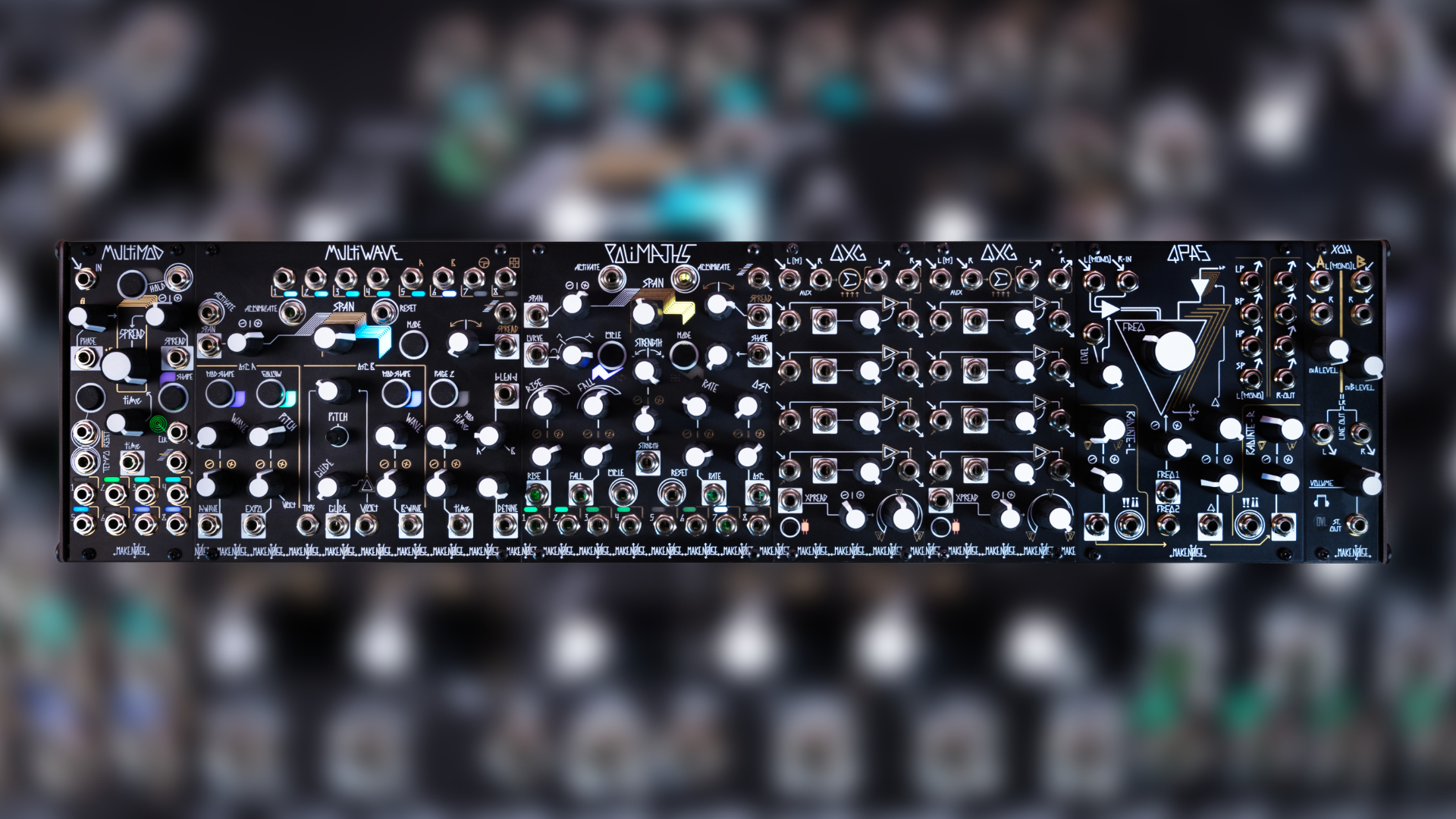
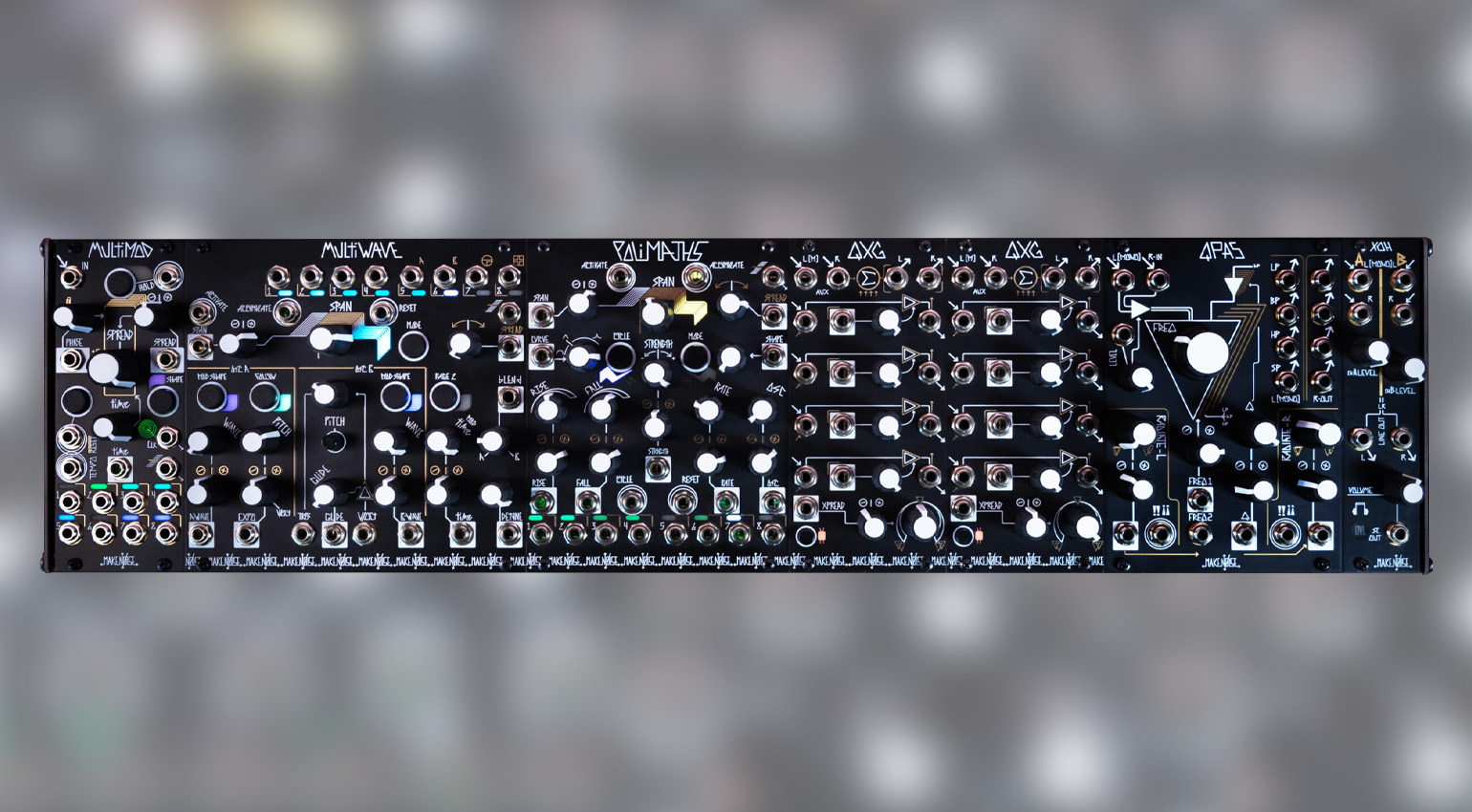
If there was a single booth at NAMM 2026 that consistently had the longest line, it was Make Noise. The reason? NUSS—New Universal Skiff System—a $2,399, 104HP complete modular system that arrives pre-loaded with eight carefully curated modules: MultiWAVE, PoliMATHS, QXG, QPAS, and four others designed to work together as a cohesive instrument rather than a collection of parts.
The real innovation here isn’t just convenience—it’s the multi-channel polyphonic patching architecture baked into the system design. Traditional Eurorack polyphony requires duplicating modules and running parallel signal paths, which eats up rack space and budget fast. NUSS handles polyphonic signal routing at the system level, meaning true polyphonic patches are possible without the usual module multiplication headache.
NUSS was also showcased at the Buchla and Friends 2026 event alongside the show, generating buzz in both the East Coast and West Coast synthesis communities. For newcomers intimidated by the modular selection paradox—hundreds of modules, infinite combinations, zero guidance—NUSS is Make Noise’s answer: a complete, thoughtfully assembled instrument that’s ready to patch the moment you open the box. It’s the strongest argument yet that modular doesn’t have to mean complicated.
Noise Engineering Multi Repetitor: Generative Rhythm Perfected
Noise Engineering has long been the go-to brand for producers who want their rhythms to feel alive rather than programmed, and the Multi Repetitor is the culmination of that philosophy. This 10HP, $320 generative trigger sequencer is the spiritual successor to both the Numeric Repetitor and Zularic Repetitor, combining their best ideas into a single, more powerful module.
Three distinct algorithms drive the pattern generation. The mathematical algorithm creates precise, evolving patterns based on mathematical relationships. The African music theory algorithm draws from traditional West African polyrhythmic structures—the kind of interlocking patterns that Western time signatures can’t easily describe. The Euclidean algorithm distributes triggers as evenly as possible across a given number of steps, a technique that’s become fundamental in electronic music production.
What makes Multi Repetitor special is the ability to switch between these three algorithms in real time using the fader-based interface. Mid-performance, you can morph from a mathematically precise techno pattern to an organically flowing Afro-Cuban-inspired groove without stopping the clock. At $320 for 10HP, it’s one of the most feature-dense rhythm modules at NAMM 2026. GearNews has a thorough analysis of each algorithm’s behavior and musical applications.
Behringer JT-2: Jupiter-8 Tone Meets Eurorack Format
Behringer continues its mission to democratize classic synthesizer sounds with the JT-2, a paraphonic analog synthesizer based on a single Roland Jupiter-8 voice, redesigned for Eurorack. The Jupiter-8 is one of the most coveted vintage synthesizers ever made, with original units regularly selling for $30,000 or more. The JT-2 distills that legendary voice architecture into a module that will likely cost a fraction of a percent of the original.
The oscillator section references the original Jupiter-8’s VCO circuit, delivering that characteristic warm-yet-present analog tone that made the Jupiter-8 the go-to synth for everyone from Duran Duran to Tame Impala. The paraphonic design means you’re not limited to monophonic lines—limited chord voicings are possible, adding harmonic richness that pure mono modules simply can’t achieve.
Being a Eurorack module rather than a standalone unit means the JT-2 integrates directly into your modular ecosystem. Route external envelopes into the filter, clock the arpeggiator from your sequencer, or process the output through your favorite effects modules. Pair it with the Acid Rain Ziggurat for quantized melodic sequences, or use Noise Engineering’s Multi Repetitor to trigger rhythmic patterns through the JT-2’s filter—the possibilities expand dramatically when classic analog tone meets modern modular routing.
The elephant in the room, of course, is how closely the JT-2 actually captures the Jupiter-8 sound. Early reports from NAMM attendees who A/B compared the module against original Jupiter-8 recordings were overwhelmingly positive, particularly regarding the filter sweep character and oscillator drift behavior. Synth Anatomy’s full breakdown covers the technical specifications and expected pricing in detail.
What These Releases Tell Us About the Future of Eurorack
Stepping back from the individual modules, NAMM 2026 revealed four clear trends shaping the Eurorack landscape. First, hybrid digital-analog design has become the dominant paradigm. The BASTL Alchemist exemplifies this—digital oscillators for flexibility, analog signal paths for warmth, all at a price point that would have been impossible five years ago.
Second, complete systems are rising. Make Noise’s NUSS represents a fundamental shift in how manufacturers think about the modular experience. Instead of selling individual components and leaving system design to the user, NUSS offers an opinionated, curated instrument that happens to be modular. Expect more manufacturers to follow this approach in 2026 and beyond.
Third, algorithmic and generative sequencing continues to evolve in musically meaningful directions. Noise Engineering’s incorporation of African music theory into trigger generation algorithms is a perfect example—moving beyond purely mathematical approaches toward culturally informed pattern generation. Acid Rain’s quad quantizer similarly pushes the boundary of what “automatic” pitch processing can achieve musically.
Fourth, the vintage-to-Eurorack pipeline shows no signs of slowing down. Behringer’s JT-2 joins a growing list of classic synthesizer voices reborn in modular format, making legendary sounds accessible to a new generation of producers at a fraction of the original cost.
Whether you’re planning your first Eurorack case or optimizing a mature system, these five modules represent the cutting edge of what modular synthesis can do in 2026. The barrier to entry has never been lower, the sonic possibilities have never been wider, and the argument for adding Eurorack to your production setup has never been stronger. If NAMM 2026 is any indication, the modular renaissance is just getting started—and the best modules are the ones that make complex sound design feel effortless.
Need help integrating new modules into your studio workflow, or looking for professional mixing and mastering for your modular recordings?
Get weekly AI, music, and tech trends delivered to your inbox.