NAMM 2026 Guitar and Bass Gear Preview: 7 Confirmed Highlights from Fender, Gibson, PRS
January 9, 2026
Gemini 3 Pro Preview Deep Think Mode: Is Google’s $250 AI Ultra Worth the 93.8% GPQA Score?
January 12, 2026
A 30-year flagship redesign, a fully analog signal path in an era of DSP everything, and headphone calibration matched to individual serial numbers — the NAMM 2026 studio monitors headphones lineup is shaping up to be the most significant in recent memory. The show doesn’t open until January 20 in Anaheim, but the pre-show announcements and confirmed product reveals have already sent shockwaves through the pro audio community. Here’s everything we know so far, and why these products matter for your studio.
PMC Main Monitor Series: A 30-Year Flagship Redesign Confirmed for NAMM 2026
PMC, the British company whose monitors have been the backbone of mastering suites at Abbey Road Studios, Metropolis Studios, and countless world-class facilities, is set to debut a completely redesigned Main Monitor Series at NAMM 2026. This is not an incremental update — it’s the first ground-up redesign of their flagship line in over three decades.
The new Main Monitors retain PMC’s signature ATL (Advanced Transmission Line) bass-loading technology, which has always set them apart from conventional ported and sealed designs. But this time, PMC has added what they’re calling LaminairX airflow technology. The concept is elegant: by controlling airflow at the transmission line’s exit point to maintain laminar (smooth, non-turbulent) flow, they’ve reportedly achieved a dramatic reduction in port noise while simultaneously extending low-frequency response with improved phase accuracy.
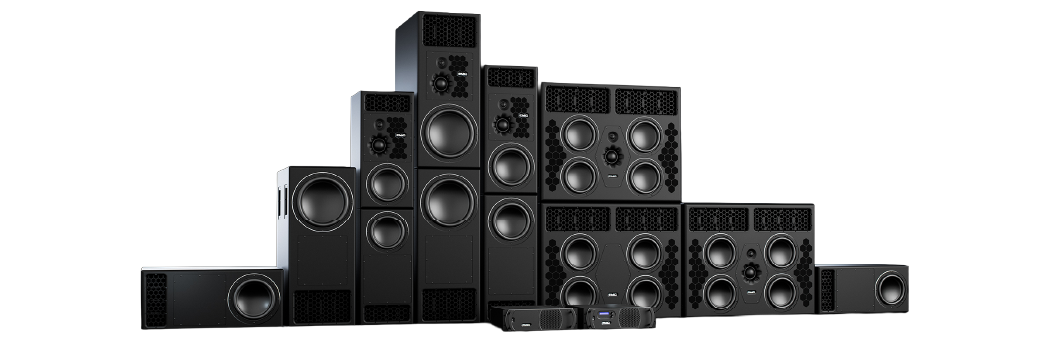
What makes this particularly noteworthy is the context. The large-format studio monitor market has seen significant innovation from competitors like Genelec (with their SAM system) and Neumann (with the KH series), all leveraging DSP-based room correction. PMC’s approach of refining their acoustic engineering rather than adding digital processing represents a fundamentally different philosophy — one that many mastering engineers will find appealing.
The redesign encompasses everything from driver units to cabinet construction. For studios that have relied on PMC Main Monitors as their reference for years, this will be the most consequential upgrade opportunity in the product’s entire history. Pricing and exact specifications are expected to be revealed at the show itself.
HEDD Audio TYPE 20 A-CORE: The Bold Return to Pure Analog
In an industry that’s been racing toward DSP-powered room correction, digital crossovers, and network-connected monitoring systems, Berlin-based HEDD Audio is about to make a statement. The TYPE 20 A-CORE, confirmed for NAMM 2026, features a 100% analog signal path — no DSP, no digital crossover, no A/D or D/A conversion anywhere in the chain.
The “A-CORE” designation stands for Analog Core, and it’s paired with HEDD’s renowned AMT (Air Motion Transformer) tweeter. Unlike conventional dome tweeters that push air by pistonic motion, the AMT driver uses a folded diaphragm that squeezes air, resulting in significantly faster transient response and wider dispersion. The combination of this already-exceptional high-frequency driver with a fully analog crossover network means the signal from your DAC to the speaker driver encounters zero digital processing.
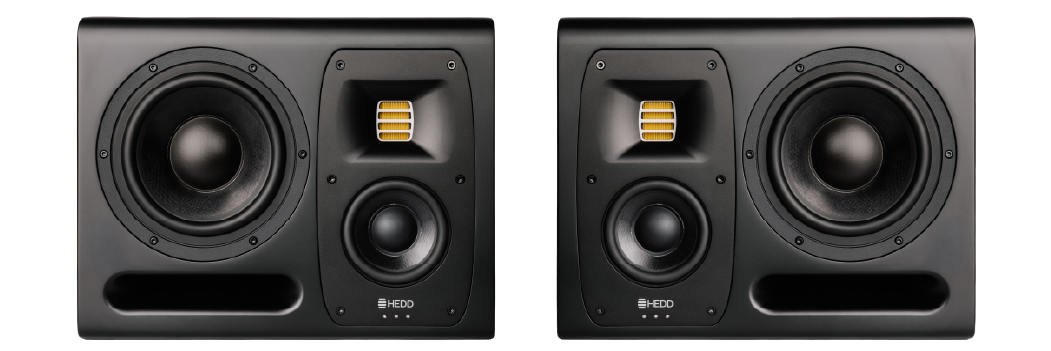
This is a deliberately provocative design choice. The ongoing debate in professional audio about whether DSP-corrected monitors truly deliver “accurate” sound or merely “processed” sound has been simmering for years. HEDD’s position is clear: if you want to hear exactly what your mix sounds like, keep the signal analog from start to finish. Whether you agree with that philosophy or not, the TYPE 20 A-CORE will be one of the most talked-about monitors at NAMM 2026, particularly among mastering engineers and classical recording professionals who prize signal purity above all else.
Audeze LCD-5s: SLAM Technology Meets $4,500 Flagship Ambitions
Audeze has confirmed the LCD-5s for NAMM 2026, and it’s bringing some serious technology to the table. Priced at $4,500, this is the first headphone to feature Audeze’s new SLAM (Symmetric Lateral Acoustic Magnet) technology, which addresses one of the fundamental challenges of planar magnetic driver design: magnetic field uniformity.
In traditional planar magnetic headphones, the magnets on either side of the diaphragm don’t always create a perfectly uniform field across the entire driver surface. This can lead to subtle nonlinearities in diaphragm movement, which translate to distortion and reduced dynamic range. SLAM rearranges the magnet geometry to create a symmetrical, uniform field, theoretically allowing the entire diaphragm to move with identical force at every point.

The specs are impressive: 5Hz to 50kHz frequency response, a carbon-fiber and magnesium chassis for weight reduction, and what Audeze claims is measurably lower distortion than any previous LCD model. For context, the original LCD-5 was already considered one of the best-measuring planar magnetic headphones ever made, so improvements on that baseline are significant.
Audeze will also be showing the CRBN2 at $5,999, making this NAMM a showcase for the extreme high end of the headphone market. For producers and mastering engineers who rely on headphones for critical listening — whether by choice or necessity — the LCD-5s could set a new reference standard.
beyerdynamic Headphone Lab: Free Plugin That Could Change How You Monitor
Perhaps the most democratically exciting announcement confirmed for NAMM 2026 is beyerdynamic’s Headphone Lab. It’s not a headphone — it’s a free plugin (VST3, AU, and AAX) that brings factory-calibrated correction profiles matched to your specific headphone’s serial number.
Let that sink in for a moment. While third-party solutions like Sonarworks SoundID and Waves Nx have offered headphone correction for years, they rely on generalized target curves for each headphone model. beyerdynamic’s approach is fundamentally different: every pair of supported headphones gets individually measured at the factory, and that measurement data is linked to the serial number. When you enter your serial number into Headphone Lab, you get a correction profile that’s specific to your exact unit, not just your model.
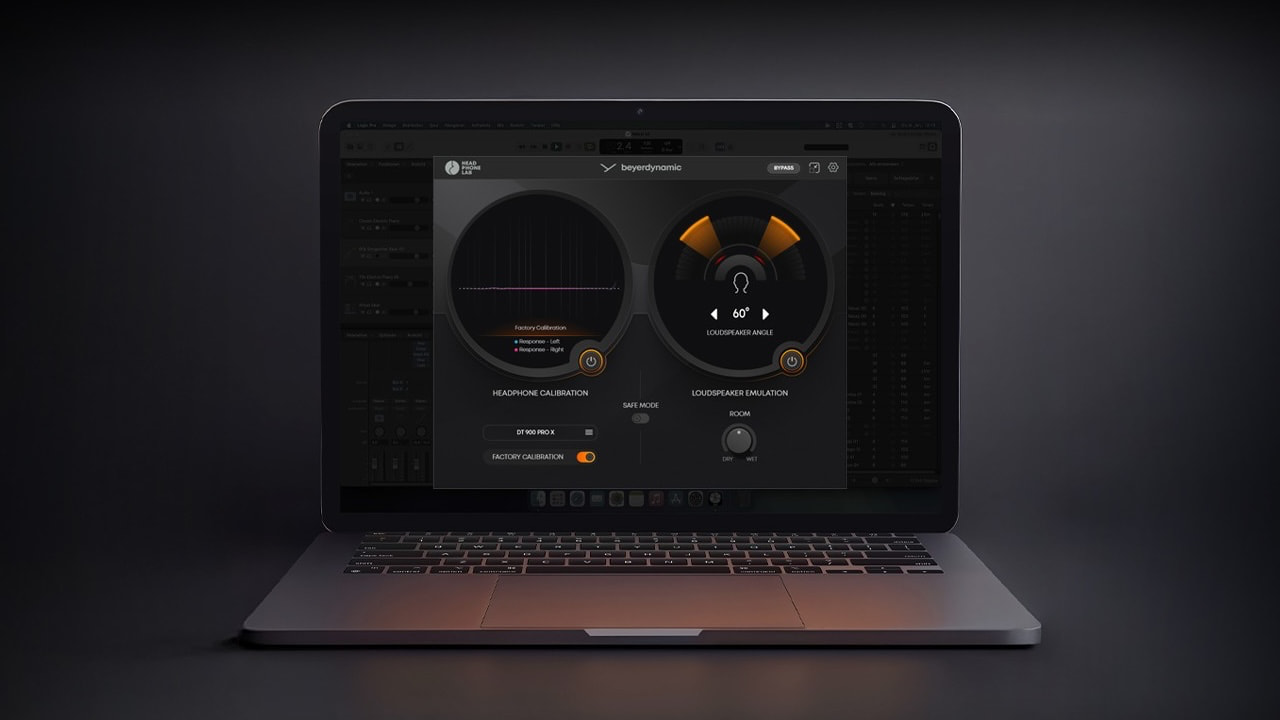
The feature set goes beyond simple frequency correction. Headphone Lab includes crossfeed processing (which simulates the natural blending of left and right channels that occurs with speakers), HRTF-based spatial processing, and multiple room emulations. Supported models at launch will include the DT 700 PRO X, DT 900 PRO X, DT 1770 PRO MKII, and DT 1990 PRO MKII.
The fact that this is free is the real story. If you already own any of these headphones, you’re getting a significant monitoring upgrade at zero cost. And from a business perspective, this signals a fascinating shift: headphone manufacturers are beginning to see software ecosystems as extensions of their hardware products, much like what we’ve seen in the synthesizer world with hardware/software bundles.
Kii Audio THREE BXT and ATC In-Wall Monitors: The High-End Monitoring Divide
NAMM 2026 is also expected to showcase a growing divide in the high-end monitoring market. On one side, Germany’s Kii Audio will be presenting the THREE BXT system, which uses DSP-controlled cardioid radiation patterns to minimize room acoustic interference. The system essentially makes the speaker “ignore” the room to a degree that passive acoustic treatment alone cannot achieve.
On the other side of the spectrum, the UK’s ATC is set to unveil in-wall monitors — the SSM12i and SSM25i — alongside their SCM150ASL at $25,490 per pair. In-wall mounting eliminates Speaker Boundary Interference Response (SBIR) by flush-mounting the speaker into the wall, using the wall itself as an infinite baffle. This is the approach favored by many broadcast and post-production facilities, and ATC’s entry into this segment suggests growing demand from music production studios as well.
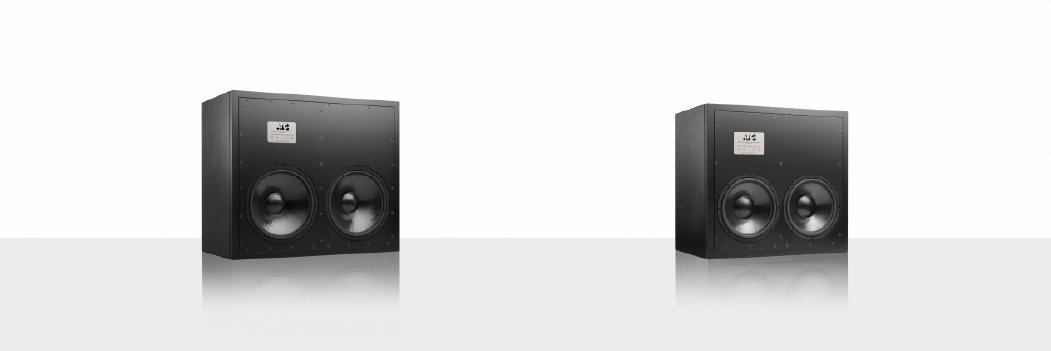
Add the Augspurger DUO 8 at $29,500 to the mix, and you have at least three monitoring systems north of $20,000 debuting at this single show. The message is clear: even in the streaming era, professional studios are investing more heavily than ever in monitoring accuracy.
Three Key Trends Emerging from NAMM 2026 Studio Monitors and Headphones
Looking at the full picture of what’s confirmed for NAMM 2026, three major trends emerge in the studio monitoring space.
The Analog vs. Digital Debate Intensifies. HEDD’s TYPE 20 A-CORE champions pure analog signal paths while Kii Audio’s THREE BXT pushes DSP control to new extremes. Both claim to deliver “the truth” — they just disagree on how to get there. This philosophical split will define how engineers choose their next monitors, and NAMM 2026 will be the first opportunity for direct A/B comparisons.
Headphone Monitoring Reaches New Sophistication. Between Audeze’s SLAM technology and beyerdynamic’s serial-number-matched calibration, headphone monitoring is approaching a level of precision that was unthinkable five years ago. With remote production now standard practice for many professionals in 2026, this trend has massive practical implications for anyone mixing or mastering outside a treated room.
The Ultra-Premium Segment Expands. ATC SCM150ASL, Augspurger DUO 8, Audeze CRBN2 — the $5,000-to-$30,000 price range is getting crowded. This suggests that top-tier studios are not cutting back on monitoring investments, even as the broader market gravitates toward more affordable solutions. The gap between consumer-grade and professional-grade monitoring has never been wider.
What to Watch For: Practical Takeaways for Producers and Engineers
If you’re evaluating these products for your own studio, here’s how to think about the lineup. For home studio producers, beyerdynamic’s Headphone Lab is the clear no-brainer — it’s free, and if you already own supported beyerdynamic headphones, you’ll get measurable monitoring improvements with zero investment. The DT 900 PRO X paired with Headphone Lab could become one of the best value propositions in studio monitoring for 2026.
For professional studios considering a monitoring upgrade, the PMC Main Monitor Series redesign and HEDD TYPE 20 A-CORE represent fundamentally different approaches. PMC doubles down on refined acoustic engineering with LaminairX technology, while HEDD strips away all digital processing for pure analog monitoring. Both will be available for direct comparison at the NAMM show floor, so if you’re attending, schedule time for extended listening sessions.
Products like the 64 Audio Aspire 3 ($649) and Telgrapher Carbon Fox carbon-fiber monitor are also confirmed for the show, ensuring there will be compelling options across every price point and use case.
NAMM 2026 is shaping up to be a landmark year for studio monitoring. From PMC’s 30-year redesign to beyerdynamic’s free calibration plugin, there’s something meaningful for every level of producer and engineer. We’ll be covering each product in depth once the show opens on January 20, with hands-on comparisons and detailed analysis. Stay tuned.
Looking for expert guidance on studio monitor selection or acoustic optimization? Sean Kim brings 28+ years of audio engineering experience to every consultation.
Get weekly AI, music, and tech trends delivered to your inbox.