Claude Opus 4.5 Update: Auto-Compaction, Effort Parameter, and Microsoft 365 Integration Explained
January 8, 2026
NAMM 2026 Audio Interfaces Preview: Best New Picks Under $500
January 8, 2026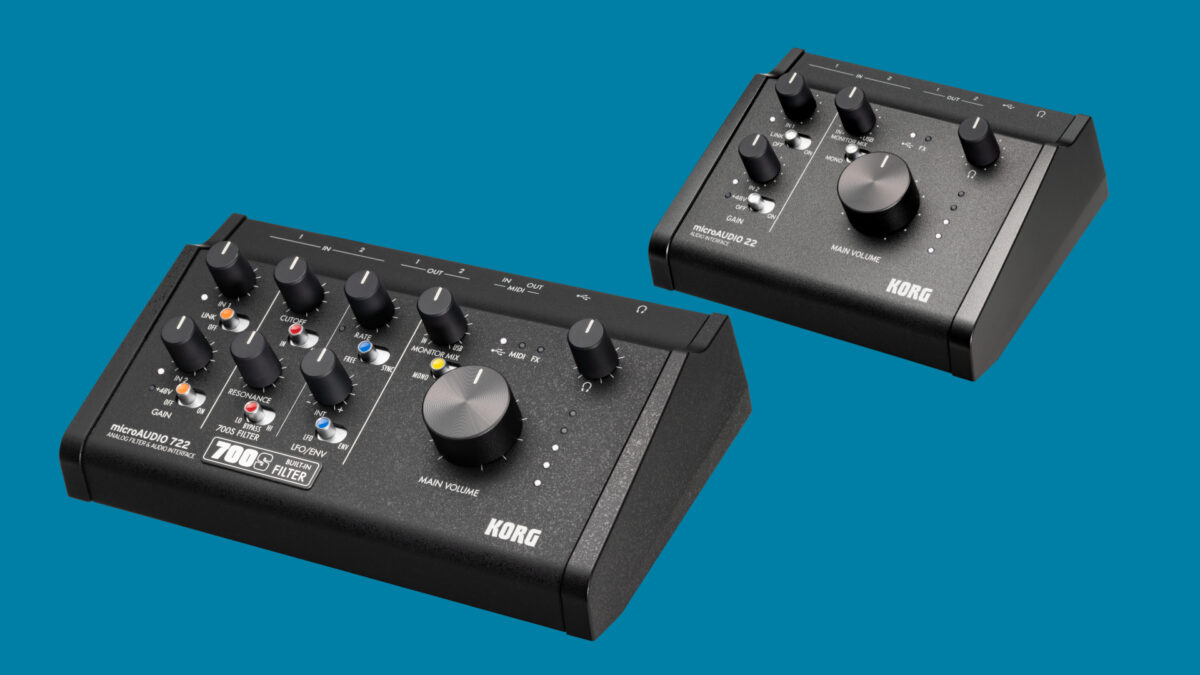
NAMM 2026 audio interfaces under 500 dollars just got a whole lot more interesting. Five manufacturers showed up to Anaheim this January with USB-C interfaces that would have been flagship products three years ago — and not a single one breaks the $500 mark. From Arturia’s pocket-friendly mobile solution to Fender’s 16-channel beast with DC-coupled outputs for modular synths, this year’s crop is genuinely exciting. Here’s everything you need to know before you pull out your wallet.
Why NAMM 2026 Is a Turning Point for Budget Audio Interfaces
The audio interface market has been quietly consolidating around a few key trends: USB-C as the universal standard, 32-bit converters trickling down to mid-range price points, and mobile-first designs that work equally well on a laptop, tablet, or phone. NAMM 2026 is where all of those trends converged at once. Every interface on this list ships with USB-C connectivity, three out of five support 32-bit recording, and two are explicitly designed for mobile creators. The days of paying $800+ for professional-grade specs are officially over.
What makes this year’s lineup particularly notable is the differentiation. Instead of five nearly identical 2-in/2-out boxes, each product carves out a distinct niche. Arturia went mobile-first. Korg added an analog filter from a classic synth. Yamaha built a touch-screen mixing console into an interface. Fender packed 16 channels and CV outputs into a half-rack unit. There’s something genuinely useful for every type of producer, engineer, and content creator.
1. Arturia MiniFuse 2 OTG — $170: The Mobile Creator’s Secret Weapon
Arturia’s MiniFuse 2 OTG is the most affordable interface on this list, and it’s specifically designed for creators who work outside the traditional studio. At $170, you get a 2-in/2-out interface with 24-bit/192kHz resolution, dual USB-C ports for connecting to two devices simultaneously, and an impressively low noise floor with -129 dBu EIN and 110 dB dynamic range.
The “OTG” in the name stands for On-The-Go, and Arturia means it literally. The dual USB-C design lets you connect to your laptop and your phone at the same time — perfect for live streamers who need to run audio from a DAW while monitoring chat on a tablet, or musicians who want to record into their phone as a backup. There’s also a 250mA USB-A hub port for connecting a MIDI controller or other peripherals. The trade-off is that there’s no 5-pin MIDI I/O, so hardware synth users with older gear will need an adapter.
Best for: Live streamers, mobile podcasters, guitarists who record on an iPad, and anyone who needs a reliable travel interface without compromises on audio quality.
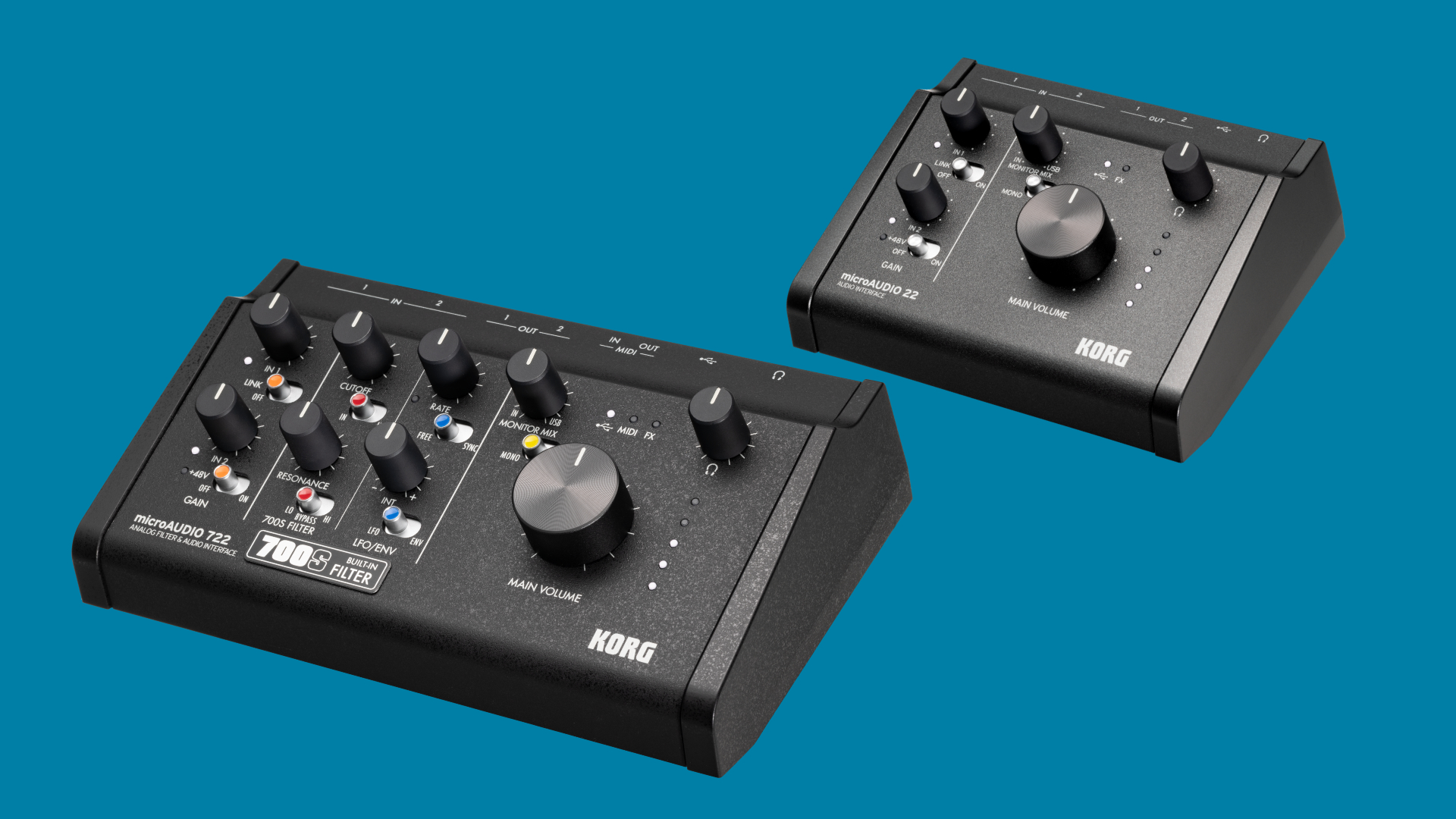
2. Korg microAudio 22 — $199: The Best Value with Software Bundle
Korg’s microAudio 22 hits a sweet spot that’s hard to argue with. For $199 you get a bus-powered USB-C interface with combo inputs (Hi-Z for guitar, XLR with 48V phantom power for condenser mics), 24-bit/192kHz conversion, and a software bundle that includes Ableton Live Lite, iZotope Ozone Elements, and Korg’s exclusive Filter Ark plugin with 14 different filter modules.
The Filter Ark plugin alone is worth mentioning — it gives you 14 virtual analog filter models inside your DAW, from classic ladder filters to aggressive state-variable designs. For producers who want to add character to soft synths or process samples through colorful filters, it’s a compelling add-on that you won’t find bundled with any competing interface. The microAudio 22 ships in March 2026, which means it should be in stores before festival and touring season kicks off.
Best for: Bedroom producers, singer-songwriters, and anyone starting out who wants a complete recording package (interface + DAW + mastering plugin + creative effects) for under $200.
3. Korg microAudio 722 — $269: The One with the Analog Filter
Here’s where things get interesting. The Korg microAudio 722 is everything the 22 offers, plus a built-in analog filter circuit derived from the legendary miniKORG 700S — the synth that defined an era of Japanese electronic music in the 1970s. At $269, you’re getting a proper USB-C audio interface and a standalone analog filterbox in one unit.
The analog filter section can process audio coming through the interface inputs in real time, or it can operate as a standalone filterbox without a computer connected at all. Run a drum machine through it on stage. Process vocals during a live set. Feed a guitar through a resonant low-pass sweep. The 722 also adds full-size MIDI I/O (5-pin DIN), which the 22 lacks, making it a much better fit for studios with hardware synths and drum machines.
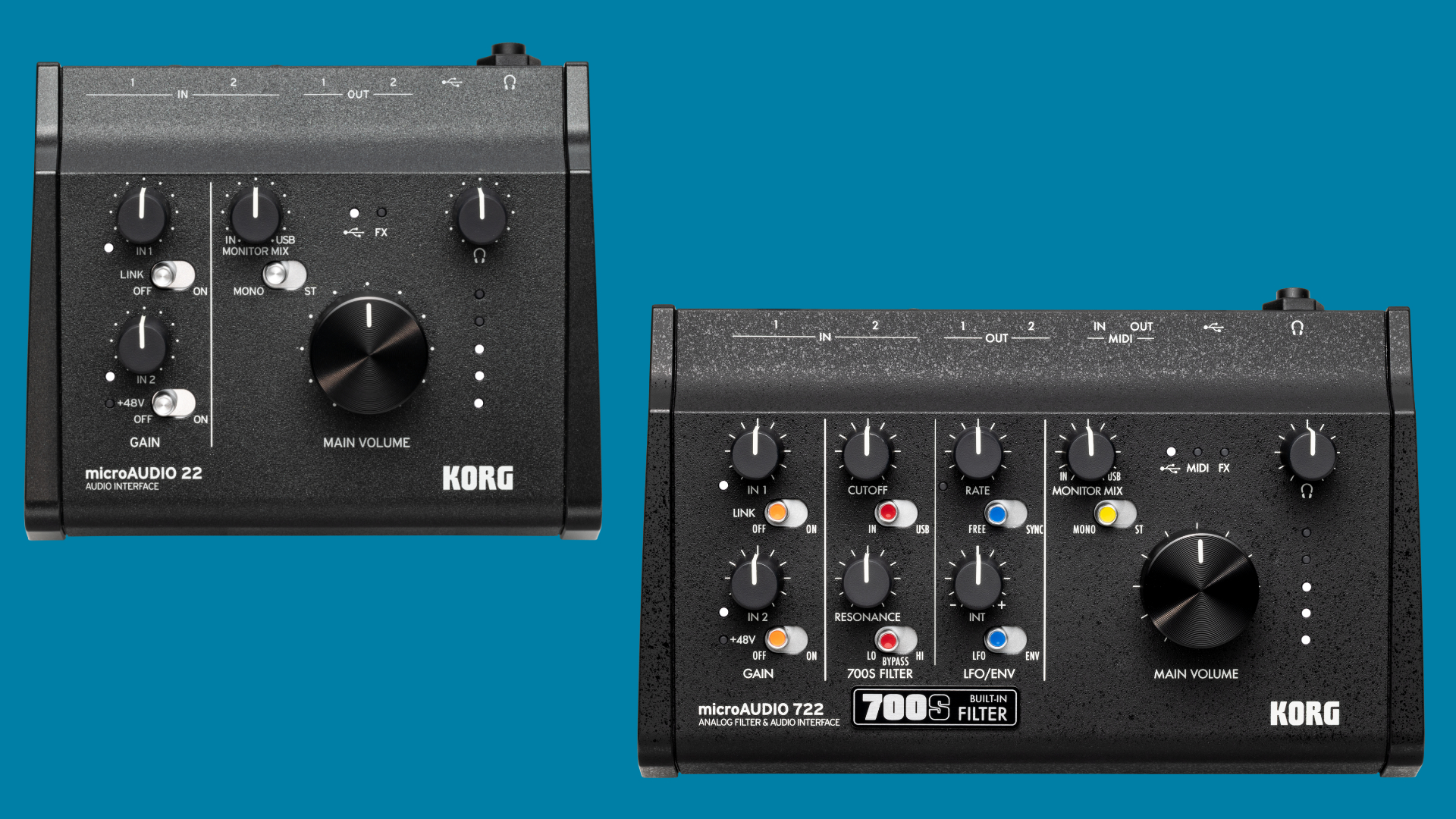
The standalone filterbox mode is the real differentiator here. Disconnect the USB cable, plug in a sound source, and you have a hardware effects unit that you can throw in a gig bag. No other interface at any price point offers this kind of dual functionality. At $269, it’s $70 more than the microAudio 22, and that premium buys you the analog filter, MIDI I/O, and standalone operation — a bargain by any measure.
Best for: Synth enthusiasts, hardware-heavy producers, live electronic performers, and anyone who wants analog character in a compact, affordable package.
4. Yamaha URX22 / URX44 — From $399.99: The Touch-Screen Powerhouse
Yamaha’s new URX series represents a fundamentally different approach to what an audio interface should be. Starting at $399.99 for the URX22, these interfaces feature 32-bit/192kHz conversion, a touch LCD panel for on-device mixing and effects control, DSP-powered processing, and dual USB-C ports for multi-stream audio with three loopback channels. The URX44 steps up to 120 dB ADC dynamic range and 130 dB DAC dynamic range — numbers that put it in the same conversation as interfaces costing twice as much.
The touch LCD is the headline feature. Instead of controlling your monitor mix through a software app on your computer (which adds latency and eats CPU), the URX lets you manage everything directly on the hardware. Adjust input gain, dial in DSP effects (EQ, compression, reverb), set up monitor mixes — all from the touch screen without opening a single software window. For streamers and podcasters who are already juggling multiple apps, this is a genuine workflow improvement.
Yamaha also offers the URX44V variant, which adds HDMI-USB video input — a nod to the growing number of creators who handle both audio and video in their workflow. All models are available in black and white finishes. The three loopback channels are particularly useful for streaming setups where you need to route DAW audio, system audio, and communication audio independently.
Best for: Streamers, podcasters, content creators who want hardware-based mixing, and producers who need 32-bit recording with premium conversion quality.
5. Fender Quantum LT 16 — $499.99: The Pro-Level Workhorse
The Fender Quantum LT 16 is the most ambitious interface on this list, and it barely squeaks under the $500 ceiling. For $499.99 you get 16 inputs and 8 outputs, 32-bit/192kHz conversion, 124 dB DAC dynamic range, eight MAX-HD mic preamps with 75 dB of gain, full MIDI I/O, loopback channels, and — here’s the kicker — DC-coupled outputs for sending control voltage directly to modular synthesizers and other CV-compatible gear.
The DC-coupled outputs are a genuine rarity at this price point. Modular synth users typically need a separate module or a high-end interface like the Expert Sleepers ES-9 to send CV from their DAW to their rack. The Quantum LT 16 handles it natively. Sequence your modular from Ableton, send LFOs from VCV Rack to hardware oscillators, or use Max/MSP to create complex modulation — all without any additional hardware.
Eight MAX-HD preamps with 75 dB gain means you can record everything from ribbon microphones (which need a lot of gain) to drum overheads without breaking a sweat. The standalone mic-pre mode lets you use the Quantum LT 16 as a premium eight-channel preamp feeding into another interface or a mixing console — handy if you ever upgrade to a larger system. Fender also bundles their Studio Pro software suite, which includes a DAW controller application and a suite of mixing tools.
Best for: Project studios needing multi-channel recording, modular synth users who want CV integration, bands recording live, and engineers who need a versatile and expandable interface.
NAMM 2026 Audio Interfaces Compared: Quick Spec Table
Here’s how all five interfaces stack up side by side:
- Arturia MiniFuse 2 OTG — $170 | 2-in/2-out | 24-bit/192kHz | 110 dB DR | Dual USB-C | Mobile-first
- Korg microAudio 22 — $199 | 2-in/2-out | 24-bit/192kHz | USB-C bus-powered | Filter Ark + Ableton Lite
- Korg microAudio 722 — $269 | 2-in/2-out | 24-bit/192kHz | Analog filter (miniKORG 700S) | MIDI I/O | Standalone filterbox
- Yamaha URX22/URX44 — From $399.99 | 32-bit/192kHz | Touch LCD | DSP mixing | 120/130 dB DR (URX44) | Dual USB-C
- Fender Quantum LT 16 — $499.99 | 16-in/8-out | 32-bit/192kHz | 124 dB DR | 8× MAX-HD preamps | DC-coupled CV | MIDI I/O
Which NAMM 2026 Audio Interface Should You Buy?
The answer depends entirely on your workflow and what you’re trying to accomplish. If you’re a mobile creator, live streamer, or podcaster who records on the go, the Arturia MiniFuse 2 OTG at $170 is the obvious choice — it’s affordable, dead-simple, and the dual USB-C connectivity is genuinely useful for multi-device setups.
If you’re a bedroom producer just getting started, the Korg microAudio 22 at $199 gives you the best software bundle in the game (Ableton Live Lite + iZotope Ozone Elements + Filter Ark). If you want that same package with an analog filter and hardware MIDI, spend the extra $70 on the microAudio 722 — the standalone filterbox mode alone is worth the premium.
For streamers and content creators who are tired of juggling mixer software on their computers, the Yamaha URX series starting at $399.99 brings hardware mixing with a touch screen and 32-bit quality that punches well above its weight. And if you need multi-channel recording with modular synth integration, the Fender Quantum LT 16 at $499.99 is, frankly, a steal for what it delivers.
The bottom line: NAMM 2026 has given us five very different interfaces, each one excellent at what it does, and all of them under $500. Whichever one fits your workflow, you’re getting more capability per dollar than at any point in audio interface history. The best move is to figure out which feature set matches your actual needs — and then act before the initial stock runs out, because several of these are going to sell fast.
Need help choosing the right interface for your studio setup, or looking for professional mixing and mastering services?
Get weekly AI, music, and tech trends delivered to your inbox.