Meta AI 2025 Recap: From Llama 3 to 4 — The Year Open Source Reshaped AI
December 23, 2025
AI Safety 2025 Year-End Report: From Anthropic’s C+ to the NY RAISE Act — Regulation, Alignment, and Industry Scorecard
December 24, 2025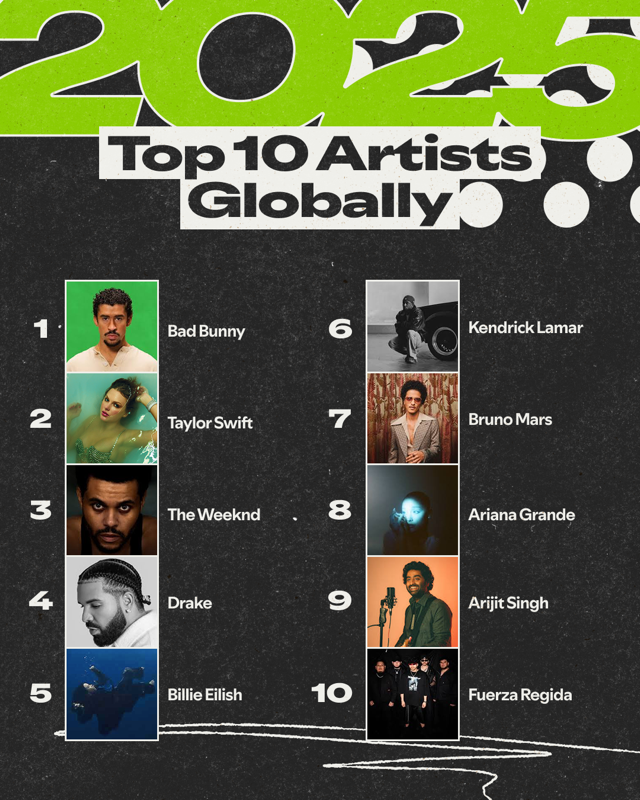
5.1 trillion streams. The music streaming wrapped 2025 season has arrived, and the numbers are staggering. A 10% jump from last year confirms what many suspected: the global music industry just shattered another ceiling. In the first week of December, every major platform unleashed its year-end data simultaneously. Spotify Wrapped, Apple Music Replay, YouTube Music Recap, and even Deezer all competed for attention with their annual listening reports. But beyond the personalized playlists and shareable cards, these reports paint a vivid picture of how music consumption is fundamentally shifting across every continent and every demographic.
Spotify Wrapped 2025: The Numbers That Dominated Everything
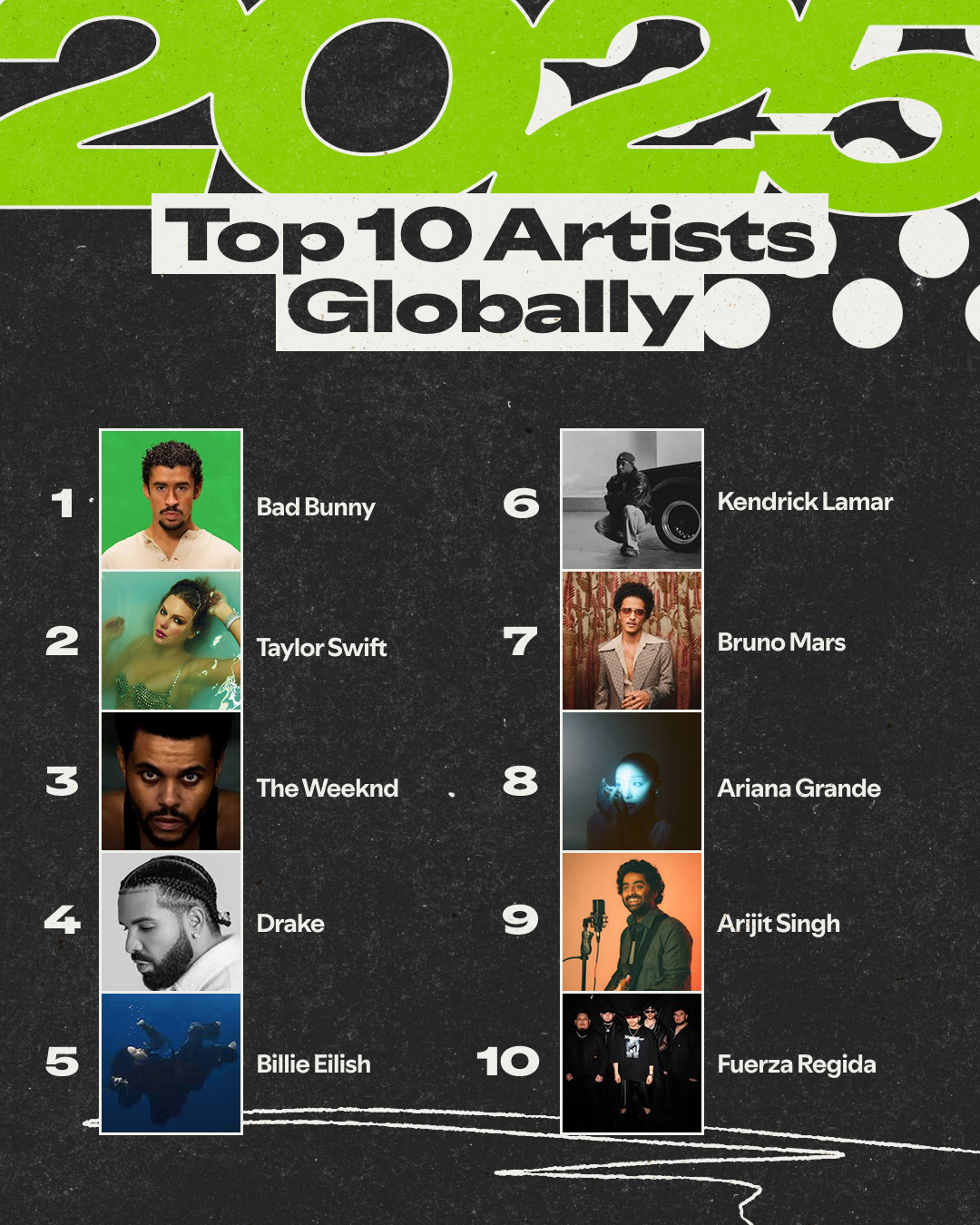
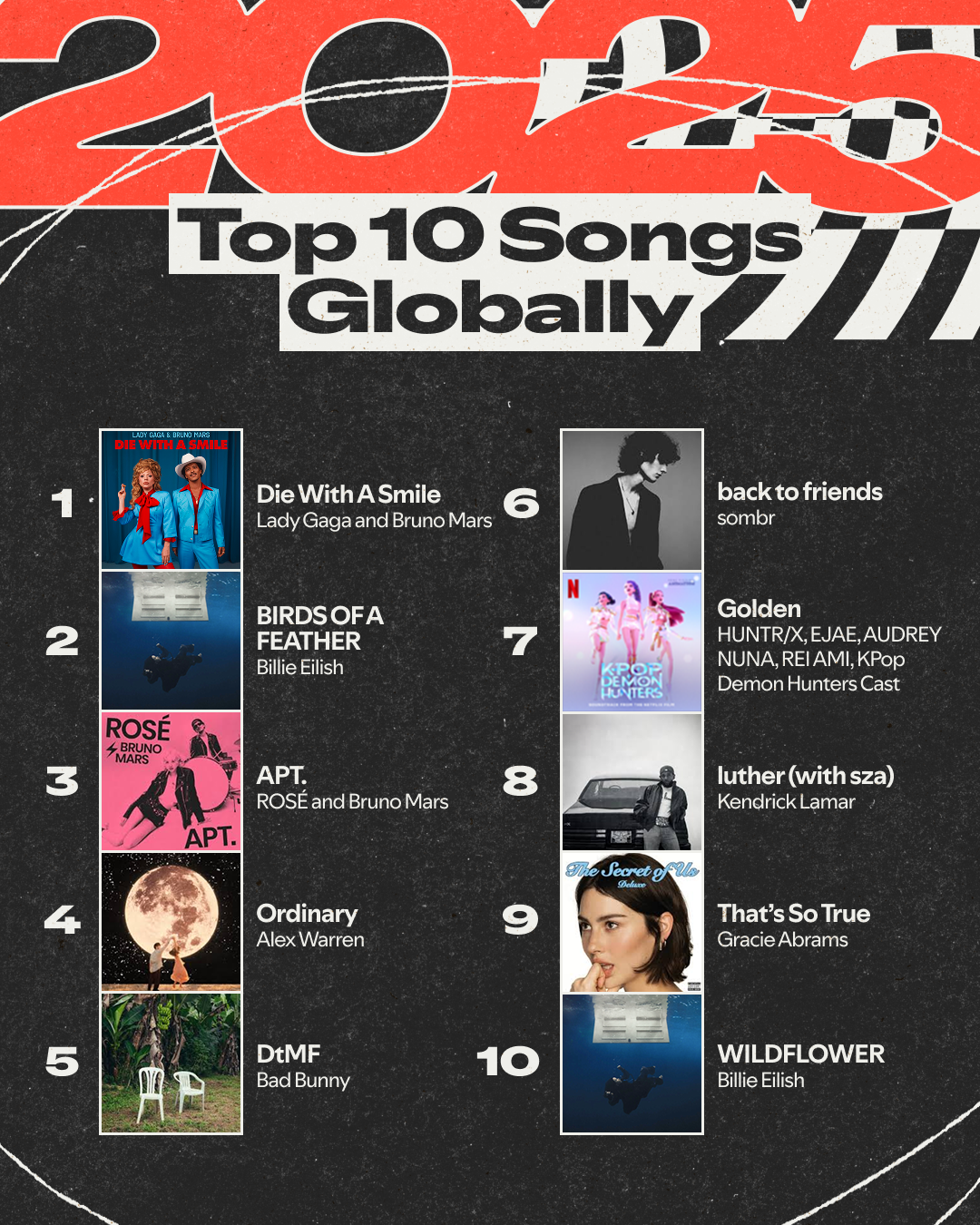
Spotify Wrapped 2025, released on December 3, delivered another round of jaw-dropping statistics. Bad Bunny claimed the top global artist spot with a staggering 19.8 billion streams across the year. Let that sink in for a moment. Nearly 20 billion individual plays for a single artist. The top global song was Lady Gaga and Bruno Mars’ “Die With A Smile,” which racked up over 1.7 billion streams. In the US, Taylor Swift held the number one artist position, reinforcing her unshakable grip on the American market.
But the platform-level metrics tell an even bigger story. Spotify now boasts over 700 million monthly active listeners. Within just three days of Wrapped going live, the feature generated 250 million engagements. Wrapped card shares topped 500 million, a 41% increase year-over-year. Wrapped has evolved far beyond a feature. It has become a cultural event, a social media ritual that turns every December into a global conversation about music.
Here is one of the most fascinating data points from this year’s Wrapped: the average Spotify user listened to 2,728 songs from 1,488 different artists in 2025. That is a remarkable breadth of listening. It suggests that algorithmic discovery is working, pushing listeners beyond their comfort zones and into the catalogs of artists they might never have found on their own. For independent and emerging artists, this is genuinely encouraging data. It means the playing field, while far from level, is at least wider than it has ever been. A track that resonates emotionally can find its audience even without major label backing, provided the algorithm picks up on early engagement signals.
Apple Music Replay and YouTube Music Recap: The Differentiation War
One of the most interesting developments this year was Apple Music beating Spotify to the punch. Apple Music Replay 2025 launched on December 2, a full day before Spotify Wrapped. The results were notably different from Spotify’s, which itself is fascinating data. Apple crowned ROSE and Bruno Mars’ “APT.” as the top song of the year and named Tyler the Creator as Artist of the Year. The divergence in top picks between the two platforms reveals meaningful differences in their user demographics and listening cultures.
Apple Music also introduced three compelling new features: Discovery (artists you found for the first time this year), Loyalty (artists you stuck with consistently), and Comebacks (artists you returned to after a break). These go deeper than simple rankings. They analyze the texture of your listening habits over time, tracking not just what you listened to but how your relationship with different artists evolved throughout the year. It is a clear signal that Apple is pushing Replay from a Wrapped clone into a distinctly different product.
YouTube Music took a different approach entirely by leaning hard into AI. Their 2025 Recap introduced an “Ask about your listening” feature that lets you have a conversation with AI about your own music habits. Want to know what genre you gravitated toward during summer? Just ask. The Musical Passport feature visualizes your taste by geographic region, and a new calendar graphic shows which artist dominated each day of your year. Each platform is finding its own angle on the same core question: how do you make streaming data feel personal and shareable? The fact that three major platforms all launched their reports within a 48-hour window shows how much strategic importance the industry places on owning the year-end narrative. For listeners, the competition is a net positive. It means richer, more insightful features every December.
Deezer Struck First and Revealed Some Surprising Numbers
The platform that actually launched its year-end report first was Deezer. “My Deezer Year 2025” went live on December 1, and while Deezer commands a smaller market share than the big three, its data offers a useful perspective. The average Deezer user listened to 122.8 hours of music across the year, explored 691 songs from 402 different artists, and discovered 357 new tracks. Perhaps most interestingly, 12% of all Deezer users qualified as “superfans,” a designation for listeners who are deeply invested in specific artists.
That 12% superfan figure deserves attention. It aligns with a growing industry consensus that the most valuable segment of listeners is not the casual majority but the deeply engaged minority. These are the fans who buy merch, attend concerts, drive vinyl sales, and generate the most consistent revenue over time. For artists and labels rethinking their monetization strategies, this data point from Deezer reinforces the argument for investing in direct fan relationships rather than chasing broad streaming volume alone. The fact that all four major platforms now surface some version of loyalty or superfan metrics in their year-end reports suggests the industry is collectively recognizing this shift.
K-pop Ranks 4th Globally and Genre Boundaries Continue to Collapse
Korean music ranked as the 4th most-streamed language globally on Spotify Wrapped 2025. K-pop album exports surpassed $300 million for the year. BTS maintained their position as the most-streamed K-pop act, and ROSE’s “APT.” landed at number three on the global chart. Asia remains the largest consumption base for K-pop, but growth in Europe and Latin America has been particularly significant this year. What was once dismissed by Western industry executives as a niche phenomenon driven by a small but intense fanbase is now a structural force in global music. The numbers no longer leave room for debate. K-pop is not an anomaly. It is a permanent fixture of the global streaming landscape, and its influence on production styles, visual aesthetics, and fan engagement models is being felt across every genre.
Spotify’s trend report makes it clear that 2025 was the year genre boundaries collapsed more dramatically than ever. Afrobeats completed its crossover into the mainstream. Country-rock fusion attracted entirely new listener demographics. An emotional pop movement emerged as listeners increasingly chose music by mood rather than genre. Meanwhile, Bollywood, Brazilian funk, and Reggaeton continued their upward trajectories. The old model of music consumption organized neatly by genre is giving way to something far more fluid and global. Listeners are building playlists that mix K-pop with country, Afrobeats with indie rock, and Reggaeton with electronic. The data makes it undeniable: the playlist generation does not think in genres.
What 5.1 Trillion Streams Really Tell Us About Music’s Future
According to Chartmetric’s annual industry report, the average time for a song to reach one billion streams has plummeted from 2,729 days in 2015 to just 197 days in 2025. That is not incremental change. That is a fundamental acceleration in how music is consumed and how quickly hits can emerge. A song released in January can be a billion-stream phenomenon by July. The total global stream count of 5.1 trillion represents a 10% year-over-year increase, confirming that the streaming market is still expanding rather than plateauing. For context, this growth is happening even as the market matures, which suggests that new listener demographics in developing markets and increased per-user consumption are both contributing to the expansion.
Three clear takeaways emerge from this year’s data. First, listening is getting more diverse. With users averaging 1,488 artists per year, algorithmic recommendation engines are successfully surfacing long-tail content and giving smaller artists genuine opportunities for discovery. Second, the platform competition around year-end reports is driving genuine feature innovation. AI-powered analysis, behavioral pattern insights, and social sharing mechanics are all evolving rapidly because Spotify, Apple, YouTube, and Deezer are all trying to own the December conversation. Third, the rise of global genres is no longer a trend. It is a structural shift. K-pop, Afrobeats, and Reggaeton are not emerging anymore. They have arrived.
The 2025 Wrapped season has become something far more significant than a social media moment. It is an annual data dump that provides strategic intelligence for artists, labels, marketers, and anyone building in the music space. Every number Spotify, Apple, YouTube, and Deezer published this month carries implications for how music will be created, distributed, and monetized in 2026 and beyond. The platforms showed us the data. Now it is up to the industry to act on it. Whether you are an independent artist trying to break through, a label executive planning next year’s strategy, or simply a music fan curious about how the world listens, these numbers offer a roadmap. The 2025 Wrapped season is over, but the insights it generated will shape decisions well into 2026 and beyond.
Get weekly AI, music, and tech trends delivered to your inbox.