Hugging Face Open Model Rankings 2026: How Chinese AI Labs Rewrote the Leaderboard in One Year
January 23, 2026
AI Education Tools 2026: 5 Tools Reshaping How Students Learn After CES and NAMM
January 26, 2026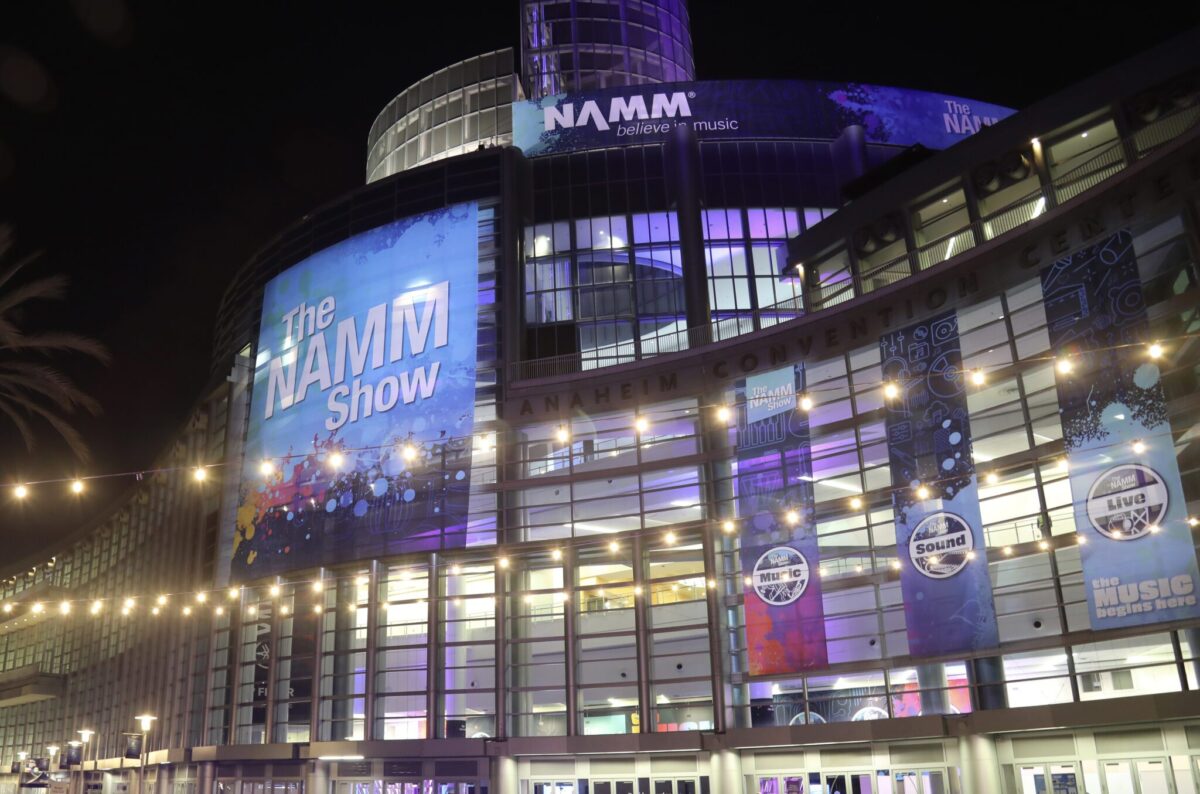
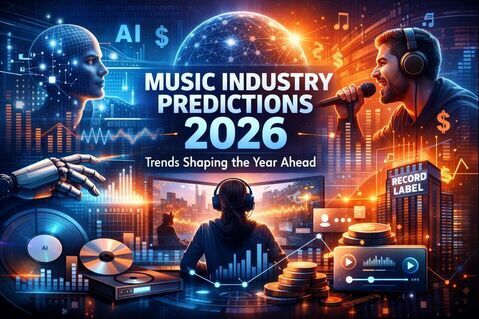
Right now, as you read this, 60,000 people at NAMM 2026 are witnessing something that goes far beyond new gear announcements — music industry predictions 2026 are playing out in real time. Avid just integrated Splice’s AI tools directly into Pro Tools. Live Nation posted $25 billion in annual revenue. Spotify deleted tens of millions of AI-generated tracks. And Suno’s valuation hit $2.45 billion. This isn’t gradual evolution. This is the music industry hitting an inflection point unlike anything we’ve seen, and it’s happening right now in January 2026.
Music Industry Predictions 2026: NAMM Proves AI Has Gone Pro
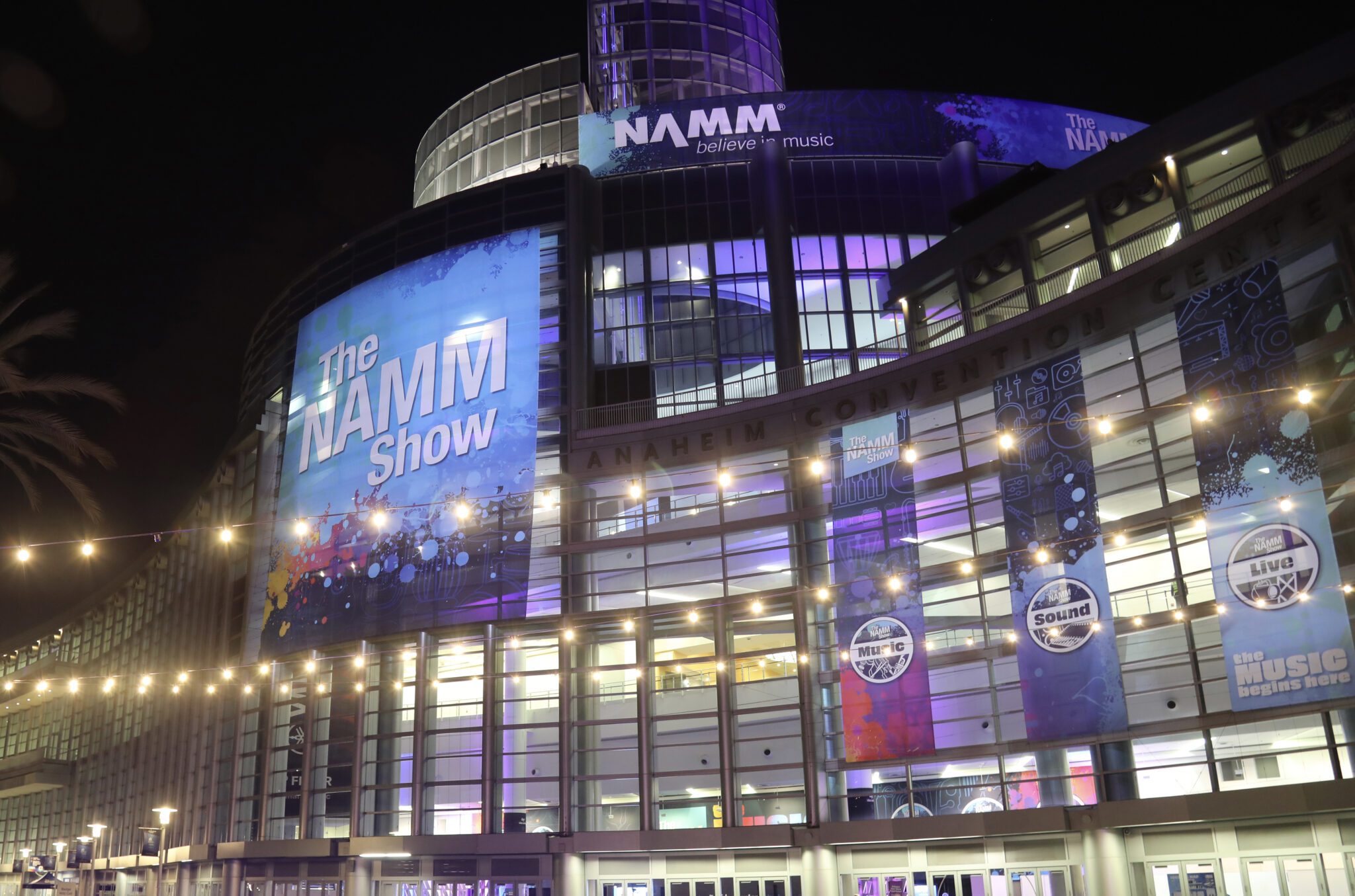
The NAMM 2026 show, running January 20-24 at the Anaheim Convention Center, is celebrating its 125th anniversary with record-breaking numbers. Over 60,000 attendees from 122 countries, 1,650 exhibitors representing more than 5,400 brands — a 25% increase from 2025. Nearly 400 brands unveiled new products through expanded Electronic Press Kits, and almost 15,000 artists demonstrated gear on the show floor.
But the numbers only tell part of the story. The real headline is the unmistakable shift of AI from novelty to necessity in professional music production. Avid’s integration of Splice’s AI-powered tools into Pro Tools was the show’s biggest talking point — a clear signal that AI has graduated from experimental curiosity to daily workflow essential for working engineers and producers.
On-device AI is now being embedded directly inside synthesizers and performance rigs, enabling real-time tone modeling and responsive accompaniment without cloud latency. This is the “code-meets-craft” moment the industry has been building toward. Meanwhile, Dolby Atmos demonstrations from Sony and Dolby drew packed crowds, showing that immersive audio is finally moving beyond early-adopter territory into mainstream producer consciousness.
Fender made waves by unveiling a new studio hardware and software ecosystem built on its PreSonus acquisition — a strategic pivot from guitar manufacturer to comprehensive studio gear company. The NAMM Foundation announced $250,000 in new music education funding, and more than 200 educational sessions featured 550+ speakers covering everything from creative entrepreneurship to digital distribution. In a symbolic first, YouTube creator Rick Beato received the Music for Life Award — the first digital creator to receive this honor, cementing the legitimacy of online music education and content creation within the traditional music industry establishment.
Perhaps the most telling observation from the show floor is the visible divide: AI-forward companies charging ahead with intelligent tools on one side, traditional acoustic instrument craftsmen doubling down on heritage and handmade quality on the other. Both camps are drawing crowds. Both have passionate defenders. This tension between technological innovation and artisanal tradition will define the industry’s identity throughout 2026 and beyond.
The AI Music Explosion and the Streaming Platform Counterattack
AI music generation has entered an entirely new phase in 2026. Suno V5 achieved an ELO benchmark score of 1,293, surpassing all competitors, and the company’s valuation stands at $2.45 billion. Udio has signed licensing deals with Warner, Universal, and independent labels, moving AI-generated music from legal gray area to legitimate industry player. The technology is no longer a curiosity — it’s a commercial force reshaping how music gets created, distributed, and monetized.
But this explosion comes with serious growing pains. According to Tuned Global’s industry analysis, streaming fraud now exceeds $1 billion annually, with 80% executed by sophisticated networks exploiting the system at scale. By November 2025, Deezer was receiving over 50,000 fully AI-generated tracks every single day. Spotify responded by removing tens of millions of low-quality AI-generated tracks — a dramatic purge that signals a fundamental shift in platform strategy from open aggregation to active quality curation.
Digital service providers are tightening content curation standards across the board. The flood of AI-generated content has made quality control a survival issue for streaming platforms. AI-driven fraud detection is becoming essential, creating the paradoxical situation where AI is now policing AI. The global music streaming market has surpassed $30 billion with a 12% compound annual growth rate, but sustaining that growth requires solving the content quality crisis that AI itself has created.
Another fascinating development worth tracking: AI agents are beginning to query music systems directly through Model Context Protocol (MCP), effectively becoming primary users of music APIs. This means the customer base for music services is expanding from humans to machines — a paradigm shift that few in the industry have fully grasped yet. When your most active API consumer isn’t a person but an AI agent, the entire business model needs rethinking.
The Live Event Boom: Live Nation’s $25 Billion Year and What Comes Next
While AI creates turbulence in the digital realm, the live events sector is experiencing what can only be described as a golden age. Live Nation’s 2025 annual revenue topped $25 billion, up $2 billion year-over-year, with adjusted operating profit hitting $2.4 billion. The US live music market alone reached $18.51 billion in 2025, while the global market hit $35.2 billion. These are staggering numbers that underscore a fundamental truth about human behavior: people crave shared, in-person experiences.
The forward-looking indicators are even more impressive. Eighty percent of large-venue shows for 2026 were already booked by early February, with North American bookings pacing at double-digit growth. Ticketmaster delivered a record January 2026, with concert ticket gross transaction value up over 50%. These aren’t incremental gains — they represent a fundamental acceleration in consumer demand for live music experiences that shows no signs of plateauing.
The most significant shift is geographic. For the first time in 2025, more fans attended Live Nation concerts outside the United States than inside it. The company is capitalizing on this by opening new company-managed stadiums in Mexico and arenas in Paris, aggressively expanding its international footprint. Billboard’s 2026 predictions note that Live Nation continues to shape the live events landscape even amid regulatory scrutiny, cementing its position as the dominant force in global live entertainment.
There’s a profound irony worth sitting with here: in an era where AI can generate a passable song in seconds, human beings are spending more money than ever to be physically present at live performances. The demand for authentic, in-person musical experiences isn’t just surviving the AI revolution — it’s thriving because of it. When recorded music becomes abundant and algorithmically generated, the irreplaceable value of witnessing a live performance only increases. Scarcity creates value, and live music is the ultimate scarce resource in an age of infinite digital content.
Beyond Streaming: Music Expands Into Gaming, Wellness, and Automotive
One of the most important music industry predictions 2026 that deserves more attention is the rapid expansion of music beyond traditional streaming. Music is no longer just a product consumed through headphones or speakers — it’s becoming an ambient, integrated layer across gaming, fitness, wellness, health tech, and automotive sectors. The idea of music as standalone content is giving way to music as infrastructure that enhances every aspect of daily life.
Fan engagement models are evolving beyond traditional royalty structures toward user-centric distribution and direct superfan support. K-Pop continues its relentless global expansion as one of the most commercially potent forces in the industry, while AI transforms not just music creation but marketing, distribution, and audience analytics across the board. The revenue diversification happening right now is remarkable — artists and labels who once relied primarily on streaming royalties are discovering that sync licensing for wellness apps, in-game audio for major titles, and branded sonic identities for automotive companies can be equally or more lucrative than traditional distribution.
AI agents querying music systems through Model Context Protocol represent perhaps the most radical shift of all. When machines become primary consumers of music data and services, the entire value chain needs to be reconsidered. Who licenses music to an AI? How do you monetize an API call from an autonomous agent? These questions don’t have clear answers yet, but they’re already becoming commercially relevant in ways that will reshape business models throughout 2026 and beyond.
What These Music Industry Predictions 2026 Mean Going Forward
Three mega-trends are converging to reshape the music business in 2026. First, AI tools have crossed the threshold from novelty to professional necessity — NAMM 2026 made that undeniably clear with Avid’s Pro Tools integration and on-device AI in performance hardware. Second, streaming platforms are being forced to evolve from pure aggregators to quality curators as AI-generated content threatens to overwhelm their catalogs, with streaming fraud alone costing the industry over $1 billion annually. Third, the live events sector has become the paradoxical beneficiary of the digital age, posting record revenues precisely because authentic human experiences have become more valuable in an AI-saturated world.
The divide between AI-embracing companies and traditional craftsmanship purists that was so visible at NAMM will deepen throughout the year. But here’s the essential takeaway: both approaches have a viable path forward. The winners in 2026 won’t be those who choose one side — they’ll be the ones who find the right balance between AI-powered efficiency and human-driven authenticity. As music expands beyond streaming into gaming, wellness, automotive, and AI-agent ecosystems, the opportunities are unprecedented for those who can read the direction of change. The music industry’s greatest upheaval in decades is unfolding right now, and adaptability will matter more than any single prediction.
Get weekly AI, music, and tech trends delivered to your inbox.