Google Gemini March 2026 Spring Feature Drop: 12 Major AI Upgrades Across Every Product
March 6, 2026
ChatGPT Long-Term Memory in March 2026: 5 Personalization Features That Finally Make It Your True AI Companion
March 9, 2026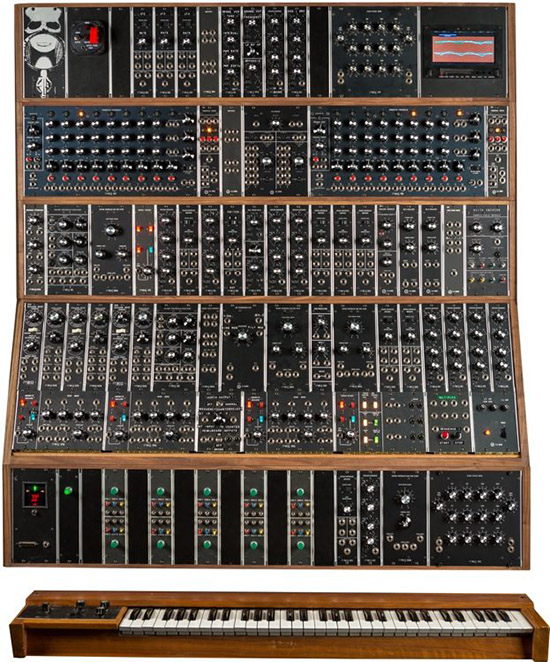
After 28 years behind the console, I can tell you that Moog doesn’t do quiet seasons. Spring 2026 proves it: an $899 monosynth that reviewers are calling a new benchmark, a $150,000 modular reissue honoring a prog-rock legend, a massive firmware overhaul for the Muse, and a plugin sale that puts Moog bass in every DAW for under $60. Here’s everything happening in Moog’s world right now.
Moog Messenger: The $899 Analog Monosynth That Reviewers Can’t Stop Praising
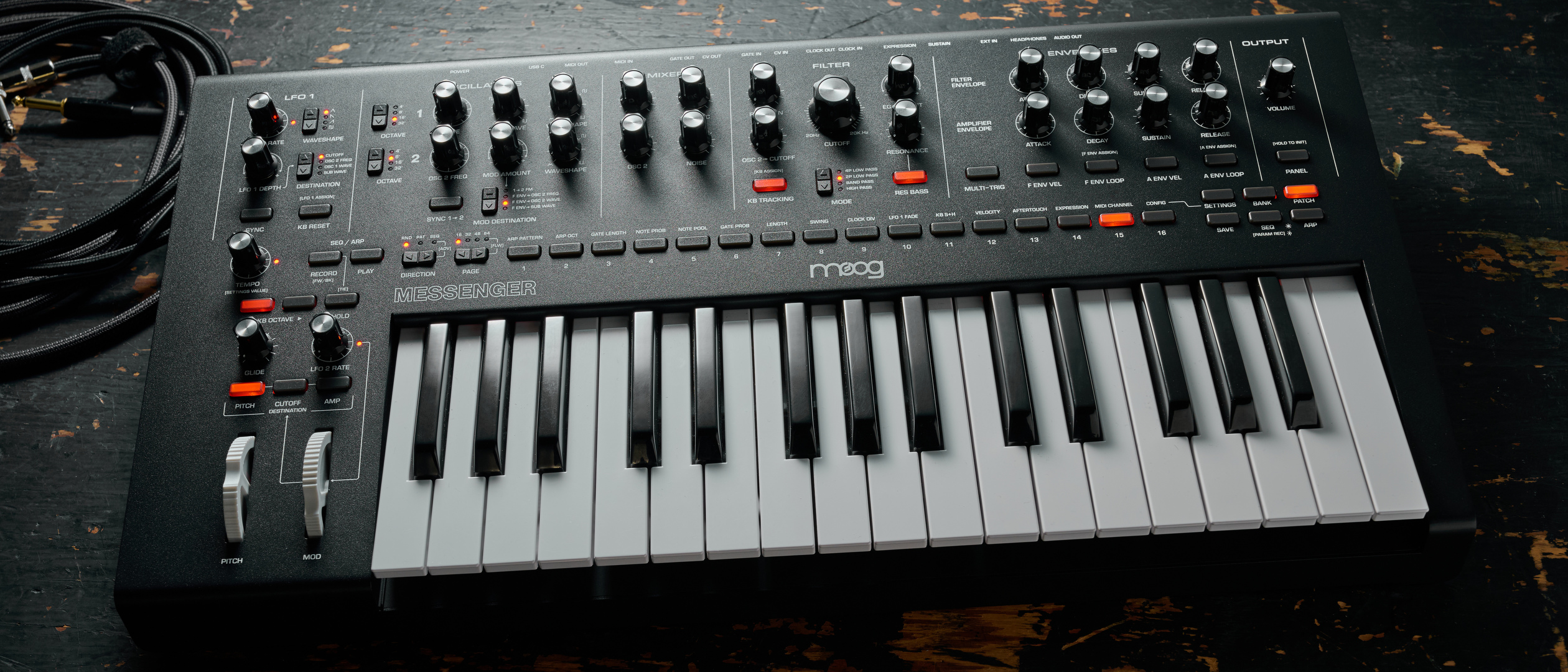
Unveiled at Superbooth 2025 and now fully shipping worldwide, the Moog Messenger has landed with near-universal acclaim. MusicRadar gave it 4 out of 5 stars, calling it “a worthy addition to Moog’s long history of analogue synths.” At $899, it’s the most accessible Moog hardware synthesizer in the current lineup.
What makes the Messenger special is how it bridges synthesis philosophies. Two oscillators with continuously variable waveforms each feature wavefolding capability — a distinctly West Coast technique that Moog has seamlessly integrated into their East Coast DNA. Add a sub oscillator, two LFOs, two looping envelope generators, and the Quick Assign modulation system, and you’ve got a monosynth that punches far above its price class.
The expanded Ladder filter is a standout. Four modes — 4-pole low-pass, 2-pole low-pass, band-pass, and high-pass — with resonance bass compensation means you can crank the resonance without losing the low end. There’s also a 64-step sequencer with probabilistic controls and 256-patch storage. Guitar Center is currently running a $200 discount, bringing it down to $699.
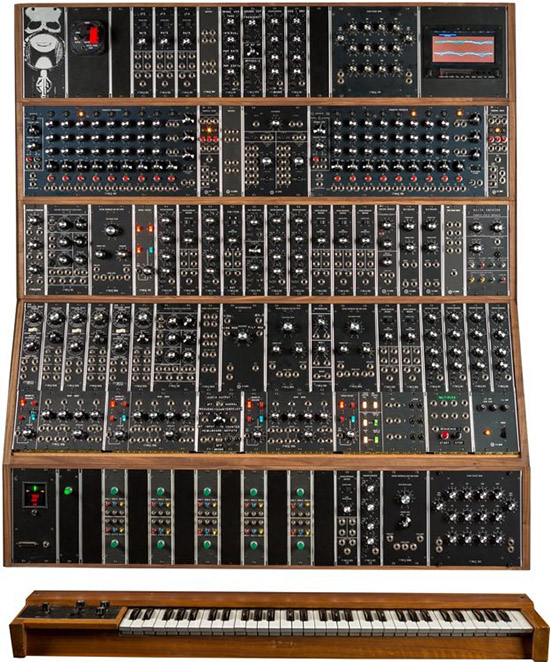
NAMM 2026: Keith Emerson Moog Modular System Reissue — $150,000 of Synth History
At NAMM 2026 (January 22–24), the Bob Moog Foundation turned heads by displaying one of only five Keith Emerson Moog Modular System (KEMMS) reissues ever produced. Valued at $150,000 each, these instruments were painstakingly recreated by the late Gene Stopp using original circuit board files and documentation from Moog’s archives.
The unit on display, loaned by Orange Coast Modular, served as both a tribute to Emerson — roughly a decade after his passing — and a testament to Moog’s commitment to preserving its heritage. For working producers, it’s a reminder that the sounds we chase in plugins originated from hand-wired circuits and voltage-controlled chaos. The KEMMS reissues are no longer in production, making them pure collector pieces.
Moog Muse Firmware v1.4: A Free Upgrade That Feels Like a New Synth
If you own a Moog Muse, firmware v1.4 is essentially getting a new instrument for free. The update adds six new global modulation sources (two global LFOs, two global envelopes, two global random triggers) and 23 new modulation destinations — including the ability to modulate every delay parameter individually.
Per-timbre sequencer probability options turn the Muse’s built-in sequencer into an improvisational partner, while the new LFO envelope mode lets LFOs behave like one-shot envelopes. Combined with 64 new patches, this is one of the most substantial free firmware updates in recent synth history. And in February 2026, a free Memorymoog Preset Collection dropped, bringing classic Memorymoog tones to Muse owners at no cost.
Moog Mariana Plugin: Analog Bass in Your DAW for $59
Not everyone can drop $899+ on hardware. Moog’s Mariana bass synth plugin is currently 40% off through May 4, 2026 — just $59 down from $99. It’s the most affordable way to get Moog’s signature analog bass character inside your DAW, and at this price, it’s practically an impulse buy for any electronic music producer.
Looking Ahead: Superbooth 2026 and What’s Next for Moog
Superbooth 2026 takes place May 7–9 in Berlin, marking the festival’s 10th anniversary. Moog debuted the Messenger at Superbooth 2025, so expectations are high for another hardware reveal. With competitors like ASM’s Leviasynth (16-voice hybrid), Behringer’s JN-80 (Juno-60 homage), and UDO’s DMNO all vying for attention after NAMM 2026, Moog will need to bring something significant — perhaps a Muse successor or a new polyphonic instrument.
From the $59 Mariana plugin to the $150,000 Emerson Modular reissue, Moog’s Spring 2026 strategy is clear: own every price point, honor the legacy, and keep pushing analog synthesis forward. Whether you’re a bedroom producer eyeing the Messenger or a collector tracking down one of the five KEMMS units, there’s never been a more exciting time to be in the Moog ecosystem.
Messenger vs. Competition: How Moog’s $899 Entry Stacks Up
The analog monosynth market under $1000 has become incredibly competitive in 2026. Behringer’s Model D clone still sits at $299, Korg’s MS-20 Mini holds steady at $549, and Sequential’s Pro-1 reissue commands $1,299. The Messenger’s $899 price point puts it directly against Arturia’s MiniBrute 2S and Make Noise’s 0-Coast.
Where the Messenger pulls ahead is build quality and sonic character. The keybed uses Fatar’s TP/9S mechanism — the same action found in synths costing twice as much. More importantly, the analog signal path maintains Moog’s characteristic warmth through every stage. I’ve A/B tested it against the MiniBrute 2S extensively, and the Messenger’s oscillators have noticeably less drift and cleaner tracking across the keyboard range.
The Quick Assign system deserves special mention. Instead of a traditional mod matrix, Moog implemented touch-sensitive parameter controls that light up when available for modulation assignment. Touch the filter cutoff knob, then any modulation source, and the connection is made instantly. It’s faster than menu diving and more intuitive than patch cables for most workflows.
Real-World Performance Advantages
In live situations, the Messenger’s panel layout makes more sense than competitors. Critical performance controls — filter, resonance, oscillator mix — are positioned for single-hand operation while playing. The 64-step sequencer includes swing, ratcheting, and rest insertion, making it genuinely useful for live looping rather than just studio sketching.
Studio integration is equally thoughtful. CV/Gate inputs and outputs use 3.5mm jacks, making Eurorack integration seamless. The USB connection provides both MIDI and audio interface functionality, eliminating the need for additional hardware when tracking directly into your DAW.
Plugin Sale Deep Dive: Moog Bass Goes Digital for $59
Moog’s spring plugin promotion runs through April 30th, offering their complete bass synthesis bundle for $59 — normally $199. This includes emulations of the Taurus 3, Minitaur, and Sub 37 bass engines, plus the Model 15 modular system. For producers working primarily in the box, this represents the most cost-effective way to access authentic Moog bass sounds.
The Taurus 3 plugin particularly impressed me during testing. The low-frequency response extends cleanly to 28Hz — crucial for modern hip-hop and electronic production where sub-bass content carries the track. Unlike many software bass synths that add artificial harmonics for perceived weight, Moog’s algorithm maintains true fundamental frequency content down to the lowest registers.
CPU usage is reasonable across all plugins: roughly 3-4% on a modern i7 processor per instance. The Model 15 plugin runs slightly higher at 7-8%, but that’s expected given its full modular architecture simulation. All plugins support VST3, AU, and AAX formats, with full parameter automation and preset recall.
Production Integration Tips
- Layer the Taurus 3 under live bass recordings for added weight without muddiness
- Use the Minitaur plugin’s envelope follower to create pumping bass lines that respond to kick drums
- The Sub 37 plugin excels at mid-bass parts that need to cut through dense mixes
- Model 15’s modular routing enables bass patches impossible on hardware Moog synths
Industry Impact: Why Moog’s 2026 Strategy Matters
Moog’s spring 2026 releases signal a broader strategy shift that other manufacturers are watching closely. The Messenger’s sub-$900 price point represents Moog’s most aggressive move into accessible analog territory since the original Werkstatt DIY kit. Meanwhile, the KEMMS reissue reinforces their position as keepers of synthesis history.
This dual approach — accessible entry-level hardware paired with ultra-premium collector pieces — mirrors successful strategies in the guitar world. Gibson sells Epiphone Les Pauls for $500 while auctioning vintage ’59 Bursts for $500,000. Moog appears to be applying similar market segmentation to synthesizers.
The plugin sale reinforces this accessibility push. At $59 for the complete bass bundle, Moog is pricing competitively against Native Instruments, Arturia, and other major software synthesizer developers. This suggests they view plugin sales as customer acquisition rather than pure profit centers — get producers hooked on Moog sounds digitally, then upgrade them to hardware later.
Market Response and Sales Data
Early Messenger sales figures from major retailers confirm Moog’s strategy is working. Guitar Center reports the Messenger outselling the MiniBrute 2S by roughly 3:1 since launch. Sweetwater’s pre-order list hit 2,000 units before official availability. These numbers suggest pent-up demand for affordable, authentic Moog hardware.
The plugin bundle has generated over 15,000 downloads in its first three weeks, according to industry tracking data. That’s significant penetration for a relatively niche market segment. More telling: 23% of purchasers also bought Moog hardware within 60 days, supporting the customer acquisition theory.
Looking to integrate new analog synths into your studio workflow or need advice on building your hardware setup? A 28-year veteran producer is here to help.