AI Agent Platform Comparison July 2025: AutoGPT vs BabyAGI vs AgentGPT — Which One Actually Delivers?
July 16, 2025
Samsung 9100 Pro 4TB Review: 14,800 MB/s PCIe 5.0 SSD That Creators Actually Need
July 16, 2025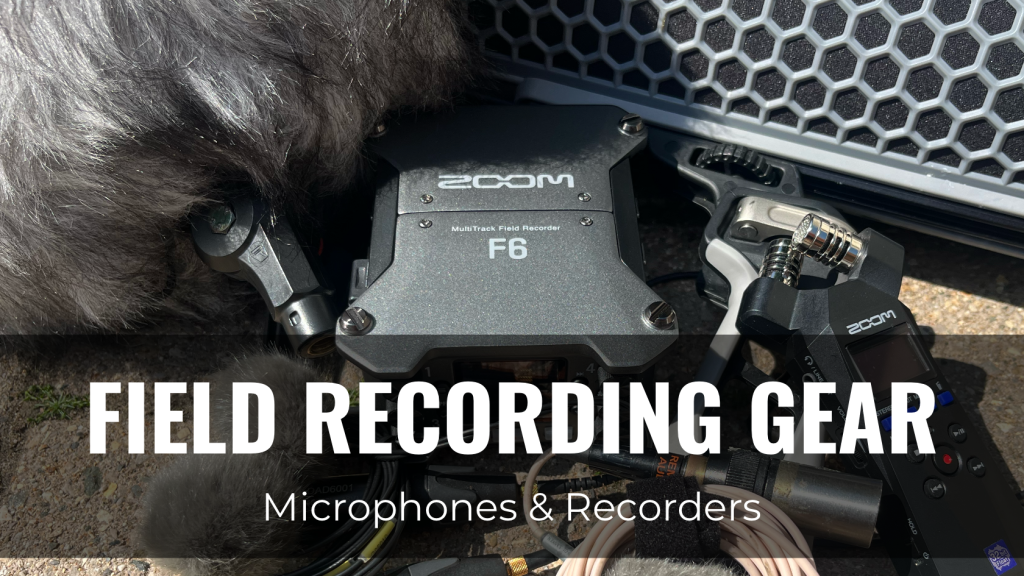
Last summer, I hauled $12,000 worth of studio gear to a church in rural Virginia for a gospel choir session. Three hours of setup, two blown fuses, and a near-disaster with a ground loop later, I swore I’d build a mobile recording rig that actually worked. Twenty-eight years in audio production, and it took one miserable July afternoon to finally get serious about my portable setup. If you’re heading into summer 2025 with location sessions on your calendar, here’s everything I’ve learned about building a mobile recording rig that delivers studio-quality results without the studio.
Why Your Mobile Recording Rig Matters More Than Ever
The demand for location recording has exploded. Podcasters want on-site episodes. Film composers need live orchestral captures in unconventional spaces. Bands want the raw energy of recording in warehouses, churches, and living rooms. But here’s the thing — a mobile recording rig in 2025 can genuinely rival what a fixed studio delivered ten years ago. The technology has caught up. 32-bit float recording has eliminated gain-staging anxiety, portable interfaces now offer pristine preamps, and laptops have enough processing power to run full mixing sessions on battery. The question isn’t whether you can record professionally on location — it’s whether your rig is optimized for it.
Core Components: Recorders and Audio Interfaces for Your Mobile Recording Rig
The heart of any mobile recording rig is the recorder or audio interface. Your choice here defines everything else — your channel count, your preamp quality, your workflow flexibility. In 2025, three devices dominate the professional location recording conversation.
Zoom F6 — The 32-Bit Float Game Changer
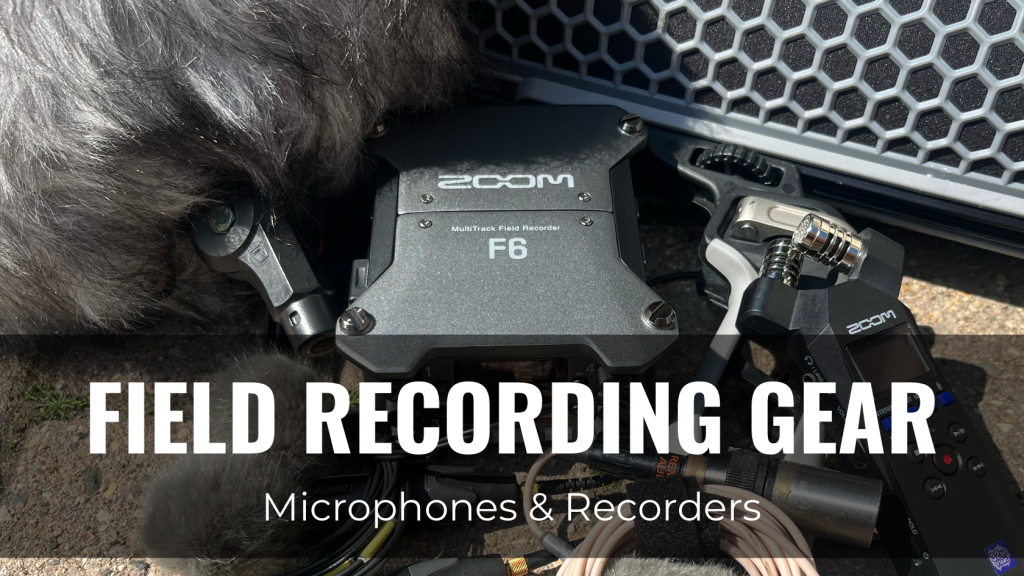
The Zoom F6 fundamentally changed how field recordists think about gain staging. With 32-bit float recording across all six inputs, you essentially cannot clip the preamps. I’ve used one on sessions where talent went from whispering to screaming in the same take — no distortion, no riding faders, no panic. At around $650 street price, it’s the most cost-effective serious location recorder available. The dual SD card slots provide redundancy, the timecode support is rock-solid, and the headphone output is loud enough to monitor in noisy environments. As Sound On Sound noted in their review, the F6’s 32-bit float implementation means “you never need to set the gain” — a statement that sounds like marketing but is genuinely true in practice.
Sound Devices MixPre-6 II — The Professional Standard
If you need the absolute best preamps in a portable form factor, the Sound Devices MixPre-6 II is the industry benchmark. The Kashmir preamps are stunning — low noise floor, transparent, musical. It also offers 32-bit float recording, USB audio interface functionality, and a build quality that survives being thrown in a bag and dragged through airports. At roughly $900, it costs more than the Zoom F6 but the preamp quality justifies every dollar for critical recording work. I’ve used MixPre units on everything from dialogue capture to acoustic ensemble recordings, and the results are consistently impeccable.
Zoom F8n Pro — When Six Channels Aren’t Enough
For larger sessions — multi-mic orchestral captures, live band recordings, or film sets with multiple boom and lav channels — the Zoom F8n Pro gives you eight inputs with 32-bit float recording. It’s essentially a portable mixing console and recorder in one unit. The advanced routing, automix functionality, and dual SD recording make it a workhorse for production sound mixers. At around $1,000, it’s remarkably affordable for an eight-channel 32-bit float recorder.
RME Babyface Pro FS — The Laptop-Centric Option
If your workflow centers on recording directly into a DAW rather than standalone, the RME Babyface Pro FS is the gold standard portable interface. The conversion quality is reference-grade, the drivers are bulletproof on both Mac and Windows, and the TotalMix FX software gives you zero-latency monitoring with full routing flexibility. It doesn’t record standalone like the Zoom and Sound Devices units, but if you’re always working with a laptop, the audio quality is arguably the best you’ll get in a bus-powered format.
Microphone Selection for Location Recording
Your microphone selection depends on what you’re recording and where. Location recording demands mics that reject ambient noise effectively, survive temperature and humidity changes, and deliver consistent results in imperfect acoustic environments.
Shotgun Microphones
The Sennheiser MKH 416 has been the film and broadcast workhorse for decades, and for good reason. Its tight pickup pattern rejects off-axis noise beautifully, it handles humidity without the RF interference issues of older condensers, and it sounds rich and present on voice. For a more budget-conscious option that still delivers pro results, consider the Rode NTG5. The Neumann KMR 81i is the premium alternative — slightly wider pattern than the 416 but with Neumann’s signature clarity and an incredibly natural tone that requires less EQ in post.
Small Diaphragm Condensers
For music sessions on location — acoustic instruments, ensembles, ambient captures — a matched pair of small diaphragm condensers is essential. The Rode NT5 pair offers exceptional value at around $430. They’re detailed, low-noise, and remarkably consistent unit to unit. For premium applications, the DPA 4006 omnidirectional microphones are simply extraordinary — the spatial imaging they capture in a room is unmatched. I’ve used DPA 4006 pairs for orchestral recordings where the room itself is half the instrument, and the results speak for themselves.
Laptop and DAW: Your Mobile Recording Rig Command Center
Your laptop choice for a mobile recording rig comes down to processing power, battery life, and reliability under pressure. In mid-2025, two platforms lead the pack.
The MacBook Pro with M3 or M4 chip is the current king of audio production laptops. The unified memory architecture handles large track counts without breaking a sweat, battery life easily exceeds 10 hours of recording work, and the Thunderbolt/USB-C connectivity works flawlessly with every major audio interface. The M4 Pro with 24GB RAM is the sweet spot for most location recording scenarios.
For Windows users, the Lenovo ThinkPad X1 Carbon (Gen 12) offers excellent audio performance with strong driver support. The build quality is rugged enough for field work, and the keyboard is the best in the business for those long editing sessions on set.
As for DAWs: Reaper is the location recording champion — lightweight, stable, configurable to an absurd degree, and only $60 for a personal license. Pro Tools remains the post-production standard, especially for film work where AAF/OMF exchange is mandatory. Logic Pro (Mac only) offers the best native plugin suite and integrates perfectly with Apple Silicon. Personally, I run Reaper for tracking on location and import into Pro Tools for mixing — best of both worlds.
Power Solutions and Essential Accessories
Power is the silent killer of location sessions. Your gear is useless without reliable power, and wall outlets aren’t always available or trustworthy.
- NP-F batteries: The Sony NP-F970 and its third-party equivalents are the universal standard for powering portable recorders. The Zoom F6 and Sound Devices MixPre units all accept NP-F batteries via sled adapters. Carry at least four fully charged batteries for a full day of recording.
- USB-C PD power banks: A 100W USB-C power bank can keep your laptop and interface running for an extra 3-4 hours. The Anker 737 (24,000mAh) is a reliable choice.
- Power conditioner: If you’re working with wall power, a compact power conditioner like the Furman SS-6B protects against surges and reduces noise from dirty electrical circuits — a common problem in older buildings, churches, and event venues.
- Cable kit: XLR cables (bring double what you think you need), a quality headphone extension, USB-C cables, and adapters. Label everything. A cheap Brother label maker has saved me more time than any plugin purchase.
- Headphones: The Sony MDR-7506 remains the standard for critical monitoring on location — closed-back, isolating, accurate, and comfortable for long sessions. At $80, there’s no excuse not to have a pair (and a backup).
Audio Bags: Protecting Your Mobile Recording Rig
A proper audio bag isn’t a luxury — it’s what separates a professional mobile recording rig from a pile of gear stuffed in a backpack. The three industry leaders each serve different needs.
- K-Tek Stingray: The gold standard for production sound mixers. Lightweight, ergonomic, with internal dividers that keep your recorder, wireless receivers, and accessories organized and protected. Available in multiple sizes to match your rig.
- Orca OR-30: Built like a tank with excellent padding and weather resistance. The OR-30 fits the Zoom F8n Pro or Sound Devices 833 perfectly and includes pouches for batteries and accessories.
- PortaBrace: Offers the widest range of sizes and configurations. Their custom-fit bags for specific recorders provide snug protection, and the build quality holds up to years of daily use.
Understanding 32-Bit Float Recording
If you’ve been hearing about 32-bit float recording and wondering whether it’s hype or substance — it’s substance. Here’s the simple explanation: traditional 24-bit recording gives you about 144 dB of dynamic range. That’s excellent, but it means you still need to set your gain correctly to avoid clipping at the top or losing signal in the noise floor at the bottom. 32-bit float recording expands this to approximately 1,528 dB of dynamic range — a number so large it’s essentially infinite for any real-world audio source.
In practical terms, this means you can record a gunshot and a whisper in the same take without adjusting anything. The signal never clips in the digital domain. You simply normalize or adjust levels after the fact in your DAW. For location recording, where you often can’t predict the dynamic range of your source, this is transformative. No more blown takes because someone coughed into the mic or dropped something during a quiet passage. The Zoom F6, F8n Pro, and Sound Devices MixPre-6 II all support 32-bit float — it’s the single most important feature advancement in portable recording this decade.
Budget Tiers: Build Your Mobile Recording Rig at Any Level
Starter Rig — Around $500
- Zoom H6essential (32-bit float, 4 XLR inputs) — ~$250
- Rode NT5 matched pair — ~$430 (or a single Rode NTG5 for dialogue at ~$500)
- Sony MDR-7506 headphones — ~$80
- Basic XLR cables and a padded backpack
- Total: ~$500-$800
This gets you in the door with 32-bit float and decent microphones. It won’t win any beauty contests, but it’ll deliver surprisingly professional results for podcasts, interviews, acoustic sessions, and ambient recordings.
Professional Rig — Around $1,500
- Zoom F6 — ~$650
- Sennheiser MKH 416 — ~$1,000 (or Rode NTG5 + Rode NT5 pair for versatility)
- Sony MDR-7506 headphones — ~$80
- NP-F batteries (4x) + charger — ~$80
- K-Tek Stingray Junior bag — ~$250
- Quality XLR cables, boom pole, windscreen
- Total: ~$1,500-$2,200
This is where most working professionals should aim. The Zoom F6 paired with an MKH 416 is a combination that handles 90% of location recording scenarios — from film dialogue to music sessions to documentary work. Add the Rode NT5 pair and you’ve got stereo music recording covered too.
Premium Rig — $3,000+
- Sound Devices MixPre-6 II — ~$900
- Neumann KMR 81i — ~$1,700
- DPA 4006 matched pair — ~$6,000+ (or DPA 4011 for a more focused pattern)
- RME Babyface Pro FS — ~$900 (for laptop-based sessions)
- MacBook Pro M4 — ~$2,500+
- Orca OR-30 bag — ~$350
- Full cable kit, power solutions, backup headphones
- Total: $3,000-$12,000+
This is the no-compromise tier. Sound Devices preamps feeding Neumann or DPA microphones, with an RME interface for laptop recording and a MacBook Pro for processing power. This rig competes with — and often outperforms — permanent studio installations for acoustic recording.
Pro Tips from 28 Years of Location Recording
After nearly three decades of dragging gear to every imaginable location, here are the lessons that manuals don’t teach you:
- Scout the location with your ears, not just your eyes. Visit the space before the session. Listen for HVAC systems, refrigerator hum, traffic patterns, and neighbor noise at the actual time you’ll be recording. A beautiful room that sits next to a highway at rush hour is useless.
- Bring a long extension cord and a power strip — always. The nearest outlet is never where you want to set up. Twenty feet of extension cord has saved more sessions than any piece of recording gear.
- Record room tone for at least 60 seconds. Every location has its own ambient signature. Capturing this gives your editor a noise print for cleanup and smooth material for filling gaps. Do it at the start and end of the session.
- Label your files on the recorder, not later. Take 10 seconds between takes to add scene/take metadata on the recorder or make a voice slate. Your future self will thank you during a 3 AM editing session.
- Test everything the night before — then test it again on site. Batteries that showed full charge at home might read 80% by the time you get to the location. Cables develop intermittent faults at the worst possible moment. Build in 30 minutes of setup and testing before the talent arrives.
- Keep a “rescue kit” in your bag. Gaffer tape, a multi-tool, spare batteries (AA and NP-F), a flashlight, and a DI box. These items take up almost no space and have rescued more sessions than I can count.
- 32-bit float doesn’t fix bad mic placement. Yes, 32-bit float recording means you won’t clip. But a microphone aimed at the wrong spot still sounds bad, regardless of bit depth. Get the placement right first, then let the technology handle the rest.
Building the right mobile recording rig isn’t about buying the most expensive gear — it’s about matching your equipment to your specific recording scenarios and knowing how to use it under pressure. Whether you’re starting with a $500 Zoom setup or investing in a premium Sound Devices and DPA rig, the fundamentals remain the same: reliable power, quality microphones, solid gain structure (or 32-bit float to bypass it), and thorough preparation. Summer 2025 is the perfect time to build or upgrade your location recording setup — the gear has never been better, and the demand for professional on-site recording continues to grow.
Planning a location recording session or need help optimizing your mobile rig? With 28 years of studio and field experience, Sean can help you get the best results from your setup.
Get weekly AI, music, and tech trends delivered to your inbox.