Best Smart Thermostats 2025: Nest vs Ecobee vs Honeywell — Which One Actually Saves You Money?
June 13, 2025
Elektron Syntakt OS 1.30: SY CHIP, Euclidean Sequencing, and 4 New Machines That Transform Your Groovebox
June 16, 2025
An 86.6% HumanEval score. Code generation that runs twice as fast. A 256k token context window that can swallow entire codebases whole. Mistral AI Codestral just claimed the number one spot on the LMsys Copilot Arena leaderboard, and if you have been riding the GitHub Copilot wave without looking around, it is time to pay attention. In June 2025, Mistral went even further by launching Mistral Code, a full IDE coding assistant that puts these numbers into the hands of every developer running VSCode or JetBrains.
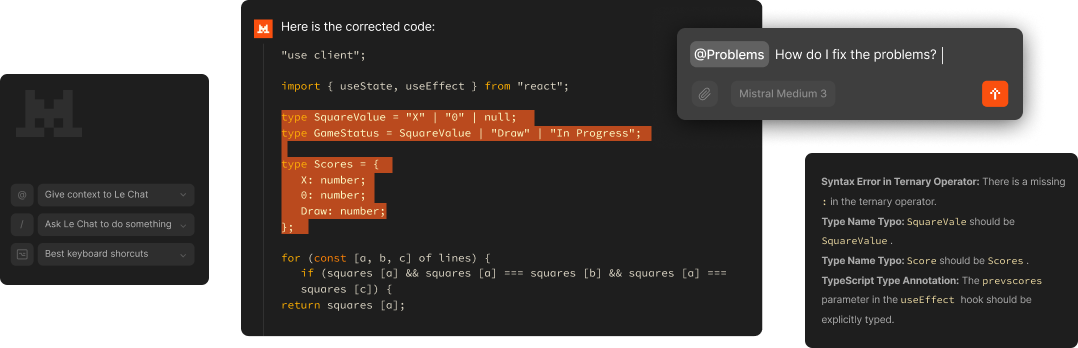
What Is Mistral AI Codestral?
Mistral AI Codestral is a 22-billion parameter open-weight language model built exclusively for code generation and completion. First announced in May 2024, it supports over 80 programming languages and was designed from the ground up as a coding-specific model rather than a general-purpose LLM adapted for code tasks. That architectural focus is what sets it apart from models like GPT-4 or Claude that handle code as one capability among many.
The standout technical feature is its Fill-in-the-Middle (FIM) mechanism. Instead of simply predicting the next token in a sequence, Codestral analyzes both the preceding and following code context simultaneously, then fills in the gap. This approach mirrors how developers actually work — you rarely write code purely from left to right. You are inserting functions between existing blocks, completing partial implementations, and patching logic into established patterns. According to Mistral AI’s official announcement, Codestral outperformed competitors on RepoBench, a benchmark specifically designed to evaluate long-range code understanding.
Codestral 25.01: The January Upgrade That Changed Everything
The original Codestral was impressive, but the January 2025 update transformed it into a genuinely elite coding model. Mistral AI’s official blog post detailed several major improvements that pushed the model to the top of multiple leaderboards.
- 2x faster code generation — A more efficient architecture and improved tokenizer cut latency in half, making real-time autocomplete noticeably snappier
- 256k context window (up from 32k) — An 8x expansion that allows the model to reason over entire codebases rather than individual files
- 86.6% HumanEval score — Placing it among the highest-performing code generation models available
- 95.3% FIM pass@1 average — Near-perfect accuracy on fill-in-the-middle code completion tasks
- 80.2% MBPP — Strong performance on practical programming problem solving
- Number 1 on LMsys Copilot Arena — The community-driven leaderboard where models compete head-to-head in blind evaluations
The context window expansion deserves special attention. At 32k tokens, you could feed the model a handful of related files. At 256k tokens, you can provide an entire project structure, including configuration files, test suites, documentation, and dependency definitions. This means Codestral can generate code that is contextually aware of your project’s patterns, naming conventions, and architectural decisions rather than producing generic completions that need manual adjustment.
Mistral Code IDE: A Full-Stack Challenge to GitHub Copilot
On June 4, 2025, Mistral AI launched Mistral Code, a complete IDE coding assistant available for VSCode and JetBrains IDEs. As TechCrunch reported, the tool was built as a fork of Continue.dev and bundles four specialized models into a single integrated experience. This is not just a model API — it is a direct competitor to Cursor, Windsurf, and GitHub Copilot as a complete coding environment.
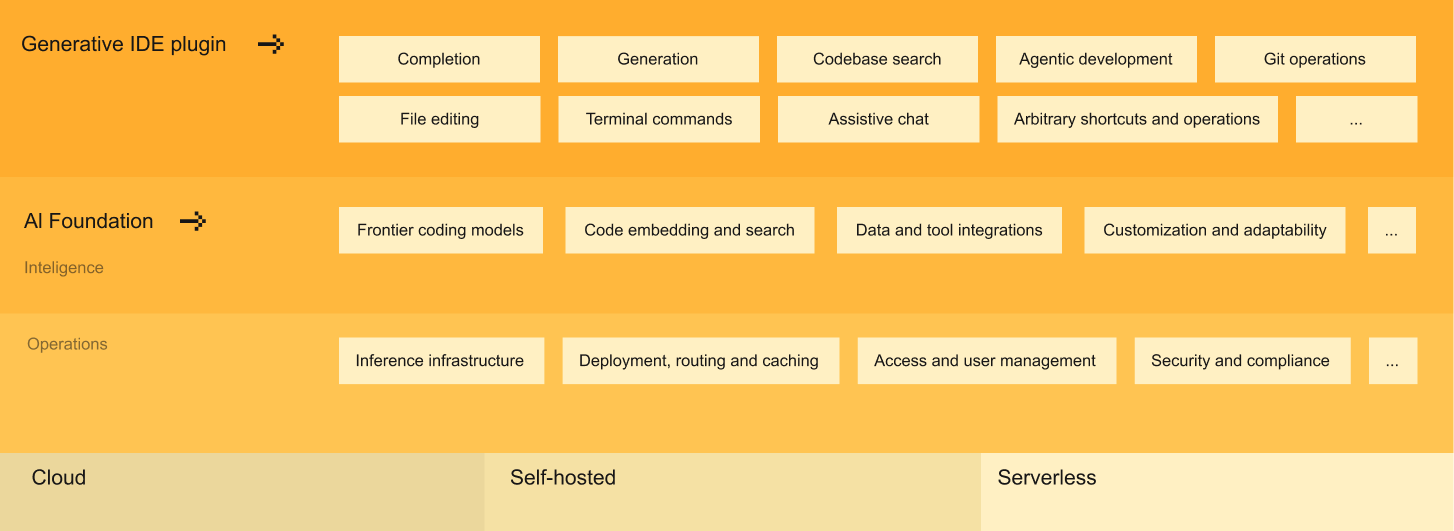
The multi-model architecture is what makes Mistral Code genuinely different from its competitors. Rather than routing everything through a single large model, each task gets handled by a model optimized for that specific job:
- Codestral handles real-time autocomplete using the FIM mechanism, providing inline code suggestions as you type
- Codestral Embed powers semantic code search, helping you find relevant code across your project based on meaning rather than keyword matching
- Devstral serves as the agentic coding component, capable of modifying files, analyzing Git diffs, and interpreting terminal output autonomously
- Mistral Medium manages the chat interface, handling natural language questions about your code and providing explanations
This division of labor approach has a practical advantage. When you ask GitHub Copilot for an autocomplete suggestion, the same model that handles your chat questions is also processing the completion. With Mistral Code, the autocomplete model is laser-focused on code patterns while the chat model specializes in natural language understanding. The result should be faster, more accurate responses across both use cases.
Enterprise Features That Matter
According to Mistral’s official announcement, Mistral Code includes enterprise-grade features that address the security concerns many organizations have about AI coding tools. Role-based access control (RBAC), audit logging, and self-hosted deployment options mean companies can run the entire stack within their own infrastructure. For organizations in regulated industries — finance, healthcare, defense — this is not a nice-to-have feature. It is often a hard requirement that cloud-only solutions cannot meet.
Mistral AI Codestral vs. GitHub Copilot: An Honest Comparison
GitHub Copilot remains the dominant player in the AI coding assistant market. Backed by OpenAI’s Codex models and deeply integrated into the GitHub ecosystem, it has millions of active users and a mature feature set that includes PR summaries, issue analysis, and workspace understanding. So where does Codestral actually have an edge?
Where Codestral wins: Raw benchmark performance is hard to argue with. The 86.6% HumanEval score and 95.3% FIM accuracy represent genuine technical achievements. The 256k context window is significantly larger than what most competitors offer, making it particularly strong for enterprise-scale projects with large codebases. And the open-weight nature of the model means organizations can deploy it on their own hardware, maintaining complete control over their code and data.
Where Copilot wins: Ecosystem integration is Copilot’s strongest advantage. The seamless connection to GitHub repositories, issues, pull requests, and Actions creates a workflow that is hard to replicate. Copilot also has years of real-world usage data informing its suggestions, plus a massive user community generating feedback and improvements. The tool is production-proven at a scale that Mistral Code, still in private beta, has not yet achieved.
The nuanced take: Benchmarks do not always translate to real-world performance. A model that scores higher on HumanEval might not produce better suggestions in your specific React codebase or your particular Go microservices architecture. The best approach for teams evaluating these tools is to run both in parallel on actual projects and measure productivity impact directly.
Devstral and the Rise of Agentic Coding
Among the four models in the Mistral Code stack, Devstral represents the most forward-looking capability. Traditional coding assistants suggest code. Devstral acts on code. It can analyze a Git diff, understand what changed and why, modify multiple files to implement a feature, and interpret terminal output to debug issues — all with minimal human intervention.
This agentic approach to coding is where the entire industry is heading. Instead of autocompleting one line at a time, the next generation of coding tools will handle multi-step tasks: “Refactor this module to use dependency injection,” “Add error handling to all database calls in this service,” or “Write integration tests for the new API endpoints.” Devstral’s inclusion in the Mistral Code stack suggests Mistral is betting heavily on this future.
Consider a practical scenario: a developer needs to add authentication middleware to an existing Express.js application. A traditional autocomplete tool might suggest individual lines of code. Devstral, with its agentic capabilities and access to the full 256k context window, can analyze the existing route structure, identify all endpoints that need protection, generate the middleware function, apply it to the appropriate routes, and update the corresponding test files — all as a coordinated set of changes rather than isolated suggestions.
For development teams that are already building CI/CD pipelines with AI integration, or organizations looking to automate code review and testing workflows, the combination of Codestral’s raw code generation power with Devstral’s autonomous capabilities is a compelling package worth watching closely.
What This Means for Developers in 2025
The AI coding assistant market is entering a new phase of genuine competition. GitHub Copilot’s early mover advantage is being challenged not just by Mistral, but by Cursor, Windsurf, Amazon Q Developer, and others. For developers, this competition means better tools, more options, and downward pressure on pricing.
If you are evaluating AI coding tools for your team or organization, Mistral AI Codestral deserves serious consideration. The benchmark numbers are legitimately impressive, the multi-model architecture of Mistral Code is a thoughtful approach to the problem, and the self-hosting option addresses enterprise security concerns that cloud-only competitors cannot. Whether it can match Copilot’s ecosystem integration and real-world polish remains to be seen as it moves beyond private beta, but the technical foundation is undeniably strong.
The developers who will benefit most are those who stay flexible, test new tools as they mature, and choose based on measurable productivity gains rather than brand loyalty. With Codestral’s 256k context window and Devstral’s agentic capabilities, Mistral has built something that could genuinely reshape how we write code — and that makes it worth paying close attention to in the months ahead.
Looking to integrate AI coding tools into your development workflow or build automation pipelines? Sean Kim offers tech consulting to help you get started.
Get weekly AI, music, and tech trends delivered to your inbox.