AI Developer Tools 2026: The Great IDE Wars, Infrastructure Shakeups, and What It All Means
January 29, 2026
CES 2026 AI Announcements: The 5 Biggest Reveals That Will Shape This Year
January 30, 2026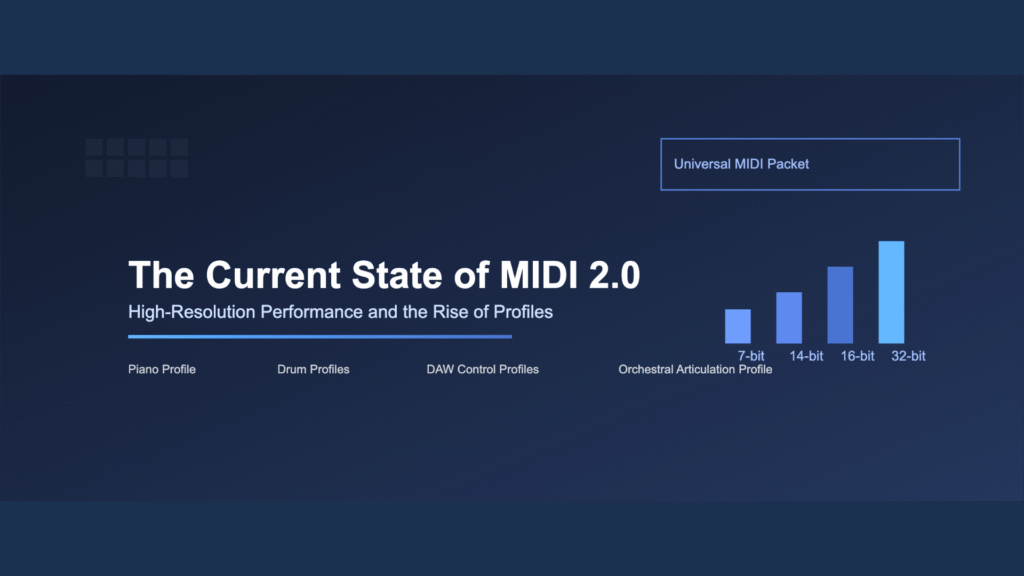
NAMM 2026 just wrapped, and MIDI 2.0 DAW support has reached a genuine inflection point. Microsoft shipped Windows MIDI Services to millions of machines, the Piano Profile earned official approval, and every major DAW now has some level of MIDI 2.0 implementation in production or beta. After years of specification work and cautious adoption, the ecosystem is finally converging — and the practical benefits for producers are becoming impossible to ignore.
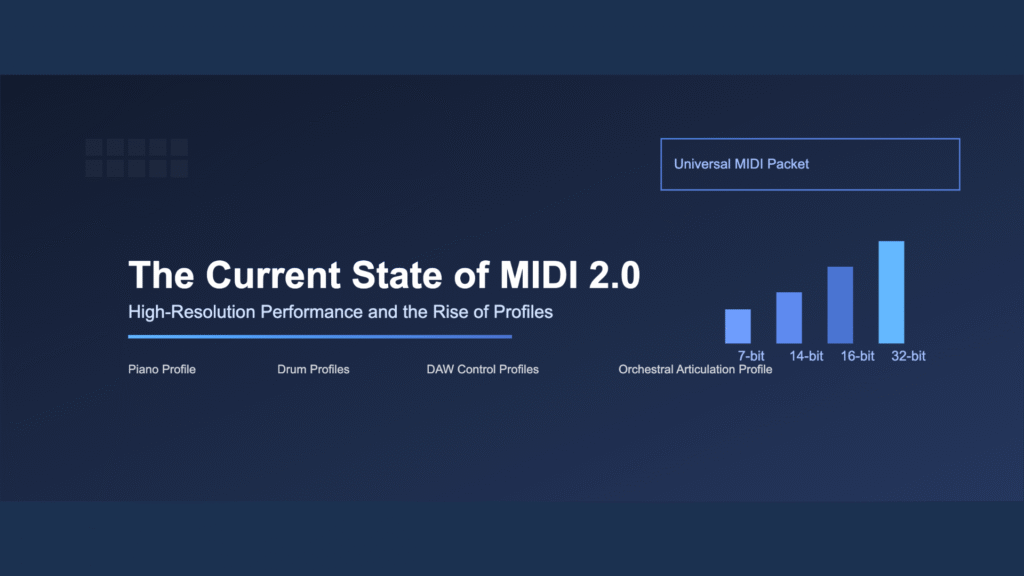
For context, MIDI 1.0 was introduced in 1983 and became the universal language for electronic music instruments and computers. Its 7-bit resolution (128 values) for velocity and controllers served remarkably well for four decades, but the limitations have become increasingly apparent as virtual instruments, expressive controllers, and high-resolution audio workflows have evolved. MIDI 2.0 addresses these constraints with 32-bit resolution (over 4 billion values), per-note control, bidirectional communication, and auto-configuration through profiles. What was once a theoretical upgrade is now shipping in real products.
What NAMM 2026 Revealed About MIDI 2.0’s Direction
This year’s NAMM show delivered more concrete MIDI 2.0 progress than any previous event. According to the official NAMM 2026 wrap-up from MIDI.org, the headline announcement was the formal approval of the Piano Profile. This might sound incremental, but it represents something fundamental: a MIDI 2.0 piano controller can now connect to a compatible virtual instrument and immediately communicate high-resolution velocity, per-note articulation, and expression data without any manual mapping. Plug in and play — in the truest sense.
The Orchestral Articulation Profile has also been finalized, which is significant for anyone working with sample libraries. Instead of memorizing keyswitch maps for every library from every developer, a standardized profile means the controller and the instrument negotiate articulation assignments automatically. The Drum Performance Profile is targeted for Q2 2026, and perhaps most exciting for studio producers, DAW Control Profiles are under active development as a modern replacement for Mackie Control — a protocol that has long outlived its design assumptions.
On the file format side, the SMF2 container format is nearing completion and the MIDI Clip File specification has been published. This means MIDI 2.0’s richer data — 32-bit controller resolution, per-note pitch bend, per-note management messages — will soon have a standardized way to be saved, shared, and archived across projects and platforms. For collaborative producers who regularly exchange MIDI files between different DAWs, this standardization removes a persistent pain point where expression data was lost or mangled in translation.
Property Exchange also deserves attention. This bidirectional protocol allows a MIDI 2.0 device and host to query each other’s capabilities and exchange configuration data in structured JSON format. In practical terms, your DAW can ask a controller what it supports, and the controller can ask the DAW what parameters are available — all automatically, without driver installation or manual setup pages.
Windows MIDI Services: The OS-Level Shift
Microsoft’s rollout of Windows MIDI Services through the KB5074105 update is arguably the single most impactful infrastructure change for MIDI 2.0 adoption in 2026. This update replaces the legacy Windows MIDI stack entirely, installing a universal USB MIDI 2.0 class driver that handles UMP (Universal MIDI Packet) natively at the operating system level.
What does this mean in practice? Windows users no longer need manufacturer-specific drivers for MIDI 2.0 hardware. The OS handles device enumeration, protocol negotiation, and data transport directly. Latency improves because the path from hardware to application is shorter and more efficient. And critically, the full 32-bit resolution of MIDI 2.0 controller data passes through without truncation — no more quantizing your expression data down to 7-bit or even 14-bit values at the system level.
It is worth noting that Windows MIDI Services also includes backward compatibility with MIDI 1.0 devices. Existing hardware continues to work through the new stack, with the system automatically handling protocol translation. This means upgrading to the new MIDI infrastructure does not break your current setup — a critical consideration for studios with years of accumulated gear.
Apple had already laid this groundwork with CoreMIDI’s MIDI 2.0 UMP support across macOS and iOS. With both major desktop platforms now offering native MIDI 2.0 transport, the remaining bottleneck is squarely on application-level implementation — and that is moving faster than many expected.
MIDI 2.0 DAW Support: Where Every Major DAW Stands Right Now
The DAW landscape for MIDI 2.0 support has shifted meaningfully since late 2025. Here is where each major platform stands as of late January 2026:
Cubase 13 / Nuendo 13 (Steinberg): Steinberg’s approach translates incoming MIDI 2.0 Channel Voice Messages into VST3 note expression and parameter data. Since VST3 already supports high-resolution parameters natively, this translation is essentially lossless. Cubase users with MIDI 2.0 controllers get 32-bit velocity and controller resolution flowing directly into compatible plugins without additional configuration.
Logic Pro (Apple): Built on Apple’s CoreMIDI 2.0 framework, Logic Pro passes MIDI 2.0 CVM data through to Audio Unit plugins. The Step Sequencer can display and edit MIDI 2.0 data directly, making per-note pitch bend and per-note CC editing a visual, intuitive process rather than something buried in list editors.
Ableton Live: Currently implementing MIDI 2.0 support in beta. While not yet in a stable release, beta testers report that high-resolution note expression and controller mapping are functioning well. Given Ableton’s development pace, a production release in 2026 seems very likely.
FL Studio 21 (Image-Line): Initial MIDI 2.0 support has been added. Image-Line’s historically rapid update cycle suggests fuller implementation will follow throughout the year.
Bitwig Studio: Partial support with emphasis on per-note expression and high-resolution controller input. Bitwig’s modular signal flow architecture is particularly well-suited to exploit MIDI 2.0’s granular per-note control, and deeper integration is expected.
REAPER (Cockos): Extensible support through REAPER’s open architecture. Community scripts and JSFX plugins can already process MIDI 2.0 data, and the platform’s flexibility makes it a strong option for early adopters willing to do some configuration work.
The common thread across all these implementations is that MIDI 2.0 adoption does not require abandoning existing workflows. Each DAW is integrating MIDI 2.0 alongside its existing MIDI 1.0 pipeline, so producers can adopt the new capabilities incrementally as their hardware and plugins support them. The transition is additive, not disruptive — which is exactly how the MIDI Manufacturers Association designed it.
MIDI 2.0 Hardware: Controllers and Network Gear Worth Watching
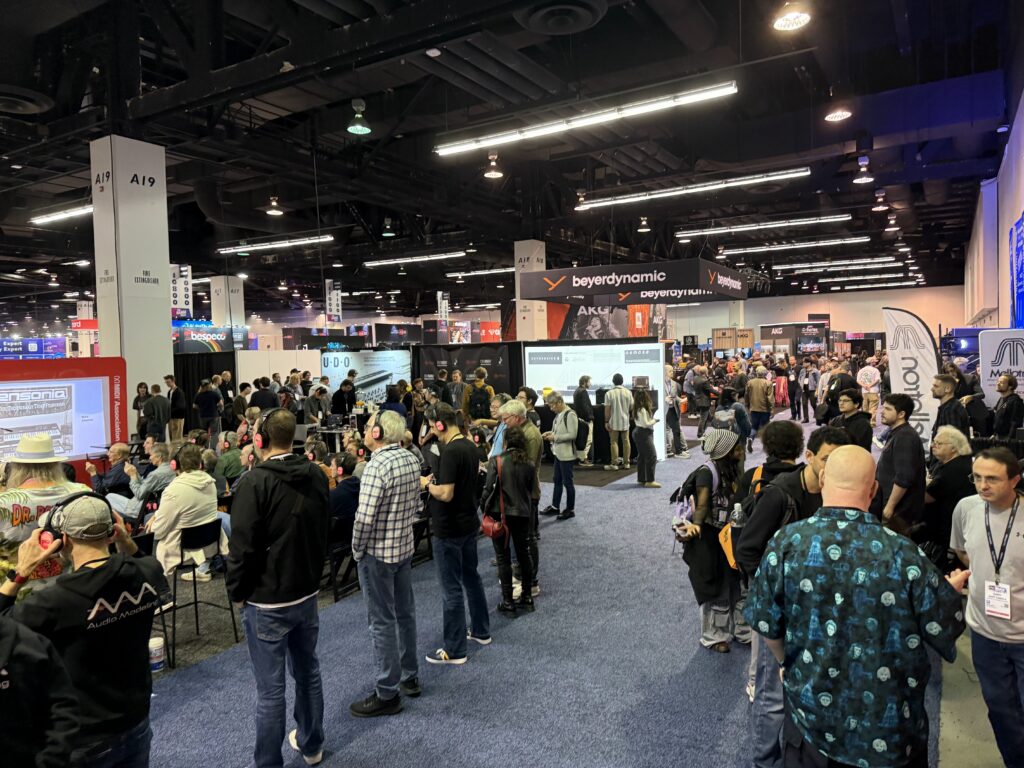
The hardware side of the MIDI 2.0 ecosystem is expanding in parallel. Several products showcased at NAMM 2026 deserve attention from working producers:
The StudioLogic SL88 MK2 is an 88-key hammer-action controller with native MIDI 2.0 support. Combined with the newly approved Piano Profile, connecting this controller to a compatible piano virtual instrument is genuinely plug-and-play — high-resolution velocity, per-note expression, and articulation data all negotiate automatically.
BomeBox Network MIDI 2.0 extends Bome’s popular network MIDI routing hardware into the MIDI 2.0 domain. For studios with complex routing needs or live performance setups requiring networked MIDI, this device routes UMP packets over wired and network connections with low latency.
Roland and Synthogy both announced MIDI 2.0 updates at NAMM. Roland’s updates focus on their flagship synthesizers and stage pianos, while Synthogy — known for the Ivory piano virtual instrument series — demonstrated Orchestral Articulation Profile integration that showcased how sample libraries can auto-configure articulation mappings with compatible controllers.
The BLE MIDI 2.0 transport specification is also actively being developed. Wireless MIDI 2.0 — with full high-resolution data over Bluetooth Low Energy — is coming, though a timeline for finalization has not been confirmed. For mobile producers and performers who rely on wireless connections, this will eventually bring the same resolution improvements to untethered setups.
Practical Steps to Prepare Your Production Setup
You don’t need to overhaul your entire studio to start benefiting from MIDI 2.0. The transition is designed to be gradual, and backward compatibility with MIDI 1.0 is built into the specification. Here is what you can do right now:
Update your OS. Windows users should ensure KB5074105 is installed to activate Windows MIDI Services. macOS users are already covered through CoreMIDI.
Update your DAW. Make sure you’re running the latest version. Even if full MIDI 2.0 editing isn’t available yet, the underlying transport and message handling improvements are active in current builds of Cubase, Logic Pro, Bitwig, and others.
Check your hardware firmware. Visit your controller manufacturer’s support page. Several manufacturers have released or announced firmware updates that enable MIDI 2.0 protocol negotiation on existing hardware.
Explore per-note expression. If you work with orchestral samples, synthesizers, or any context where per-note control matters, MIDI 2.0’s per-note pitch bend, per-note CC, and per-note management messages are a substantial workflow upgrade. Start experimenting in DAWs that already support these features.
According to MIDI.org’s February 2026 status report, the MIDI Clip File spec is already published, meaning standardized MIDI 2.0 data exchange between projects and platforms is imminent. The infrastructure is in place. The question is no longer whether MIDI 2.0 will matter for your workflow — it’s how soon you’ll start using it.
Need help setting up MIDI 2.0 in your studio or optimizing your DAW workflow? Greit Studios can help with everything from gear configuration to production consultation.
Get weekly AI, music, and tech trends delivered to your inbox.