DistroKid vs TuneCore vs CD Baby 2025: Which Music Distributor Actually Wins Your Money?
November 26, 2025
How to Build a Mastering Chain: From EQ to Limiter — Complete 7-Step Guide
November 27, 2025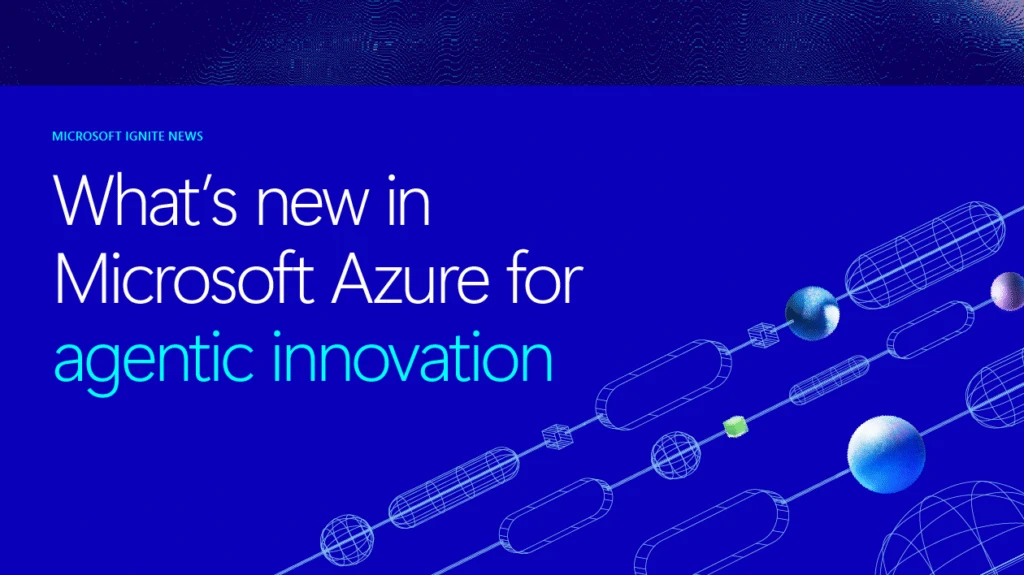
11,000 models on a single platform, AI agents that manage your cloud infrastructure autonomously, and a new $21/month Copilot tier for small businesses — Microsoft Ignite 2025 dropped a massive wave of announcements. But which ones actually matter for your enterprise?
Running November 18-21 in San Francisco, Microsoft Ignite 2025 saw Judson Althoff (CEO of Microsoft’s commercial business) take the keynote stage — marking a notable shift from Satya Nadella’s usual presence. The theme was unmistakable: agentic AI. Not chatbots that answer questions, but autonomous agents that write documents, manage cloud operations, and monitor security threats across your organization.
Here are the five Microsoft Ignite 2025 announcements that enterprise teams and developers need to act on right now.
1. Azure AI Foundry — The 11,000-Model Multi-Model Hub
The biggest infrastructure play at Microsoft Ignite 2025 was the massive expansion of Microsoft Foundry. Moving well beyond the Azure OpenAI Service, Foundry now offers access to over 11,000 models from Anthropic (Claude Sonnet 4.5, Opus 4.1, Haiku 4.5), Cohere, Meta Llama, Mistral AI, xAI, and more — all through a single platform.
This makes Azure the only cloud offering both OpenAI and Anthropic models natively. For enterprises, this eliminates vendor lock-in and lets teams pick the right model for each use case — critical for regulated industries that need flexibility in their AI stack.
The Foundry Control Plane (now in preview) adds enterprise-grade governance on top. It provides unified observability, security, and lifecycle management for all your AI agents, with Entra Agent ID for identity, Defender for runtime protection, and Purview for data governance baked in from day one.
2. Copilot Agents — AI Partners Built Into Word, Excel, and PowerPoint
Microsoft 365 Copilot evolved from a smart assistant into a full-blown agent-based work partner. The new Work IQ intelligence layer learns your role, your workflow context, and your company’s internal knowledge to deliver personalized assistance that actually understands what you do.
Specifically, dedicated agents now live inside Word, Excel, and PowerPoint. The Word agent iteratively drafts and edits documents. The Excel agent automates data analysis and visualization. The PowerPoint agent suggests structure and design for presentations. These aren’t generic suggestions — they’re context-aware actions based on Work IQ’s understanding of your organization.
On the pricing front, Microsoft made a significant accessibility move. The Microsoft 365 Copilot Business SKU launches December 1, 2025, at $21/user/month for organizations with up to 300 seats, with an introductory price of $18/user/month through March 31, 2026. This opens Copilot to small and mid-size businesses that were previously priced out.
3. Agent 365 — The Governance Framework That Kills Shadow AI
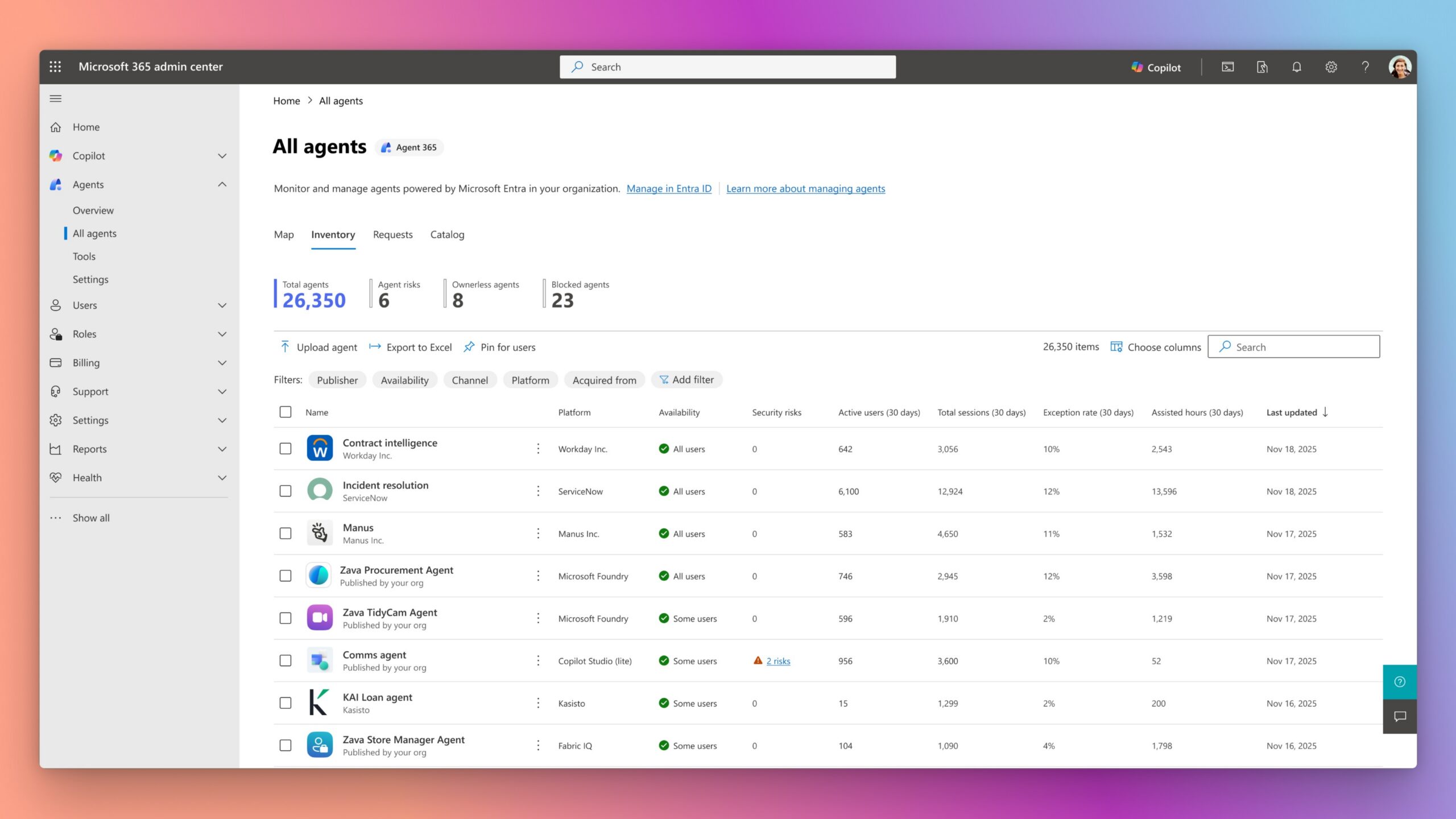
More AI agents means a bigger governance headache — who’s using which agent, with what data, and who’s keeping track? Microsoft’s answer is Agent 365, a centralized control plane for managing AI agents across Microsoft 365 and Azure.
Agent 365 provides identity management, compliance tracking, and observability for every AI agent in your environment — whether it’s built by Microsoft, a third-party partner, or your own team. IT administrators get a single console to track agent activity, enforce policies, and manage agent lifecycles.
The standout feature? Shadow AI prevention. Agent 365 can detect and control unauthorized AI agent usage across your organization, stopping data leakage and compliance violations before they happen. For enterprises already struggling with Shadow IT, this is a critical addition to the governance toolkit.
4. Azure Copilot — Agentic Cloud Operations on Autopilot
Azure Copilot (now in preview) is an agentic interface that automates the entire cloud management lifecycle. It embeds specialized agents directly into your workflow — whether you’re in the Azure portal, CLI, or chat — maintaining context as you work.
Six specialized agents were unveiled:
- Migration Agent — Automates on-premises to Azure transitions
- Deployment Agent — Handles infrastructure provisioning and CI/CD pipelines
- Observability Agent — Real-time monitoring and anomaly detection
- Optimization Agent — Cost optimization and resource right-sizing
- Resiliency Agent — Disaster recovery and availability management
- Troubleshooting Agent — Problem diagnosis and resolution guidance
The Optimization Agent deserves special attention from a FinOps perspective. Cloud cost management is evolving from manual spreadsheet analysis to AI-driven proactive recommendations — reserved instance analysis, resource downsizing, and even automated execution of cost-saving actions.
5. Fabric IQ + Foundry IQ — The Unified Semantic Data Layer
AI agents are only as good as the data they can access. Microsoft addressed this with two complementary previews: Fabric IQ and Foundry IQ.
Fabric IQ organizes enterprise data around business concepts, enabling real-time decision-making across on-premises, hybrid, and multi-cloud environments. The SAP BDC Connect announcement adds zero-copy data sharing between SAP Business Data Cloud and Microsoft Fabric — a game-changer for SAP-heavy enterprises.
Foundry IQ simplifies how AI agents access both public and private data sources like SharePoint and Fabric. Developers get pre-configured knowledge bases and agentic retrieval through a single API — no custom RAG pipeline required.
Both services fall under the Microsoft Agent Factory umbrella, available through a single metered plan that covers both Microsoft Foundry and Copilot Studio usage.
Bonus: Infrastructure — Azure Boost, HorizonDB, and Cobalt 200
Under the hood, Microsoft also announced significant infrastructure upgrades to support AI workloads:
- Azure Boost (next-gen) — 20 GBps remote storage throughput, 400 Gbps network bandwidth
- Azure HorizonDB (preview) — PostgreSQL service running up to 3x faster than open-source, with auto-scaling to 15 replicas
- Azure DocumentDB (GA) — Vector embeddings + MongoDB compatibility
- SQL Server 2025 — Built-in AI tools + OneLake integration
- Azure Cobalt 200 (coming soon) — ARM-based server optimized for AI and data-intensive workloads
Security Copilot — Now Free With E5 Licenses
In a move that should make every CISO smile, Security Copilot is now included in Microsoft 365 E5 licenses at no additional cost. It automates threat detection, streamlines incident response, and integrates natively with Defender, Entra, Intune, and Purview for a unified security posture.
Additionally, Microsoft Defender for Cloud and GitHub Advanced Security (preview) are now natively integrated, providing code-to-runtime protection that covers the entire development lifecycle.
What Microsoft Ignite 2025 Means for Your Enterprise
Microsoft Ignite 2025’s message was crystal clear — AI agents are graduating from tools to teammates. Not just chatbots that answer questions, but autonomous agents that draft documents, manage cloud infrastructure, and monitor security across your organization. The sheer breadth of announcements signals that Microsoft is betting its enterprise future on agentic AI — and the infrastructure, governance, and data layers to support it.
What separates this year’s Ignite from previous events is the emphasis on governance first. Microsoft clearly learned from the Shadow IT problems of the cloud era and is proactively building guardrails before agents proliferate uncontrollably. Agent 365, Foundry Control Plane, and Entra Agent ID collectively represent the most comprehensive AI governance stack announced by any major cloud provider to date.
Here are your immediate action items:
- December 1: M365 Copilot Business SKU launches — evaluate the $18 introductory pricing for sub-300-seat organizations
- Foundry multi-model: Start testing Anthropic Claude and other alternatives alongside OpenAI
- Agent 365 rollout plan: Establish your AI agent governance framework now
- Fabric IQ preview: Identify pilot projects for unified data integration
- Security Copilot: If you’re on E5, activate it immediately
Microsoft Ignite 2025 marked the official start of the agentic AI era. The enterprises that start planning their agent adoption and governance strategies now will be the ones with a competitive edge when these tools hit general availability.
Need help building AI automation systems or planning your enterprise AI adoption strategy? Check out Sean Kim’s tech consulting.
Get weekly AI, music, and tech trends delivered to your inbox.