Samsung Galaxy Z Fold7 Rumors: 5 Leaked Upgrades That Could Redefine Foldables
May 7, 2025
Neural DSP Quad Cortex CorOS 3.2 Roadmap: Cory Wong X, ESS Codec, and 5 Features Worth the Wait
May 8, 2025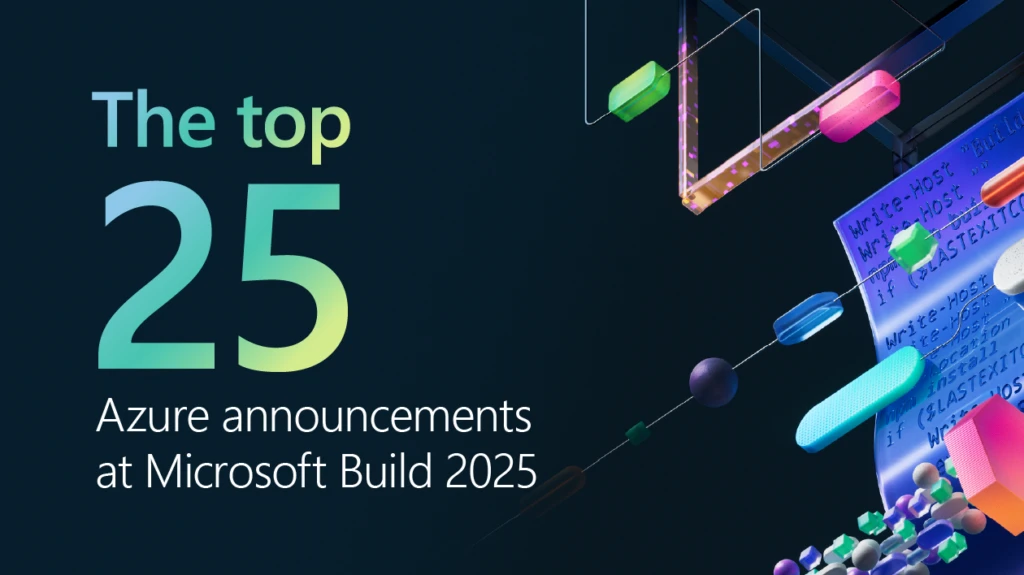
A platform with 1,900+ AI models, multi-agent orchestration baked in, and the ability to run inference on local devices without touching the cloud. That is not a wishlist — it is exactly what Microsoft just shipped at Build 2025. Azure AI Foundry is here, and it changes the equation for anyone deploying custom AI at scale.
What Is Azure AI Foundry? Not Just a Model Hub — an Agent Factory
Azure AI Foundry is Microsoft’s unified AI platform, now generally available as of Build 2025. But calling it a “model hub” undersells what it actually does. Microsoft positioned it as an agent factory — a platform for designing, training, and operating AI agents across their entire lifecycle at enterprise scale. In his keynote, Satya Nadella declared this “the age of the agentic web”, signaling Microsoft’s bet that the future of AI is not individual models but orchestrated agents working together.
To understand why this matters, consider the current state of enterprise AI deployment. Most organizations juggle multiple AI providers, each with their own APIs, billing systems, and security models. A typical enterprise might use OpenAI for text generation, a custom model for domain-specific tasks, and an open-source model for internal experimentation — all managed separately. Azure AI Foundry consolidates this fragmented landscape into a single control plane with unified governance, monitoring, and billing.
The platform rests on three pillars. First, a model catalog of 1,900+ models — including OpenAI, Meta Llama, Mistral, xAI’s Grok 3, and Black Forest Labs’ Flux Pro 1.1 — deployable as serverless API endpoints with pay-as-you-go billing. Second, Agent Service hit general availability, enabling multi-agent orchestration with MCP (Model Context Protocol) support for enterprise workflows. Third, Foundry Local brings AI inference to edge and local devices without cloud connectivity.
The Azure AI Foundry Model Catalog: What 1,900+ Models Actually Means
Numbers can be misleading, so let us break down what the model catalog actually delivers. According to Azure’s official Build 2025 announcement, the catalog is not just a list — it is a deployment-ready ecosystem. The Hugging Face partnership alone adds access to 10,000+ open-source models, making Azure AI Foundry one of the most comprehensive model marketplaces in the industry.
The real game-changer here is Model Router. Instead of manually selecting which model to use for each task, Model Router automatically routes requests to the optimal model based on the task type, balancing cost against performance. For organizations running diverse AI workloads — text generation, code completion, image synthesis, data analysis — this removes a significant operational burden.
Deployment flexibility is equally impressive. Microsoft’s deployment documentation outlines several options: serverless API endpoints with pay-as-you-go billing, managed compute for dedicated capacity, and Infrastructure-as-Code deployment via Azure CLI and Bicep templates. Fine-tuning is available for non-OpenAI models like Mistral, giving teams the ability to customize open-source models for their specific domains.
- Serverless API deployment: Call models on-demand without managing infrastructure
- Model Router: Automatic model selection optimizing cost and performance
- Fine-tuning: Customize Mistral, Llama, and other non-OpenAI models for your domain
- IaC support: Automate deployment pipelines with Azure CLI and Bicep
Azure AI Foundry Agent Service: Multi-Agent Orchestration Goes Enterprise
The general availability of Azure AI Foundry Agent Service was arguably the most significant announcement at Build 2025. This is not another chatbot framework. It is a production-grade platform for running multi-agent systems where specialized AI agents collaborate to handle complex business workflows — with built-in error handling, handoff protocols, and enterprise security.
The adoption of MCP (Model Context Protocol) deserves special attention. By standardizing how agents communicate with each other and with external tools, Microsoft is laying the groundwork for an interoperable agent ecosystem. Think of it as HTTP for AI agents — a shared protocol that lets different models, services, and tools work together without custom integration code for every connection.
Enterprise adoption is already underway. JM Family automated complex document processing across their automotive dealership operations. Fujitsu built customer support agents for their global IT services. YoungWilliams deployed multi-agent automation for child welfare data processing, significantly improving operational efficiency. The pattern is clear: these are not proof-of-concept demos but production workloads handling real business logic.
Foundry Local: AI Without the Cloud
Foundry Local addresses a critical gap in enterprise AI adoption. Many industries — healthcare, manufacturing, defense, financial services — cannot send sensitive data to the cloud. Foundry Local lets organizations run AI models directly on local devices and edge hardware, with no cloud dependency required. This is not a scaled-down demo feature. It is a deliberate strategic move to capture markets where cloud-based AI has been a non-starter due to regulatory constraints.
The implications extend beyond data sovereignty. Local inference eliminates API call latency, reduces ongoing cloud compute costs, and enables real-time AI in IoT scenarios where connectivity is unreliable. For healthcare providers processing patient data under HIPAA, manufacturers running quality control on production lines, or defense applications requiring air-gapped operation, Foundry Local bridges the gap between AI capability and regulatory reality.
From a developer perspective, Foundry Local uses the same APIs as the cloud version. This means teams can develop and test locally, then deploy to the cloud when ready — or keep everything on-premises if their compliance requirements demand it. The consistency between local and cloud environments reduces the friction that typically slows enterprise AI adoption. It also opens the door for hybrid architectures where sensitive data stays local while less critical workloads scale in the cloud.
The Expanding Azure AI Foundry Ecosystem
According to InfoQ’s Build 2025 analysis, the addition of xAI’s Grok 3 and Black Forest Labs’ Flux Pro 1.1 to the model catalog signals Microsoft’s commitment to offering the broadest possible model selection. Text generation, code completion, image synthesis, and multimodal reasoning — all accessible from a single platform with unified billing and governance.
The Hugging Face partnership bringing 10,000+ open-source models into the fold is particularly significant for research teams and startups. Instead of managing separate infrastructure for open-source experimentation and production workloads, teams can now prototype with open-source models and scale to commercial models within the same platform — using the same APIs, the same monitoring, and the same security controls.
This ecosystem play is strategic. By making Azure AI Foundry the default entry point for AI model deployment — regardless of whether the model comes from OpenAI, Meta, Mistral, or the open-source community — Microsoft is positioning itself as the platform layer that sits beneath the AI model wars. Whichever model wins in a given category, Azure AI Foundry wins as the deployment platform.
My Take: The Reality of Multi-Agent Orchestration
Having spent 28 years at the intersection of music, audio, and technology, I have a unique perspective on Azure AI Foundry’s multi-agent approach — because I am already living it. I run a production blog pipeline with six AI agents (researcher, writer, image generator, publisher, reviewer, reporter) that collaborate sequentially to produce and publish content daily. From that hands-on experience, I can tell you: the hardest part of multi-agent systems is not model performance. It is communication reliability between agents.
Agent Service supporting MCP and handling inter-agent handoffs and error recovery at the platform level is genuinely meaningful for practitioners. When you build an agent pipeline yourself, you quickly learn that a chain is only as strong as its weakest link. One agent’s output becomes the next agent’s input, and if anything breaks in the middle, the entire pipeline collapses. Microsoft tackling this problem at enterprise scale signals that AI agents have graduated from experiment to production workload.
That said, I have practical concerns. Of those 1,900 models, the number that are genuinely production-ready for specific use cases is much smaller. Model Router’s automatic selection will not always be optimal — domain expertise still matters when choosing models. Pay-as-you-go pricing can become unpredictable when traffic spikes. And Foundry Local, while compelling, is likely limited to smaller models given the compute constraints of edge devices. Still, the direction is undeniable. AI is expanding from cloud-only to edge, local, and multi-agent collaboration — and that trajectory is not reversing.
Azure AI Foundry’s vision is clear: select models, deploy them, compose them into agents, and manage the entire pipeline from one platform to solve real business problems. If Microsoft executes on this vision, the barrier to enterprise AI adoption drops significantly. The question is execution speed and ecosystem momentum. But with the GA of both the core platform and Agent Service, plus early enterprise adoption from companies like JM Family and Fujitsu, the momentum is building faster than most anticipated.
For developers and engineering leaders evaluating their AI strategy, Azure AI Foundry deserves serious consideration — not because it is perfect, but because it represents the most comprehensive attempt yet to solve the full lifecycle of enterprise AI deployment. From model selection to agent orchestration to edge deployment, it is all in one place. Whether that consolidation delivers on its promise will be the story to watch throughout the rest of 2025.
Interested in building AI agent pipelines or automation systems? With 28 years of hands-on experience, I can help you design and implement the right architecture.
Get weekly AI, music, and tech trends delivered to your inbox.