Devious Machines Duck 2 Review: The $40 Sidechain Plugin That Makes Compressor Sidechaining Obsolete
March 18, 2026
Java 26 Release: 10 JEPs Including Vector API for AI, Post-Quantum Crypto, and Structured Concurrency — Oracle’s Biggest Update Since Records
March 18, 2026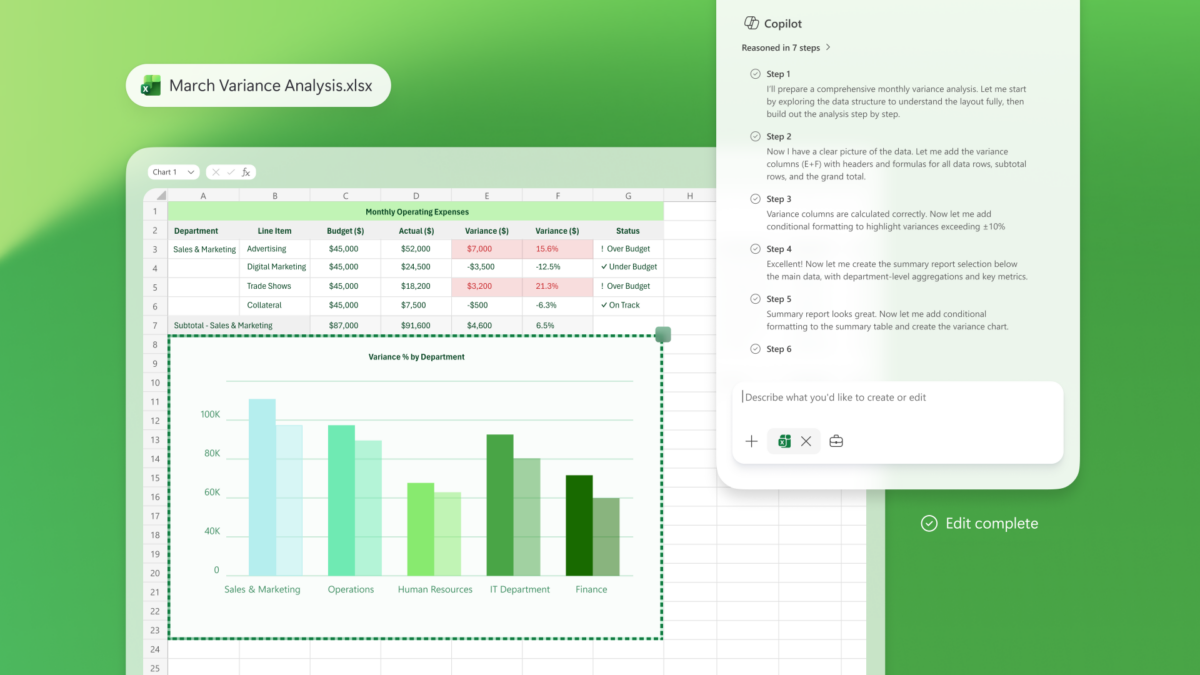
Microsoft just played its multi-model card — and the implications are massive. On March 9, 2026, Microsoft 365 Copilot Claude Sonnet integration went live, giving 400 million Office users the ability to choose Anthropic’s AI right alongside OpenAI models. This isn’t a minor feature toggle. It’s the opening move of a multi-model strategy backed by a $30 billion Azure compute deal, and it’s about to reshape how enterprises think about AI productivity.
Microsoft 365 Copilot Claude Sonnet Integration: What Actually Changed
With the Wave 3 update, Microsoft has made Claude Sonnet directly selectable in Copilot Chat’s Frontier program. Previously locked to OpenAI’s GPT-4o, users can now pick the model that best fits their task. According to Microsoft’s official blog, the rollout spans web, desktop, macOS, and mobile, with completion expected by late March 2026.
If you’re a licensed M365 Copilot user in a supported region, you can activate Claude Sonnet through the model selector in Copilot Chat right now. The exception: EU/EFTA, UK, and government or sovereign cloud environments remain excluded for the time being, signaling a phased regulatory approach.
Copilot Cowork: The Autonomous AI Agent Powered by Claude
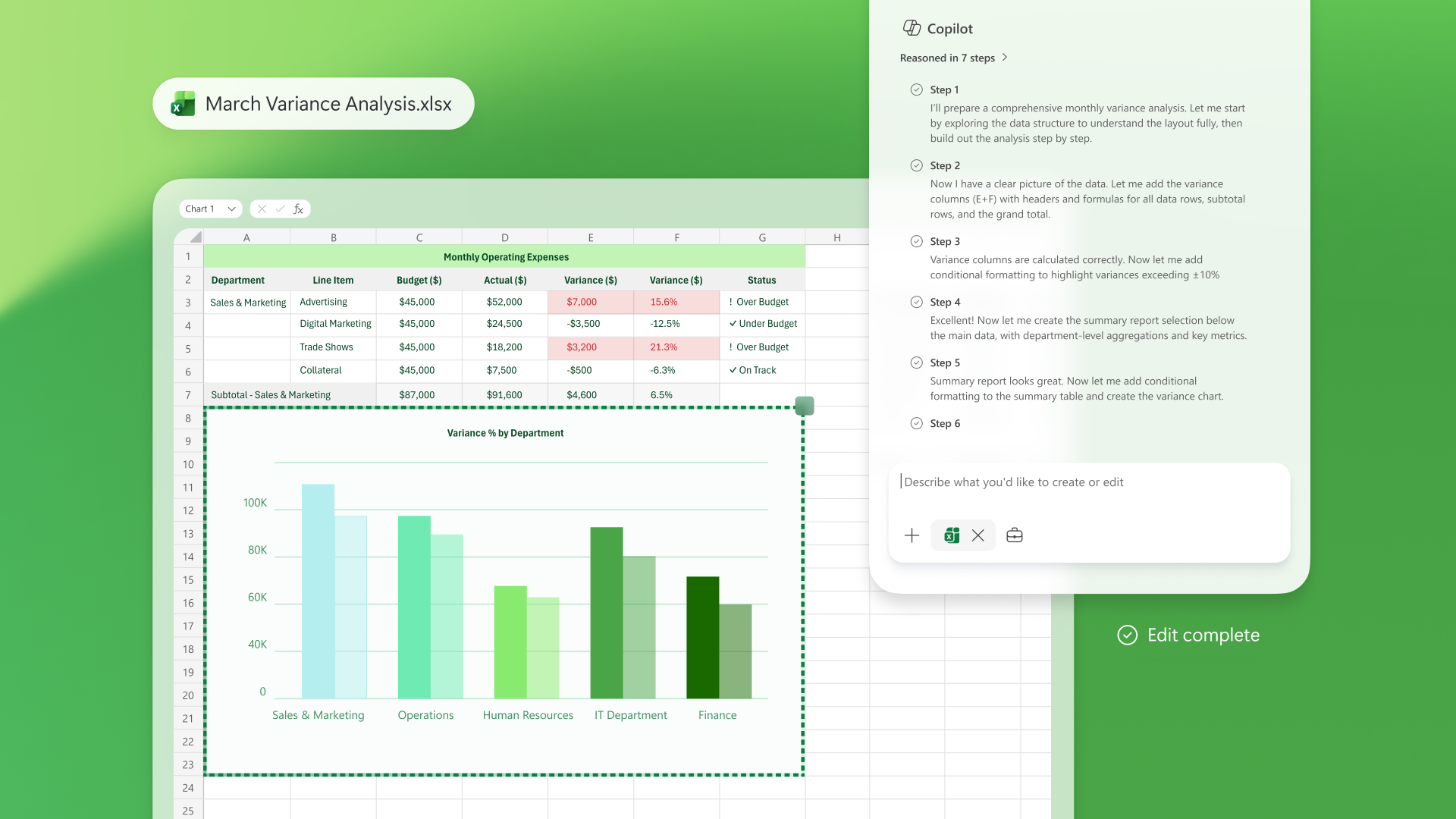
The headline feature isn’t just model selection — it’s Copilot Cowork. Built on Anthropic’s agentic model, Cowork goes far beyond simple Q&A. It handles multi-step autonomous tasks across Microsoft 365 apps, using the same agentic harness as Anthropic’s Claude Cowork but running on Microsoft’s cloud infrastructure for enterprise-grade data protection.
As Fortune reported, Copilot Cowork leverages ‘Work IQ’ — intelligence drawn from emails, files, documents, meetings, and chats — to understand organizational context before executing tasks. It’s currently in research preview with select customers and will be more broadly available through the Frontier program in late March 2026.
Think of it this way: regular Copilot answers your questions. Copilot Cowork does your work — drafting reports from meeting notes, building presentations from scattered data, or orchestrating multi-step workflows across Word, Excel, and PowerPoint without you switching between apps.
Real-World Cowork Scenarios
To understand the practical impact, consider these concrete workflows that Copilot Cowork enables. A product manager receives a request for a quarterly business review. Previously, they’d spend hours pulling data from Excel, summarizing meeting notes from Teams, and building a PowerPoint deck. With Cowork, the entire pipeline is orchestrated autonomously: the agent pulls revenue data from the relevant spreadsheets, cross-references it with meeting transcripts for qualitative context, drafts a coherent narrative in Word, and assembles the final presentation in PowerPoint — all while maintaining brand consistency and citing internal sources.
Another example: a finance analyst needs to model three different acquisition scenarios. Cowork can generate the scenario parameters in Excel, apply complex formulas across multiple linked workbooks, validate the outputs against historical M&A data, and produce an executive summary comparing all three outcomes. The key differentiator is that these aren’t isolated AI prompts — they’re chained, context-aware steps where each action builds on the previous one.
Opus 4.6 in Excel and PowerPoint: The Million-Token Game Changer
Claude Sonnet isn’t the only model making waves. Opus 4.6 has been deployed as an add-in for PowerPoint and Excel, bringing one million tokens of context and advanced reasoning capabilities. Here’s what that means in practice:
- Excel: Automated scenario parameter generation, formula application, and validation against historical data. Multi-file support lets Claude read and work across multiple open spreadsheets in a single conversation
- PowerPoint: AI-assisted slide drafting, brand guideline enforcement, image fetching, and intelligent content layout suggestions. The model understands the full presentation context for coherent recommendations
- Word: Agentic Copilot handles multi-step editing from draft to final version autonomously
The multi-file capability is particularly significant. Instead of context-switching between tabs and manually cross-referencing data, Claude can now process multiple open files simultaneously. Enterprise audit logging and tokenization for sensitive data protection come built-in, not as afterthoughts.
E7 Frontier Worker Suite: Enterprise AI at $99 Per Month
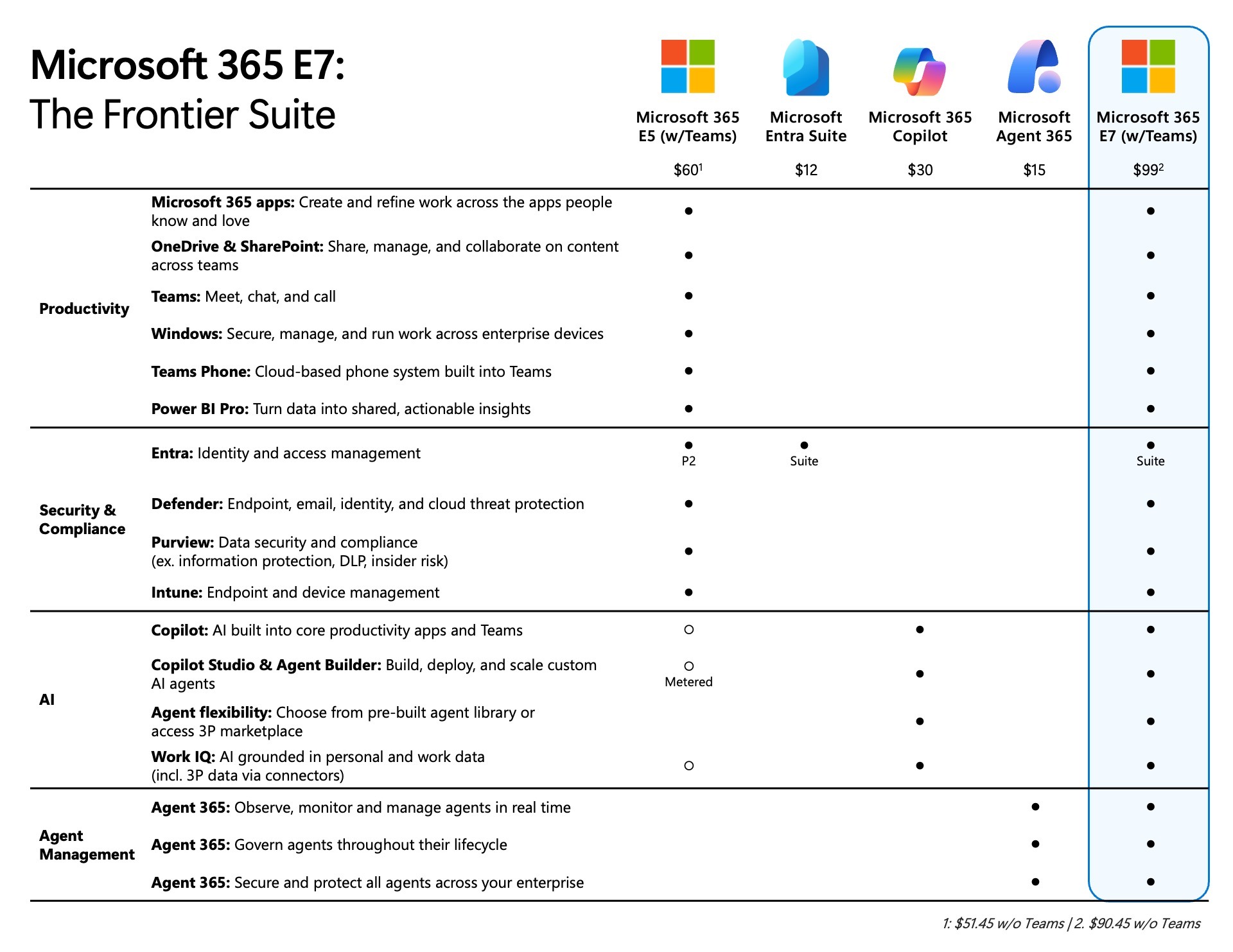
Alongside the integration, Microsoft unveiled a new licensing tier. The Microsoft 365 E7 Frontier Worker Suite launches May 1, 2026, at $99 per user per month, bundling:
- Microsoft 365 E5 ($60)
- Copilot ($30)
- Agent 365 ($15) — the new AI agent monitoring and security governance platform
- Entra Suite and advanced security tools
Purchased separately, these components total $117, making the bundle roughly a 15% discount. But the real value proposition is Agent 365, which integrates with Entra, Defender, Purview, and Intune to provide centralized AI agent governance — addressing the single biggest barrier to enterprise AI adoption: security and compliance oversight.
The $30 Billion Deal Behind the Multi-Model Strategy
Behind this integration sits a $30 billion Azure compute deal between Microsoft and Anthropic. Microsoft maintains its OpenAI partnership while adding Anthropic as an official subprocessor, formalizing a multi-model approach where the platform “chooses the right model for the job regardless of who built it.”
This dual-vendor strategy is a deliberate hedge. By running both OpenAI and Anthropic models on Azure infrastructure, Microsoft avoids single-provider dependency while giving customers the flexibility to match model strengths to specific use cases. Claude’s extended context window and nuanced reasoning complement GPT-4o’s speed and breadth. For organizations processing lengthy legal contracts, financial reports, or technical documentation, having Claude’s million-token context available alongside GPT-4o’s rapid summarization creates a genuinely complementary toolkit rather than a redundant one.
Microsoft Foundry: The Developer Story
Through Microsoft Foundry, developers can access Claude Sonnet 4.5, Haiku 4.5, and Opus 4.1 in public preview with serverless deployment. Python, TypeScript, and C# SDKs are supported, along with Microsoft Entra authentication and Azure Consumption Commitment (MACC) compatibility. According to Anthropic’s official announcement, existing Azure agreements and billing systems carry over — no separate vendor approvals needed.
The Foundry integration is particularly significant for enterprise development teams. Instead of managing separate API keys, billing relationships, and compliance certifications for each AI provider, everything runs through existing Azure governance. A development team building a customer service agent can use Haiku 4.5 for fast, cost-effective initial triage at one-third the cost of Sonnet, then escalate complex cases to Opus 4.1 for deep reasoning — all within the same Azure billing and compliance framework. This model routing capability eliminates the operational overhead that has historically slowed enterprise AI adoption.
Enterprise Data Protection: What Stays the Same
The question every IT admin is asking: what happens to data protection? According to Microsoft Learn documentation, Anthropic operates as an officially sanctioned subprocessor under Microsoft’s Data Protection Addendum (DPA) and Product Terms. Existing Enterprise Data Protection continues unchanged — the same protections apply whether you’re using OpenAI or Claude models.
Administrators can enable Claude Sonnet 4 and Opus 4 variants for Copilot’s Agent Mode, with granular controls including usage quotas, audit logging, and redaction policies. Tokenization replaces sensitive values before transmission, minimizing data exposure concerns.
Current Adoption and What Comes Next
The numbers tell the story. 90% of Fortune 500 companies already use Copilot, and 80% have deployed AI agents. The Microsoft 365 Copilot Claude Sonnet integration adds model choice to this existing foundation, which should only accelerate adoption.
From an investor perspective, this is noteworthy. Concerns about AI disrupting SaaS revenue models have lingered, but Microsoft’s response is to make SaaS more valuable through AI bundling. The E7 Suite strategy increases ARPU (average revenue per user) rather than cannibalizing it. AI isn’t replacing SaaS — it’s making SaaS more expensive, and enterprises are willing to pay.
What This Means for Google and Salesforce
Microsoft’s multi-model move puts significant competitive pressure on Google Workspace and Salesforce. Google has been building Gemini into its productivity suite, but it’s a single-model strategy. Salesforce has Einstein GPT powered primarily by OpenAI. Neither offers the model choice that Microsoft now provides. For enterprise procurement teams evaluating productivity suites, the ability to select between AI providers within the same platform adds a compelling differentiation point that competitors will struggle to replicate quickly.
The timing is also strategic. With Gartner predicting that 40% of enterprise applications will use task-specific AI agents by the end of 2026 (up from less than 5% in 2025), Microsoft is positioning Copilot as the default agent orchestration layer. By making that layer model-agnostic, they’re making the switching cost for organizations already in the Microsoft ecosystem prohibitively high.
How to Get Started: Practical Recommendations
If your organization is already on Microsoft 365 with Copilot, enabling Claude Sonnet is straightforward. IT administrators should check the Microsoft 365 admin center for the Frontier program opt-in, review the subprocessor documentation for compliance sign-off, and configure the model selector policies for their tenant. Start by enabling Claude Sonnet for a pilot group — power users in finance, legal, or strategy teams who regularly work with long documents will see the most immediate benefit from the extended context window.
For organizations evaluating the E7 Frontier Worker Suite launching May 1, the math is straightforward: if you’re already paying for E5 and Copilot separately ($90/month), adding Agent 365 governance at $15 would bring your total to $105. The E7 bundle at $99 saves $6 per user per month while adding Entra Suite and advanced security tools. For a 10,000-person enterprise, that’s $720,000 in annual savings plus enhanced governance capabilities.
The bottom line: the Microsoft-Anthropic integration in Microsoft 365 Copilot isn’t just a feature update — it’s a structural shift in enterprise AI infrastructure. The era of debating which single AI model is best is over. We’ve entered the era of choosing the right model for the right task. The question isn’t whether your organization will adopt this multi-model approach — it’s how fast you can get there.
Looking to build AI-powered automation pipelines or develop an enterprise AI integration strategy? Get in touch with Sean Kim.
Get weekly AI, music, and tech trends delivered to your inbox.