
Best DAW for Beginners September 2025: Complete Comparison Guide
September 15, 2025
GitHub Universe 2025 Preview: Copilot Coding Agent Goes GA, CLI Launch, and Everything Developers Need to Know
September 16, 2025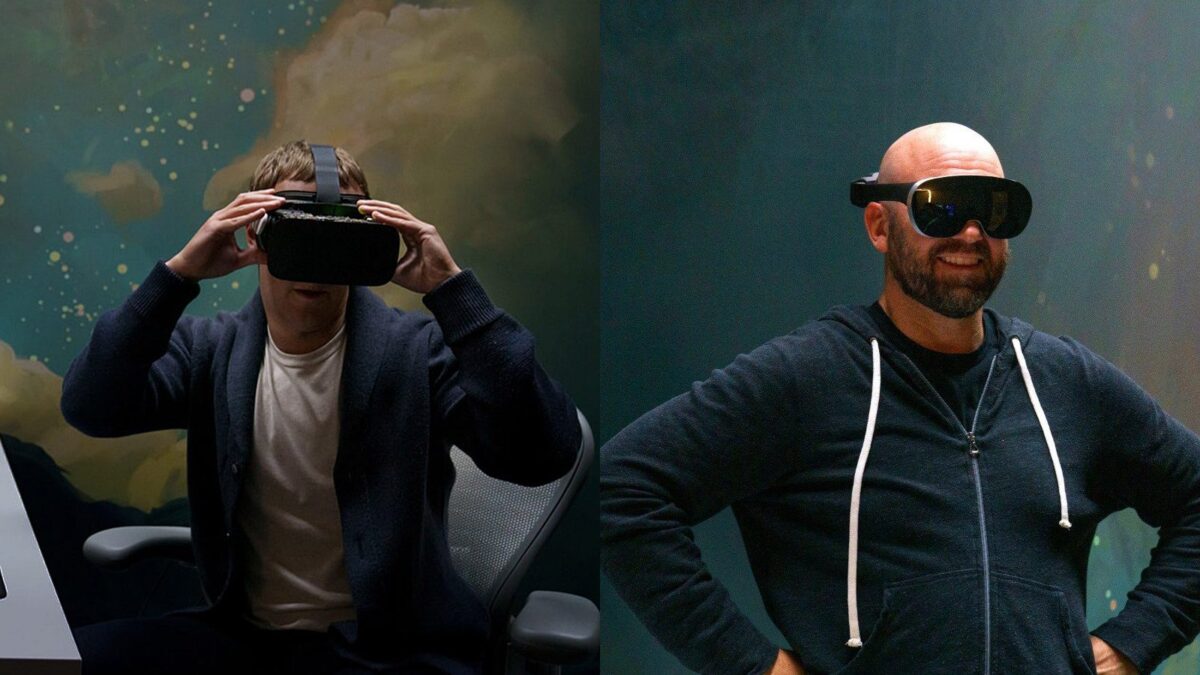
Forget everything you think you know about standalone VR headsets. Meta’s next move isn’t just an incremental upgrade — the Meta Quest 4, codenamed “Project Pismo,” is shaping up to be the most ambitious leap in consumer VR hardware since the original Quest made untethered virtual reality mainstream. With eye tracking, foveated rendering, OLED displays, and a dramatically lighter form factor all reportedly on the table, Meta is clearly swinging for the fences ahead of a rumored 2026 launch.
As we sit here in mid-September 2025 — just days before Meta Connect 2025 kicks off on September 17 — the VR community is buzzing with anticipation. While this year’s event is expected to spotlight Ray-Ban Meta smart glasses and AI features, the real hardware enthusiasts have their eyes on what comes next. Let’s break down everything we know about the Meta Quest 4 and why it matters for the future of immersive technology.
Project Pismo: Meta Quest 4’s Dual-Model Strategy
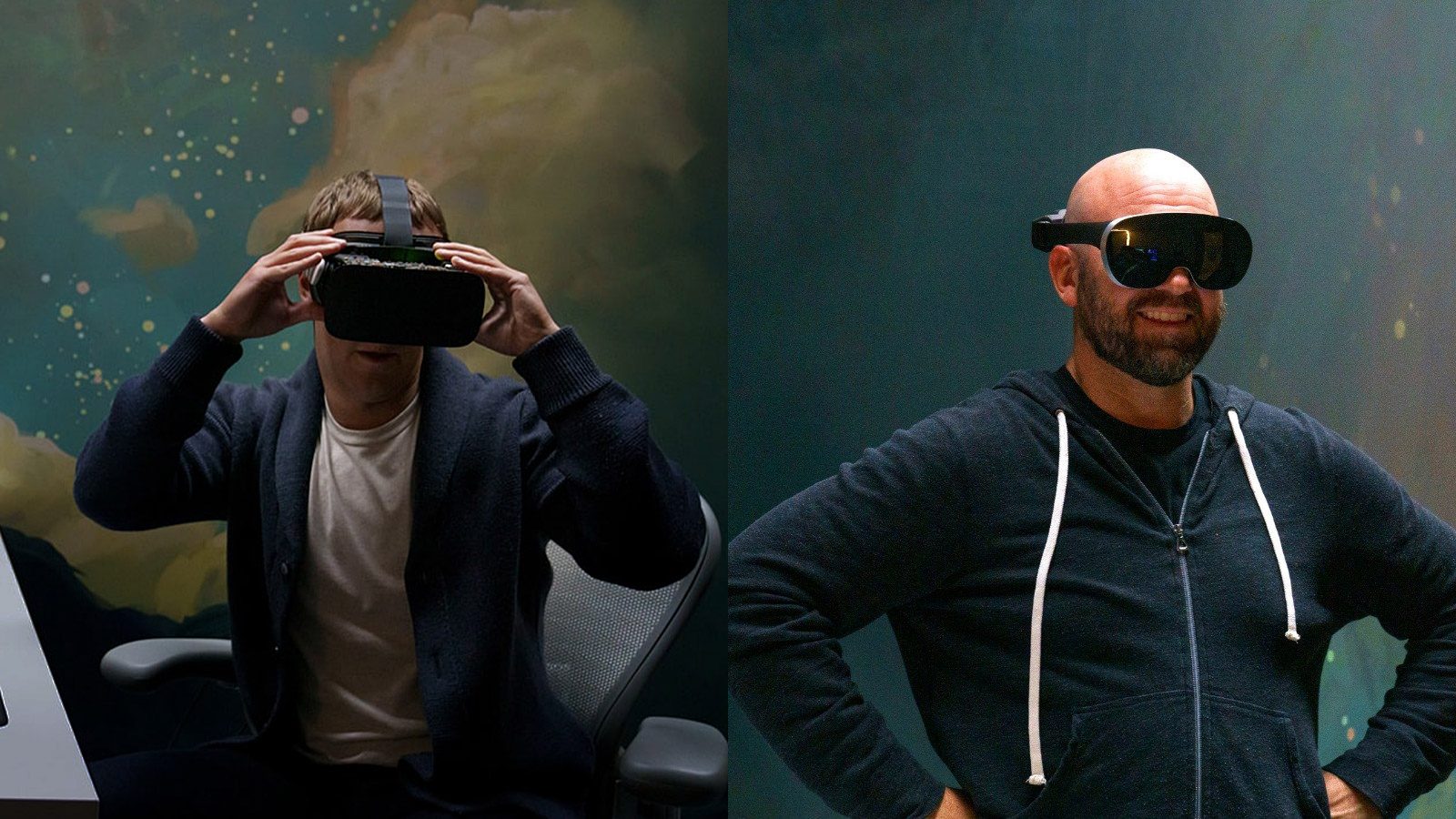
Perhaps the most significant leak about the Meta Quest 4 is that Meta isn’t building just one headset — they’re building two. Internal codenames “Pismo Low” and “Pismo High” suggest a tiered approach that mirrors what Apple and Samsung have done in smartphones for years.
According to Road to VR’s reporting based on The Information’s investigation, Pismo Low is expected to be the mainstream successor to the Quest 3 — likely positioned around $300-400. Pismo High, on the other hand, appears to target the prosumer and professional market at approximately $800 without controllers. This dual-tier approach makes strategic sense: Meta can defend its dominant position in affordable VR while simultaneously pushing upmarket against Apple’s Vision Pro.
The pricing strategy is particularly interesting. At $800, the Pismo High model would sit in a fascinating middle ground — far more accessible than the $3,500 Apple Vision Pro, yet positioned as a clear premium tier above the existing Quest 3. For Meta, this could be the sweet spot that captures professionals and enthusiasts who want cutting-edge features without Vision Pro’s eye-watering price tag.
Meta Quest 4 Eye Tracking: The Feature That Changes Everything
Eye tracking isn’t new in VR — the Quest Pro introduced it in 2022, and PlayStation VR2 uses it for foveated rendering on PS5. But the Meta Quest 4 making eye tracking standard across both models would be a genuine inflection point for the entire VR ecosystem. Here’s why.
Foveated rendering — the technique of rendering full detail only in the small area where your eyes are focused while reducing resolution in your peripheral vision — is the single most impactful optimization in VR graphics. The human eye only perceives sharp detail in roughly 2 degrees of your visual field (the fovea), yet current VR headsets waste enormous GPU resources rendering everything at full resolution. Eye-tracked foveated rendering solves this spectacularly. Performance gains of 30-50% or more become possible, meaning the Snapdragon XR3 chip can punch well above its weight class in visual fidelity.
Reports from early 2025 indicate that Meta has been running focus groups in Burlingame, California, testing Pismo prototypes that capture facial expressions, eye movements, and voice input. Participants reportedly tested devices with integrated eye and face tracking sensors, suggesting these features will ship as standard hardware rather than optional accessories.
Beyond rendering optimization, eye tracking enables natural user interfaces. Imagine selecting a menu option simply by looking at it and confirming with a hand gesture. Social VR becomes dramatically more natural when your avatar’s eyes move as yours do — making eye contact, looking away during thought, and expressing emotions through gaze. For Meta’s Horizon social platform, this could be the feature that finally makes VR social interactions feel genuinely human.
OLED Displays, Snapdragon XR3, and the Spec Sheet
The Meta Quest 4’s reported shift from LCD to OLED or mini-LED displays represents another major upgrade. OLED technology brings true blacks (essential for immersive dark environments), faster pixel response times (reducing motion blur and the “smearing” effect that plagues LCD-based headsets), and superior color accuracy. For mixed reality passthrough, OLED’s higher contrast ratio means the real world viewed through the headset’s cameras will look noticeably more natural.
Powering the Meta Quest 4 will reportedly be Qualcomm’s Snapdragon XR3 Gen 3 chipset, purpose-built for extended reality workloads. While specific benchmarks haven’t leaked, the XR3 is expected to deliver a generational leap in both graphics performance and power efficiency over the XR2 Gen 2 in the current Quest 3. Combined with foveated rendering, this chip should enable visual experiences that approach — and in some cases rival — what tethered PC VR headsets can deliver.
The full rumored spec sheet paints an impressive picture:
- Snapdragon XR3 Gen 3 processor
- OLED or mini-LED dual displays
- Integrated eye and face tracking (standard on both models)
- Hardware-level foveated rendering support
- Enhanced mixed reality passthrough with higher resolution cameras and HDR
- Significantly lighter design, potentially under 400g for the headset
- External compute puck option for the premium model
- Hand tracking as primary input method (controllers optional)
A Radically Lighter Design: Lessons from Holocake 2
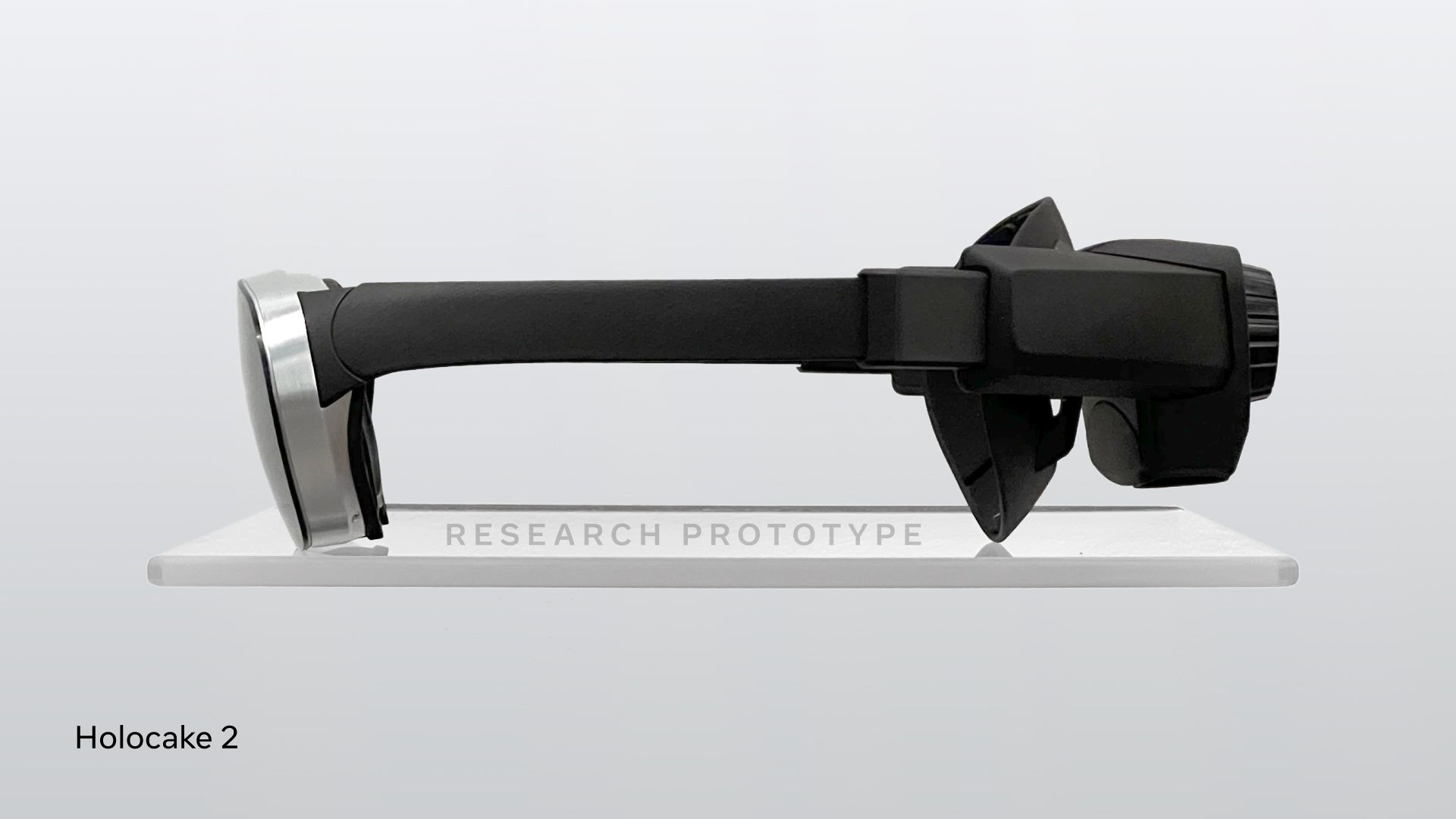
Weight is the silent killer of VR adoption. You can have the most stunning visuals and immersive audio in the world, but if the headset feels like a brick strapped to your face after 30 minutes, most people won’t use it regularly. Meta clearly knows this, and the Quest 4 design appears to draw heavily from the company’s Holocake 2 research prototype — a dramatically thinner headset that used pancake-style optics taken to their logical extreme.
One of the more intriguing design rumors involves an external compute puck connected to the headset via a cable. By offloading the processor, battery, and heat dissipation away from the head-mounted unit, Meta could dramatically reduce the weight and bulk of what you actually wear on your face. This is similar to the approach Magic Leap took with its early devices, but Meta has the engineering resources and manufacturing scale to execute it at a consumer price point.
There’s even speculation that Meta might drop the “Quest” branding entirely for this next generation. After building the Quest brand from Oculus’s legacy, a name change would signal that this isn’t just a Quest 3 with better specs — it’s a fundamentally different category of device. Whether that happens remains to be seen, but it speaks to the scale of ambition behind Project Pismo.
Mixed Reality Gets Serious: Beyond Passthrough Gimmicks
The Quest 3 introduced mixed reality passthrough to the mainstream, but let’s be honest — the current implementation, while impressive for a $500 device, still looks noticeably digital. Colors are washed out, resolution is limited, and latency can make fast head movements feel disconnected from reality.
The Meta Quest 4 is expected to address these limitations head-on. Higher resolution passthrough cameras, HDR support, and improved spatial mapping could push mixed reality from “neat tech demo” to genuinely useful daily tool. Imagine placing virtual monitors around your physical desk with enough clarity and color accuracy to actually work on them for hours. Or having virtual objects in your living room that look convincingly real — with proper lighting, shadows, and occlusion.
This is where Meta’s competition with Apple gets particularly interesting. The Vision Pro’s passthrough is currently the gold standard — high resolution, low latency, excellent color reproduction. If the Meta Quest 4 can deliver even 80% of that quality at a fraction of the price, it could define the mixed reality market for the next several years.
The Competitive Landscape: Meta Quest 4 vs. Everyone Else
The VR and mixed reality market in 2026 will be the most competitive it’s ever been. Here’s how the Meta Quest 4 stacks up against the current and upcoming competition:
Apple Vision Pro ($3,499): Apple’s spatial computing headset set a new bar for display quality, passthrough fidelity, and build quality. However, its astronomical price and limited app ecosystem have kept it firmly in early-adopter territory. A second-generation Vision Pro is rumored for 2026-2027, potentially at a lower price point. The Meta Quest 4’s premium tier at $800 would undercut Apple by more than 4x while potentially offering comparable eye tracking and mixed reality features.
Samsung Galaxy XR: Samsung’s partnership with Qualcomm and Google for a mixed reality headset has been one of the worst-kept secrets in tech. Expected to run on Android XR, the Galaxy XR could launch before or alongside the Quest 4, creating a genuine three-horse race in the premium standalone segment.
PlayStation VR2: Sony’s headset remains the best value proposition for VR gaming, especially with its excellent OLED displays and eye tracking at $549. However, it requires a PS5, making it a very different product category from standalone devices. The recently announced PC adapter expands its reach but doesn’t change its fundamental tethered nature.
Quest 3 / Quest 3S: Meta’s own current lineup will likely remain on sale alongside the Quest 4, potentially at reduced prices, ensuring there’s an entry point for every budget. This is the “iPhone model” — multiple generations coexisting at different price tiers.
What This Means for Developers and Content Creators
For VR developers, the Meta Quest 4’s feature set opens doors that have been theoretically possible but practically out of reach. Universal eye tracking means developers can finally build interactions around gaze without worrying about hardware fragmentation. Foveated rendering as a platform standard means they can push graphical fidelity dramatically higher. And improved mixed reality capabilities open entirely new application categories — from architectural visualization to remote collaboration to medical training.
Content creators and filmmakers working in 360-degree and volumetric video will benefit from the OLED displays’ superior black levels and color accuracy. The improved passthrough cameras could also enable new forms of augmented live events and performances — imagine attending a concert where virtual stage effects blend seamlessly with the real performers.
The Road to 2026: What to Watch For
While the Meta Quest 4 is still roughly a year away from its expected late 2026 launch, several milestones will shape what we ultimately get:
- Meta Connect 2025 (September 17): While the Quest 4 itself likely won’t be shown, any mixed reality or AI announcements could hint at the platform direction for next-gen hardware.
- Qualcomm Snapdragon Summit (late 2025): The official XR3 announcement will give us concrete performance expectations.
- Samsung Galaxy XR launch: Samsung’s entry will force Meta to finalize pricing and positioning, potentially accelerating the Quest 4 timeline.
- Developer SDK updates: Watch for Meta releasing eye tracking and foveated rendering APIs — when these become mandatory in development guidelines, hardware launch is imminent.
- Apple’s WWDC 2026: Any Vision Pro price cuts or second-gen announcements will directly impact Meta’s Quest 4 strategy.
The Meta Quest 4 represents a pivotal moment for consumer VR and mixed reality. Eye tracking and foveated rendering as standard features, OLED displays, a dramatically lighter design, and a price point that undercuts Apple by thousands of dollars — if Meta delivers on even most of these rumored specs, the Quest 4 won’t just be the best standalone headset on the market. It could be the device that finally makes VR and mixed reality a mainstream daily-use technology rather than an occasional novelty. The next 12 months will tell us whether Project Pismo lives up to the hype — and with Meta Connect just days away, the first hints might come sooner than anyone expects.
Get weekly AI, music, and tech trends delivered to your inbox.