Apple MacBook Pro M5 Launch: New Chip Brings 3.5x AI Performance and a GPU Revolution
October 30, 2025
Komplete 15 Collector’s Edition Review: 165 Instruments for $1,799 — Is NI’s Biggest Bundle Worth It?
October 31, 2025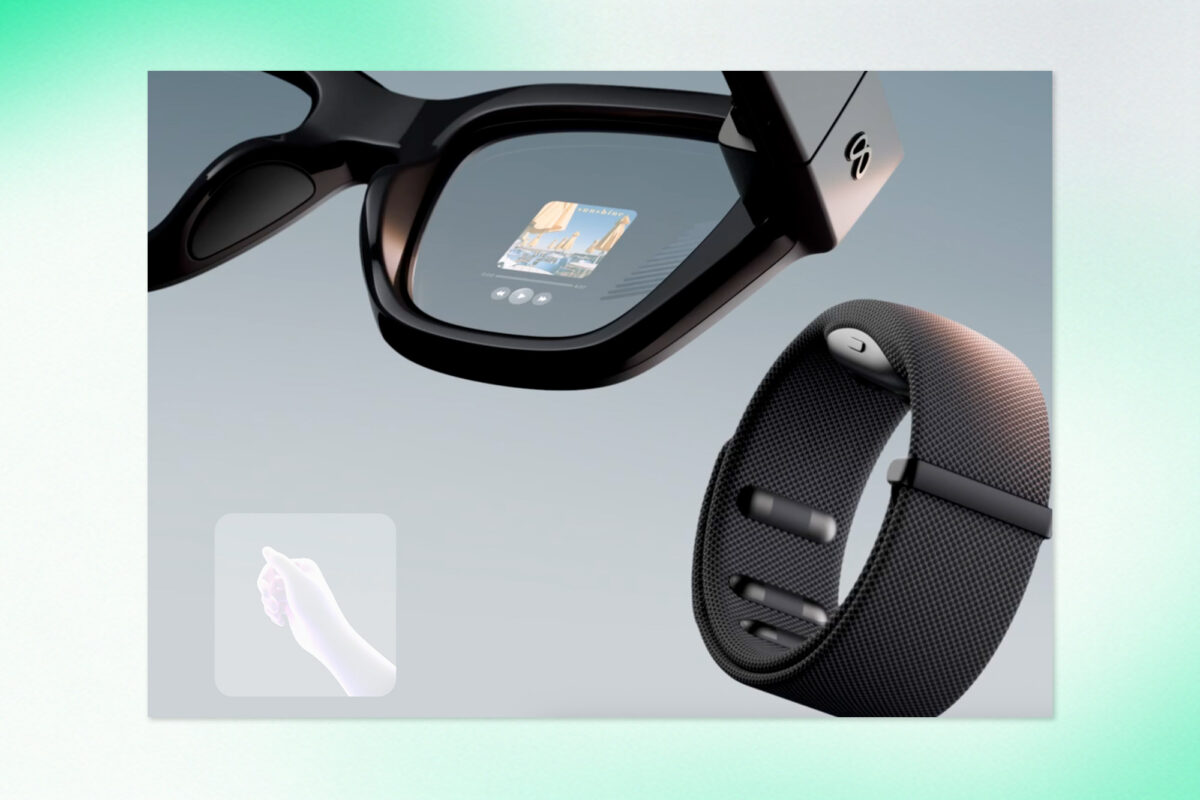
Forget new headsets — Meta Connect 2025 just redefined what the existing ones can do. While everyone waited for a Quest 4 reveal on September 17, Zuckerberg delivered something arguably more important: a complete AI overhaul of the Quest ecosystem that turns your current headset into something it wasn’t when you bought it.
After spending weeks digesting every announcement, developer session, and hands-on demo from the two-day conference, here’s what actually matters — and what’s just marketing fluff.
Meta Horizon Engine: Built From Scratch, and It Shows
The biggest under-the-radar announcement at Meta Connect 2025 wasn’t a product — it was infrastructure. Meta completely rebuilt its VR engine from the ground up, and the numbers tell the story: 4x faster loading times and support for 100+ users in a single instance. For context, the previous limit was around 20-30 users before things got choppy.
Meta Horizon Engine isn’t just faster — it fundamentally changes what developers can build. The engine powers realistic physics simulations, advanced lighting, and the ability to generate “nearly infinite connected spaces.” This is Meta’s answer to critics who’ve called the metaverse empty and lifeless. Whether 100-person instances actually feel populated remains to be seen, but the technical ceiling has been lifted dramatically.
Horizon OS v81: Your Quest Just Got a Brain Transplant
The Horizon OS v81 update that rolled out in October is the most ambitious software overhaul Quest has ever received. Here’s what changed:
Rebuilt Horizon Central
Horizon Central — the social hub — has been completely redesigned. It’s now a larger, more detailed space that supports more users simultaneously, offers faster travel between areas, and includes a digital item store for avatar customization. There’s also an event Arena for live concerts and comedy shows, which is Meta’s clearest signal yet that VR entertainment is where the money is.
Mixed Reality Link with Windows 11
Meta partnered with Microsoft to bring Windows 11 and Windows 365 to Quest headsets through Mixed Reality Link. This means you can run a full Windows desktop environment in mixed reality — with up to 12 anchored windows floating in your physical space. For remote workers who’ve been skeptical about VR productivity, this is the feature that might change your mind.
Meta AI Gets Contextual Intelligence
The Meta AI assistant received logic improvements that sound small but matter enormously in practice. If you tell Meta AI “it’s too loud,” it now understands context — reducing volume instead of giving you a confused response. It’s the kind of ambient intelligence that makes VR feel less like operating a computer and more like talking to a room that listens.
Meta Hyperspace: Your Room, Digitized in 10 Minutes
Meta Hyperspace (formerly Horizon Hyperscape) is the feature that had people at Connect doing double-takes. Using the cameras on your Quest 3 or Quest 3S, you walk around your room for 5-10 minutes. The system captures your real-world space and generates a photorealistic digital replica you can revisit in VR.
The implications for music producers and studio owners are immediately obvious. Imagine scanning your home studio, then inviting a collaborator on another continent to “walk through” your actual room, see your gear layout, and discuss acoustic treatment placement — all in VR. This isn’t a hypothetical use case; it’s exactly what the technology enables today.
Ray-Ban Display and the Wearable AI Ecosystem
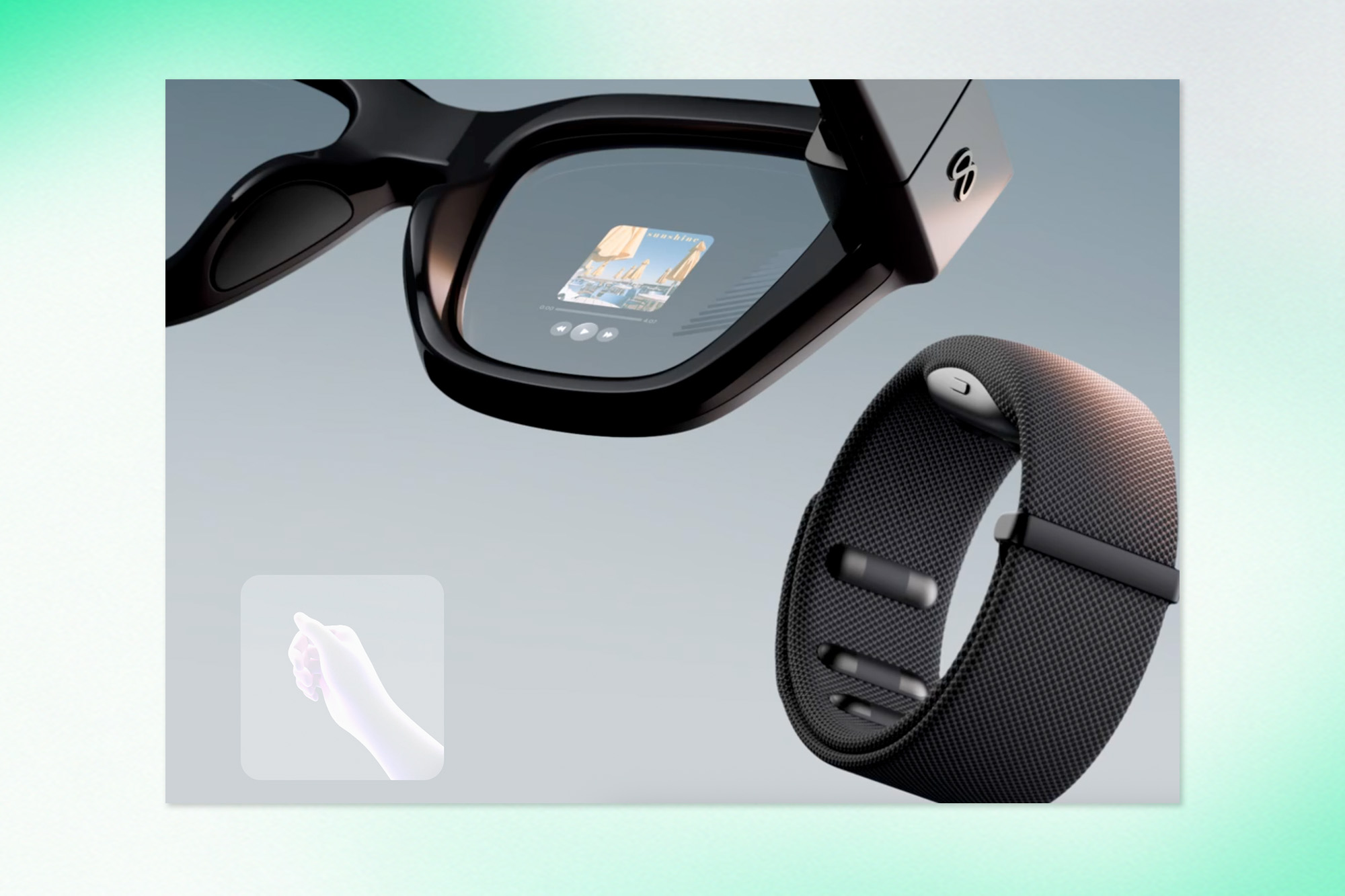
Meta Connect 2025’s hardware star wasn’t a headset — it was Meta Ray-Ban Display, the company’s first smart glasses with an actual screen. The specs: a monocular 600×600 pixel display integrated into the right lens, offering a 20-degree field of view at 42 pixels per degree. Price: $799, available September 30 in the US.
More interesting than the display itself is what ships in the box: the Meta Neural Band, an sEMG wristband that reads electrical signals from your forearm muscles. This enables gesture controls — you can type on any surface, navigate menus with finger movements, and control your glasses without touching them. It’s a genuinely new input paradigm that could make touchscreen interactions feel primitive within a few years.
Alongside the Ray-Ban Display, Meta launched the Ray-Ban Meta Gen 2 (8-hour battery, ultra HD 3K video) and the Oakley Meta Vanguard ($499, 9-hour battery for sports). The message is clear: Meta wants smart glasses to be as segmented as regular eyewear — fashion, sport, and productivity variants all running Meta AI.
Horizon Studio: AI-Generated 3D Worlds From Text Prompts
For developers and creators, Horizon Studio might be the most exciting announcement. This generative AI tool lets you create 3D meshes, textures, skyboxes, ambient audio, sound effects, and TypeScript code — all from simple text prompts. You can even generate a fully rigged and animated 3D avatar by describing what you want.
The ambient audio generation caught my attention as someone who thinks about sound design daily. Being able to generate spatial audio environments from text descriptions (“rainforest at dawn” or “busy Tokyo street corner”) opens up possibilities for immersive audio experiences that previously required hours of field recording and mixing. Whether the quality matches hand-crafted audio remains the key question.
Meta also released an MCP Server for Horizon OS that connects to LLMs, allowing developers to query the entire Horizon OS knowledge base naturally. Combined with Spatial Studio 2.0 and an updated Android Studio plugin, the barrier to building for VR dropped significantly at this Connect.
What Didn’t Happen: Quest 4 Is Not Coming Until 2026
Let’s address the elephant in the room. Despite widespread speculation, Meta did not announce Quest 4 at Connect 2025. Industry sources consistently point to a late 2026 launch, likely at Meta Connect 2026, with two models: a standard Quest 4 ($499-$599) and a budget Quest 4S ($299-$399).
Leaked specs suggest Snapdragon XR2 Gen 3, OLED or high-end LCD displays with ~30% more pixels per eye, and a wider field of view. But for now, Meta’s strategy is clear: squeeze every drop of value from existing hardware through software updates. Given what Horizon OS v81 delivers, it’s working.
Third-party Horizon OS headsets from ASUS and Lenovo are still confirmed as coming, though Meta’s CTO Andrew Bosworth acknowledged at Connect that the timeline has slipped. The Asus ROG “Tarius” gaming headset with eye-tracking and micro-OLED displays remains the most anticipated third-party device, but don’t expect it before mid-2026.
The Bigger Picture: Meta’s AI-First Metaverse Strategy
Meta Connect 2025 revealed a company that has pivoted from “build the metaverse with headsets” to “build the metaverse with AI.” Every major announcement — Horizon Engine, Horizon Studio, Meta AI improvements, Hyperspace — uses AI as the accelerant rather than hardware specs as the selling point.
This is a direct contrast to Apple’s Vision Pro strategy, which leads with premium hardware and carefully curated experiences. Meta is betting that AI-powered content creation will fill the metaverse faster than any army of designers could, and that $300-$500 headsets with brilliant software beat $3,500 headsets with polished but limited content.
For creators and professionals, the takeaway is practical: the VR platform that will matter most in 2026 isn’t the one with the best displays — it’s the one where AI does the heavy lifting of world-building, and you focus on the ideas. After Connect 2025, Meta is making the strongest case yet that it’s building exactly that platform.
Interested in how VR and spatial computing intersect with professional audio production? Let’s talk about building immersive creative workflows.
Get weekly AI, music, and tech trends delivered to your inbox.